Vis and Rāmin (Vīs o Rāmīn / ویس و رامین) · Companion Guide
维斯与拉明
一句诺言,三次毁约;母亲把女儿卖给金子,女儿把心交给绳索与雪夜。
A Chest of Gold Breaks the Gate
Mobad, king of Marv, first sees Shahru, queen of Media, at the Nowruz feast. He asks for her hand and is turned down. But she tacks on one more line, almost as a courtesy: if I ever have a daughter, she is yours. That throwaway remark costs the whole book. More than a decade later Shahru does have a daughter and names her Vis. When Vis comes of age, her mother marries her off instead to her own son, Viru. A promise made, then broken, in a single turn — the poem's whole theme is nailed above the door before the story has properly begun.
Mobad raises an army to take her by force. Qaren dies outside the gates of Media, and Mobad's own campaign ends in defeat. What the sword cannot win, gold can. His brother Zard proposes a plan: buy Shahru herself with jewels. The queen of Media hands over her daughter with her own hands. Vis is not carried off. She is sold, by her mother. It is a brutal stroke — Vis is never the passive girl of romance; she is pushed off the cliff by her own mother's greed.
A Romance Nursed Since Infancy
While Vis is still nursing, she is sent to a wet nurse's house in Khuzan. As it happens, the same nurse is already raising Ramin, Mobad's younger brother. The two children grow up under one roof, drink from the same woman, look out at the same hills. When Vis comes of age she is carried back to Media in a litter, then handed by her mother's broken promise to her own brother Viru — though under Zoroastrian law a wife may not go to her husband during her courses, so the marriage stays unconsummated. And it is Ramin whom Mobad sends to escort her to Marv.
The road east cuts through snow-covered mountains and open grassland. Vis rides in a carriage, Ramin on horseback. Two childhood companions meet again after years apart, and he falls straight off his horse, out cold. The scene is written lightly, but it carries enormous weight — this is the sharpest irony in the whole book: Ramin is the king's own brother, escorting his brother's future wife, a shepherd sent to deliver the lamb who is bitten through the heart by it on first sight. He begs his brother not to marry her. He is not heard.
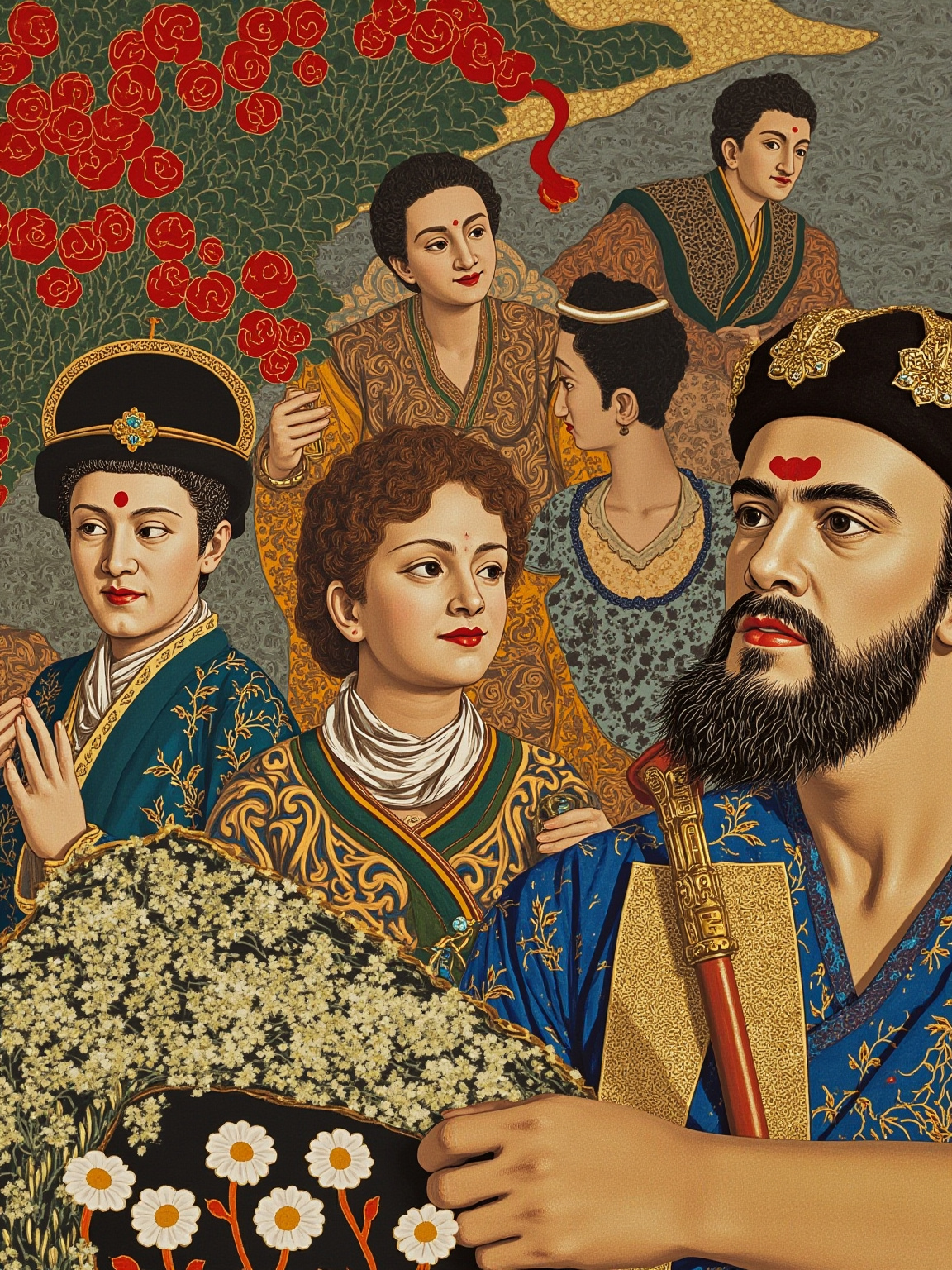
He fell from the saddle and swooned where he fell.
他一头栽下马背,当场便晕厥在原地。
金句 · 护送东行章 · 驿道坠马
Vis enters Mobad's harem in Marv and keeps him at arm's length for a full year — mourning for her father is the stated reason, ritual propriety the outer shell, but the real cause runs deeper. While Mobad is away at war, the nurse performs the deed the poem is famous for: a piece of pre-Islamic Zoroastrian charm-work that leaves the king permanently unable to consummate the marriage. The passage is charged, and has been argued over for a thousand years, but its function in the story is plain. It bolts the door between Vis and Ramin shut for good — and turns that same bolted door into a moral question the reader cannot walk past.
The Fire Trial and the Rope Ladder
The king comes home the day the nurse and Vis happen to be talking, and he catches the undertone. A Zoroastrian court has one instrument for a suspicion of adultery: trial by fire. Vis is ordered to walk through flame to prove her innocence — a genuine pre-Islamic judicial practice, not folklore dressed up for effect. The poem does not skip past it, because it is the direct trigger for the elopement: better to run than to be shamed like this.
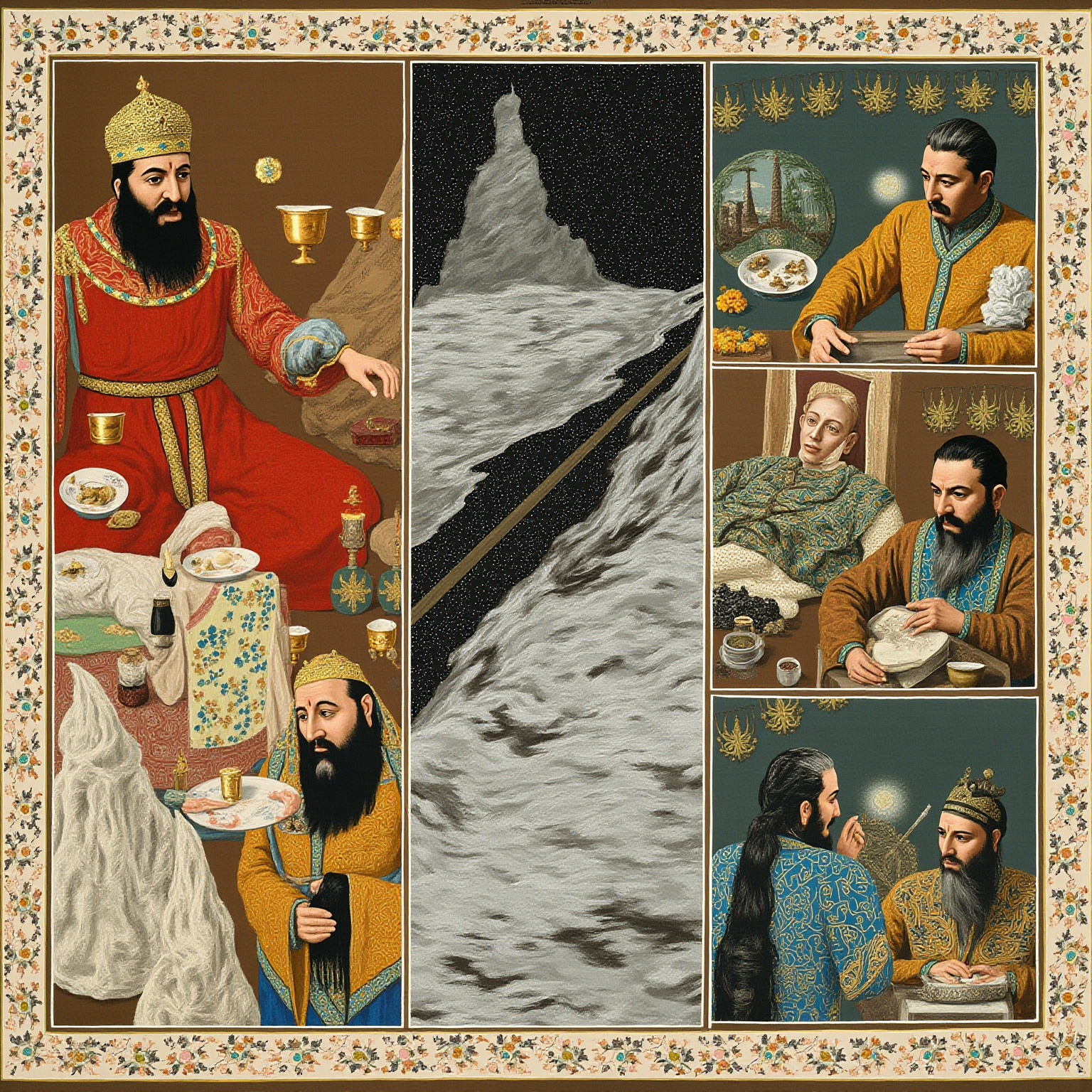
Walk through the fire, and let the fire give witness.
从火里走过去吧,让火来做见证。
金句 · 袄教火判章 · 火中验身
The escape itself, on that moonlit night, the poem renders with real restraint — a snow-covered wall, a rope let down, two figures gone into the dark of the steppe. Classical court poetry will not paint the scene for you; it leaves the reader to imagine how cold that rope was, how steady Vis's hands had to be. Gorgani is not after spectacle. He wants the weight of the act itself — a forbidden elopement, carried out inside the most tightly wound court ritual could build.
Mobad's mother steps in and talks son, brother, and daughter-in-law all back to Marv. Mobad takes Ramin along on a campaign against Rome; Ramin falls ill on the march and is left behind. From here the story stretches out through the rest of both their lives — separations, reunions, an eventual return — but the sharpest cut in the whole poem has already landed, with the elopement. What follows is reconciliation, delay, and a long bill still to pay.
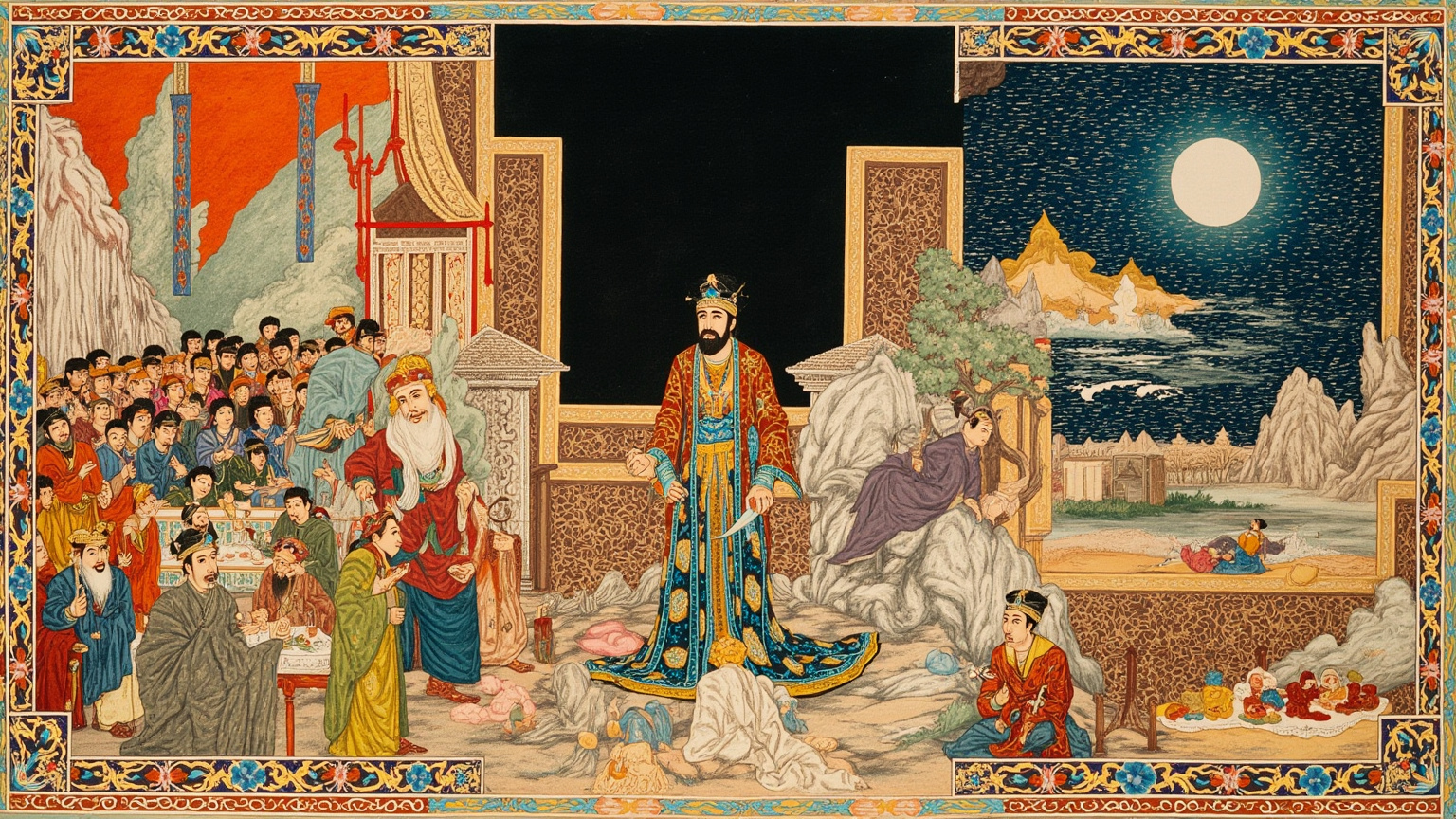
Her mother opened the gate with her own hand, and sold her for gold.
她的母亲亲手打开了城门,将她卖给了金子。
金句 · 斡旋归家章 · 母亲之卖
How a Broken Promise Becomes a Theme
The real protagonist of this book is not Ramin, and not Vis either. It is that one promise. Shahru's offhand line at the Nowruz feast — if I have a daughter, she is yours — is broken first by Shahru herself, who marries that daughter to her own son instead, and then broken again by Vis, who leaves her husband for another man. Three breaches, running in opposite directions: the mother breaks a spoken word, the daughter breaks a marriage contract. The same act, spoken by different mouths, becomes a different crime each time. Gorgani turns this into a moral equation that keeps splitting in two, each generation repeating the last one's betrayal — except this time it is the daughter's own turn to be the one who breaks faith.
Power takes an interesting shape here too. Mobad tries an army first and loses; tries gold next and wins. But the woman gold buys keeps her heart with his brother. The king's whole arsenal — troops, throne, the priestly rank his own name comes from — turns out to be worth less than love. That is the tension the whole court-romance genre is built on: love and power were never running the same race, and the poem forces them onto the same track anyway.
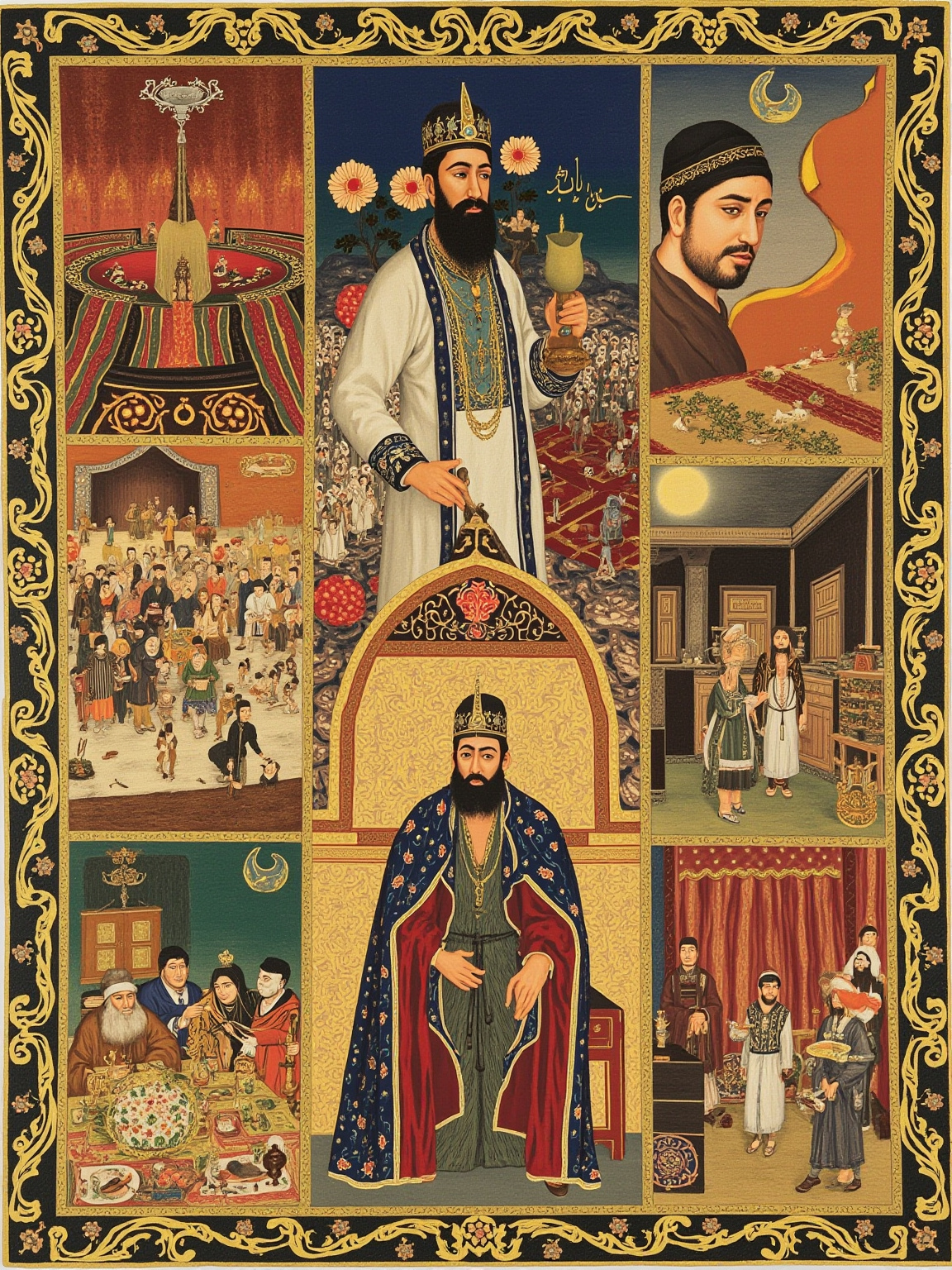
The king had his army, his throne, his crown; what he did not have was her heart.
国王有兵权、有王座、有冠冕,唯独没有她的心。
金句 · 权力章 · 金与兵之憾
Zoroastrian ritual is not scenery here. It is a character. The ban on approaching a husband during her courses, the charm-work, the trial by fire — this whole pre-Islamic apparatus of custom and ordeal boxes in everyone's movements. Vis is not unwilling to keep to ritual; ritual simply leaves her no road to walk. Ramin does not stop loving his brother; his brother simply should never have married this woman. Ritual here is not an answer. It is a cage that backs people into a corner — and it is what opens up the ritual-versus-desire theme that every Persian court romance after this one would inherit.
The gate that gold breaks open in Shahru's city is the darkest door in the whole poem — Vis is not carried off. She is handed over, by her own mother's hand.
Why It Cannot Be Skipped
Of the three great Persian love epics — Vis and Ramin, Layla and Majnun, Khosrow and Shirin — Gorgani's is the earliest. Take it away and Nezami's two later poems lose their source. The template it establishes — a love born of a broken promise, court power, an elopement — passes down almost unchanged: a wife defies her husband and flees, his family steps in to mediate, reconciliation and return follow. This is the family tree the entire genre of Persian court romance grows from.
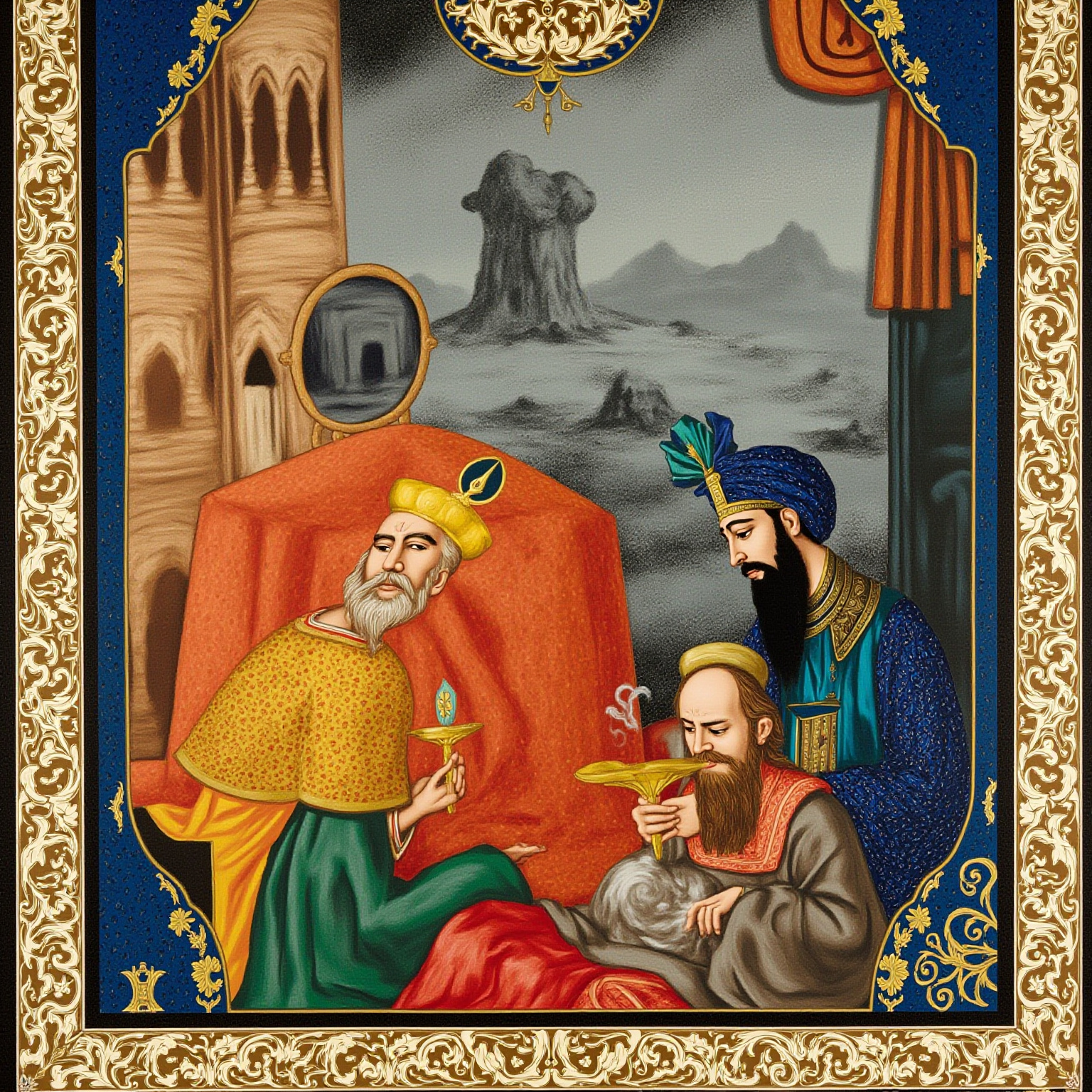
Three vows were broken before the first kiss was given.
在第一吻落下之前,诺言已三次被毁。
金句 · 三大爱情长诗章 · 违诺之母题
Harder still to set aside is the old dispute: is this, at bottom, the same story as Tristan and Iseult? The two works are separated by centuries, by half a world of geography, by any traceable route of transmission — and yet the plot skeleton is nearly identical: a love between a woman and her husband's kinsman, a forbidden affair, a potion or a charm that complicates everything, an ending that tips toward tragedy or toward reconciliation. A large share of the debate over shared origins for the world's love stories circles back to this one poem.
Why It Is Worth Reading Even Once You Know the Plot
By now you know Vis will elope, that there will be a reconciliation, that she will come back. What you do not know is the physical detail — the strip of rein still gripped in Ramin's hand as he pitches off his horse, the exact inch Shahru's chin drops as she gives in to the gold, the silence of that rope hanging just out of frame on the snowbound wall at night. Classical Persian narrative verse is written with real restraint, and the more pivotal the scene, the more it is left blank — a kind of restraint no summary can hand you. There is also the rhythm: rhymed couplets pushing forward line after line, like a post horse that never stops. None of that exists anywhere but in the original.
A story about a mother selling her daughter gets written as a long poem about fidelity in love — that is where its real venom lies.
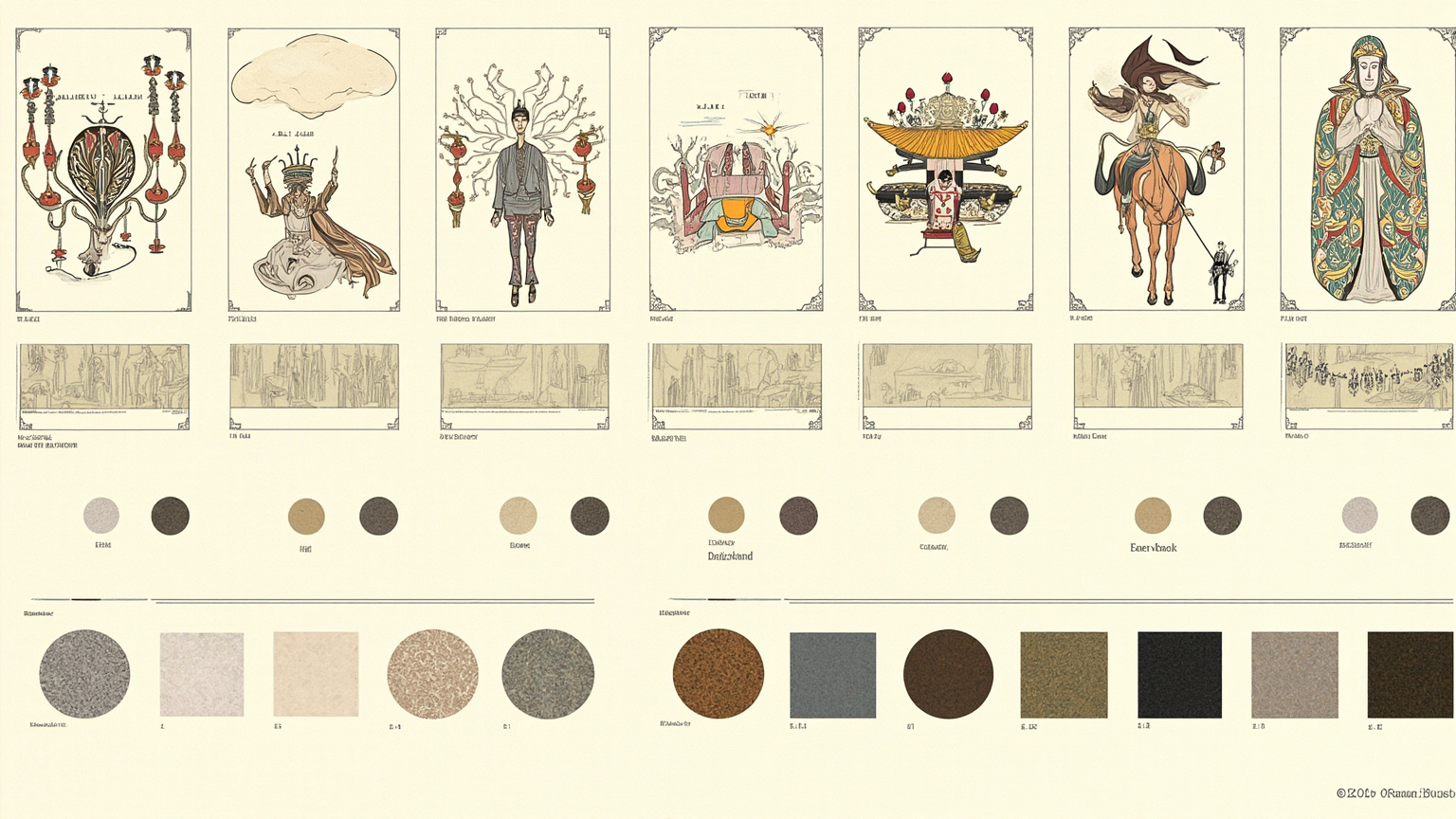
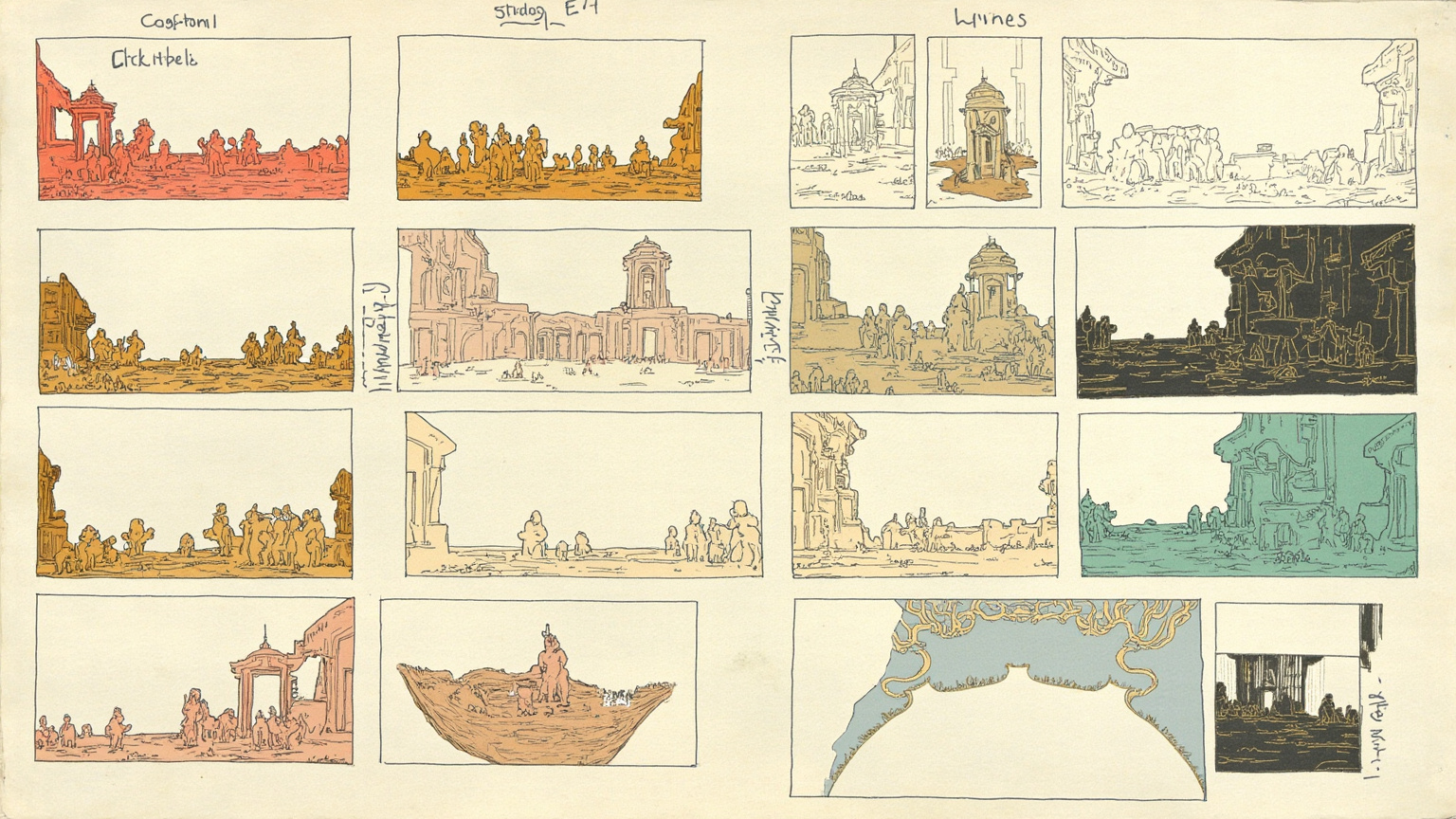
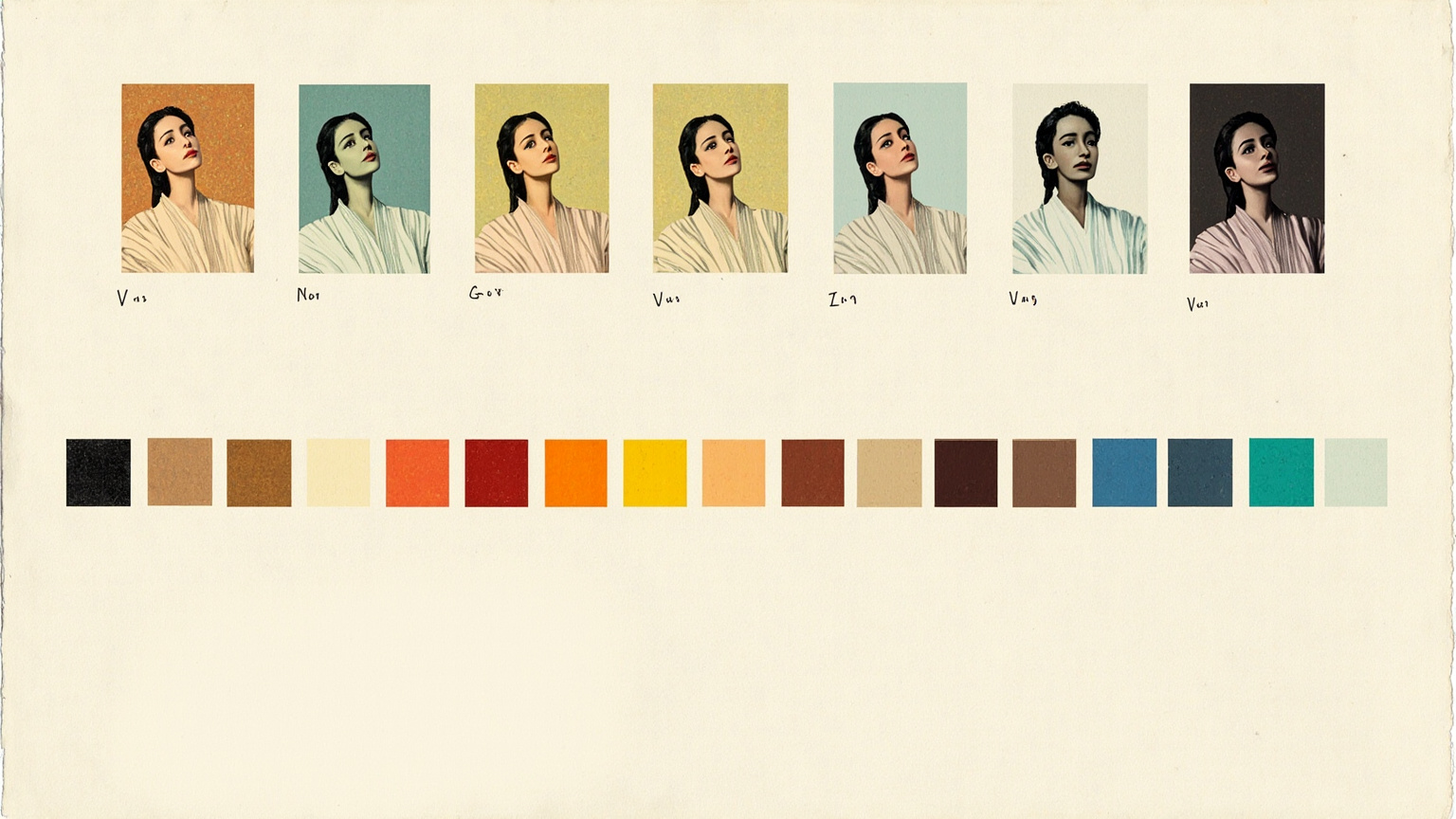
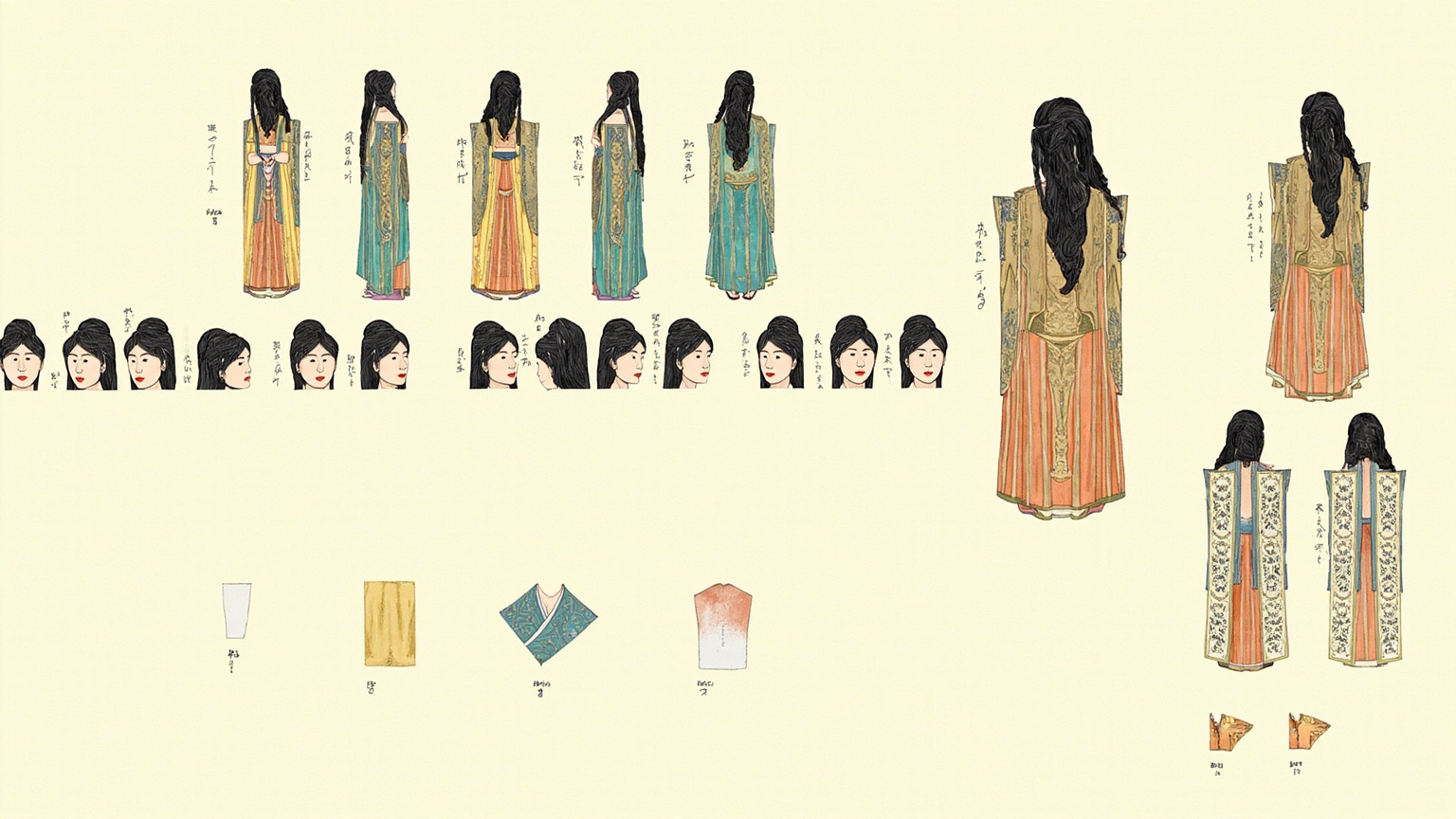
Art Direction4 plates
Before the guide was written, this book got a visual foundation — every illustration you just read grew out of it.