Viy · Companion Guide
维(妖巫)
神学生靠祷告和圈圈撑过两夜,第三夜来了一个他从没背过的名字——他看见它的那一刻,所有的规则就都失效了。
Opening
An invisible horse carries a gaunt old woman, and lashed to her back rides a theology student, skimming low over the wheat fields of Ukraine. Underneath her the student mutters his prayers, and with each word he feels himself grow lighter, until at last he twists free and brings a club down across her back. She falls, rolls once in the grass, and comes up a beautiful girl with impossibly long lashes — a face he will recognize later.
The student borne off at a gallop is Khoma Brut, a philosophy student at the Bratsky Monastery in Kiev. One hundred and ninety years ago, Gogol dropped him into a Ukrainian night and never let him find his way back out.
What kind of book is this
Viy is one of the stories in Mirgorod, Gogol's collection published in 1835. Most readers know Gogol as the writer of Dead Souls and The Government Inspector, the one who turned Russian bureaucracy and small-town life inside out with a cold sneer. This story shows his other, gothic side: Ukrainian farmland, Cossack estates, seminary students, and the murkier demons of Slavic folk horror. The creature whose name gives the story its title, and sounds like an incantation on its own, is by most scholarly accounts an invention of Gogol's own — not a figure lifted whole from any existing folk tradition.
Later horror fiction owes it a debt it rarely acknowledges: the three-night vigil, the protective chalk circle, the injunction not to look up — nearly all of it traces back to this story. It is the page Slavic folk horror had to pass through on its way into world literature.
Characters and world
Khoma Brut is poor, seminary-worn, and given to dropping half-remembered Latin into his speech; his one real skill is reading. Two classmates leave the monastery with him for the summer, Khalyava and Tiberius Gorobets, who mostly serve as company on the road and, at the story's end, as the ones left to argue over how he died.
Three forces stand against him. The witch herself first appears as an old woman with glowing eyes, then as the girl in the black-lacquered coffin. The Cossack captain Yavtukh Kovtun is the dead girl's father, and the one who has Khoma brought to the estate to keep vigil over her. And Viy is the story's closing act — squat, hairy, iron-faced, caked in black earth, unable even to look at the world until a crowd of demons lifts its eyelids for it.
The world stays small on purpose: a monastery in Kiev, a farmhouse on the steppe, a Cossack estate, one damp wooden village church, and beyond them a marsh, a stand of willows, a moon, and a rooster that always crows at the worst possible moment. Gogol doesn't build spectacle. He shows you one church, then keeps you inside it all night.
Shelter in the wilds: the story begins in a hut
Summer break arrives, and three seminary students, broke as usual, ride out across open country looking for a bed. They find a farm with room for only two more in the house, and something about the woman who runs it is already wrong — her eyes too bright, her step quicker than a young girl's. Khoma is put in a hut by himself.
That night the 'old woman' comes through his door. This is Gogol's first jolt: she doesn't lie down beside him: she climbs onto his back. The prose never explains itself, and neither does Khoma; he just keeps praying, and that scrap of seminary Latin and exorcism turns out to be enough to flip her off him.
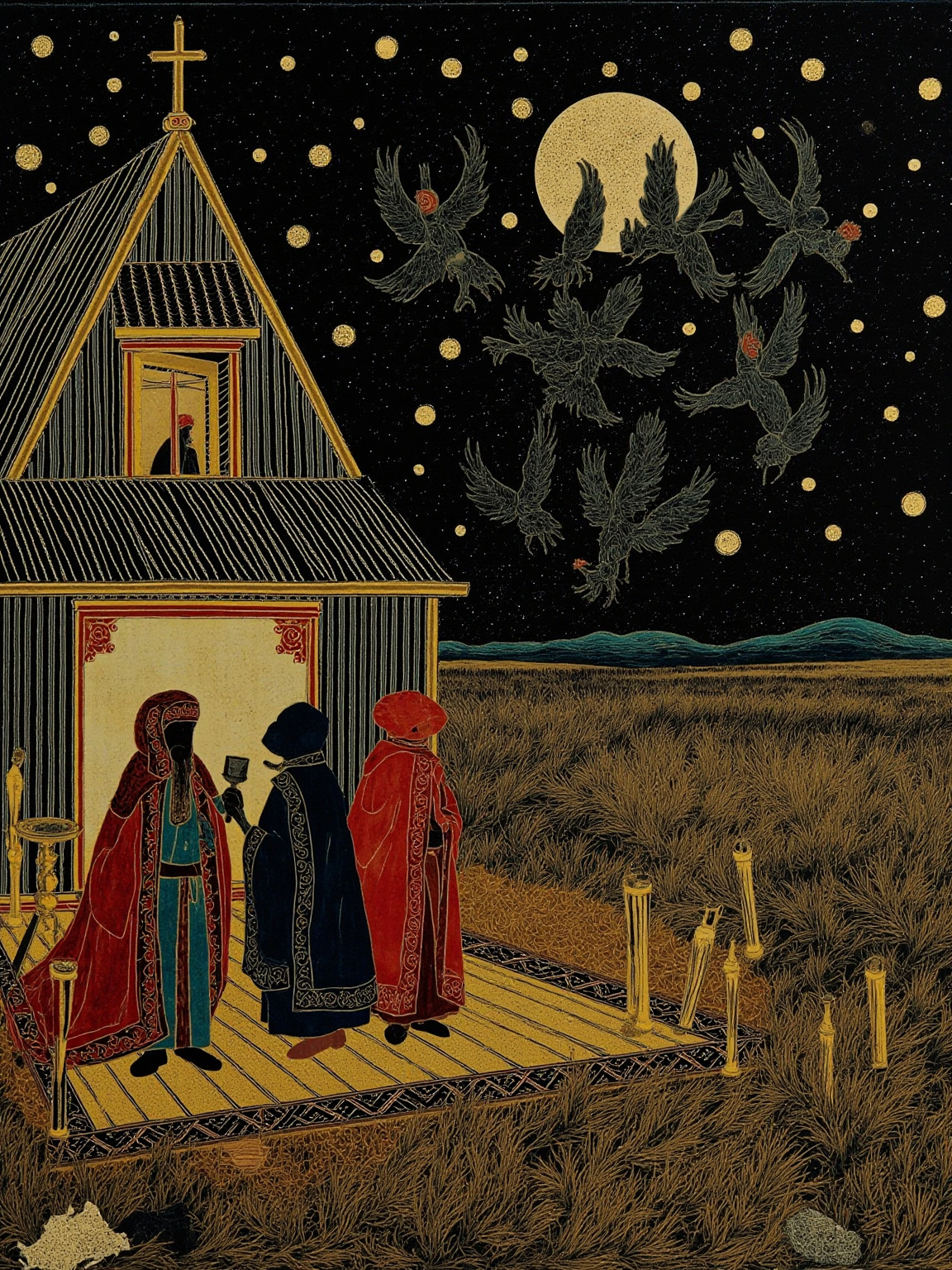
When the vacation came, the three seminary students rode out of the bursar's yard—broke, hungry, and casting about the bare steppe for some roof to sleep under.
暑假一到,三个修道院学生从管事院子里牵马出来——兜里空空,肚子空空,只好把目光撒进光秃秃的草原,去找一张能睡的床。
金句 · 序章 · 荒野投宿
The ride: the witch's first night
The witch carries Khoma out of the hut and into the air, over fields, treetops, and a river, straight toward the moon. He lies flat against her back while his prayers come apart like paper in the wind, scattering behind them. The instant they touch ground he twists over and swings the club he's been carrying with everything he has. The old woman goes down in the grass, and when she looks up again, she is a girl with lashes almost too long to be real.
The girl vanishes. Khoma makes it back to the monastery and tells his classmates what happened. Gogol keeps this part restrained: no blood, no screaming. The horror sits entirely in one fact: she has seen your face now. You hit her, so she knows you.
The vigil: the captain's estate
Word arrives that the daughter of the Cossack captain Yavtukh Kovtun has been found badly hurt in her own yard, and that before she died she asked, by name, for a monastery student in Kiev called Khoma to sit vigil over her body. The abbot doesn't ask why. He simply sends him.
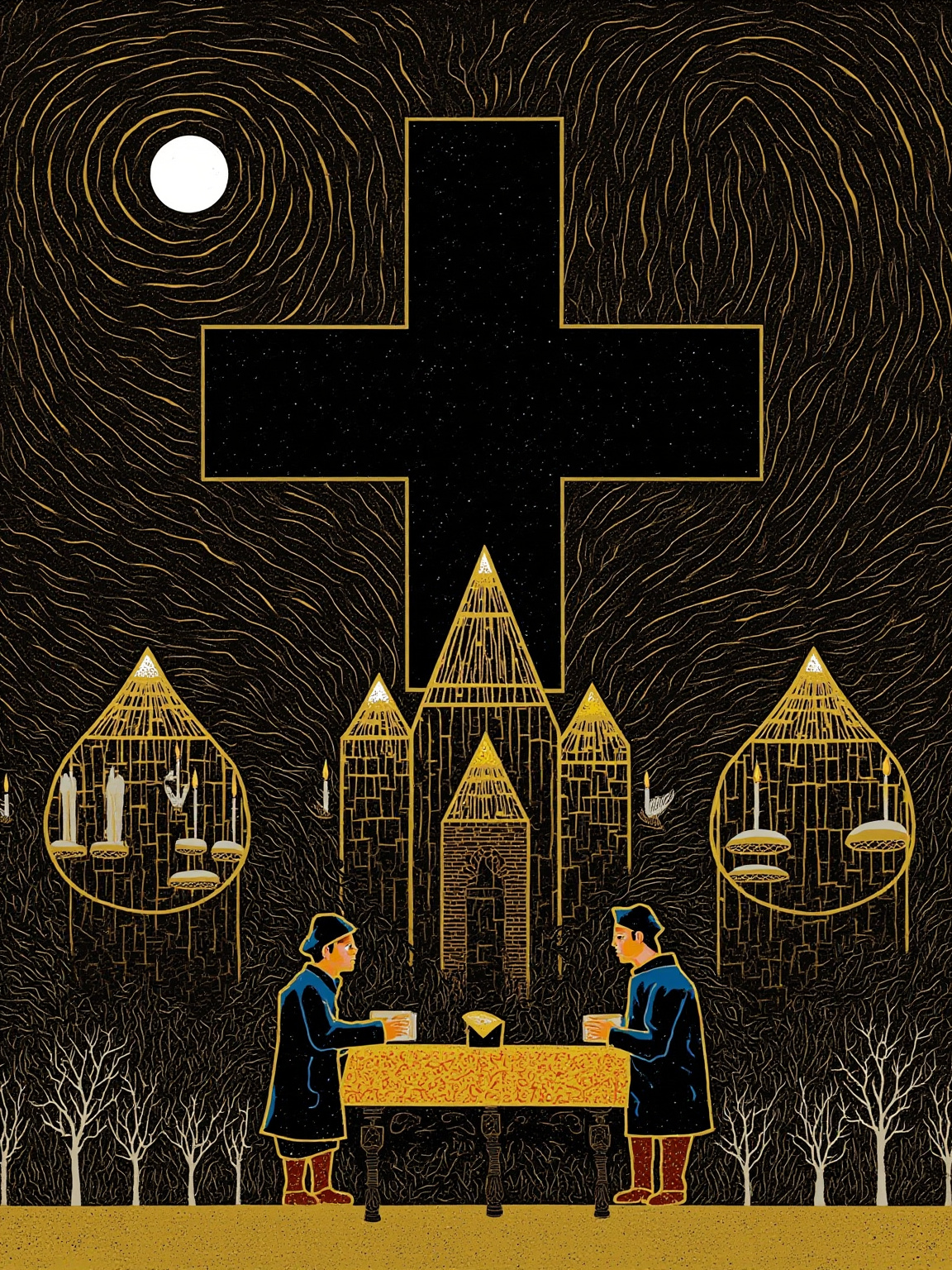
She did not lie down. She straddled him. The student felt the cold of her upon his breast, and his own blood ran cold.
她没有躺下。她跨坐到他身上。神学生只觉一片冰凉贴在胸口,连自己的血也跟着凉了下去。
金句 · 第一夜 · 飞驰
The coffin sits at the center of the estate church, black and lacquered to a shine, the lid sealed tight. Before Khoma goes in, he overhears guests murmuring about things the girl did while she was alive, though of anyone there, he should already know exactly what she was.
First night to second: the coffin comes alive
The first night passes quietly enough. Then it doesn't. The coffin lid starts to thud, as if fingernails were scraping the wood from inside; then the coffin itself lifts and flies at the chalk circle Khoma has drawn around himself. He holds up a cross in one hand and prays with everything he has in the other, cold sweat running down his forehead. Outside, branches slap the window glass, and the instant a rooster crows, the coffin drops back into place.
On the second night, she doesn't come alone. Shapes with no clear outline crowd the windows, noses pressed to the glass, breath fogging it from outside. Khoma stays inside his circle, where none of the usual rules do him any good: the things outside simply wait. By dawn, half his hair has gone white.
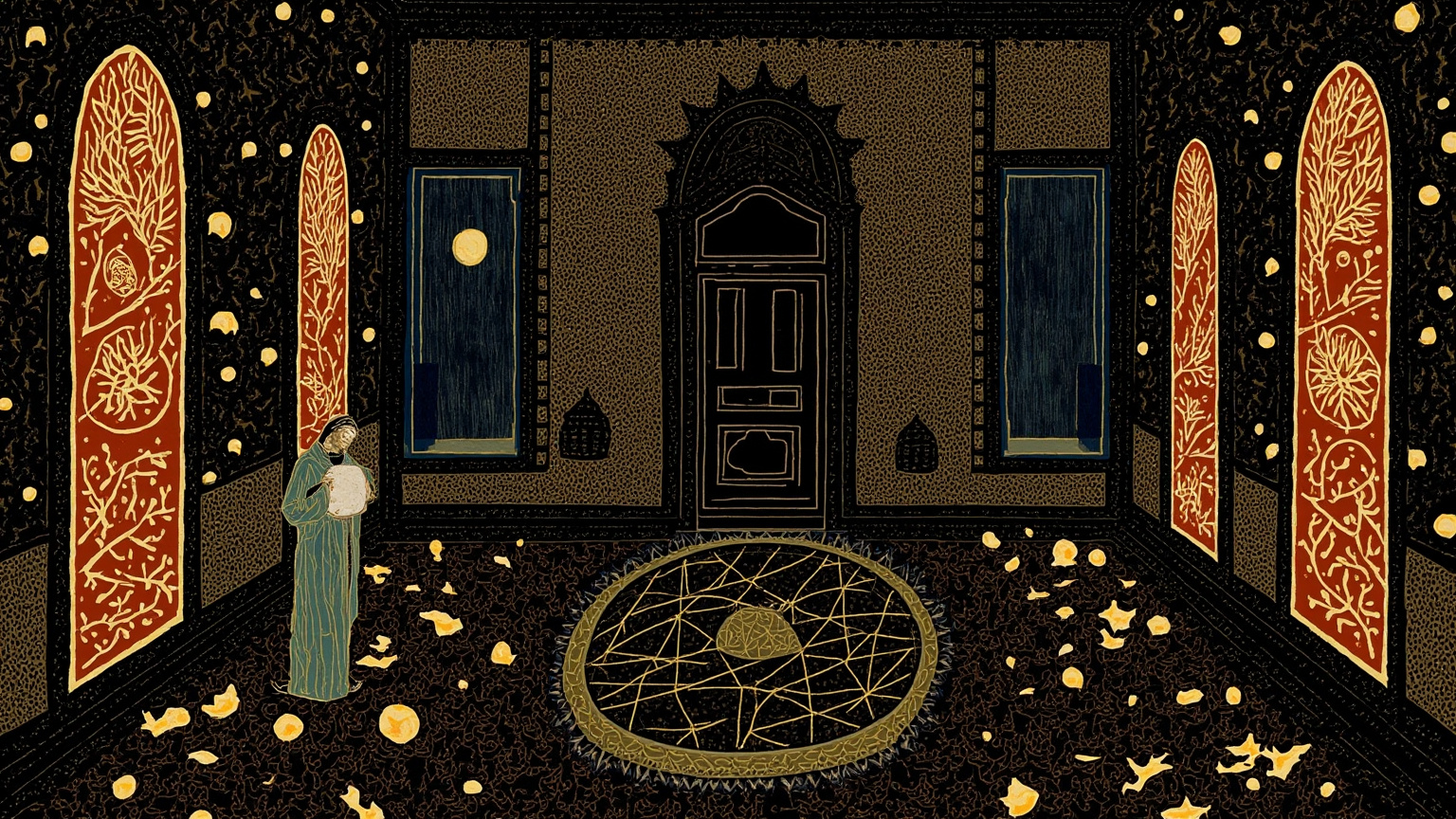
The coffin lid began to creak. Something inside was moving, tapping with the joints of dead fingers upon the painted board.
棺盖开始咯吱作响。里头有什么东西在动——用死人的指节,一下一下叩着那块漆过的木板。
金句 · 第二夜 · 教堂围困
As craft, these two nights are old-fashioned escalation, done well: the first night moves one coffin, the second sets the whole church heaving, and neither one reaches the top. Gogol keeps a hand on the reader's shoulder the whole time. Wait, he seems to say. The real night hasn't come yet.
The third night: Viy arrives
On the third night the demons stop testing him. They pack the church inside and out, the coffin lid flies open, and the girl stands up out of it. She doesn't come for Khoma. She turns the other way and opens her mouth to call a name: Viy.
Who is Viy? Squat, iron-faced, its body a tangle of fur and roots matted with black earth. When it walks in through the church door, its eyelids hang down to the ground, and the demons crowd around to lift them for it. Then it looks into the circle.
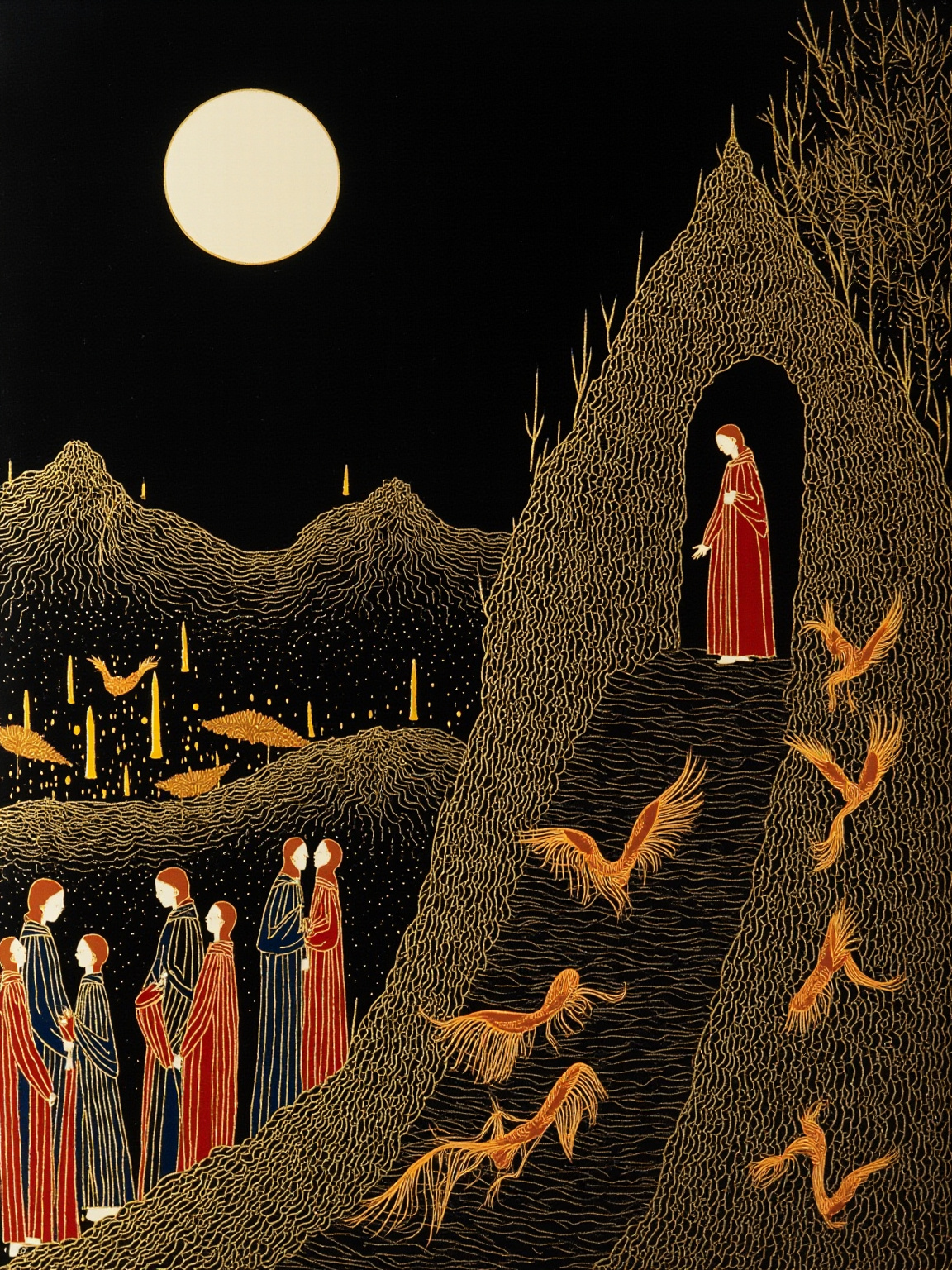
A creature came crawling into the church—short, iron-faced, its eyelids hanging down to the earth. The demons rushed to lift them, and it looked upon the circle.
一个东西爬进了教堂——矮,铁面孔,眼皮一直垂到脚边的地上。群魔一拥而上替它把眼皮掀起来,它朝圈里看了一眼。
金句 · 第三夜 · 维登场
Everything frightening up to this point has run on not being seen — Khoma's circle, his prayers, his refusal to open his eyes, all of it works because the rules hold. The moment Viy arrives, the rules invert. It can see Khoma. And now Khoma has nothing left to do.
The first time I reached this page, I found myself flipping back without thinking, certain I had missed some rule the story had set up. There was no rule to find. Gogol wants something plainer understood: once something turns serious, no earlier cleverness will save you.
Ending: the church swallowed by weeds
When Khalyava and Tiberius reach the church at dawn, what they find is something they will describe again and again for years afterward: Khoma lying on the floor, already dead. Whatever demons couldn't escape the church before daylight are trapped inside it for good. No one dares go near the wooden church again, and over the years weeds and trees push up through its foundation until the whole building leans and buckles.
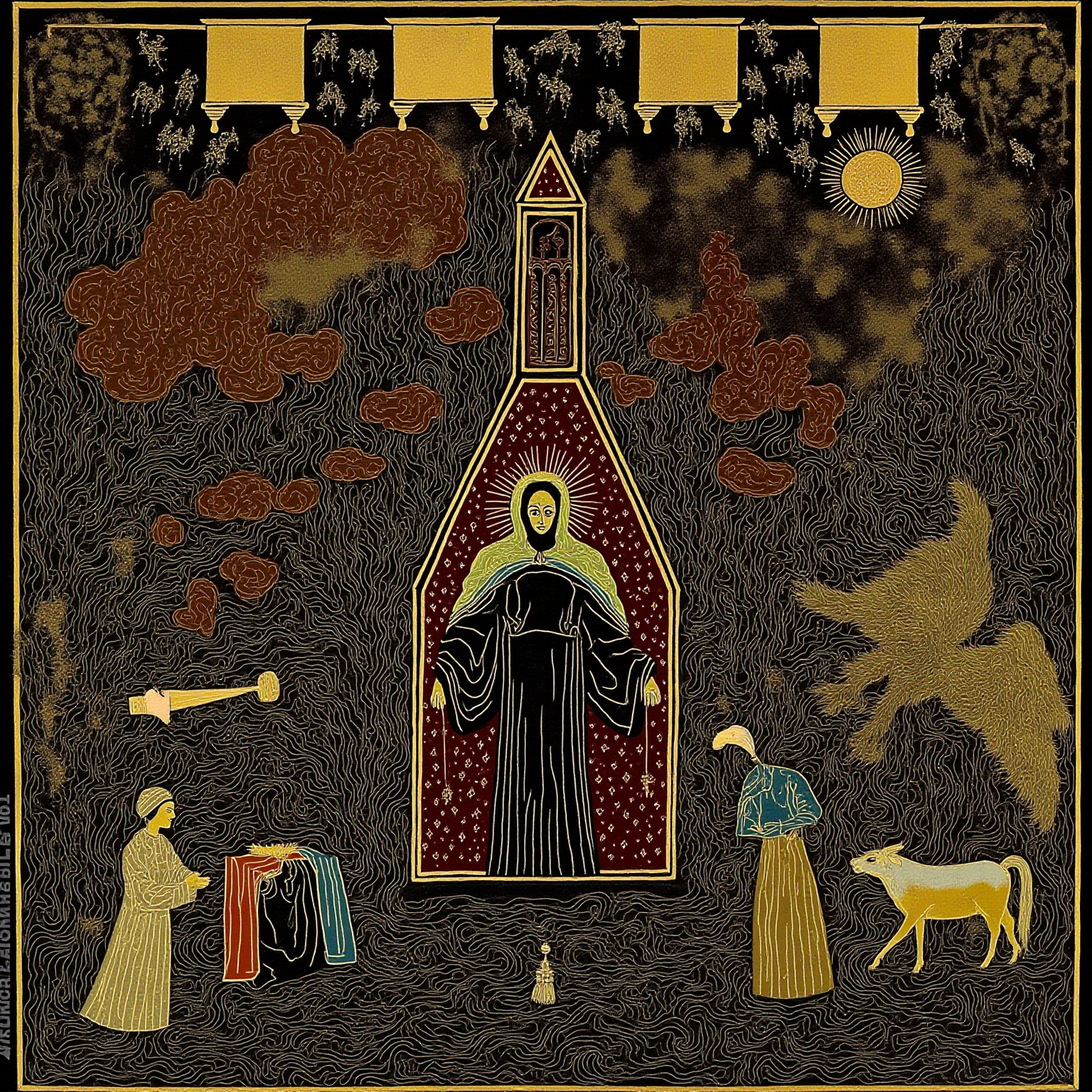
They found Khoma on the floor in the morning—dead, with a face still twisted by the terror he could not outlast.
天亮时分他们在地板上找到了霍马——死了,脸上还带着没能扛过去的那种惊惧的扭曲。
金句 · 尾声 · 教堂长进野草
The story closes there, with no explanation of what Viy actually is and no dignified ending handed to Khoma. All his friends offer, arguing it over afterward, is: 'If he'd only held out through that one look, he might have lived.' It sounds less like an answer than something they tell themselves.
What it's really about
On the surface this is a story about Khoma holding off ghosts through sheer will. Underneath, it's about two harder things. The first is seeing: the rules stop working the instant something can look back at you. The second is cost. Khoma isn't outmatched so much as worn down, soaked in sweat the first night, half gray by the second, unable to hold on through one look on the third. It's a slow curve of a man being emptied out.
Gogol keeps the Ukrainian countryside solid and specific — Latin lessons at the monastery, the food on a Cossack estate, which direction the rooster crows from at night — so that when he suddenly sends a witch airborne and packs a church with demons, the wrongness of it lands that much harder. That texture doesn't exist in the folk tales this story draws from.
Why the original is worth reading
A summary can only tell you that Khoma dies on the third night. The text itself gives you what those three nights actually felt like: which way the wind came in through the window gaps, what sound the coffin made scraping across the floor, whether the faces pressed to the glass outside looked smeared or wrinkled. Countless writers have since borrowed this story's horror skeleton, but the particular cold of Gogol's Ukrainian countryside and Cossack world has never been reproduced.
Once something turns serious, no earlier cleverness will save you.
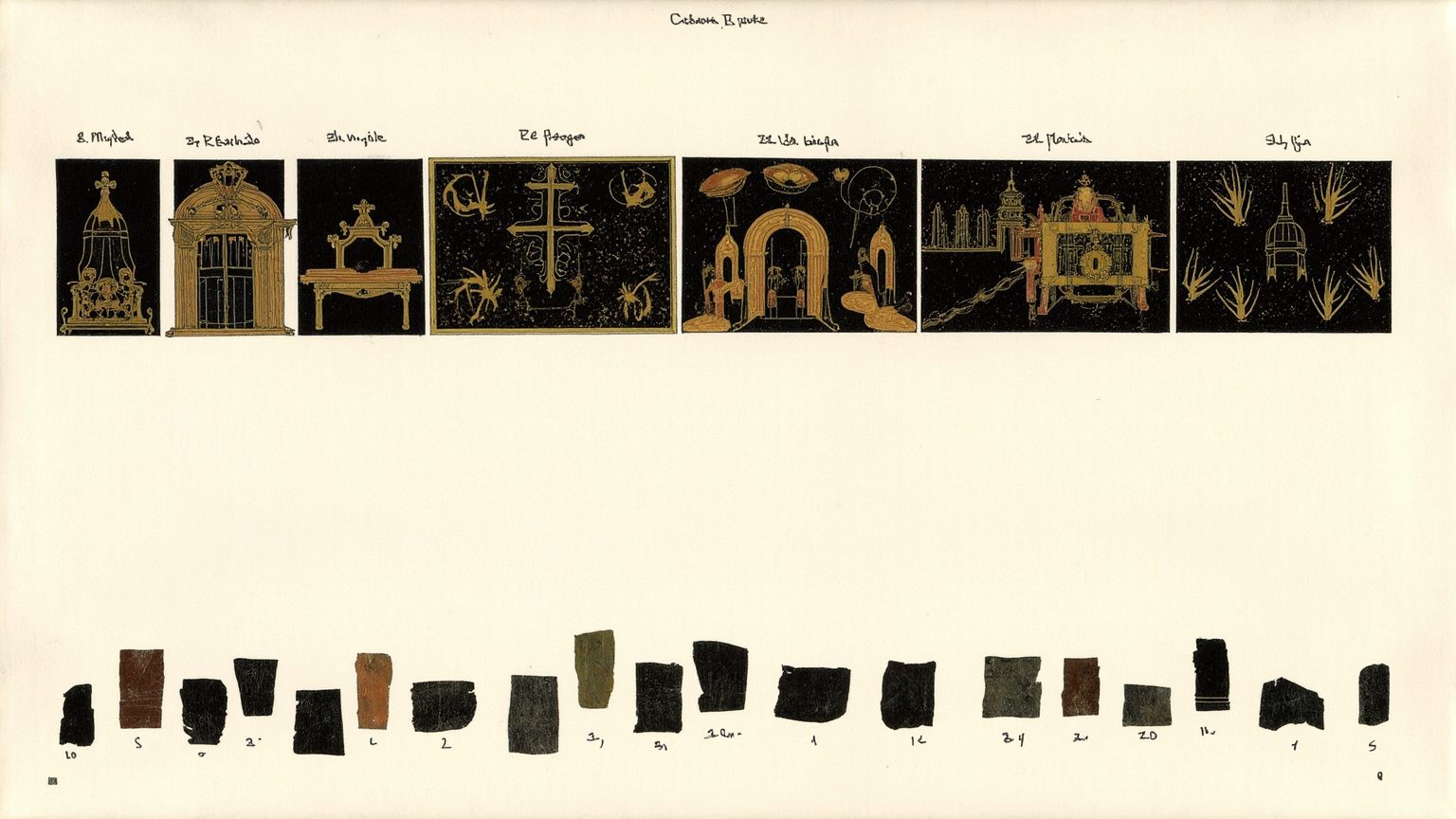
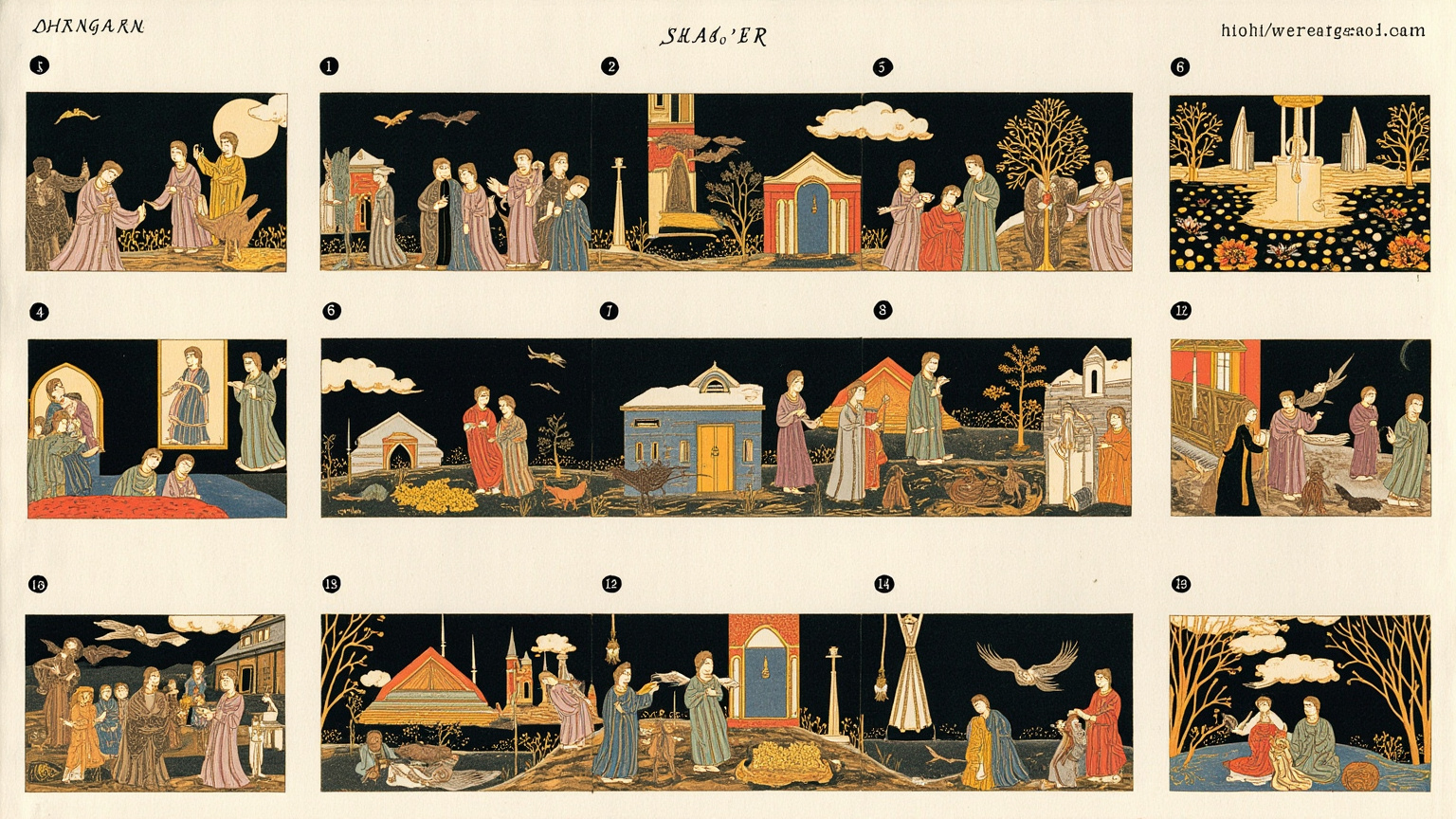
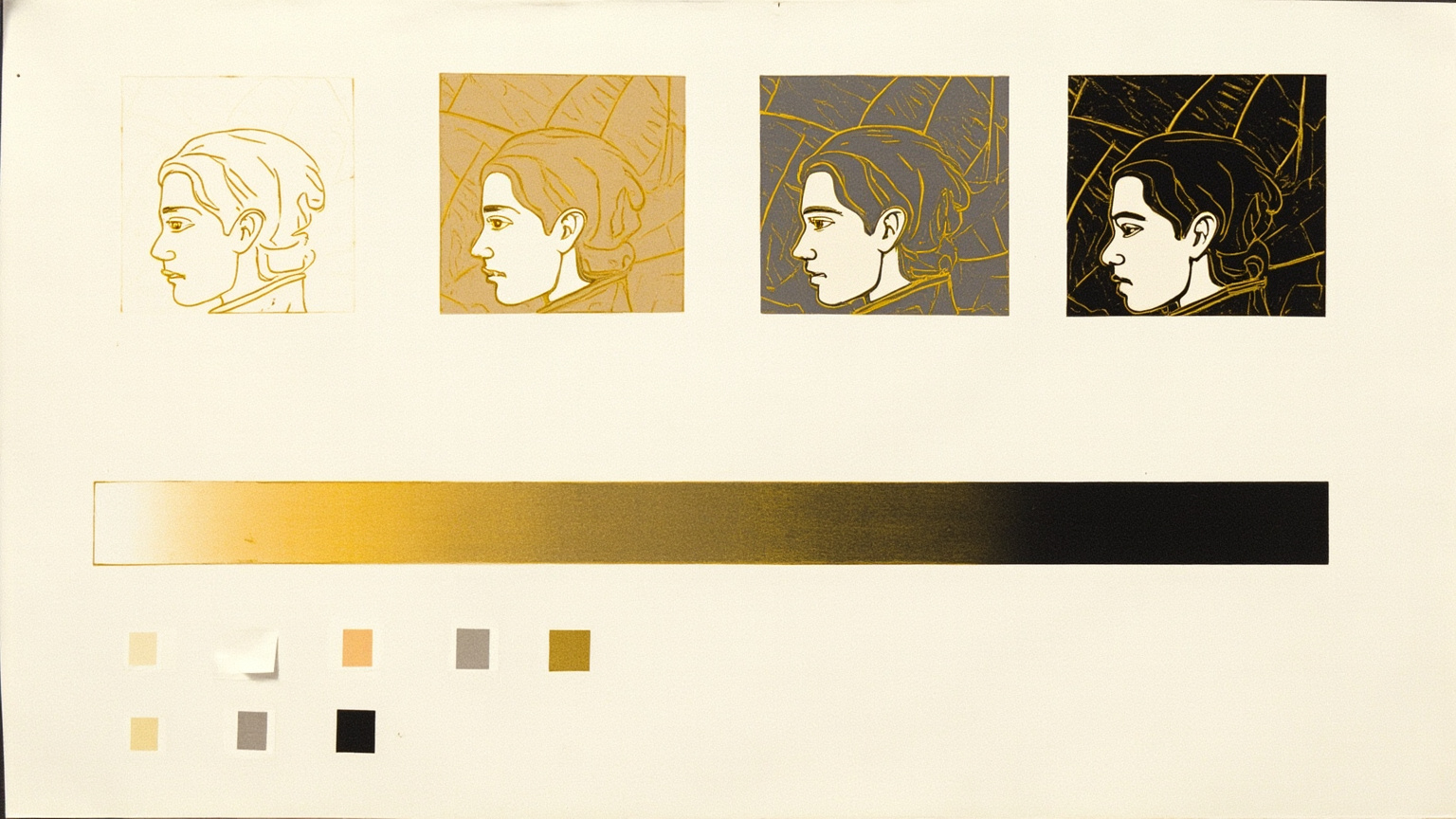
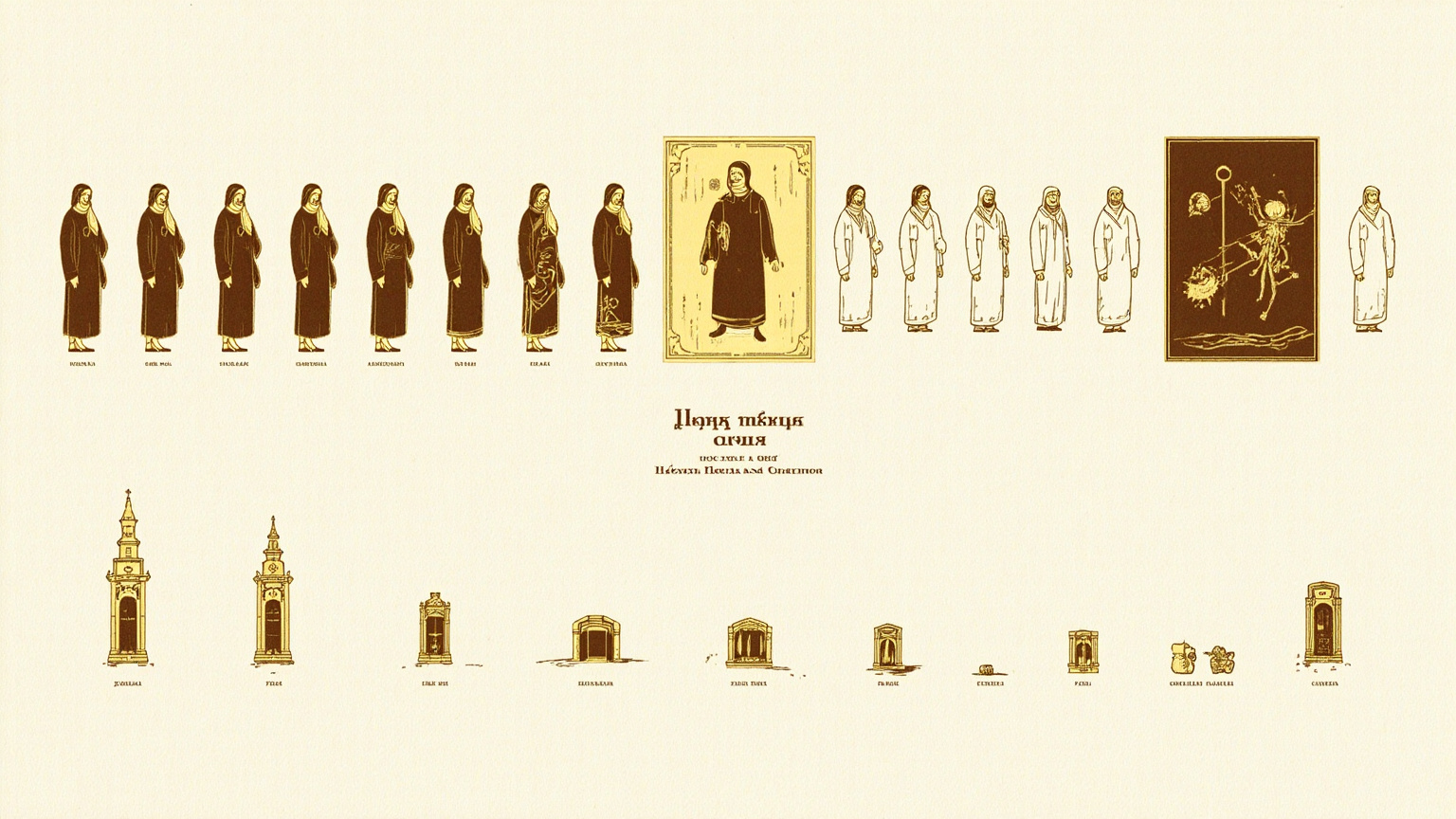
Art Direction4 plates
Before the guide was written, this book got a visual foundation — every illustration you just read grew out of it.