The Voyage of the Beagle (also published as Journal of Researches) · Companion Guide
贝格尔号航海记
二十二岁的博物学家登上小船,把世界敲成标本,把岛屿敲成问题,五年后带回来的不是答案,是一座还看不清的迷宫。
Opening: A Hammer and an Archipelago
On the Galápagos Islands, a giant tortoise crawls slowly past Darwin's feet. The young naturalist crouches to study the pattern on its shell, then looks up at the color of the volcanic rock beneath him. He will later realize that the differences among tortoise shells, finch beaks, and lizards from island to island were hiding inside exactly this kind of unremarkable comparison. None of it is theory yet, just an afternoon when a young man cracked open rocks, dropped beetles into bottles, and wrote down what he saw in a ship's log.
What Kind of Book Is This
The Voyage of the Beagle was published in the late 1830s by Charles Darwin. It does not loom large in literary history, but every story about the origin of evolutionary theory, about fieldwork in natural history, about how a scientist gets made, eventually circles back to this book. It is the true record of a naturalist barely into his twenties putting to sea for the first time, treating the whole planet as his laboratory.
More precisely, it is the source archive of Darwin's thinking. More than a decade before he turned On the Origin of Species into a systematic theory, he wrote this travelogue first. Every page is gathering material; any line of observation might later turn into evidence.
The People and the World
Only two names on board are worth remembering. One is the young Darwin, the ship's naturalist, in charge of collecting specimens, keeping the log, and jumping ashore at every port to run for the hills. The other is Captain FitzRoy, a Royal Navy officer devoted to hydrographic surveys and precise navigation, carrying the colonial assumptions typical of his era. The two men ate together in the cabin, argued, and put up with each other, and that everyday friction became the most human part of this book.
The world outside the ship was far vaster: from Cape Verde in the Atlantic to the eastern coast of South America, from the Strait of Magellan to the cold high desert of the Andes, from the volcanic islands of the Galápagos to the rain-soaked coast of Tierra del Fuego, then around the Pacific and the Indian Ocean to the southern tip of Africa. Darwin's tools were a geological hammer, collecting boxes, a microscope, and a ship's log. With this kit he translated unfamiliar terrain into specimens and pages he could carry home.
Setting Sail: A Voyage He Almost Didn't Take
Darwin was only twenty-two when he boarded the Beagle. Captain FitzRoy was a few years older, but still not yet thirty, and the two of them were left to carry an entire ship and a round-the-world mission. This was an official hydrographic survey; the naturalist was, on paper, just an extra passenger. Darwin's own family did not much approve at first — a five-year voyage sounded like a reckless gamble for a young man who had never traveled far from home. The two were close in age but worlds apart in duty, one commanding the ship and its measurements, the other chasing rocks and beetles, and that mismatch would strike sparks in the cabin for years to come.
South America: A World Struck Out of Rock
The Beagle worked its way up the eastern coast of South America inch by inch, and Darwin went ashore at every stop. He cracked open rock strata hunting for fossils, digging the remains of giant ground sloths and armadillos out of the Pampas, and finding seashells embedded in rock high in the Andes. On the same mountain, the lower layers were once seabed and the snowline above cut across it like a blade. He never wrote the words uplift of the earth's crust, but he set the hammer, the fossils, and the elevation figures down side by side in his log.
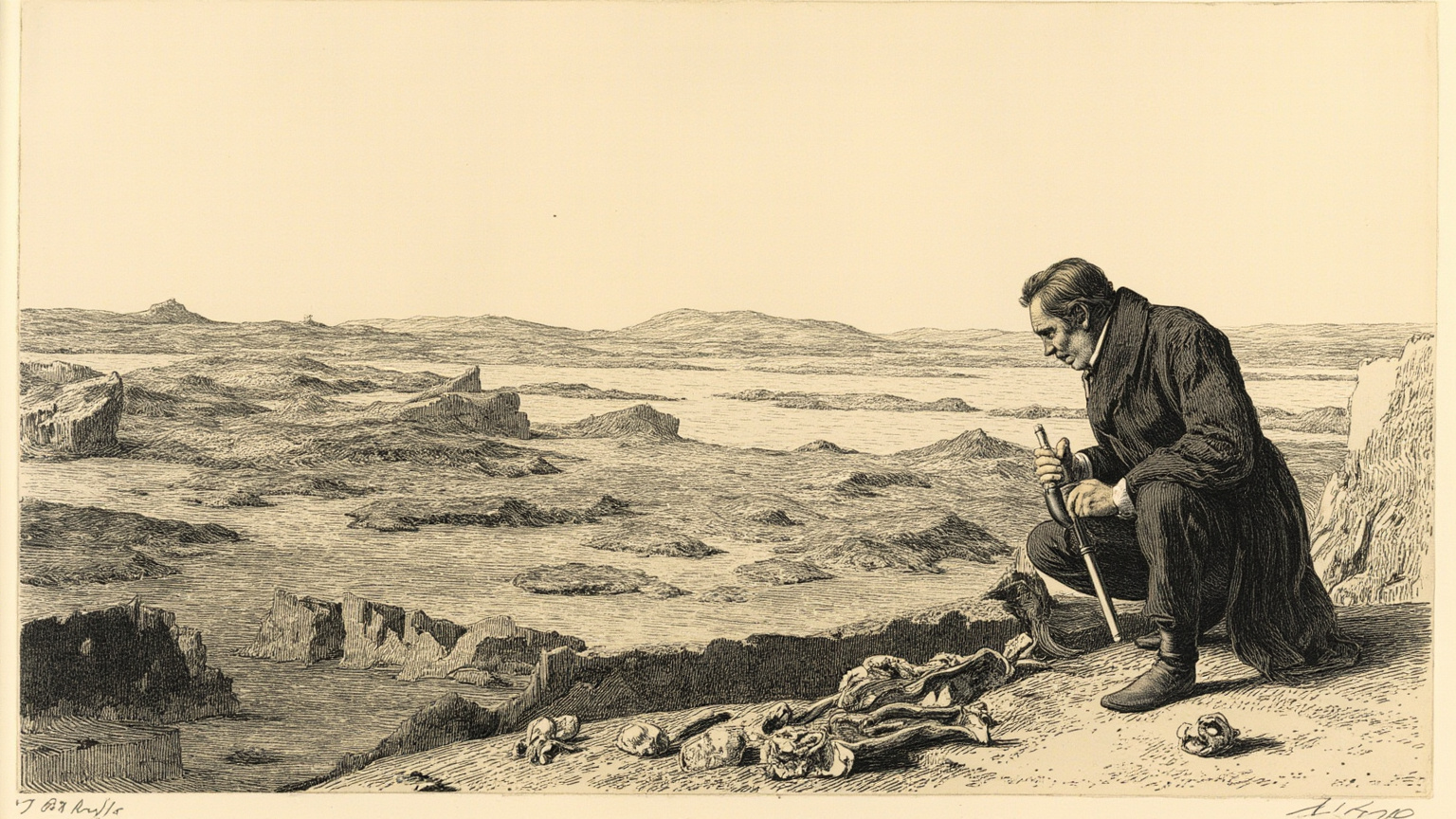
I found in the very middle of the cliffs, at the height of several hundred feet, great quantities of shells, now all extinct.
就在崖壁正中,几百英尺高的岩层里,我见到成片的贝壳,全已是死去的物种。
金句 · 第8章 · 潘帕斯与安第斯化石
The writing works because it refuses to be sentimental. South America here is not exotic scenery; it is a field record with cross-sections, coordinates, and specimen numbers. The feeling stays behind the words, and what's left on the page is the color of rock strata, elevation in numbers, the shape of bone.
Galápagos: Tortoises and Finches, Island by Island
By the time the ship reached the Galápagos, Darwin had two years of observation in South America already behind him. The volcanic landscape here kept his hammer busier than ever: black lava flows, bare craters, the marks of a rising coastline. Giant tortoises, marine iguanas, and birds of every kind moved over the lava rock, foraging.
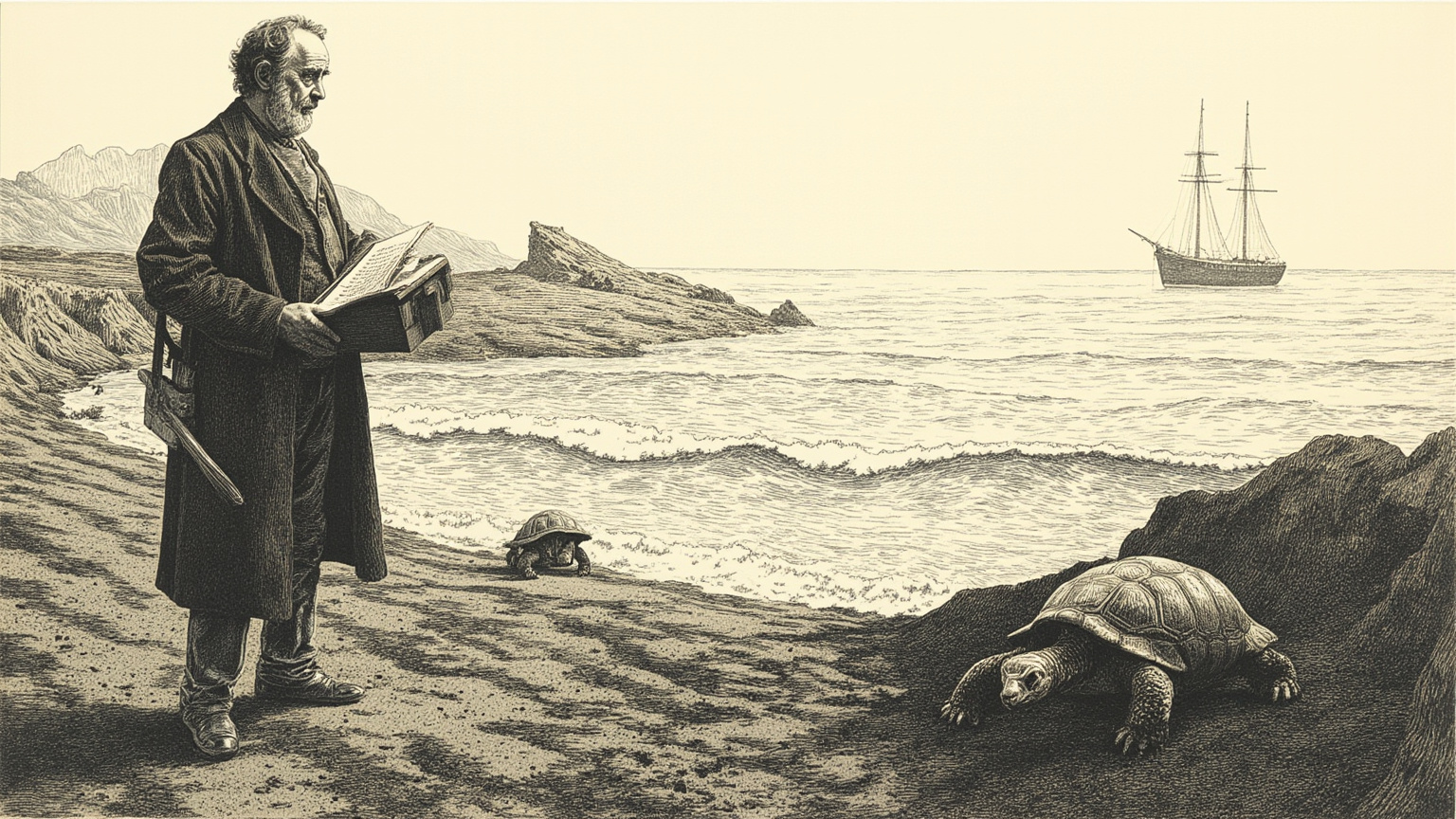
The natural history of these islands is eminently curious, and well deserves attention.
这些岛屿的自然史极其奇特,值得细细注目。
金句 · 加拉帕戈斯诸岛章 · 群岛总论
The crucial detail is that he noticed the differences in shape from island to island — the curve of a tortoise shell, the thickness of a finch's beak — and it did not arrive as a sudden flash of theory. In his log he was still naming, classifying, and correcting things by the old assumptions. He admitted his own confusion: these were neighboring islands, so why weren't the animals the same? That honesty, of having seen something without yet understanding it, is what later readers have come to value most in this book.
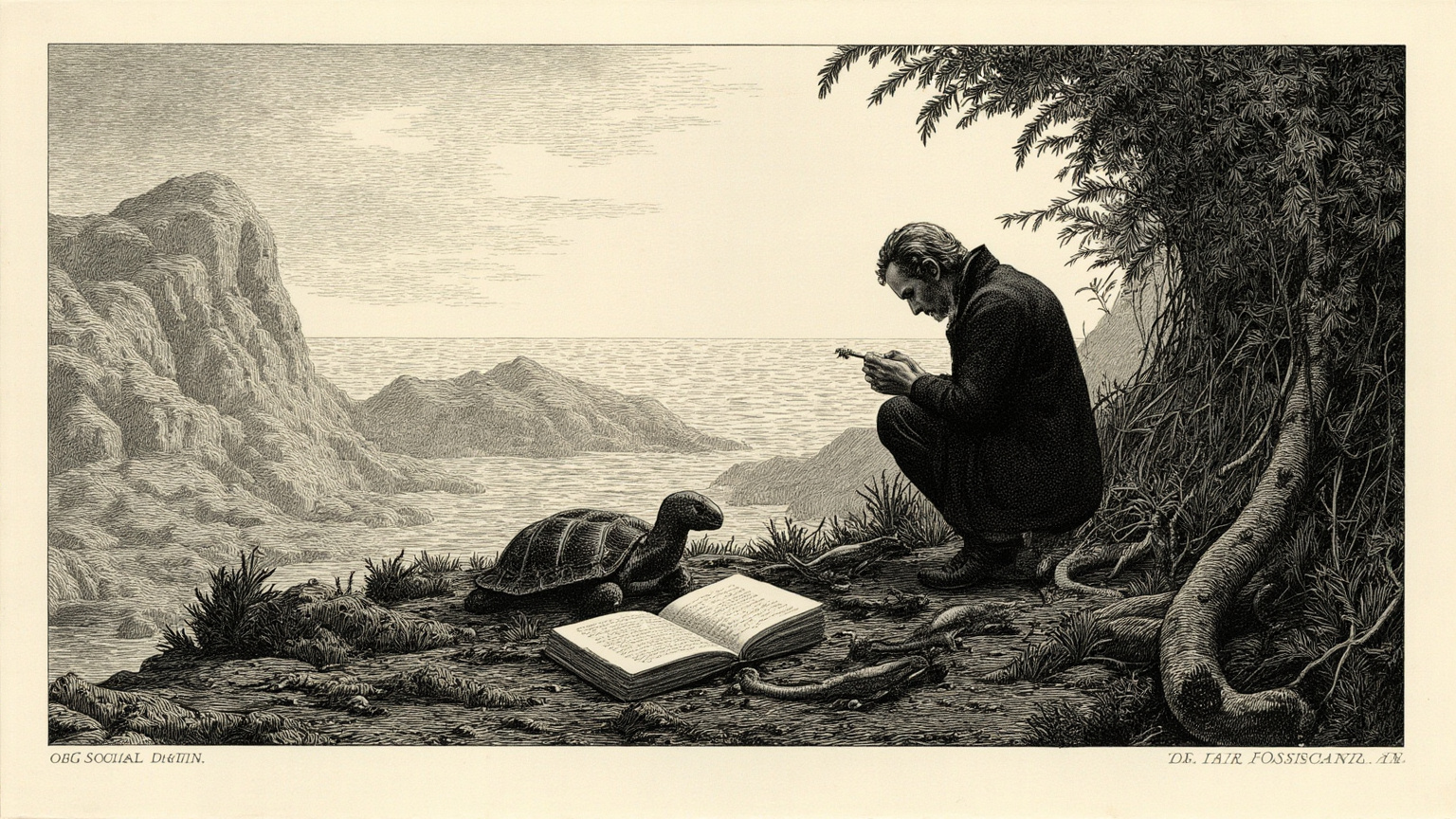
I never dreamed that islands, separated by little more than fifty or sixty miles, and formed of the same rocks, placed under a quite similar climate, rising to nearly equal height, would have been differently tenanted.
我做梦也没想到,相隔不过五六十英里、岩石相同、气候相近、高度相若的几座岛屿,住着的竟是完全不同的居民。
金句 · 第17章 · 加拉帕戈斯群岛
Worth noting: the Darwin of this moment is not yet the father of evolutionary theory. He is only doing the solid work of observing, comparing, and collecting. The theory would take another decade or more to form out of this material, and readers should resist the urge to read that ending back into these pages too soon.
Tierra del Fuego: Two Civilizations Collide
When the Beagle reached the coast of Tierra del Fuego, fog and cold pressed down together. Darwin went ashore and saw the native Fuegians for the first time: nearly unclothed, living in crude shelters, surviving by fishing and hunting, speaking a language he could not follow. Captain FitzRoy's own story enters here — years earlier he had taken several Fuegians back to England, exposed them to English life, taught them English, and was now returning a few of them to their homeland. That history of taking away and bringing back turned the moment the ship made landfall into a strange, mismatched reunion.
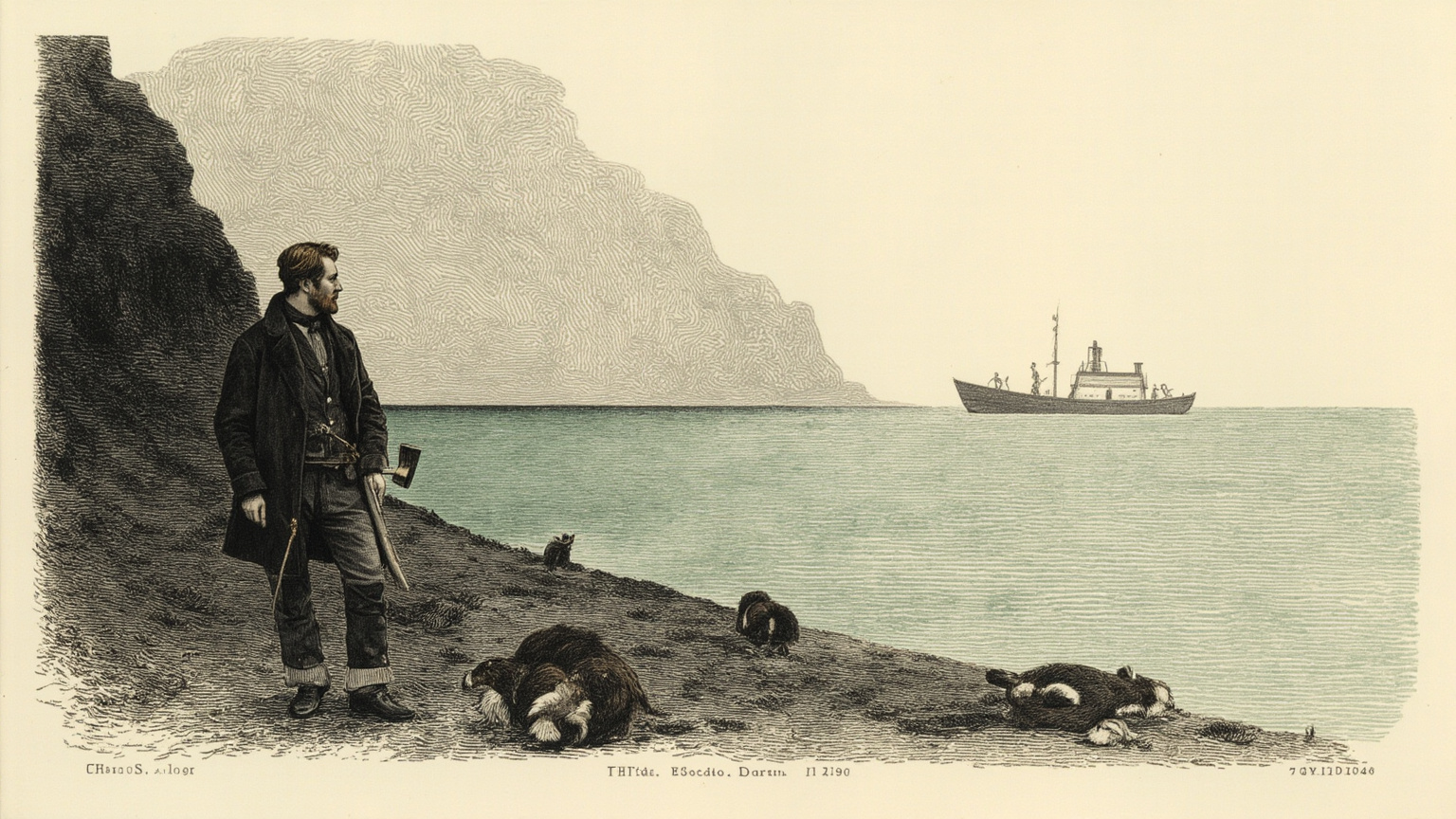
It was without exception the most wild and striking scene I ever beheld; the very type of desolation, solitude, and sublimity.
那是我平生见过最荒凉、最慑人的景象——荒芜、寂寥、与崇高交织成一种纯粹的类型。
金句 · 第10章 · 火地岛首见
Darwin's pen does two things at once in this section. It records how the Fuegians lived, their tools, their food, their language, and it also exposes the prejudices of his era that neither he nor the captain could fully shake off. He looks at them with nineteenth-century European eyes, but he also writes down his own confusion: the Fuegians who had been taken to England and brought back did not respond, once home, like a success story of civilizing. Today's reader should read this part with open eyes.
The writing works because it holds back. He does not turn Tierra del Fuego into a curiosity, and he does not turn it into a pastoral idyll either. He writes about shelters, about tools, about how a meal gets eaten, in enough detail that you can almost smell the sea wind and the fish.
The Pacific, the Indian Ocean, and Southern Africa: Piecing the Fragments Together
After Tierra del Fuego the voyage pushed on west. The ship passed Pacific islands, Indian Ocean coral reefs, and finally the southern coast of Africa. In his log Darwin began doing something new: cross-referencing observations from different places against each other, the marsupials of Australia, the fossils of South America, the seashells high in the Andes, the finches of the Galápagos. Notes that looked unrelated on their own slowly began knitting themselves into a network on the page.
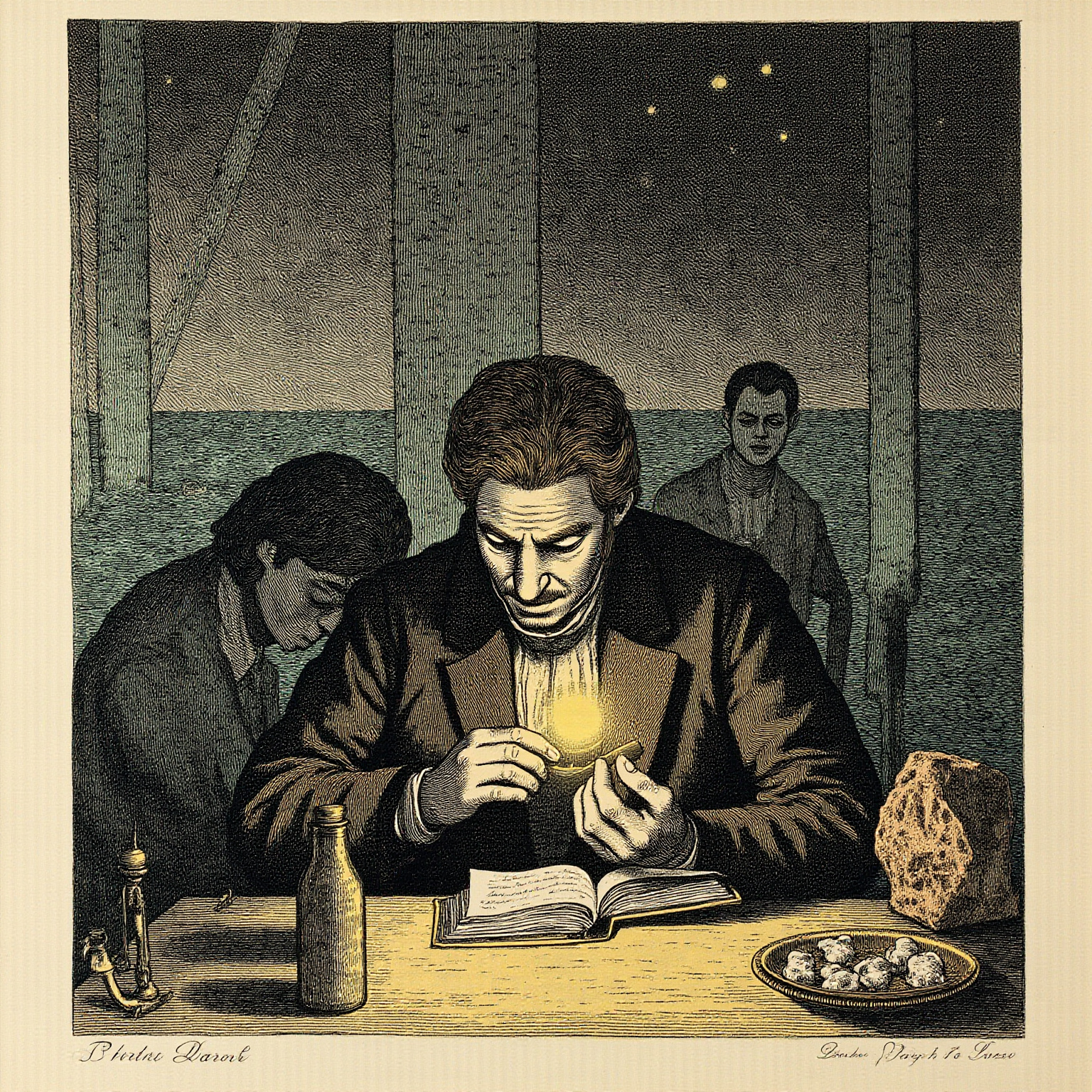
In many parts the channels are full of these canoes, and the natives, especially the Fuegians, are always alongside the ship.
许多港湾里都漂着这种独木舟,土人——尤其是火地岛人——总在船边出没。
金句 · 第10章 · 火地岛与海峡
1836: Home Again, With the Questions Just Taking Root
The five-year voyage came to a close in 1836. The Darwin who returned to England was no longer the young man who had hesitated over whether to board the ship five years before. He came home with hundreds of crates of specimens, thousands of pages of notes, and a great many questions he could not yet answer.
That is where the book ends. It offers no answers, only material; no theory, only observation; no conclusion, only I saw these things, and I cannot yet say why. That open-endedness turns out to be its greatest strength.
Themes: Observation, Time, and the Tangled Meeting of Cultures
Three layers run through the whole book, each building on the last. The first is natural observation itself: the hammer strikes, the fossil comes out of the rock, the specimen goes into the bottle, knowledge accumulated inch by inch. The second is the scale of time: ancient seashells on the Andes, the formation of the Galápagos volcanoes, the differences between fossil species and living animals, all reminding Darwin that nature does not stand still. The third is the position of the observer himself: he writes down Tierra del Fuego, and he also writes down the way he writes it. That third layer is one most nineteenth-century Europeans rarely turned on themselves, and it falls to today's reader to supply it.
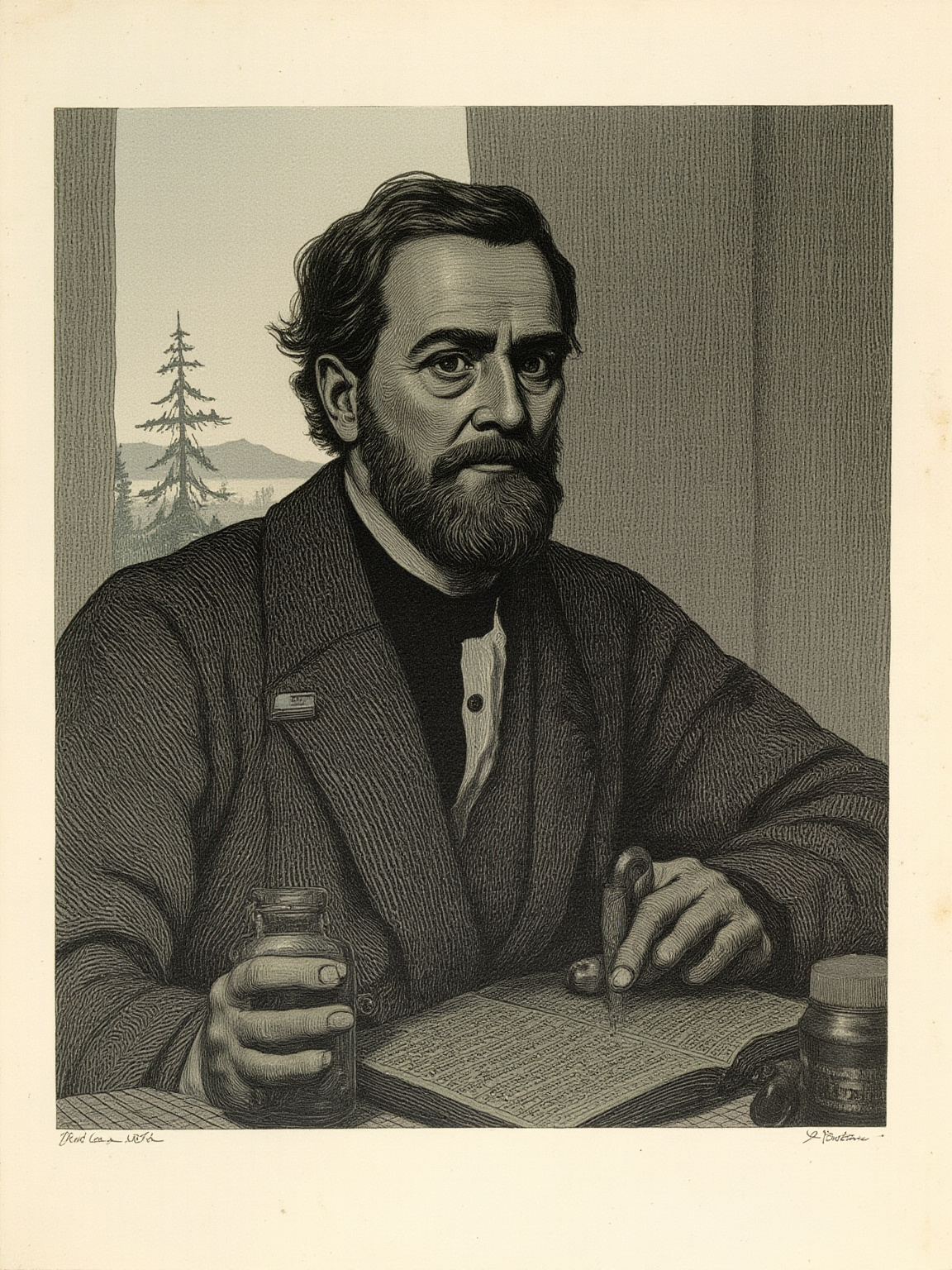
The day has passed delightfully with me; but I will not allow myself to be carried away by the strong feelings which the new scenes of this splendid archipelago have excited.
今天于我是极畅快的一日,但我不愿让这座壮丽群岛在我心中激起的激动,把我带得太远。
金句 · 第17章尾声 · 群岛收束
Why It's Still Worth Reading Today
It lets you see the prehistory of a great mind. The ideas that would later remake biology show up here as nothing more than a few rocks, a few tortoises, a few scrawled lines in a notebook. The reader gets to be confused alongside Darwin, to observe alongside him, to gather material alongside him, and that slow labor before any theory exists teaches more than any conclusion could.
It is also a mirror held up to its era. Darwin's writing is honest enough to record both nature and his own prejudices. Reading it today means taking the valuable observations he left us and also doing the reflecting on his blind spots that he never got around to himself. That is the double assignment this travel journal leaves for its modern reader.
Real science doesn't start with a conclusion. It starts with a hammer and an unfamiliar island.
Go Read the Book
A companion guide can give you the map, but not the smell. The real texture of those five years on the Beagle lives in Darwin's own writing: the wind off the Andes, the dust of the Pampas, the heat rising off the Galápagos lava coast, the smell of fish in the Tierra del Fuego fog. You only catch that by turning to the actual page. Go read it. The young man who once hesitated over whether to board the ship is worth more of your friendship than you'd expect.
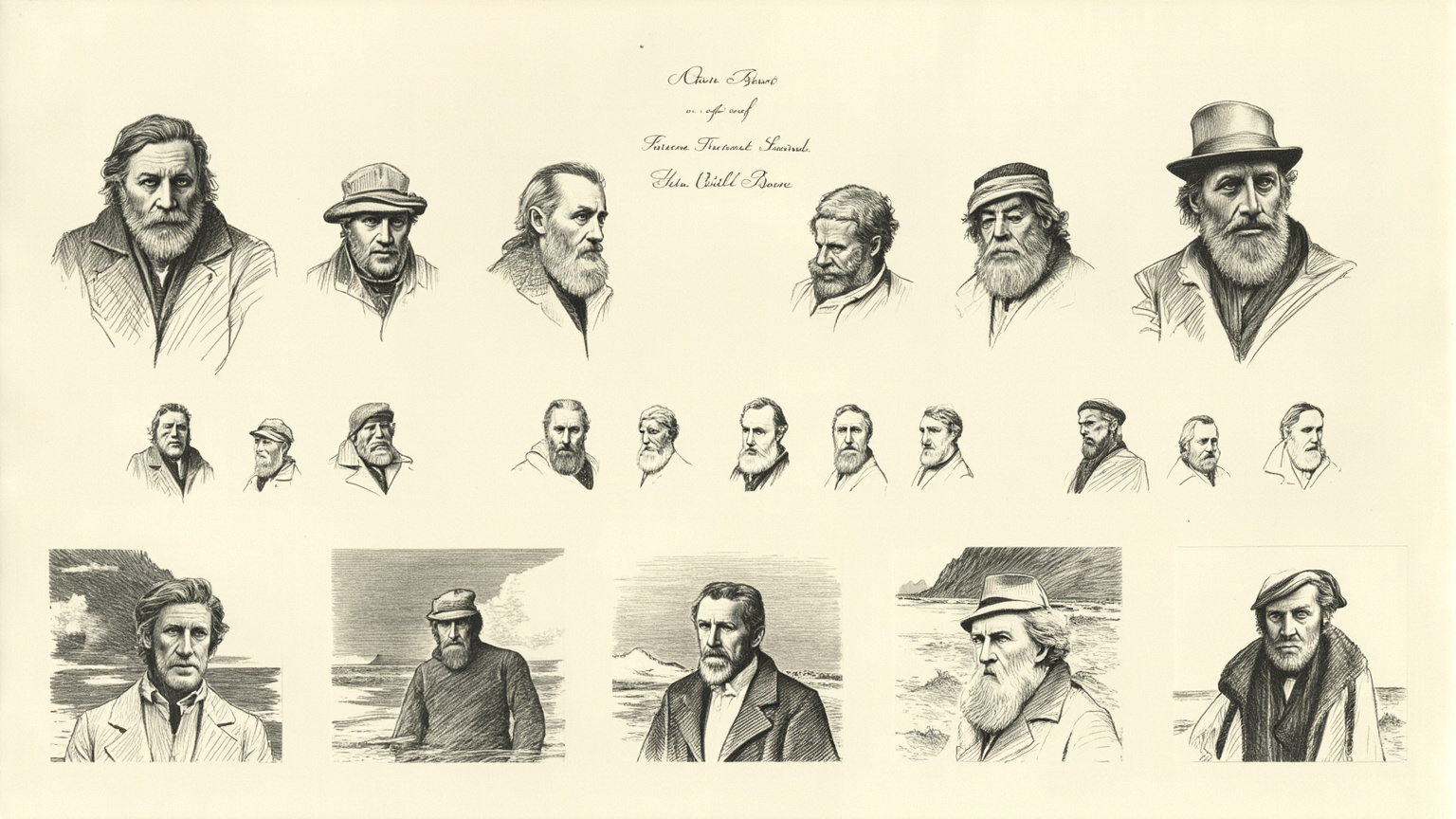
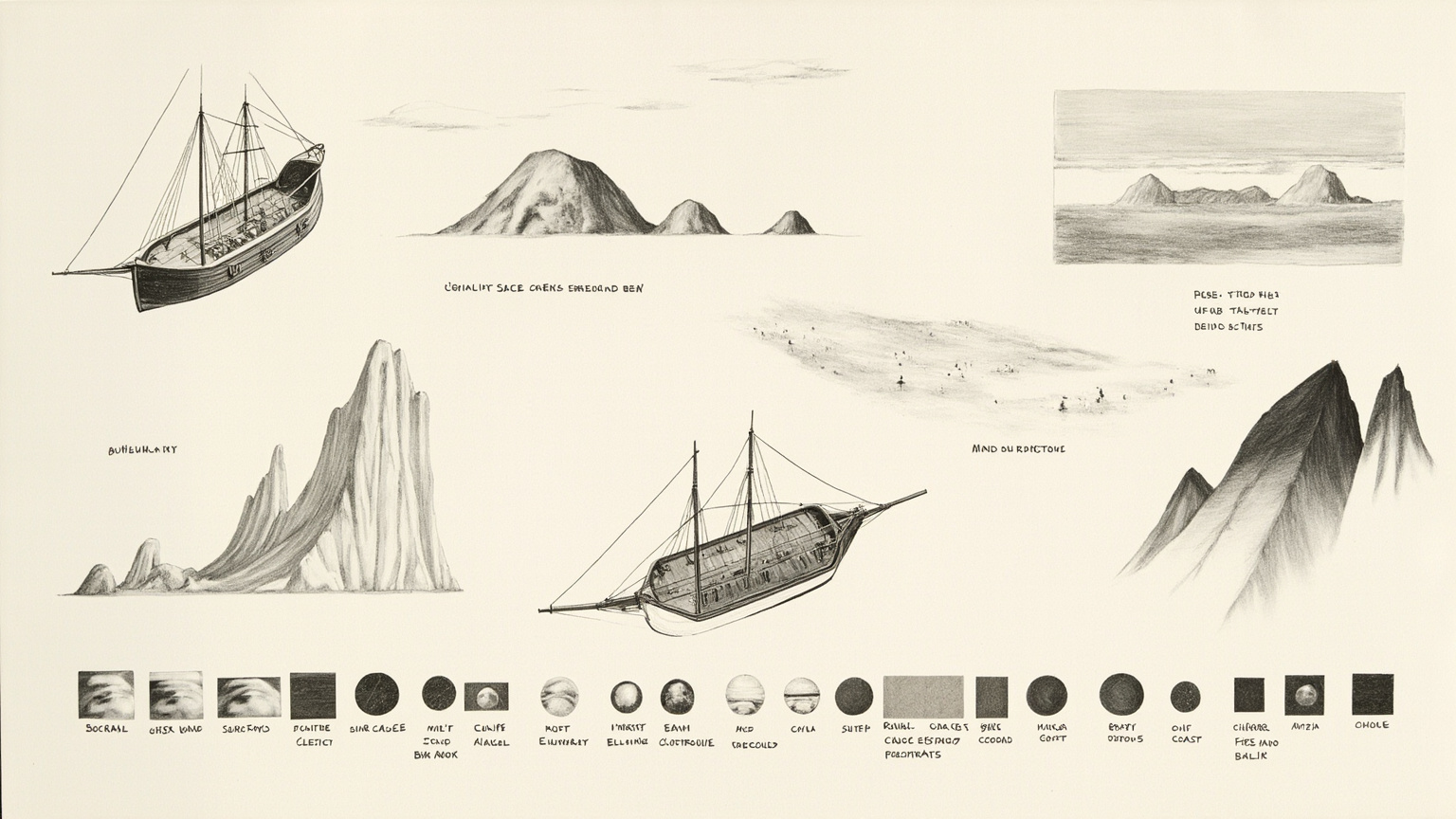
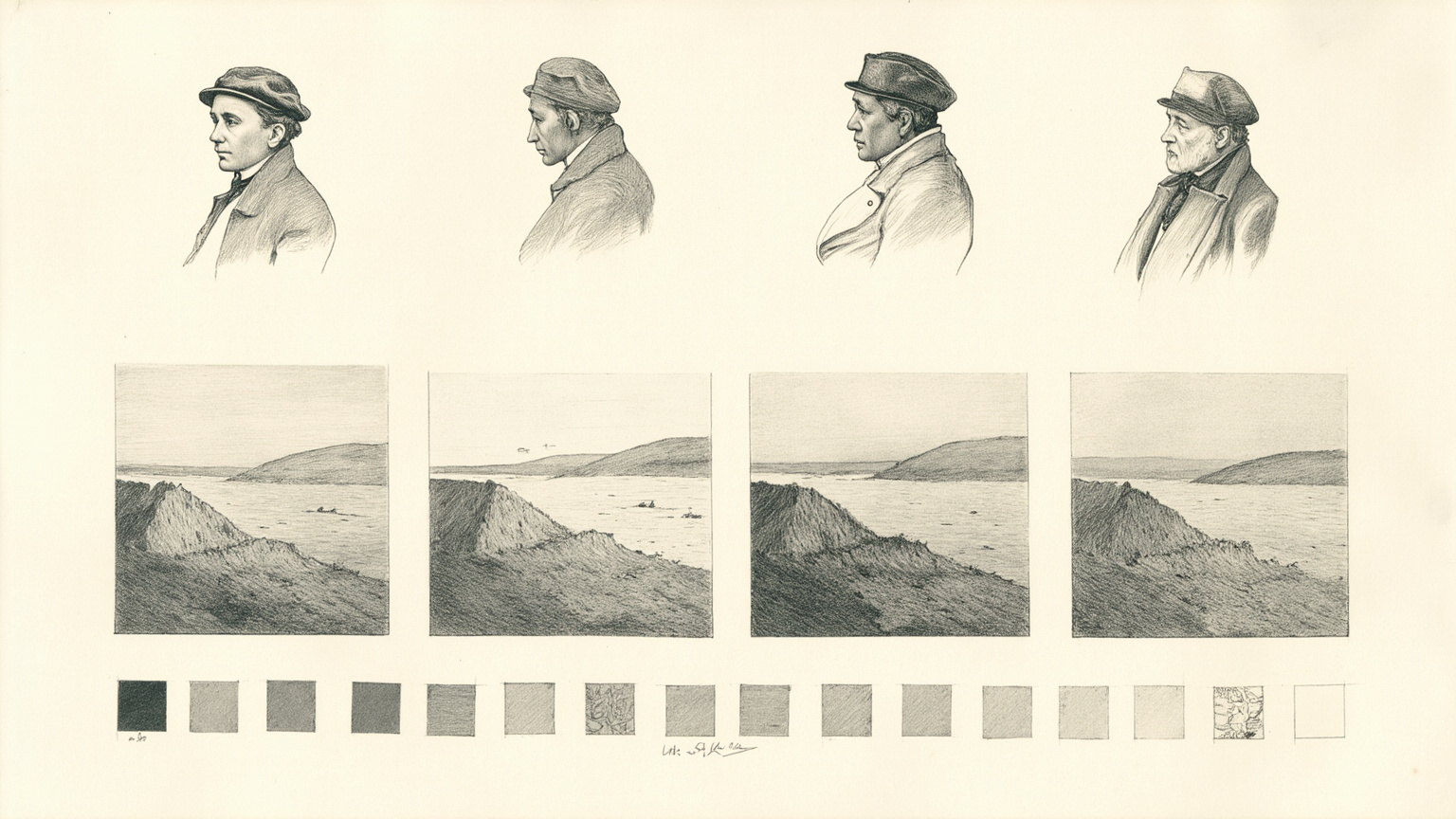
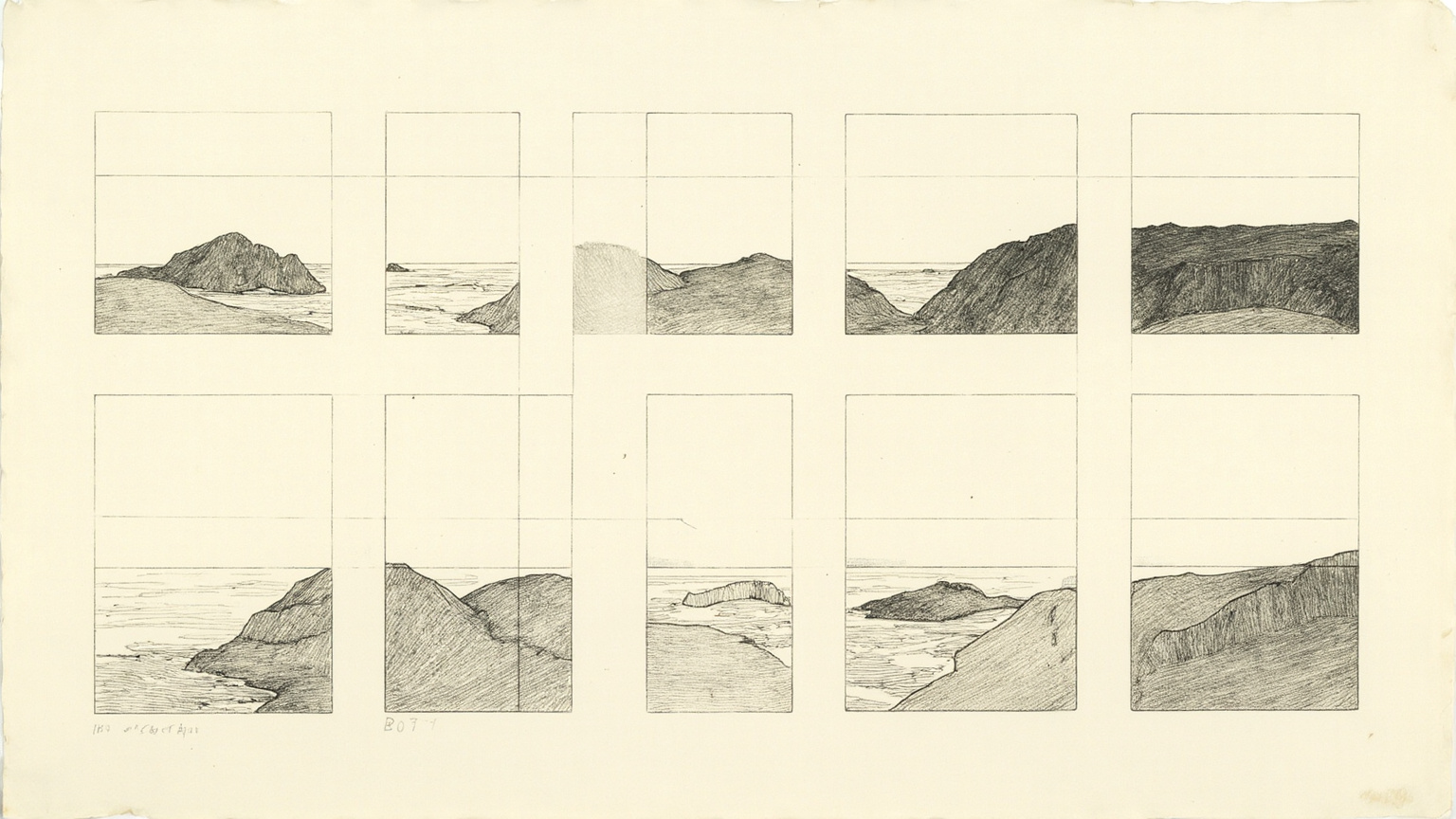
Art Direction4 plates
Before the guide was written, this book got a visual foundation — every illustration you just read grew out of it.