West African Folk-Tales · Companion Guide
西非民间故事集
小蜘蛛凭一张嘴,让豹子、河马与天上众神都坐下来听他讲。
What Kind of Book Is This
In 1917, two British educators working in the Gold Coast wrote down the Ashanti stories they heard told aloud and gathered them into this collection. There is no single author to credit: the real authors are generations of storytellers around Guinea Coast firesides—grandmothers, chiefs, elders, children. The book is remembered for one reason. It gave English readers their first substantial translation of Anansi the spider, the trickster who would later cross the ocean and become a fixture of Caribbean and African American folklore as Anansi the Spider. It is the door through which the English-speaking world first walked into Ashanti oral culture.
Characters and World
Every character in the book is an animal wearing a human face. The one who steals every scene is Anansi the spider: small, glib, quicker-witted than anyone else in the forest, a trickster who is both the hero of these stories and, often, their narrator.
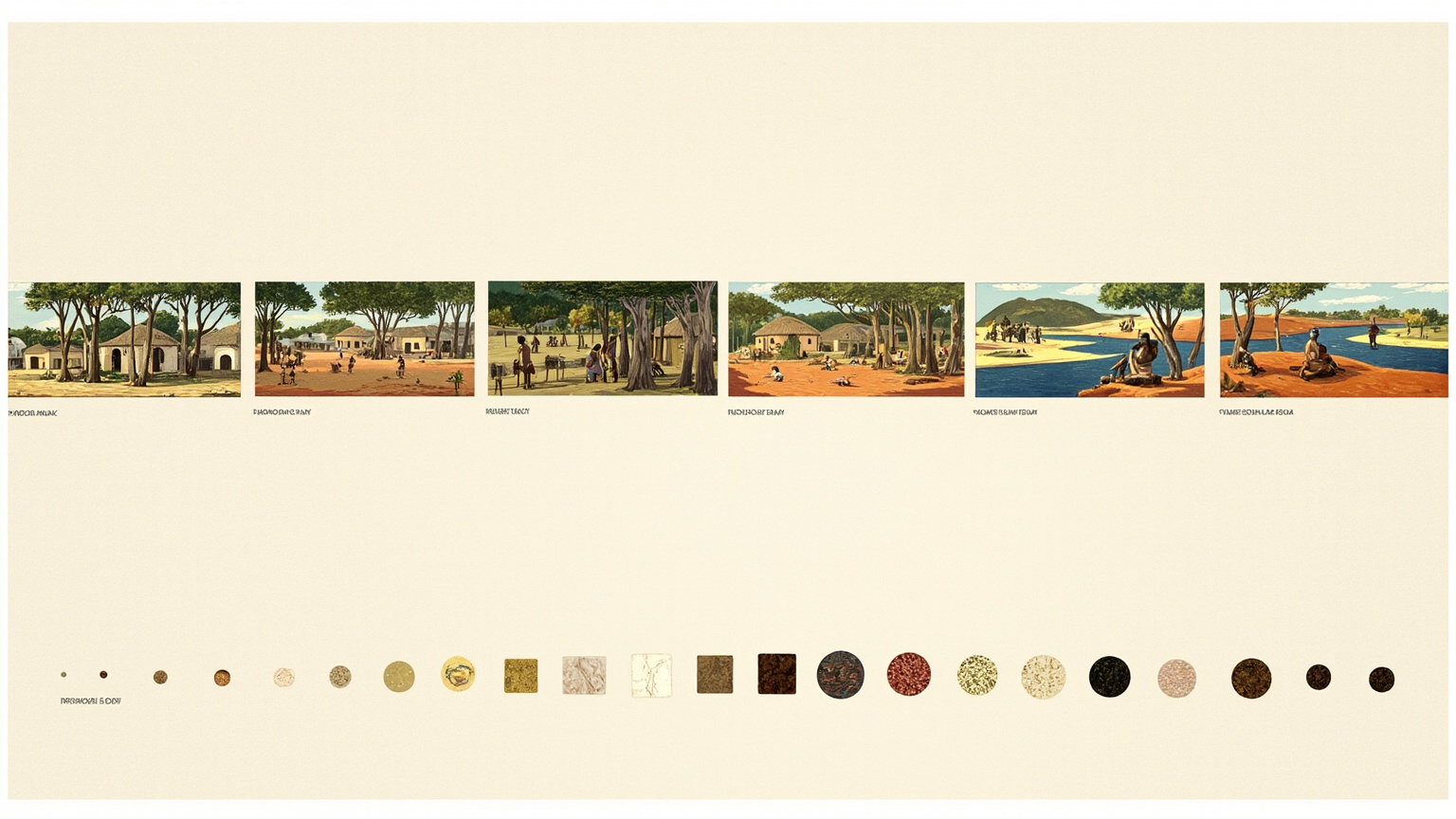
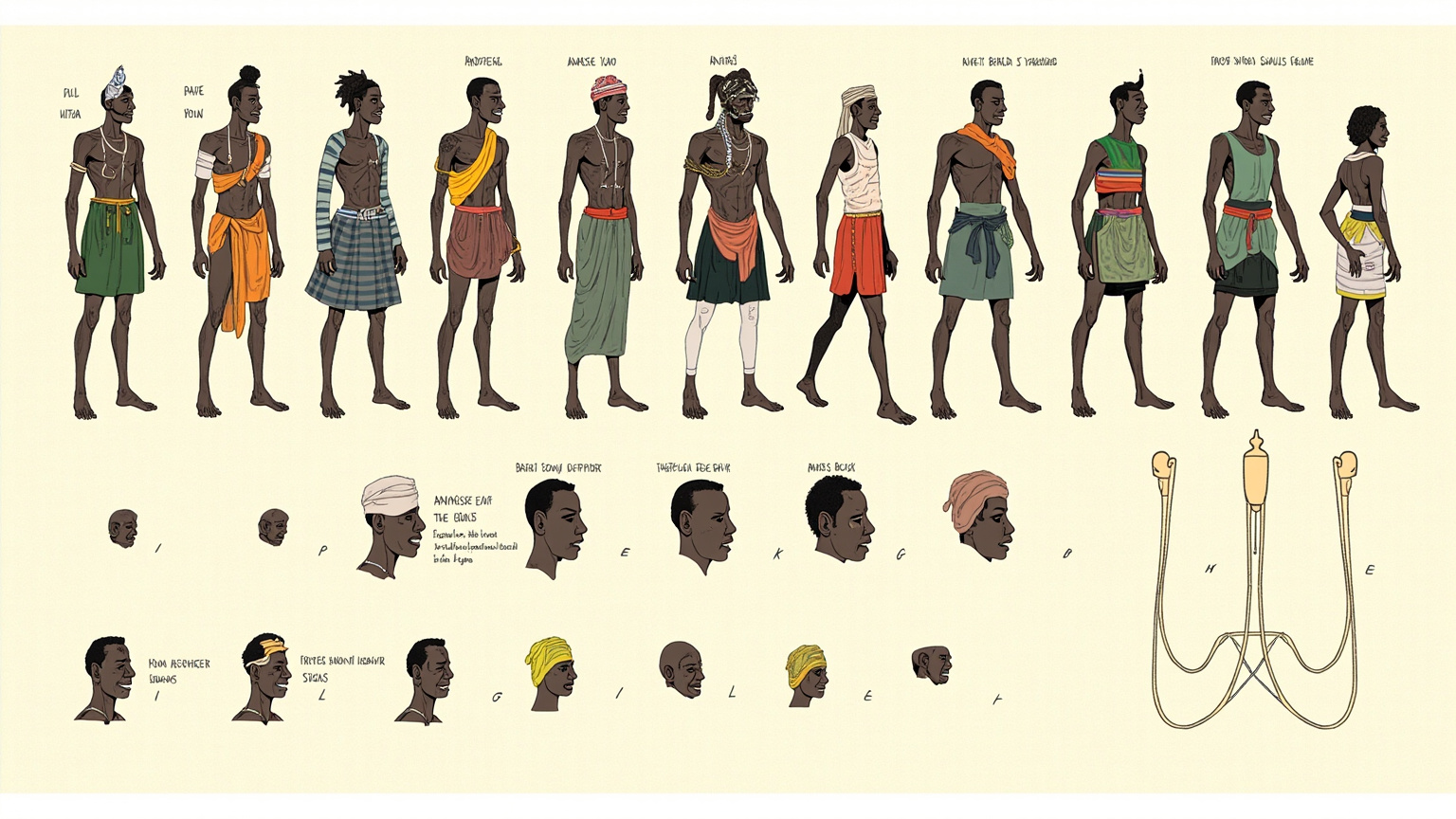
Anansi's opponents each have their own temper. Leopard is king of the forest, all muscle and menace. Hityer the hippopotamus is a lumbering giant of the river, slow-witted and short-tempered. Wasp is a swarm avenger: cross one and the whole nest turns out for revenge. Python, the gods, and the sun are the greater powers, above and below, that Anansi occasionally decides to take on anyway. In the village, the grandmother opens each telling, and the chief gathers the elders under the thatched council hall in the square to settle disputes. None of these animals go around bare and exotic: Leopard wears hunting gear, Hippopotamus wraps a loincloth around his waist, Rooster wears a crest of red feathers. They live in a real community, built of round thatched houses, palm wine, drumbeats, and long evenings of talk.
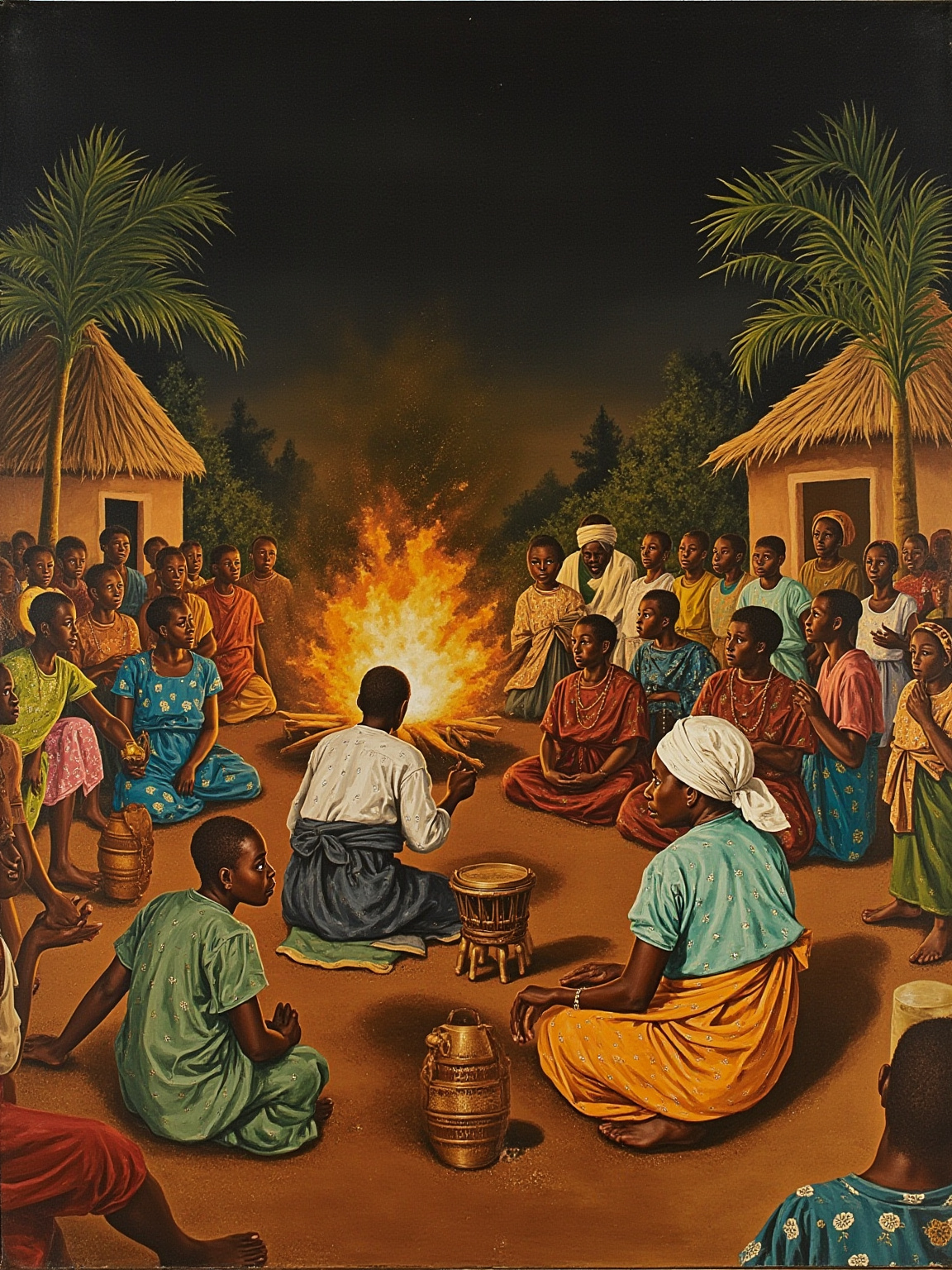
Ananse is a spider, and he is very clever, but he is not always good.
安纳西是一只蜘蛛,他极是机巧,却并非总是良善。
金句 · 开篇序言 · 安纳西其人
How the Plot Moves
I. Opening: The Oral Frame Around the Fire
The whole book is built out of one fireside evening after another. Nearly every story opens with the grandmother's "once upon a time," and in between there are drumbeats, call and response, the teller and the listeners breaking in to tease each other. This is not oral storytelling flattened onto the page. It keeps the breath of a live performance: you can almost hear a child demanding "and then what happened," hear the crowd around the fire laughing out loud. That pattern of telling, hearing, and answering back is itself how the Ashanti keep their culture in memory.
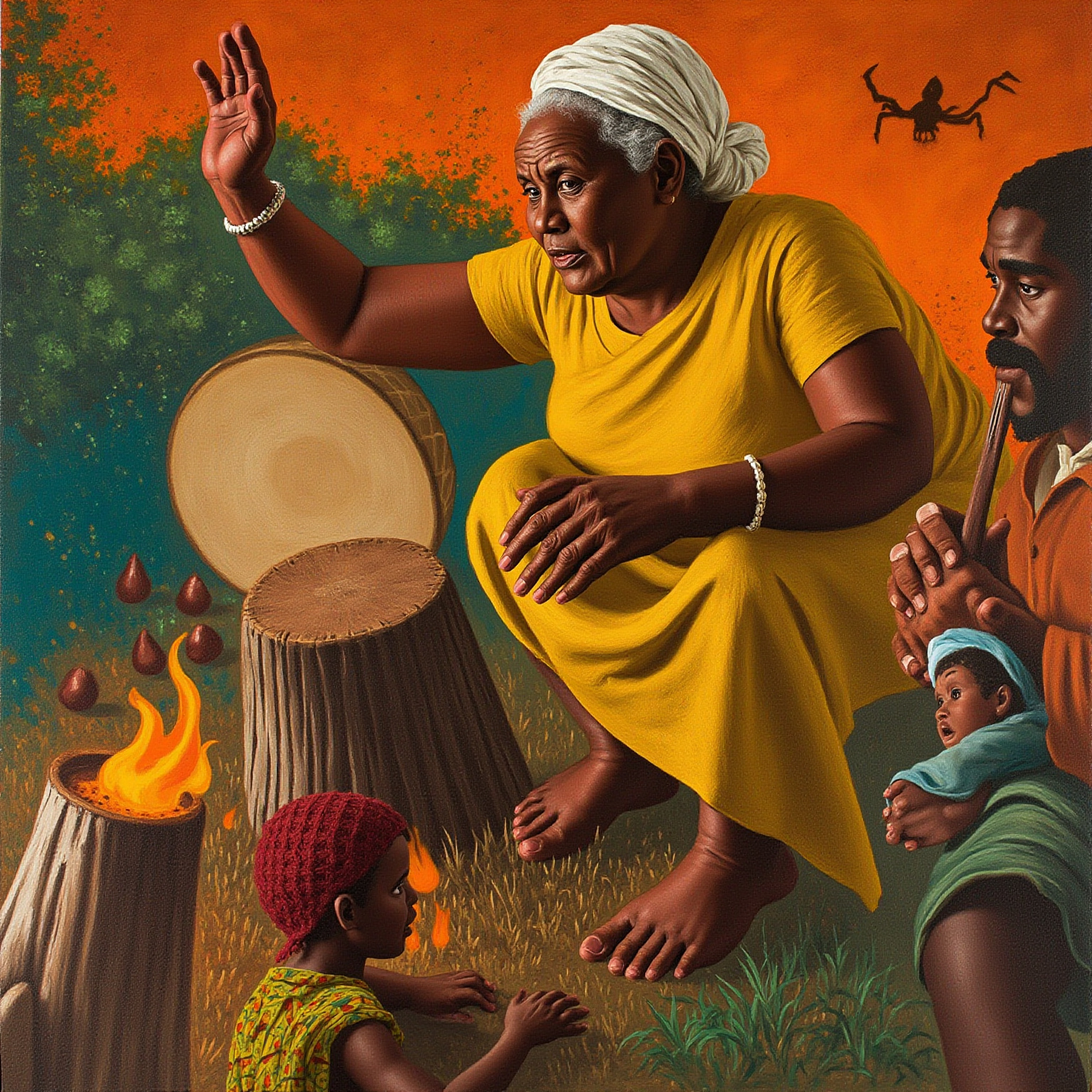
So the old people of the town gathered round the storyteller, and the drums began to talk too.
于是镇里的老人都围坐到讲述人身边,鼓声也跟着开了口。
金句 · 开篇 · 篝火夜话起头
II. Outwitting the Sun
Anansi's first great fight is with the sky itself. The gods keep the sun, and somehow Anansi manages to hide it, plunging the world into darkness. The gods panic and are forced to the bargaining table, and the little spider talks the mighty gods into giving in. As a piece of storytelling, this is a swap at the climax: where other folk traditions would bring in a hero, a divine bow, some grand sacrifice, the Ashanti story brings in a small spider and a fast mouth. The whole joke lives in the gap between how serious the stakes are and how lightly they get solved.
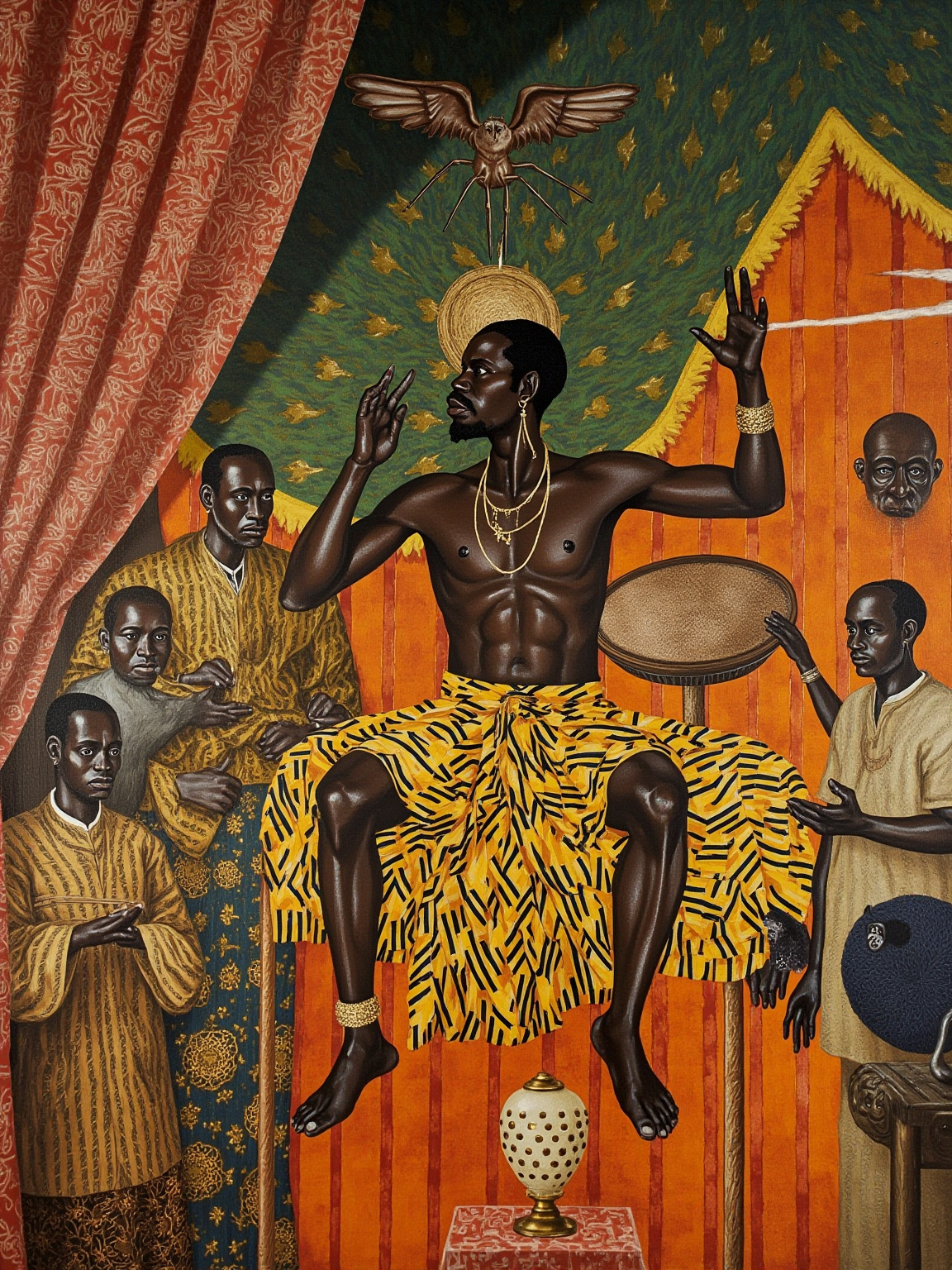
Ananse said, 'I will buy the Sun from you'; and the Sky-Dwellers were afraid, because the world had grown dark.
安纳西道:「我要买下你们的天日。」天上诸神慌了,因为世界已坠入漆黑。
金句 · 智取太阳 · 天上谈判
III. Outwitting the King of the Forest
Leopard is the standard strongman of Ashanti folk tales: imposing, powerful, a stickler for rules. None of that impresses Anansi. In the classic version of their story, he traps Leopard in his own words, or sets a snare where brute strength is useless. The more seriously Leopard takes it, the deeper he falls in; the more Anansi grins and jokes, the further ahead he gets. This is not a fight of muscle against muscle. It is a rout by wit, and it proves a point: the king of the forest does not always beat the one who can talk.
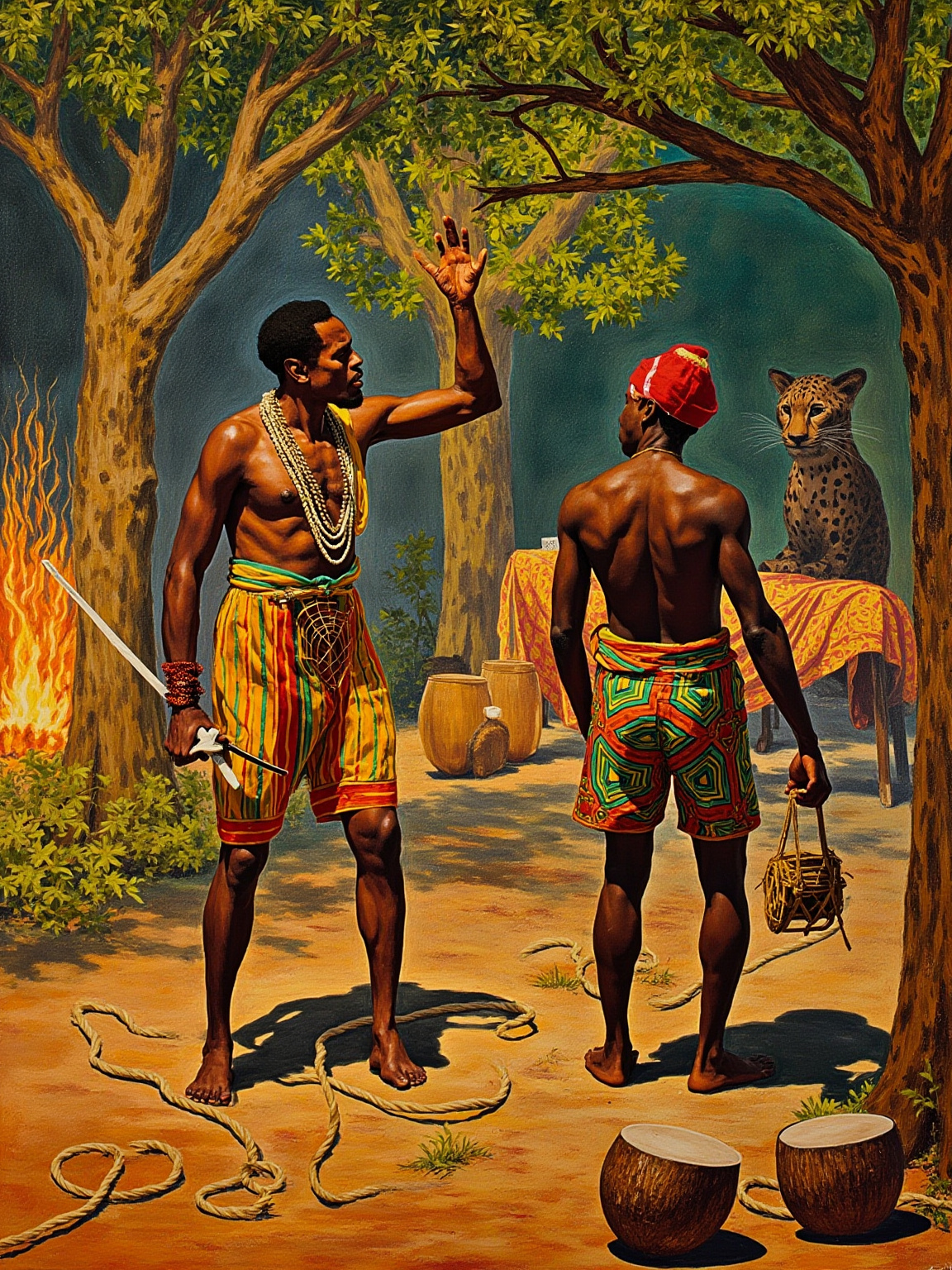
'You think the forest belongs to you,' said Ananse to the Leopard, 'but the forest belongs to the man with the story.'
安纳西对豹子道:「你以为森林是你的,可森林属于那个有故事的人。」
金句 · 智斗豹子 · 林中对峙
IV. Tricking Hityer the Hippopotamus
Down at the river, Anansi's opponent is Hityer, a huge animal with a huge temper and a mind that runs half a beat slow. In the classic telling, one simple taunt is all it takes, and Hityer flings himself into the river on his own. The pairing works every time because Ashanti storytelling runs on a simple rhythm: the slower one side reacts, the faster the other side's mouth gets. The angrier Hityer becomes, the more exhausted the reader feels on his behalf.
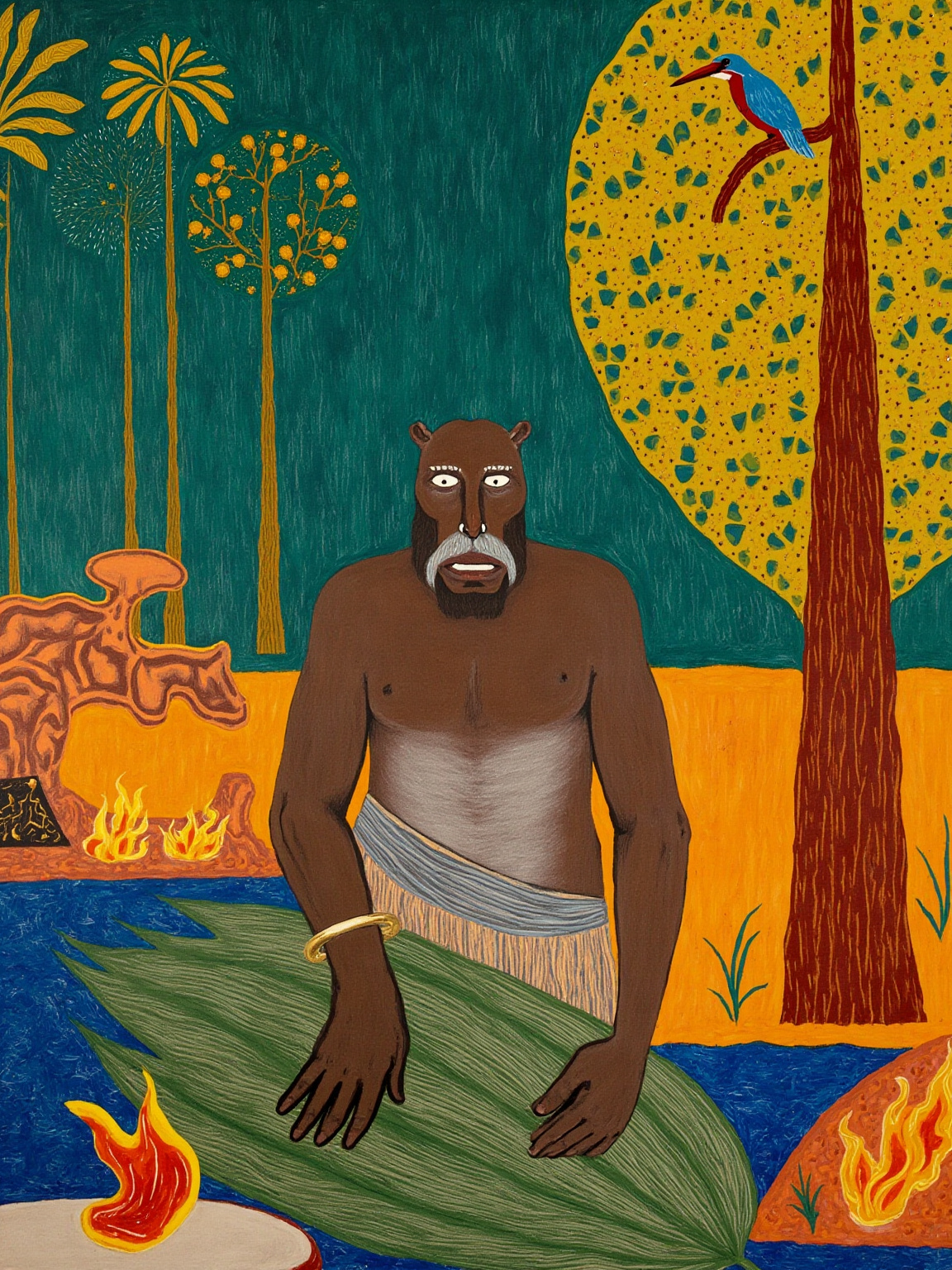
Hityer opened his great mouth to answer, and tumbled headlong into the river of his own anger.
Hityer 撑开巨口要回嘴,却被自己的一腔怒火一头栽进了河里。
金句 · 戏弄河马 · 河边得手
V. The Wasps Give Chase
The mood tightens here. Anansi, somehow, disturbs a wasp's nest, and a furious swarm chases him through the forest. The easy one-on-one sparring of the earlier stories disappears, replaced by a harder question: you can outwit the king of the forest, but can you outwit an entire nest? Anansi's answer is not to fight but to hide and scheme. He ducks into a jar, dives underwater, disguises himself as someone else. This is where the trickster tradition shows its other side: cleverness has a ceiling, and a crowd's anger cannot always be talked away.
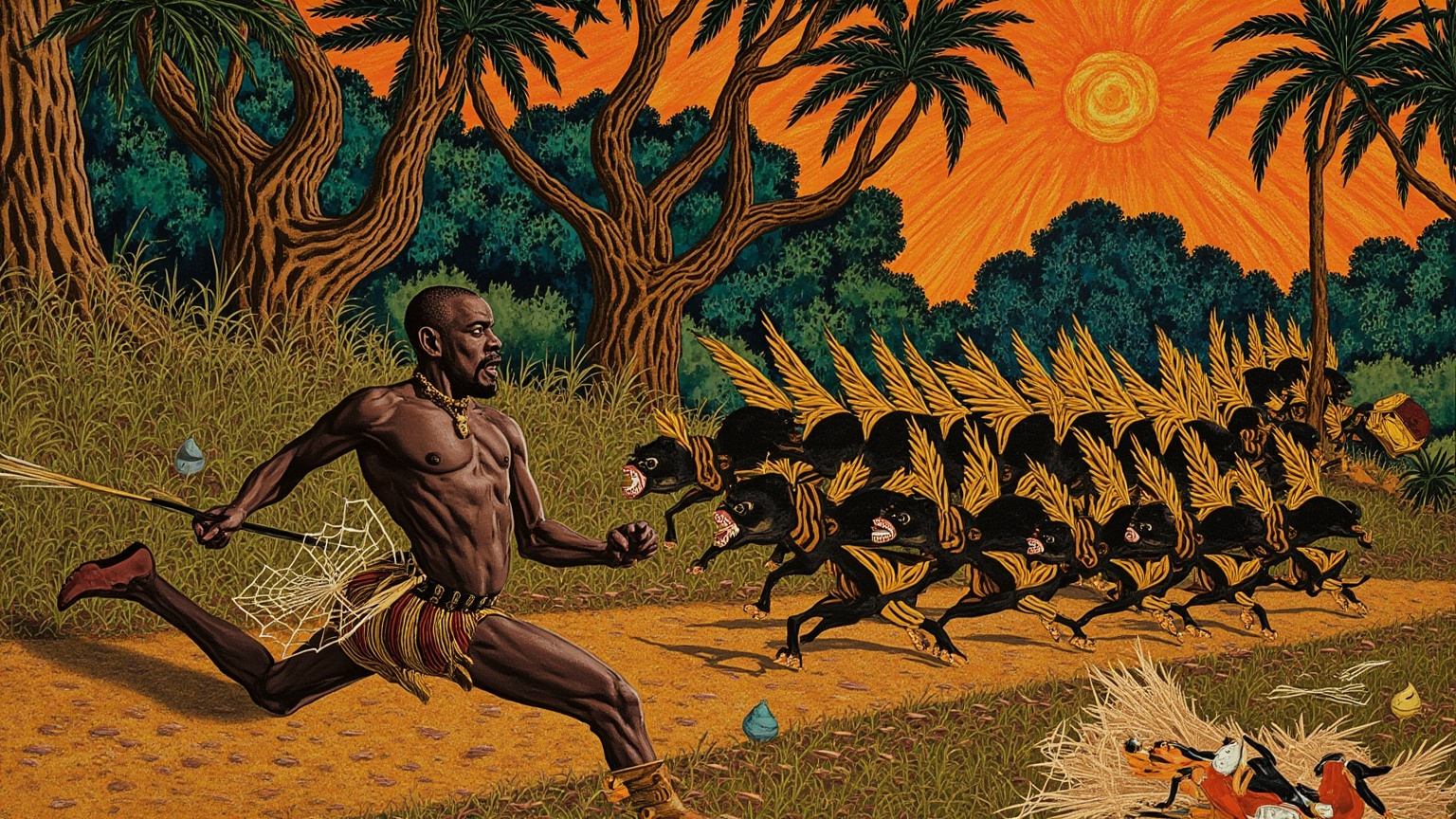
VI. The Fight for the Stories
This is where the book's cleverest move surfaces. Anansi starts contesting Python, the king of the animals, and the gods over something that is not food, not a wife, not treasure — it is the stories themselves. Who owns all the stories becomes the subject of the story. It is a sharp piece of self-reference: the Ashanti write their own role as storytellers into the tale, so that once the laughing stops, the listener realizes the very telling they just heard is a living advertisement for the craft itself.
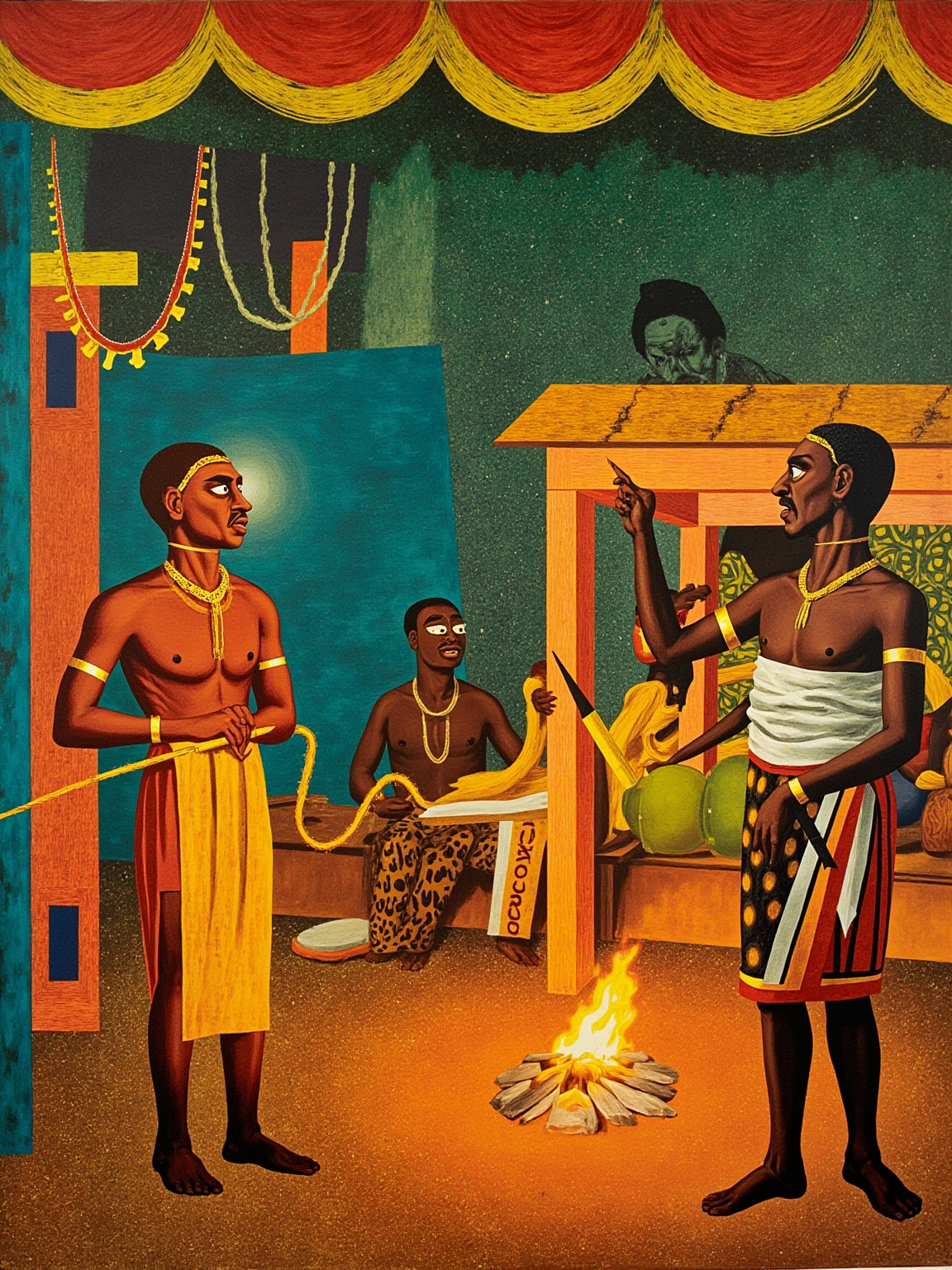
'I have bought all the stories in the world,' said Ananse, 'and I will sell them again to whom I please.'
「天下的故事我都买下了,」安纳西道,「我想再卖给谁,便卖给谁。」
金句 · 故事争夺战 · 元叙事反转
VII. The Spider Reaps What He Sows
Part of what makes a trickster compelling is that he never wins forever. In this last cluster of stories, Anansi's own greed costs him, or he breaks a bargain and gets outmaneuvered in return, and ends up running through the forest, humiliated, beaten. The stories close on a joke, but the joke is not really about Anansi losing. It is about the person everyone recognizes in him: the one who is too clever for his own good. That is what makes the book worth sitting with. It teaches you to see through a con and performs one at the same time. It is entertainment and a moral mirror the community holds up to itself.
Themes and Craft
Anansi is the shrewdest spirit in Ashanti oral culture, at once the wise man who teaches people to see through tricks and the star of the trick himself. The two are not in conflict. West African oral tradition worked out early on that a trickster's value has nothing to do with whether he wins. It lies in teaching listeners to tell truth from performance in what they hear.
Set beside the fox spirits of Strange Tales from a Chinese Studio, the wonders of the Classic of Mountains and Seas, or the fantasy of Grimm, Anansi's humor is a different animal. The spirits in Strange Tales carry a scholar's private grievance; the forests in Grimm carry the chill of a moral lesson. The humor here is communal and conversational — it comes from the teller and the audience needling each other, from a sentence that turns on itself, from an anticlimax that lands right after a drumbeat. It is a kind of humor you can only really hear sitting around a fire.
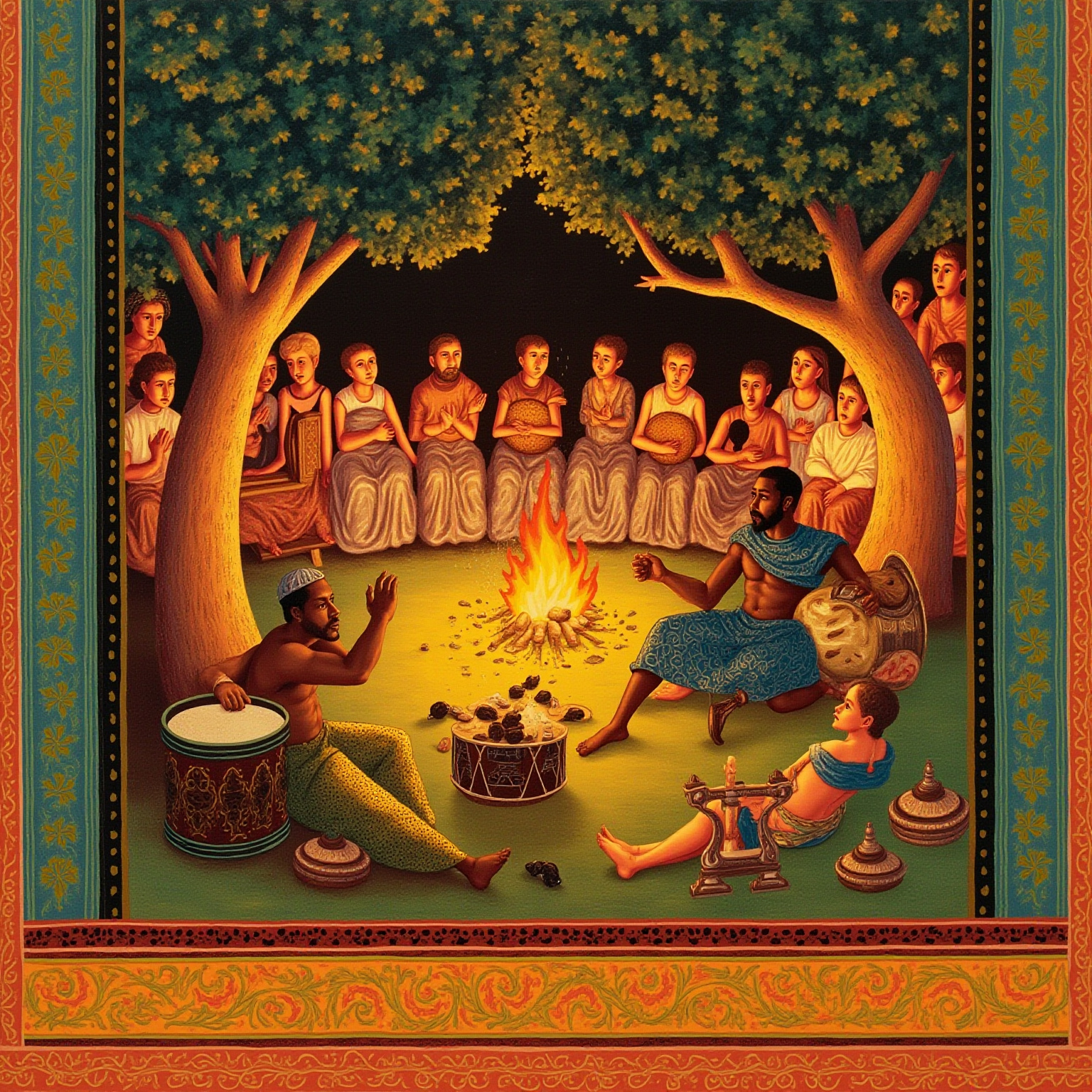
Reading the book today turns up a deeper layer as well. It records what a precolonial oral culture looked like once it was written down in English in the early twentieth century, and that act of recording is itself a mark of its era: who did the collecting, why, and in what language are all part of what this book is. It is not a curiosity cabinet of African oddities. It is a living collection of community storytelling, and reading into it turns up a way of narrating the world that is unlike anything from the East or from Europe.
Why Read the Stories Themselves
Open to almost any story and you will hit the grandmother telling how Anansi says to Leopard, "Did you build this forest?" That one line is enough to show why Ashanti humor and European fairy tale humor are not the same animal: a European hero wins by sword and fate, an Ashanti underdog wins with one line sharp enough to stop the king of the forest cold. This essay is the map. The stories are the land. The rhythm of a night around the fire, the moment the whole forest goes quiet after a single line lands, the communal celebration that smells of palm wine and moves to a drumbeat — none of that survives being described secondhand. You have to open the book and run into it yourself.
A small spider talks the sky itself into bowing — that kind of nerve is rare anywhere else in folk literature.
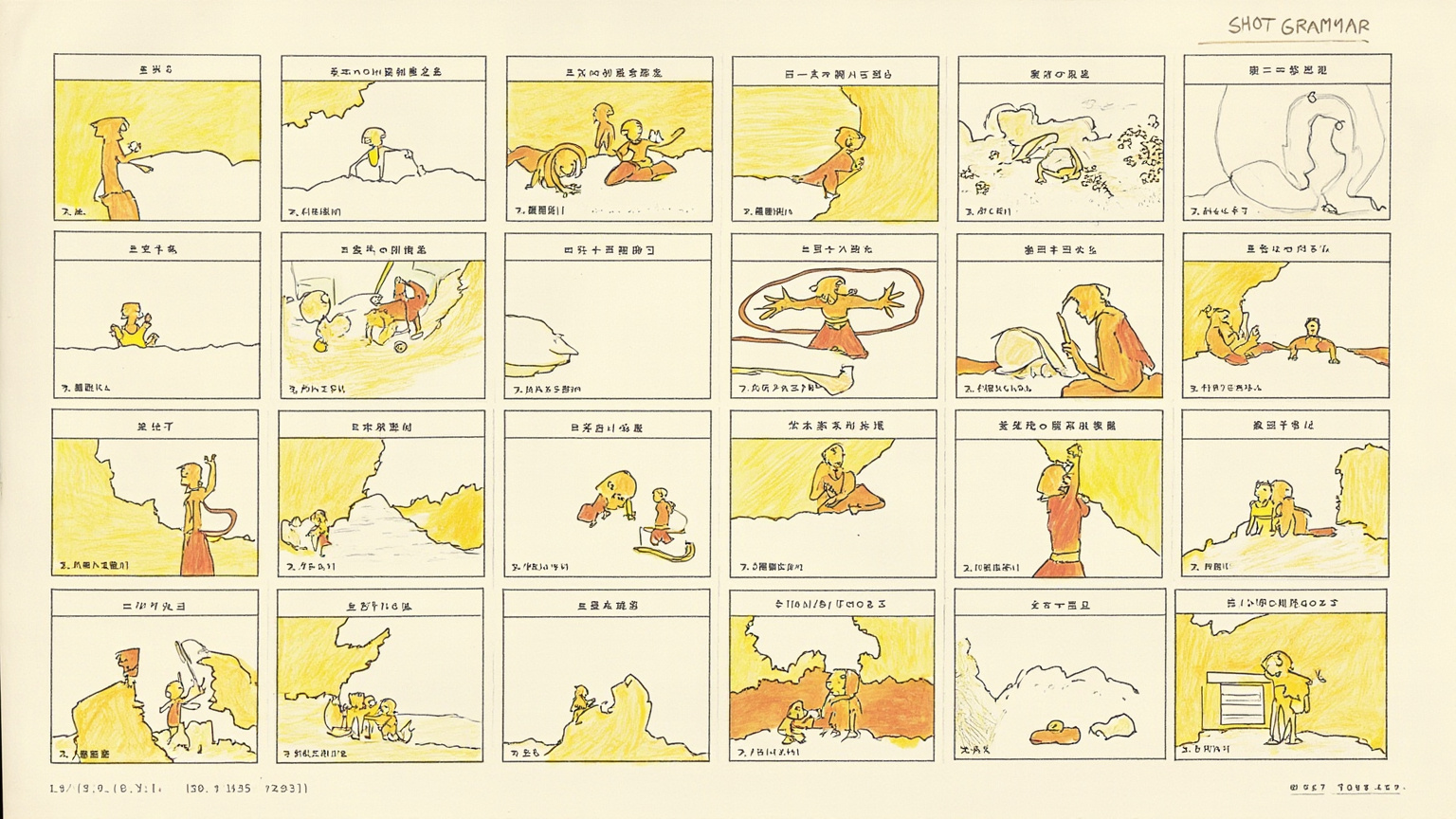
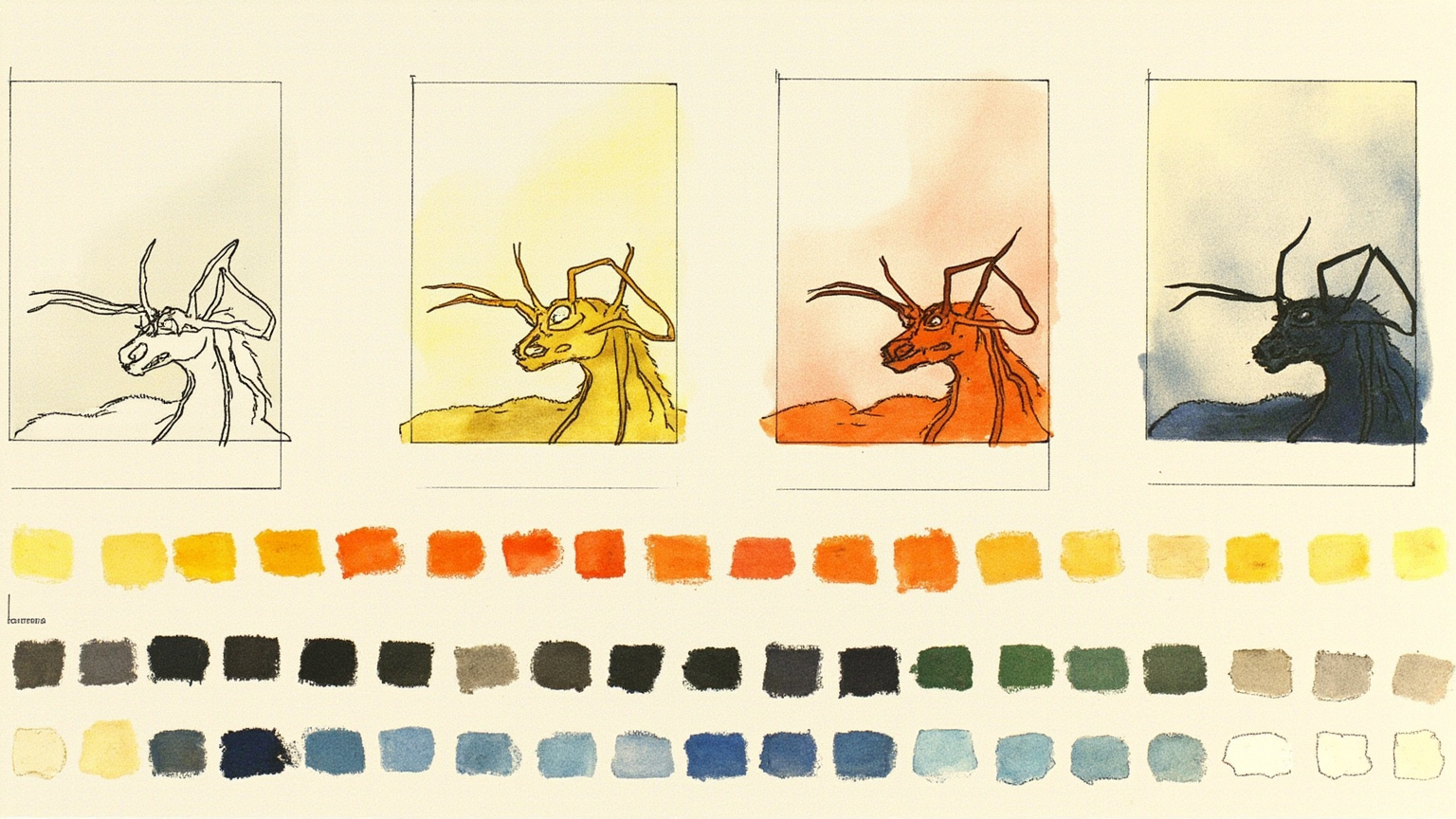
Art Direction4 plates
Before the guide was written, this book got a visual foundation — every illustration you just read grew out of it.