Wilhelm Meister's Apprenticeship (Wilhelm Meisters Lehrjahre) · Companion Guide
威廉·迈斯特的学习时代
一个逃出账房的富商之子,把舞台当作人生课本;当他终于学会不演戏,才真正踏入这所学校。
Opening
A dilapidated theatrical troupe wagon jolts along a country dirt road; inside the carriage, a boy has burrowed into a pile of stage curtains and fallen asleep, his cheeks still smeared with half-removed greasepaint. His name is Wilhelm Meister. He should be sitting in the counting house checking inventory ledgers, but here he is in a wagon worth a hundred times less than his family fortune, dreaming of being an actor. This book is about the entire process of him waking up from that dream.
This novel is part of a larger game Goethe was playing at the end of the eighteenth century—the same Goethe who wrote The Sorrows of Young Werther. It's not merely a boy's coming-of-age; it's a prescription for the entire German middle-class youth: how does someone who loves art, despises mediocrity, and wants to escape the counting house grow up?
What Kind of Book Is This
Wilhelm Meister's Apprenticeship, completed in 1795, is the first full-length novel of development in German literature. Later critics coined a term—Bildungsroman—to describe this kind of narrative, where a young person matures through experience. Along with Werther and Faust, it forms the third piece of Goethe's puzzle establishing him as a founder of German literature: a youth consumed by love, an old scholar who sells his soul to the devil, and a young merchant who encounters real life on the stage. Three characters, three ways of living, three archetypes of the German spirit.
Today, when Chinese literature departments teach the Bildungsroman genre, almost no textbook fails to start with this book. Its influence extends far beyond its era, from Dickens to Salinger, from Tolstoy to Haruki Murakami. The technique of a protagonist walking the road while discovering who they are—each of these writers borrowed from Goethe's original.
Character and World
Wilhelm, the protagonist, comes from a wealthy merchant family in late eighteenth-century Germany. His father died early, leaving behind a substantial estate. By rights, he should have taken over the counting house and warehouse, living life in his father's image. But at age seven, he saw a puppet show, and from that moment a stage grew in his heart. A little older, he falls in love with an actress named Marianne—a doomed first love that becomes the spark for his departure from home.
The people he encounters, one after another, mark the forks in his life. Philine is a young stage actress, pretty and quick on her feet, ready to treat every worldly rule as so much waste paper; she got there first, already living the "I don't care about tomorrow" life that Wilhelm wanted but never quite dared. Mignon is an Italian girl, kidnapped as a child, passing through the troupe in a boy's coat, cut down before her time. Natalie, tender and level-headed, is a noblewoman whose clear-eyed calm pulls Wilhelm out of the theater's dream and back into something real. Lothario and Jarno are two enlightened nobles of the Tower Society, spare with words and given to reason — Wilhelm's "educators" who never issue an order outright. The world they make between them has three sides. On one, the merchant household with candles burning over its ledgers. On another, the traveling troupe with footlights on cheap wigs. And on the third, the Tower Society's castle library, where the enlightened nobles talk of agricultural reform and human duty.
The first time I read this novel, I expected the story of a romantic young man escaping a dull life. None of the people who move you most in the book turn out to be romantics, as it happens. Mignon is a child who never grows up. The Harper is a man crushed beneath his own sins. Even Aurelia's death traces the final shape of someone who has truly lived for the stage — dragged under, together, by love and by illness.
Plot Outline
One: The Puppet Show and First Love — Beyond the Counting House
The story begins in business, not in poetry. Wilhelm takes the family firm from his father, and his first move is to stack the goods in the counting room and slip off to the theater. A childhood puppet show planted the seed. As a young man he meets the actress Mariane, a love affair that burns hot and ends young. He believes he is chasing art. What he is really after is an exit that won't turn him into his father. He decides to leave home: a bag of coins, a head stuffed with play lines, and a romance he has invented for himself.
Two: Drifting with the Troupe — Behind the Curtain
On the road with the troupe, he sees the underside of the stage. The footlights are a row of candles. The backdrop is a hand-painted palace. The nobles in the boxes come with their mistresses and nap. The manager, Serlo, runs it tight — plays staged fast and cheap. Philine flirts with half the men in the company from the dressing room. Aurelia, a genuinely gifted actress, runs her lines between coughs. She isn't merely acting; she is spending her life on the role. She carries Lothario in her heart, a love that is never returned; she has poured an entire lifetime's worth of theater into that single unanswered feeling. Wilhelm writes plays, takes the stage, offers schemes, and stirs up no small amount of trouble. He thought art could remain pure. Art turns out, first of all, to be a way to eat. This is the coldest stretch of writing Goethe ever did: no mockery, no romantic gloss, only the spectacle of a young man who refuses to grow up being rubbed raw by reality.
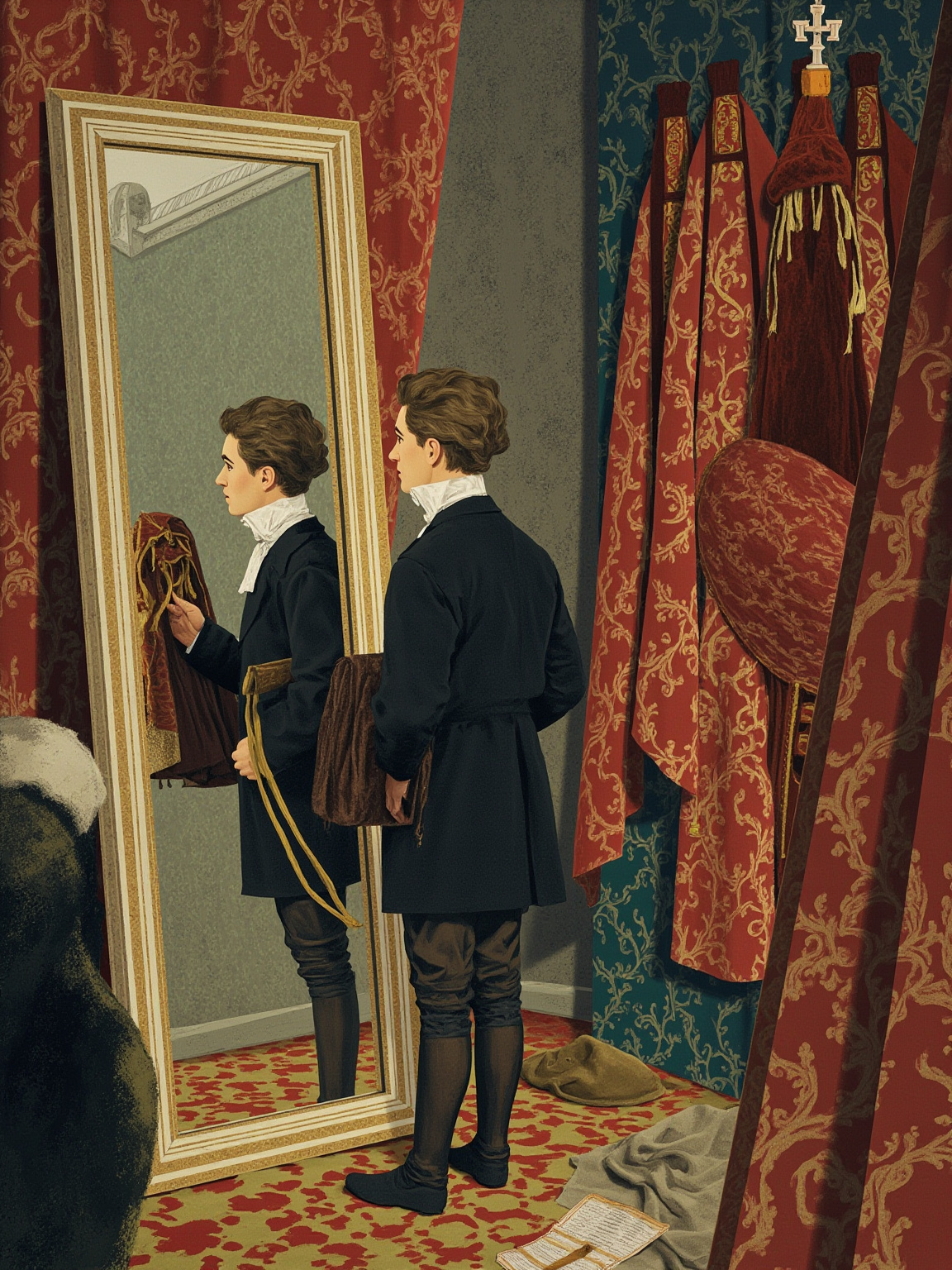
I seemed to myself like one who has gone through a long sickness and is just recovering: the new objects before my eyes gave me real pleasure.
我仿佛大病初愈一般——眼前一切崭新的事物都让我觉得真切地欢喜。
金句 · 第3卷 · 威廉初入剧团巡演
Three: Mignon and the Harper — Two Lives Knotted Past Untying
Mignon arrives. She is pulled from the snow in boy's clothes, having been kidnapped, sold, and passed from hand to hand in a touring company as a singing novelty. She calls Wilhelm 'Master' and clings to him with the desperate affection of a cat thrown away too long ago. Her song, Kennst du das Land ('Do you know the land'), is one of the most famous expressions of Sehnsucht in German verse: a hymn to a place called Italy that she has never truly been able to return to. The Harper is a wandering minstrel with a harp on his back; the singing wears his mind down, and in the end he breaks. He throws his arms around Mignon weeping, for she is his daughter, the offspring of the crime he committed years before with his own sister. Their two fates are knotted into each other like a length of ribbon tied into a knot no one can unpick; pull one end and both of them choke. This is the most lyrical stretch of the novel, and the cruelest.
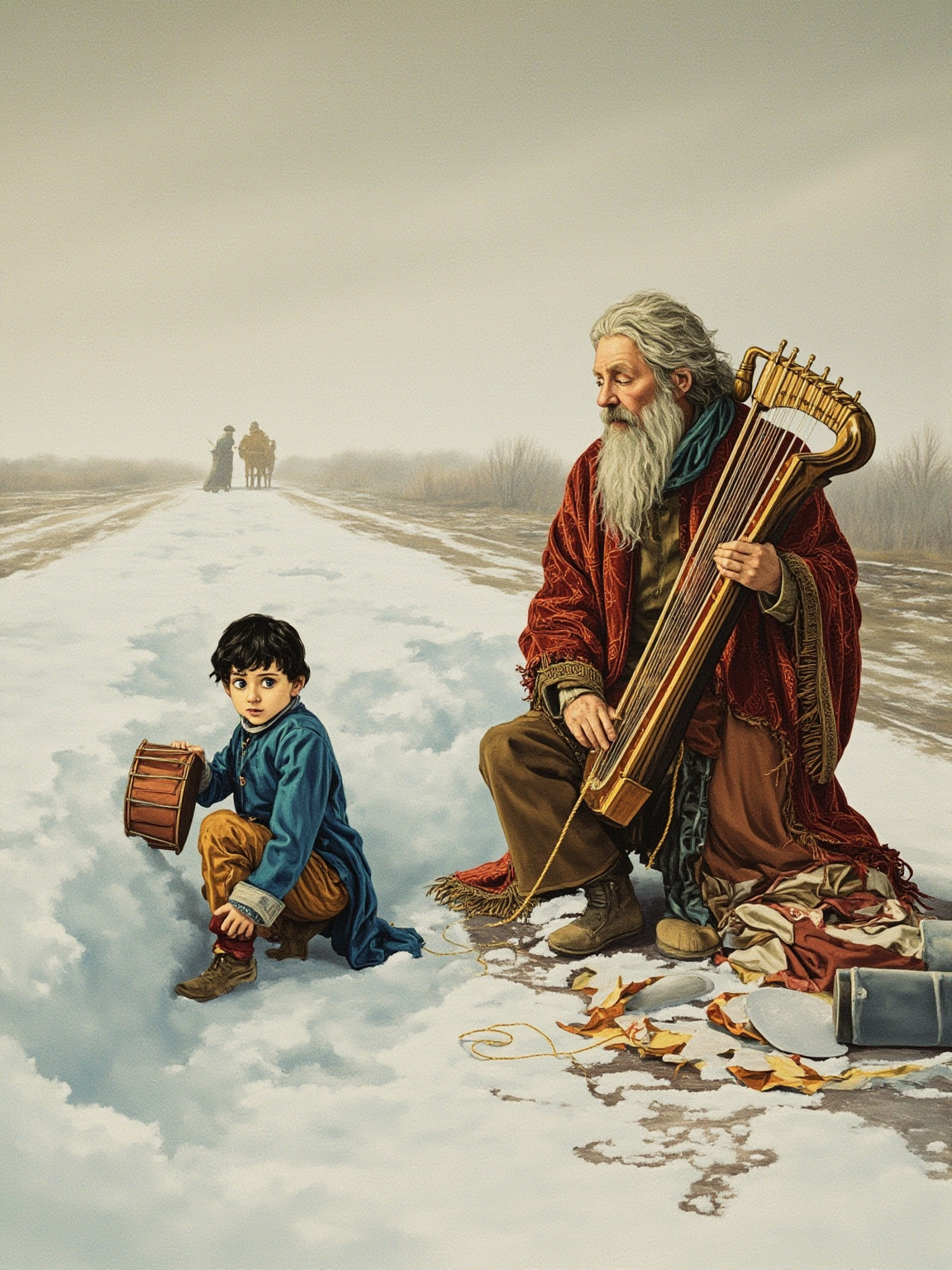
Do you know the land where the citrons blow, where the golden oranges glow in the dark foliage?
你可知道那柠檬花开的地方,在浓绿的枝叶间那金色的橘子在放光。
金句 · 第5卷 · 迷娘之歌《迷娘曲》
IV. The Tower Society: Another 'School'
Wilhelm leaves the troupe and, after some wandering, arrives at a country castle, where he meets Lothario, Jarno, and Natalie. Lothario does not talk about the stage. He talks about how to improve an estate's agriculture, how to run a household properly, how to give the surrounding peasants a decent life. Jarno is a man of few words; he often asks a single question and lets Wilhelm talk himself into a corner. Natalie is nothing like Philine's seductions or Aurelie's fragility. There is something clear-eyed in her tenderness, and simply walking beside her through the gardens is enough to quiet, for a while, the stage dialogue running through Wilhelm's head. The three of them together make up what is called the Tower Society — not a conspiracy so much as an informal self-run academy of enlightened nobles, devoted to the question of how a person might educate himself and how a society might become more reasonable.

A man is never more in keeping with himself than when he is putting all his talents on show.
人若能把自己的全部才情从容铺排,便最接近他本来的样子。
金句 · 第5卷 · 罗塔利奥谈自我教育
V. Death After Death: Three Shatterings of the Stage Dream
The final volumes of the book run cold. First Aurelie dies of her illness backstage, and Wilhelm remembers how she could cough through a scene and still land every word; something in him goes cold. With her, more than an actress goes down. The man she loved her whole life never once turned around to look at her, and she poured every ounce of her strength into a play that could never answer her back; even the manner of her dying looks like an unfinished tragedy. The Harper, suddenly unhinged, carries his daughter's small coffin to the lakeside, howls, and walks into the water. Finally Mignon — she closes her eyes quietly in Wilhelm's arms, and from that day Kennst du das Land is a song with no one left to sing it. Three deaths, three blows, and one by one they beat the romantic idea out of Wilhelm's head that art can stand in for life. At last he understands that the stage, however real, is only the stage, and the days of the living lie on the other side of the curtain.
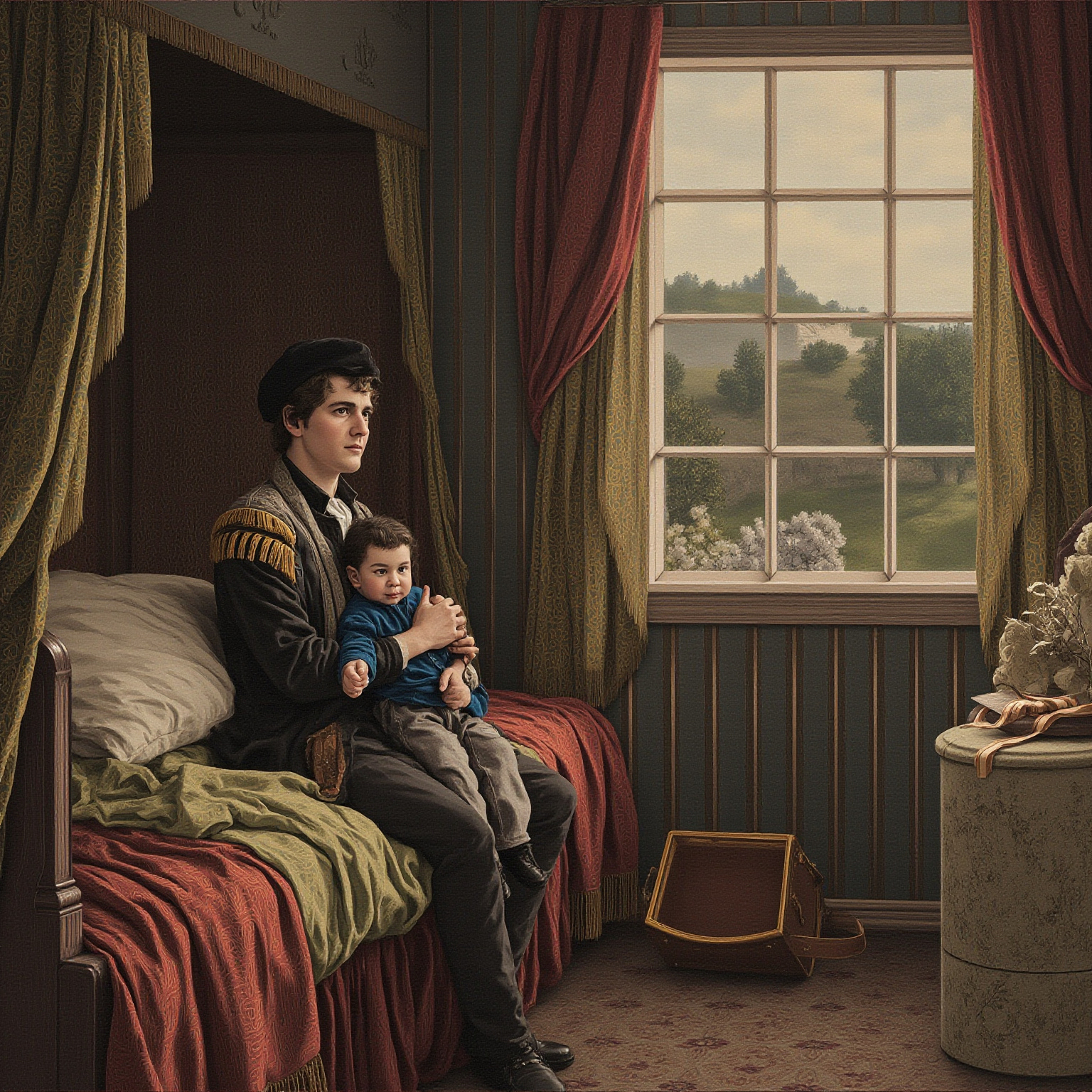
All that is left to him is his art; that alone he knows, that alone consoles him.
留给他的只剩艺术;唯独它是他懂得的,唯独它能抚慰他。
金句 · 第7卷 · 奥瑞莉之病与死
VI. Farewell to the Theater, Union with Natalie
After Mignon's death, Wilhelm formally sets aside the notion of becoming an actor. He becomes engaged to Natalie, joins the Tower Society, and begins learning to manage an estate, to care for the peasants around him, to take part in practical matters that matter ten thousand times more than any part he could play. The four words 'Years of Apprenticeship' only now mean what they have always said: he has moved from being an apprentice to stage dialogue to being an adult ready to shoulder some share of responsibility for society. This is neither a happy ending nor a tragic one. It is the clearest ending Goethe could imagine for a young man barely past twenty.
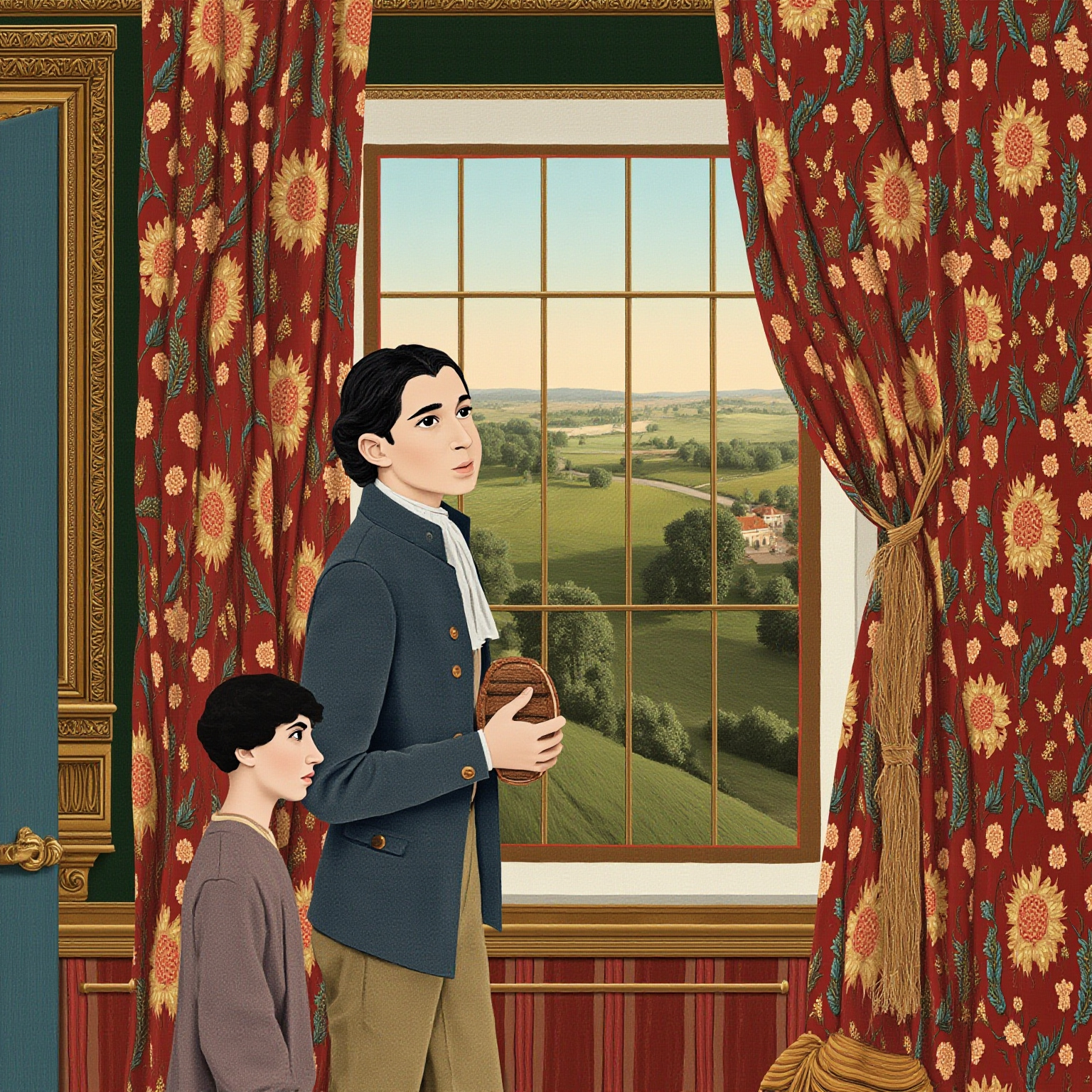
I have no longer any desire to play a part upon the stage; it is enough if I can act my part in the great drama of life.
我已不再有登台演出的渴望——若能在人生的宏大戏剧里演好自己那一角,便已经足够。
金句 · 第8卷 · 威廉致娜塔莉书
Themes and Methods
What this book is really about is "education" — not the classroom kind, but a notion new to Goethe's time: a person cannot grow by reading; they grow by walking the wrong roads, loving the wrong people, and hitting walls. Theater in the book is the central metaphor: it seduces, bewitches, and — like opium — keeps a person living inside other people's emotions; in the end, though, you have to walk out of the playhouse and into your own un-dramatic life. Mignon and the old harpist's tragedy is Wilhelm's opposite; their fates are ribbons tied off dead, while his is one he ties as he goes.
Goethe's craft in writing this novel is itself a demonstration. He doesn't give the protagonist the most lines — the sharpest sentences come from Jarno and Lothario. He doesn't cast the supporting women as rivals; Philine, Aurelie, Natalie, and Mignon occupy four wholly distinct positions on a spectrum of women, corresponding respectively to seduction, talent, reason, and the poetic. He doesn't write growth as a straight line — Wilhelm keeps slipping back into old dreams and being hauled out again by reality. Written at the close of the eighteenth century, the novel's structure already approaches the modern novel, and for today's reader the question still stands: how does a young man who doesn't know what he's meant to do actually come of age?
Wilhelm Meister is not a novel about acting. It is a novel about stopping.
The case for reading the novel itself
The guide gives you a map; the novel itself is the territory. Goethe's quiet way of writing — he doesn't weep for his characters, yet in the passage where Mignon closes her eyes the whole page falls silent; he doesn't hand the protagonist an instant awakening, but lets him circle back to the same choice across three whole volumes — only direct reading can take in that kind of writing. Then there are the poems Mignon and the old harpist sing, the unmoored German lyrics that lose something in translation but cut like a scalpel in the original. A synopsis takes an afternoon; working slowly through this book is a different sort of mental labor — worth doing.
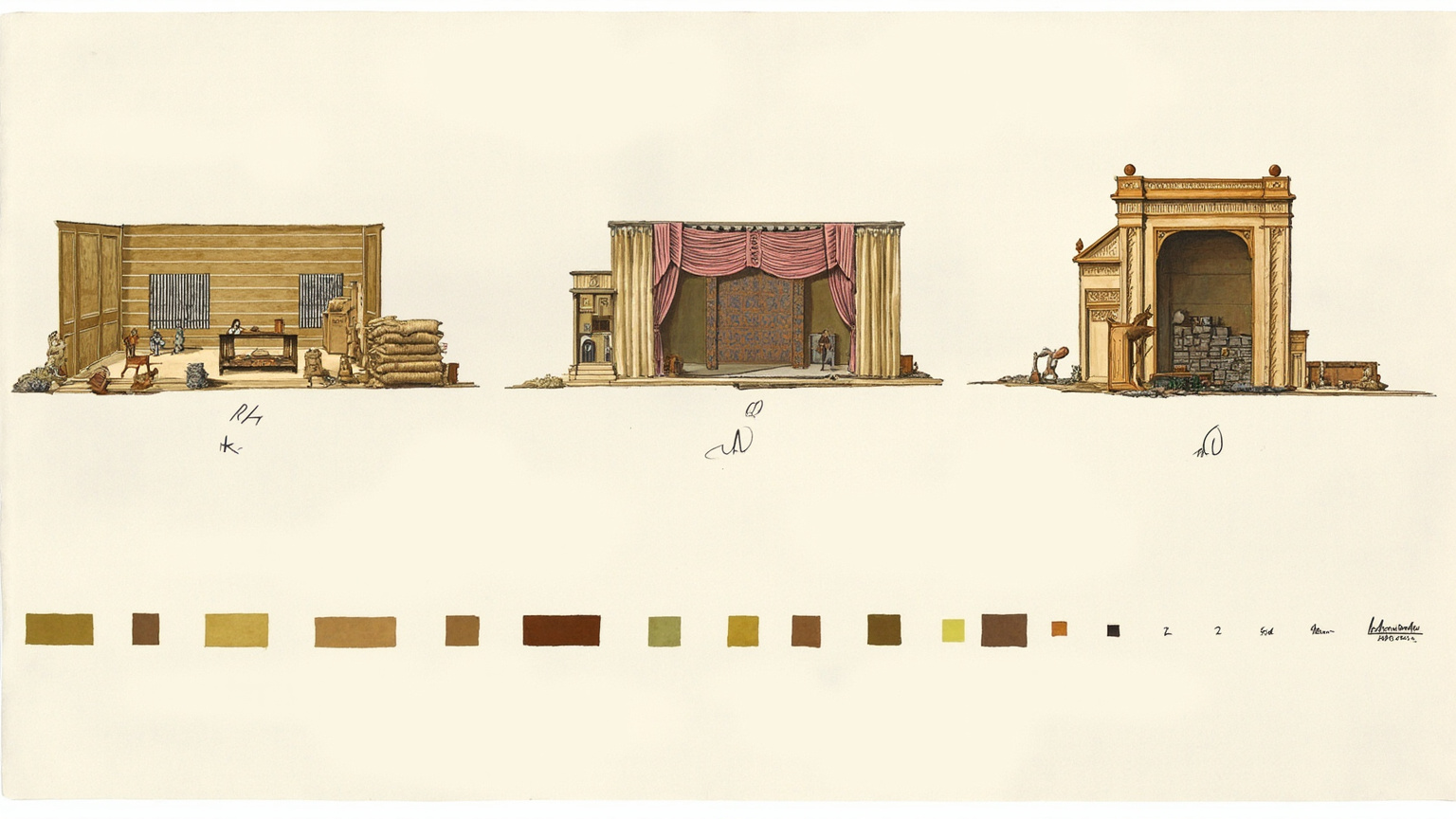
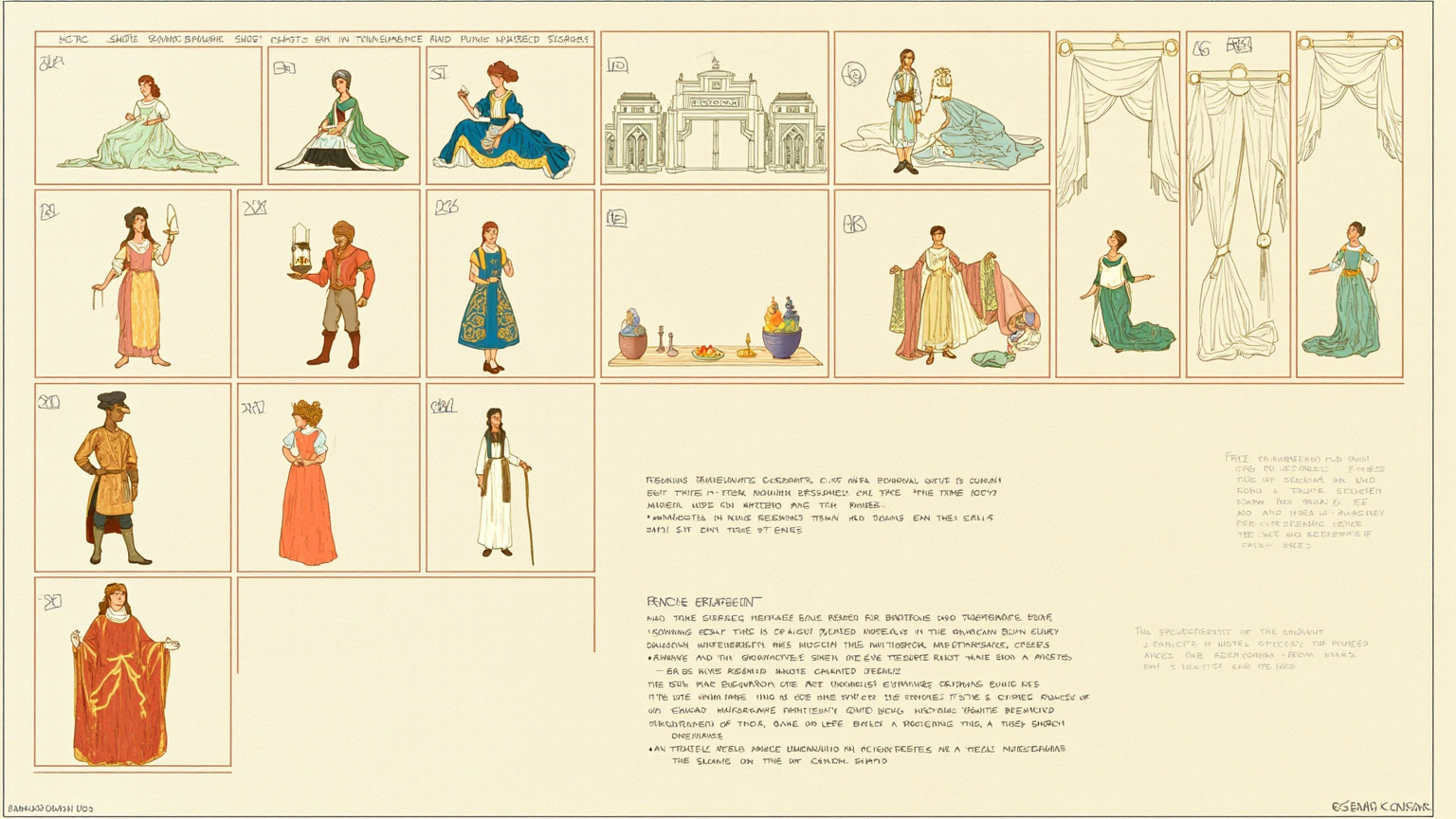
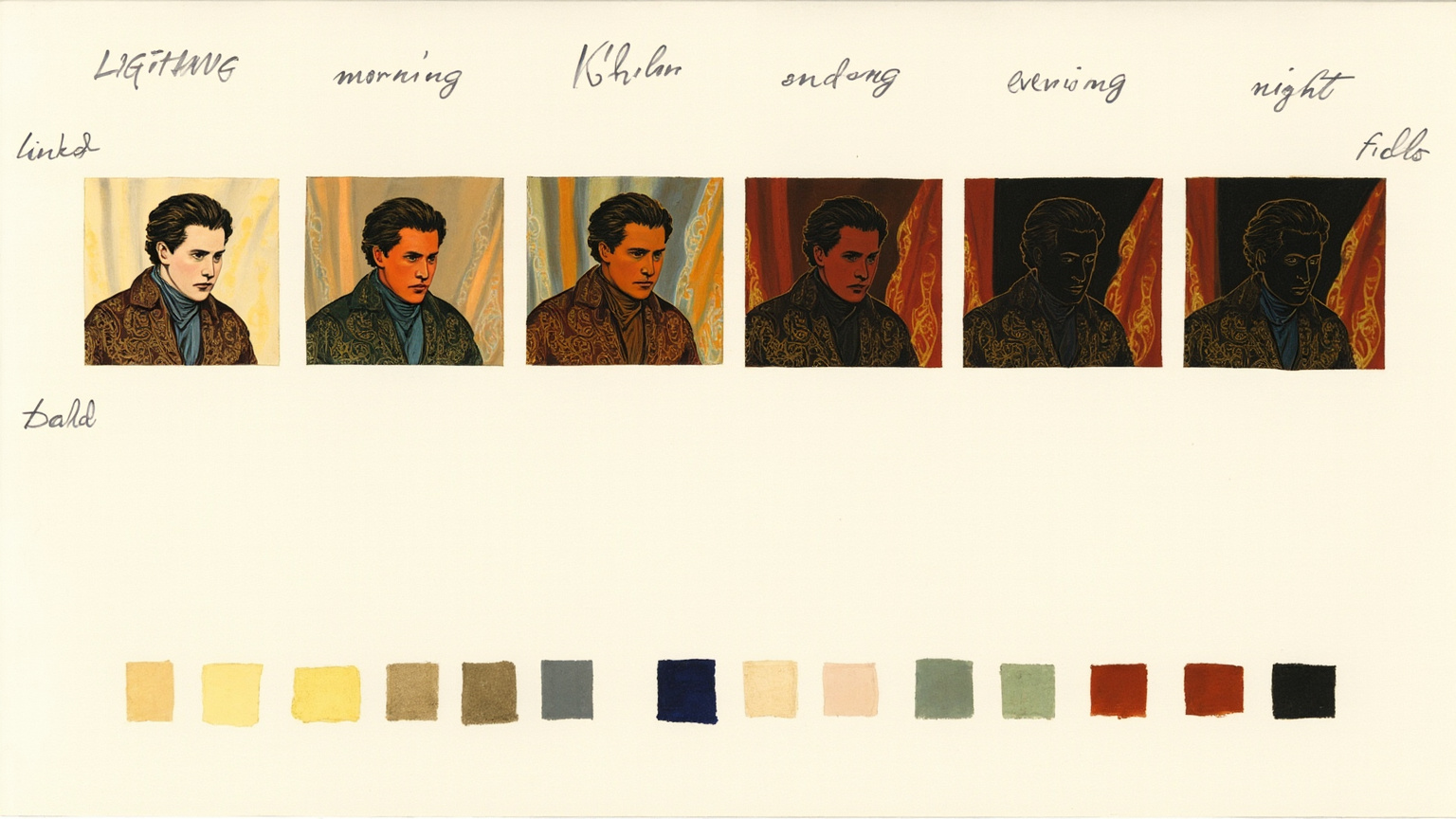
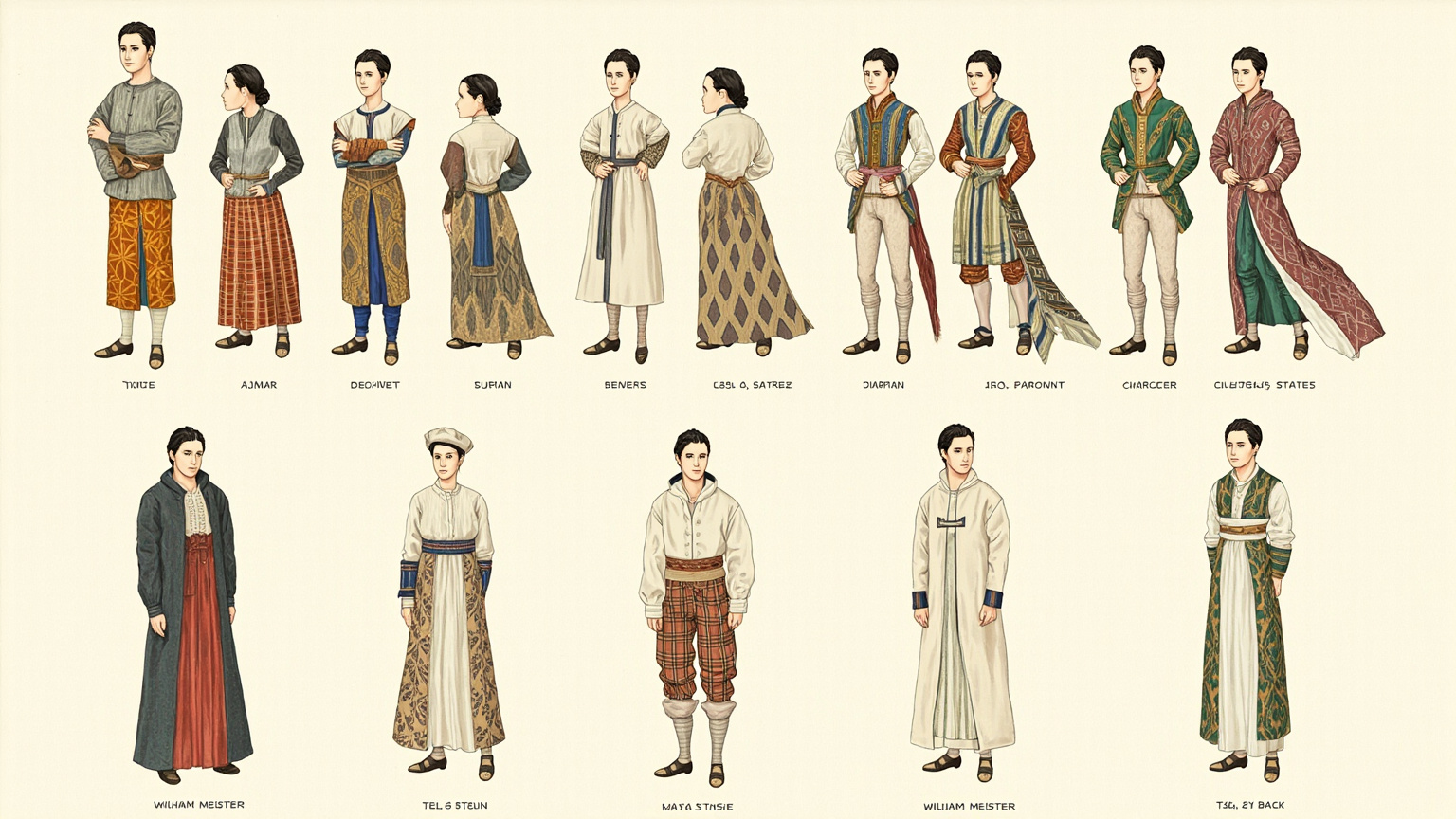
Art Direction4 plates
Before the guide was written, this book got a visual foundation — every illustration you just read grew out of it.