Yulizi (The Book of Master Yuli) · Companion Guide
郁离子
元末山野里磨出的治国草稿——以寓言冷线刺世,以诚信与定见缝合天下。
A Merchant Drowns in the River and No One Reaches Out
In Jiyin there was a rich merchant whose boat capsized as he crossed a river. A fisherman pulled him out, and he promised a hundred taels of gold. Once he reached shore, the merchant went back on his word — he handed over ten taels, then turned on the fisherman: a life is worth ten taels, what more do you want? The fisherman swallowed his anger and walked away. Some time later, the merchant's boat capsized again. This time the fisherman stood on the bank and watched him go under. This is the shortest fable in Yulizi, and the cruelest.
Wind the clock back more than six hundred years, to the wild hills of the late Yuan dynasty, in the Zhizheng era. A man in his forties sits outside a thatched hut, a medicine garden beside him, the mountains of Qingtian rising in the distance. He has just resigned his official post and come home, carrying a grudge that has nowhere to land — not against any one enemy, but against the whole rotten court: the corruption, the wars, the officials who treat people like weeds. He gives himself a pen name, Yulizi, and starts writing. His name is Liu Ji. History remembers him as Liu Bowen.
What This Book Is
Yulizi is a collection of fables in prose, eighteen chapters and nearly two hundred pieces in all (the standard surviving edition runs to a hundred and eighty-two pieces across two volumes). Each piece stands alone, yet together they all point at the same prescription. Lu Xun and Lin Yutang both admired it, and it is generally ranked as the next great peak of fable writing after the pre-Qin masters. Liu Ji says as much himself in his preface: this book was never meant to entertain. It was meant as a mirror held up to anyone who governs.
The reason it has lasted is simple: among writers of fables, Liu Bowen is one of the few who actually stood on a battlefield and actually served as strategist to a founding emperor. The old saying goes that Zhuge Liang carved the empire into three, while Liu Bowen stitched it back into one — folklore that turned him into a legendary tactician. Yulizi is the draft of statecraft he worked out in the mountains before he ever left them. He carried that thinking straight into Zhu Yuanzhang's court, and it became part of the theoretical bedrock of the founding of the Ming dynasty.
Who Yulizi Is, and What Got Written in the Mountains
Yulizi is the pen name Liu Ji gave himself. Yu means literary brilliance; li means fire — together they gesture at a civilization in full flourishing order. The whole book runs on this first-person voice: he tells a fable, drops a line of insight, then moves to the next. The reader follows Yulizi over mountains, across rivers, into marketplaces, into court, the way you'd follow an elder with sharp eyes and a soft heart through the affairs of the world.
The cast is not only human. There is Xiong Zhefu, Zili, Yu Fu, Ji Ran, a farmer in the state of Zheng who changes trades three times, a farmer in the state of Yue who keeps his head down and plants rice, a hot-tempered old man who smashes his target when his arrows miss, a farmer from Gouzhang who dies pulling a snake out of the grass by mistake, and beyond them, birds and beasts, plants and insects, ghosts and spirits, merchants in the marketplace. The backdrop never changes: the collapsing sky of the late Yuan, crushing taxes, plunder, officials behaving like bandits, common people treated like grass.
First Fire: A Merchant Drowns in the River
The story of the Jiyin merchant is the shortest strike in the whole book. A promise of a hundred pieces of gold shrinks to ten, and the merchant still calls the fisherman greedy: he thinks he's being shrewd, when what he's actually buying is his own death the next time his boat goes down. The fisherman stands on the bank and does nothing, not out of hatred, but because he has already seen the pattern clearly: with a man like this, saving him once and saving him twice end the same way. Liu Ji nails the cause and effect to the surface of the river in about twenty characters, and every merchant who reads it feels a chill down the spine.
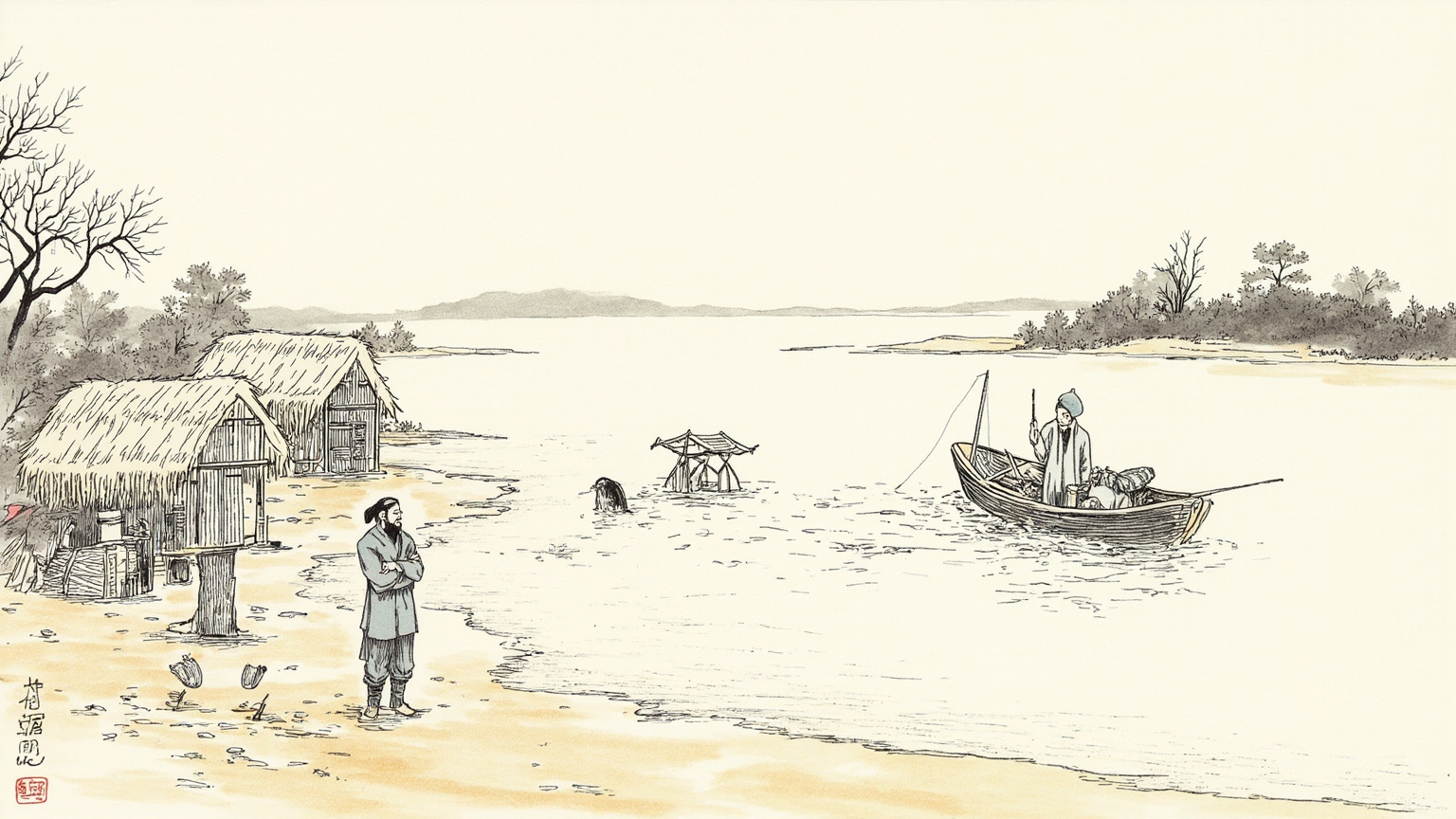
The man of Jiyin stood ashore and watched; the river took him.
济阴之贾人,立而观之,遂没。
金句 · 第5章 · 鲁僖·济阴之贾人
Second Fire: A Lacquer Merchant Dies Far From Home
Yu Fu, a man of Yue, asks his teacher Ji Ran how to get rich. Ji Ran tells him to grow lacquer trees, honestly, patiently. Three years in, Yu Fu has hundreds of hu of lacquer and a fortune within reach. His wife's brother, eaten up with envy, has an idea: boil the leaves of the lacquer tree into a paste and mix it into the raw sap, and it will sell for triple the price. Yu Fu takes the bait and hauls the lacquer a thousand li to the state of Wu. The customs officer there opens a jar, catches the wrong smell, and holds the whole shipment back until it rots. Yu Fu ends up a beggar, and dies on a street in a strange city.
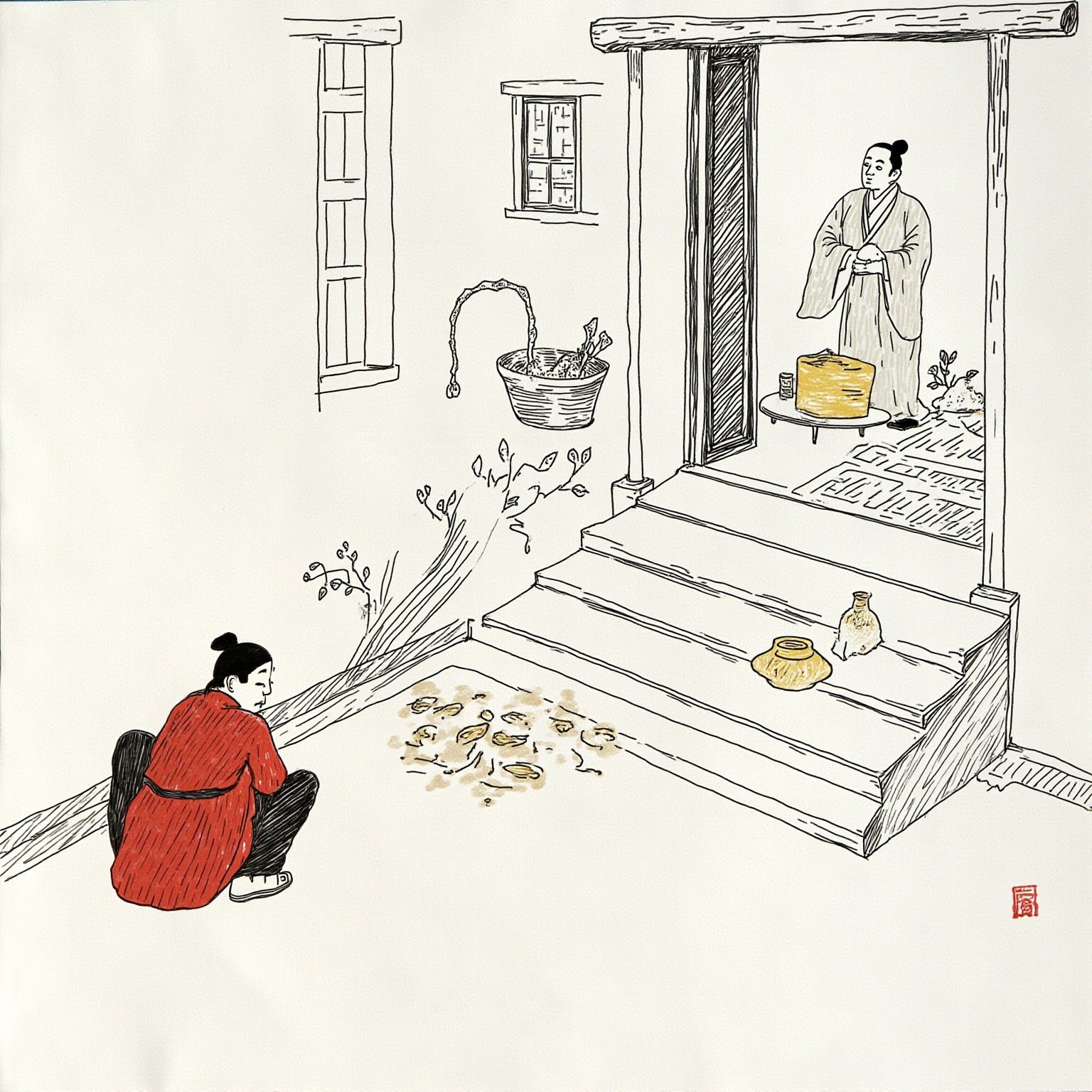
What fraud borrows, time returns in kind.
虞孚之诈售,卒自食其腐——吴门封罐,裂于一旦。
金句 · 第9章 · 虞孚
Yu Fu isn't killed by some scheme of the people of Wu. He's killed by his own cleverness. Liu Ji uses the fable to make a point that cuts clean through: honesty isn't a virtue here, it's a cost. The moment a fraud is caught, the whole road behind it is finished. It may be the sharpest piece of business ethics ever written into a Chinese fable.
Third Fire: The Umbrella Maker Meets a Drought, the Well-Sweep Maker Meets a Flood
A man from a remote corner of the state of Zheng spends three years learning to make umbrellas. The moment he finishes his training, a three-year drought hits and nobody buys umbrellas. So he switches trades: three more years to learn the well-sweep, a device for drawing water. The moment he masters it, three years of flooding arrive and nobody needs a well-sweep. He decides to switch again, this time to soldiering, but by now he's too old. His whole life gets used up by his own diligence.
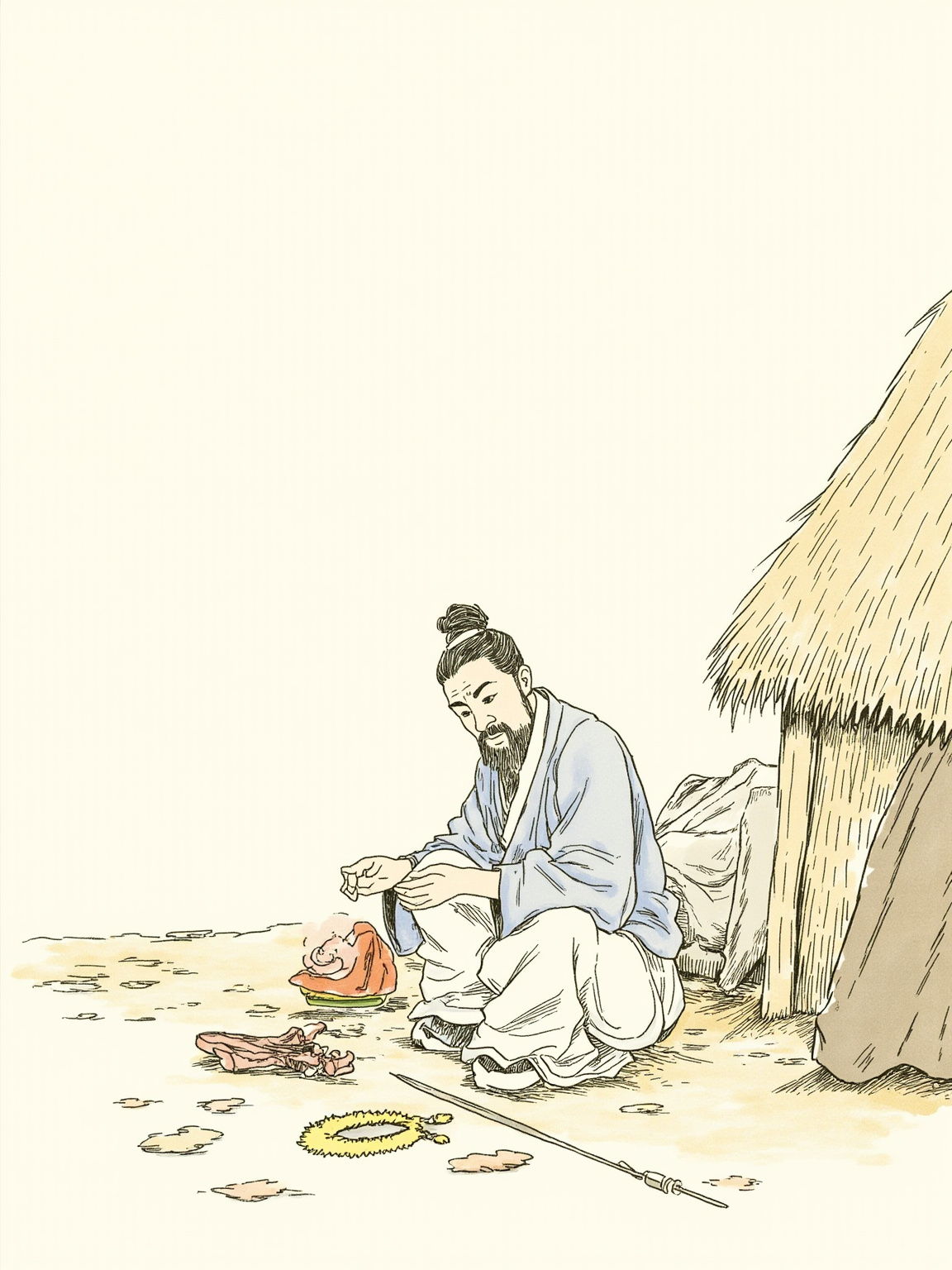
He who learns each day's craft dies by the next day's weather.
郑之鄙人,三年学伞,三年学槔,至于学兵而老于户矣。
金句 · 第10章 · 郑鄙之学盖
Set against him is a steady farmer in the state of Yue, who plants rice year after year. Drought years bring a poor harvest, flood years bring a poor harvest too, but the year the weather finally cooperates, his granary fills to the roof. Liu Ji sums up the contrast in one line: keep a boat ready for the drought, keep a fur coat ready for the heat, which, read the other way round, means a person needs conviction, not a habit of chasing whatever's hot right now. The Zheng man's flaw was never his hard work. It was that he had no ground under his feet.
Fourth Fire: Two Men Killed by Themselves
Somewhere between the states of Jin and Zheng lives a man with a violent temper. He misses the target with an arrow and smashes the target. He loses a game of chess to his own son and bites him. No one can talk him down, and eventually his own rage kills him. Yulizi draws statecraft out of this small fire: the common people are the target, the soldiers are the son. Treat them as an outlet for your anger, and the whole fate of the country shatters along with them.
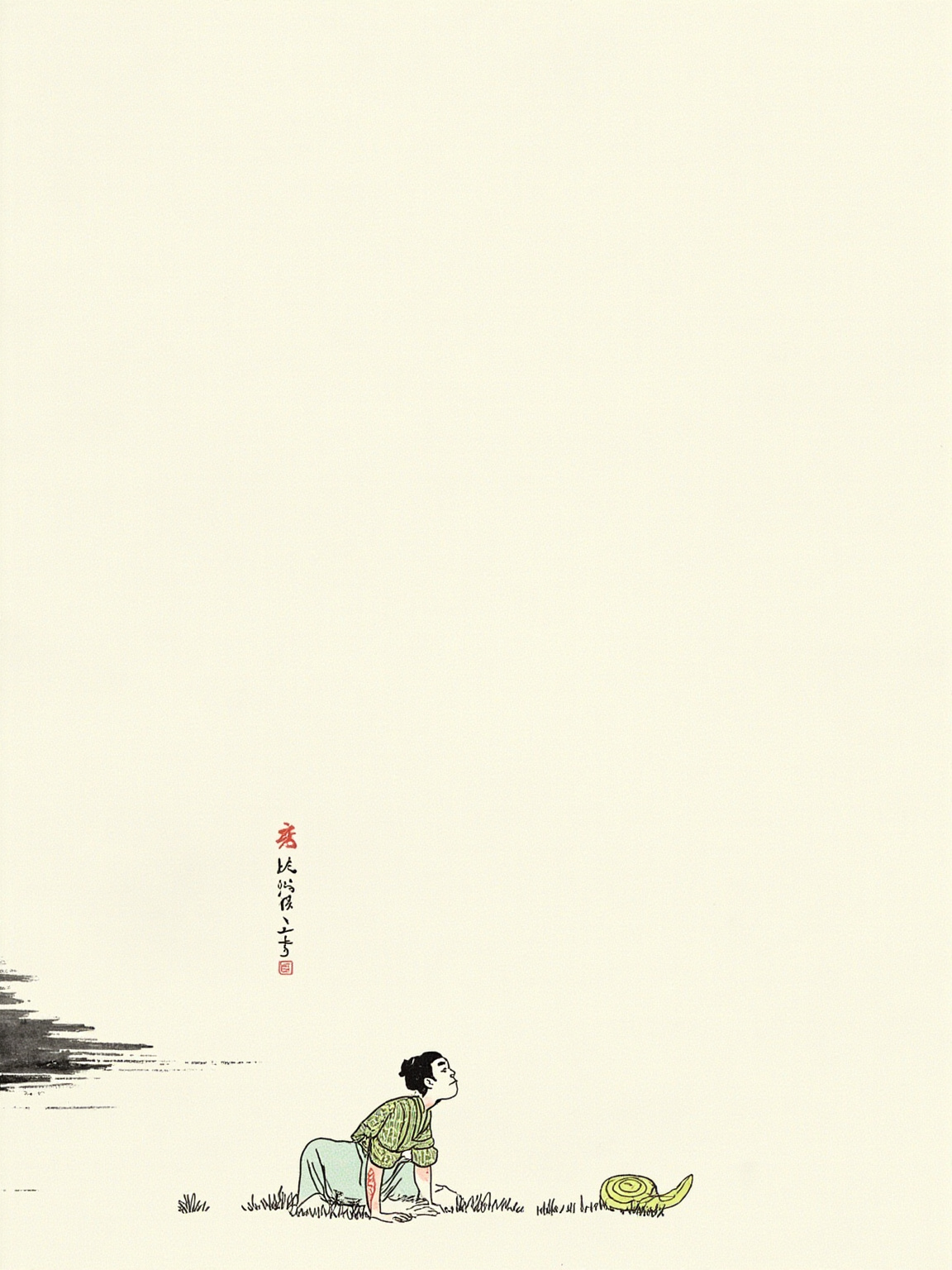
A farmer from Gouzhang hears a pheasant call in the grass one day, pulls the grass apart, and catches it. The next day he hears the same rustle, charges in, and pulls the grass apart again. This time it's a snake coiled underneath. It bites his hand to shreds, and he dies. Between one stroke of luck and the next, a small-minded man mistakes a fluke for a rule, and his fortune flips straight into disaster.
Fifth Fire: Xiong Zhefu's Parable of the Poisoned Wine
The harshest piece of political writing in the whole book hides inside two strange comparisons. Xiong Zhefu turns to Yulizi, the persona Liu Ji speaks through, and asks: if you're thirsty and you lick the cut where sap bleeds from a lacquer tree, does that quench your thirst? No, the sap is poison, and it goes straight into your mouth. Then he asks again: suppose you watch an otter stealing fish, and you poison the pond to keep the otter out. The otter stays away. But the fish die too. Zili, a ruler of a state, says no, that won't do, twice, and is finally cornered into admitting it: crushing taxes are the cut in the lacquer tree licked to quench thirst; plunder is the poisoned pond meant to keep the otter out. If the king doesn't wake up, the people stop being his people, and the state stops being his state.
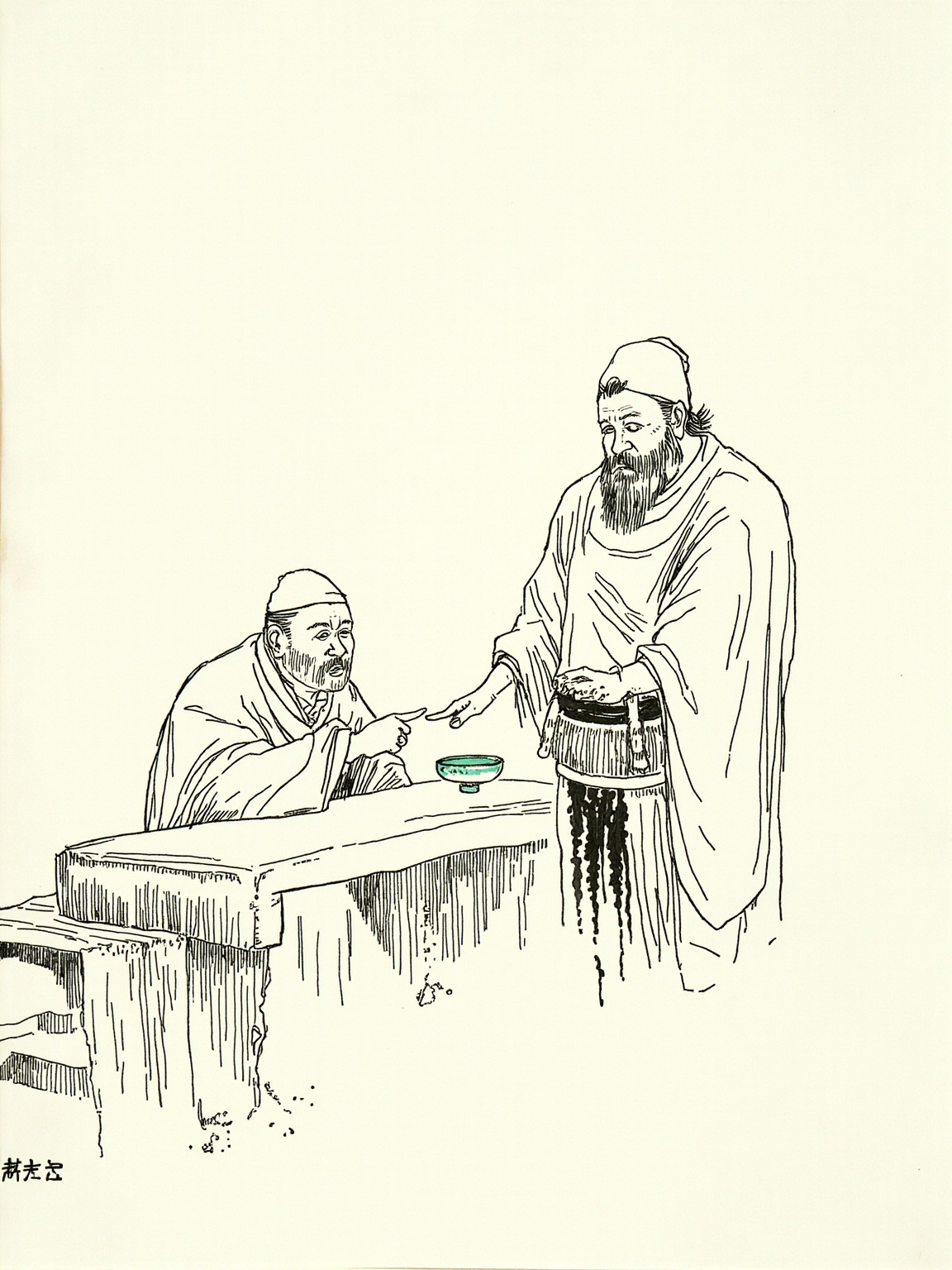
If the king will not wake, I fear the people cease to be his people, and the realm to be his realm.
王如不寤,吾恐民非王民,而国非王国矣。
金句 · 第5章 · 燕文公·饮漆毒水
From Fable Back to the Court
Yulizi holds a whole cast of supporting characters that tend to get skipped over: the ill-omened owl in The Crown Prince of Chu Raises an Owl, the nine-headed bird whose council dissolves into chaos, the craftsman Gong Zhiqiao who ages a new zither to pass it off as an antique from the Zhou court, only to watch it get praised as a national treasure once it looks old rather than genuinely new. Liu Ji twists these short pieces into a single thread, all pointing at one disease: those in power discard the real and choose the false, mistake form for substance, mistake a good performance for real talent. And so the court rots from the inside, and the state teeters.
To feed the owl and starve the phoenix — this is how a house falls.
养鸱鸮而弃鸾凤,国欲不亡,不可得已。
金句 · 第7章 · 楚太子养枭
Pull all these fables together and Liu Ji has written out a complete program for governing: pacify chaos with virtue, sustain the people with virtue, appoint the worthy through principle, let the people manage their own affairs, match ability to position, hold honesty as the foundation, stay rooted in one's proper trade. It's a prescription for the collapsing world of the late Yuan, and, as it turned out, a rough draft for the Ming dynasty that Zhu Yuanzhang would go on to found.
Why This Book Is Still Read Today
Anyone who reads fables knows the real danger isn't writing that's too simple. It's writing that reads like a fable pretending to be a moral. What makes Liu Ji rare is this: when he writes a merchant drowning, he writes only the merchant drowning, without an arrow in the margin saying don't break your word. When he writes Yu Fu adulterating his lacquer, he writes only the jar cracking open at the gate of Wu, without a sigh tacked onto the end for your benefit. The lesson grows up out of the ground under your own feet, after you've walked the story yourself.
The other rare thing is his material. A bird in the mountains, an otter in the water, a snake in the grass, a jar of lacquer in the market: he picks any of it up and it becomes a mirror for governing a country. Plenty of later writers tried this everything-is-medicine method learned from Zhuangzi; few got as close to the bone. Lu Xun said his ideas and his prose shift and startle in ways that catch the essence of Zhuangzi — and he wasn't being polite.
He stood there and watched him go under — six spare characters in the original, and the whole river goes cold.
Why You Should Read the Original Even Once You Know the Story
I've told the whole story now, but some things you only get by turning to the page yourself. Take the line from The Jiyin Merchant: he stood and watched him — four words with a pause built into them, a blank space Liu Ji left on purpose. Or take the closing line at the end of every piece in Yulizi, two or three words that flip the whole fable over and make you see it again.
Then there's the breathing of the prose itself. Classical Chinese from six hundred years ago runs in sentences as short as a carpenter's cuts, and not one stroke is wasted. Read it aloud and you'll hear a rhythm that plain vernacular doesn't have, something worked over, restrained, still warm to the touch. No retelling can give you that.
One more thing: when Liu Ji wrote these fables, he had no idea he was about to leave the mountains to serve a rebel leader who had started out as a monk. Hidden inside these birds and beasts and insects and fish is the blueprint he was drawing for a dynasty that didn't exist yet. Read them with that in mind, and in every single fable you'll catch the look of a man in the hills, gazing south.
This piece is a map. The mountain is still the mountain, the river is still the river. You have to climb that ridge in Qingtian yourself, listen for the pheasant's cry yourself, and only then decide whether to put your foot into the grass.
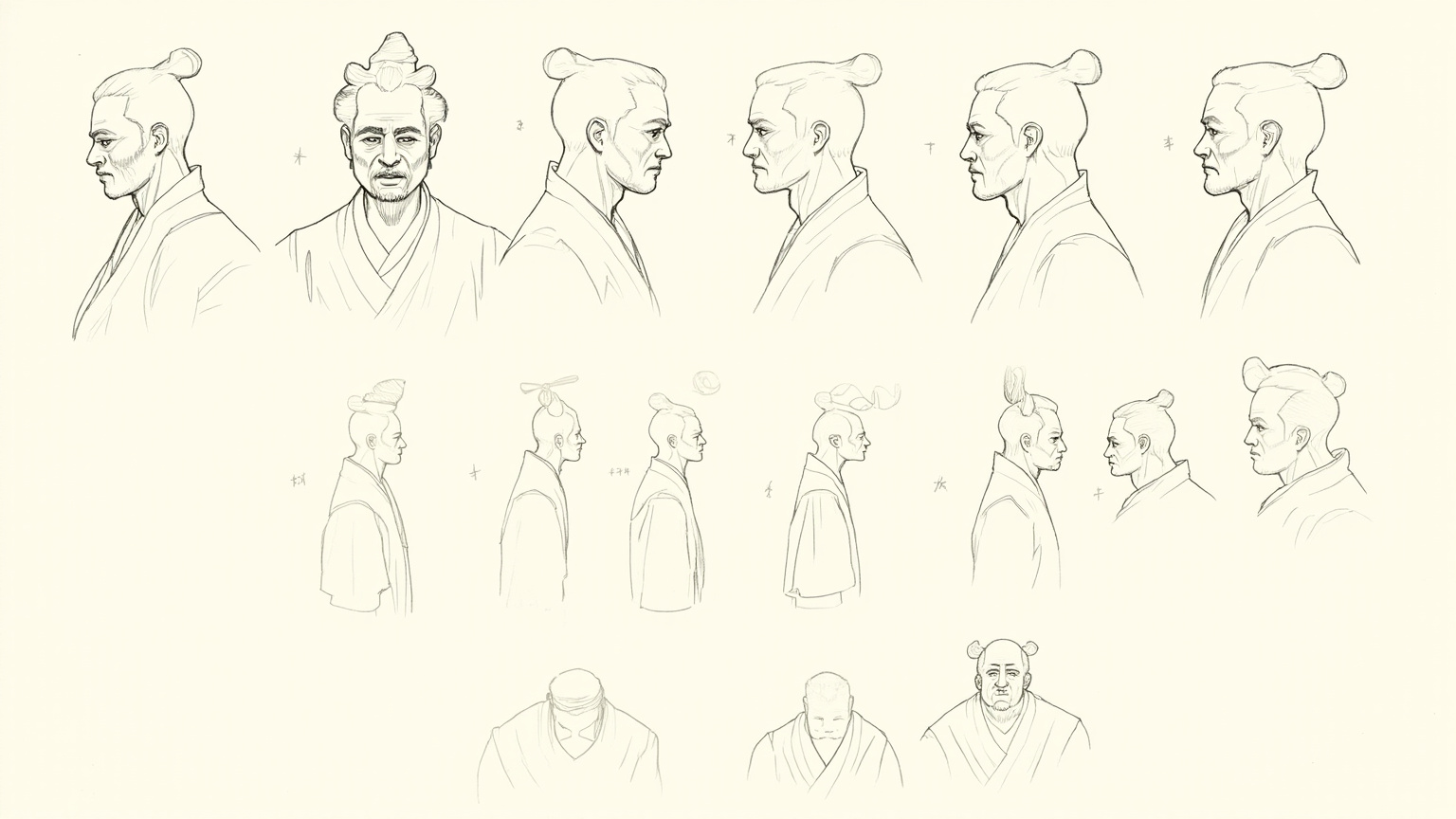
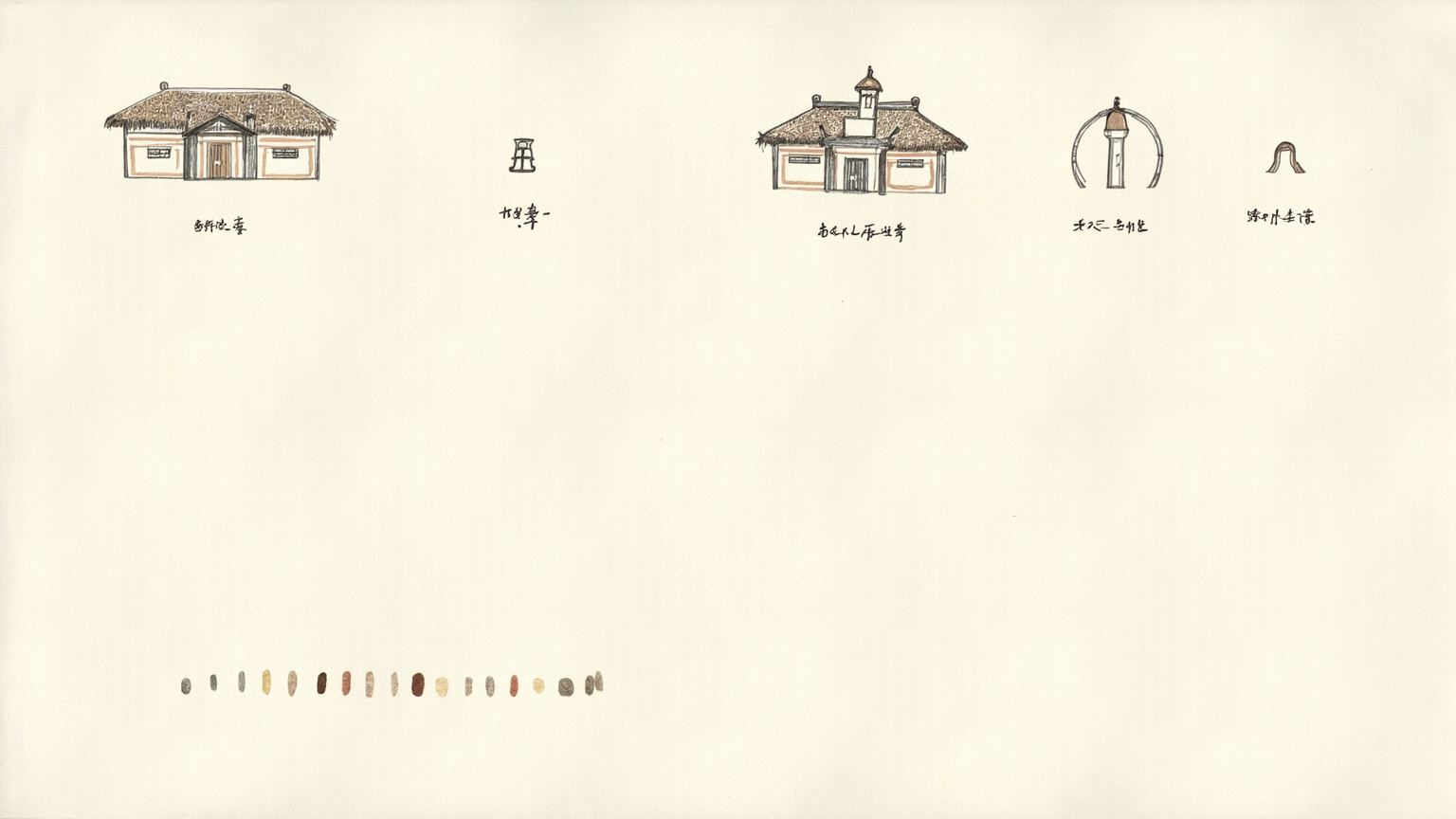
Art Direction4 plates
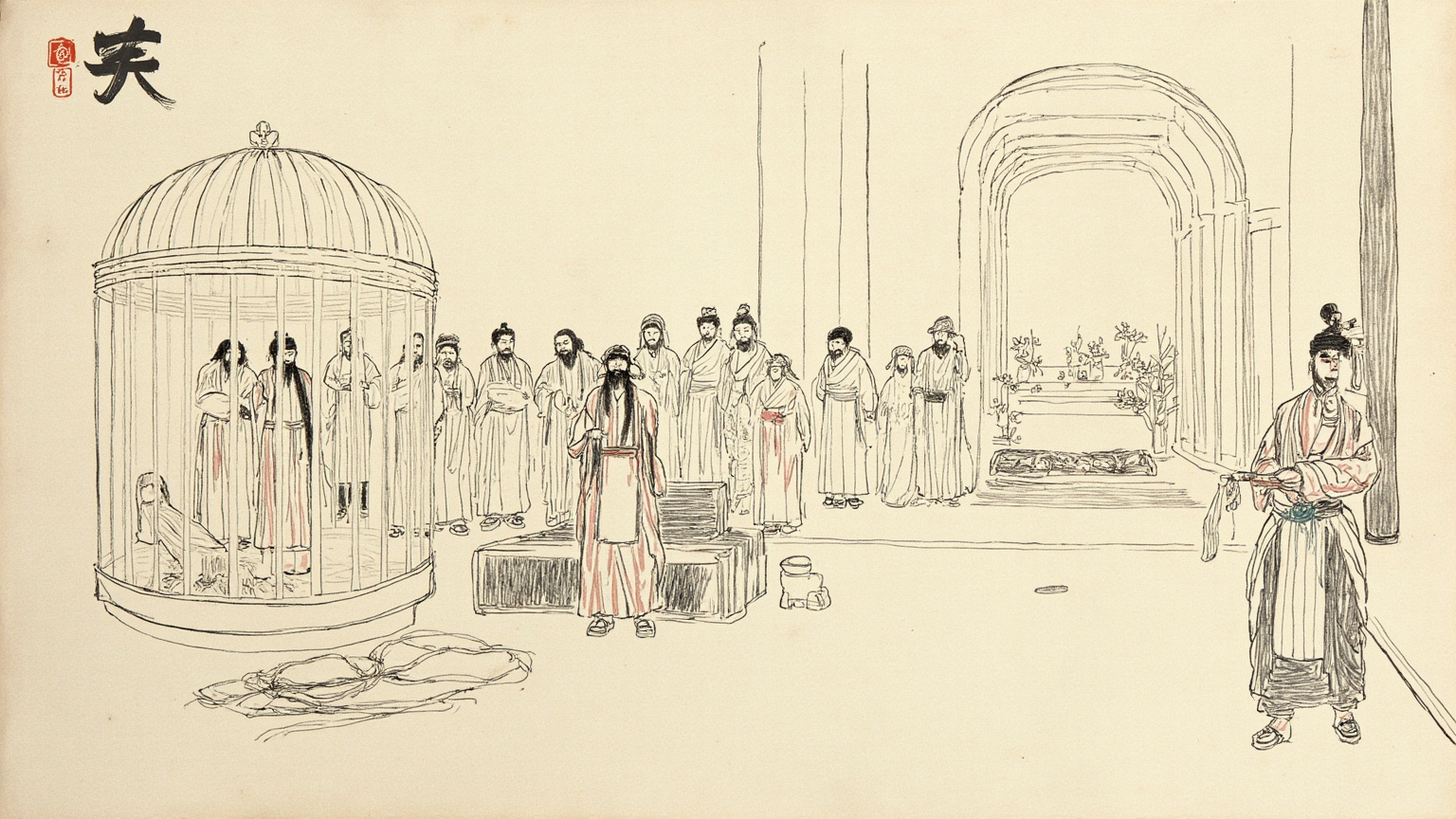
Before the guide was written, this book got a visual foundation — every illustration you just read grew out of it.