What the Master Would Not Discuss (Zibuyu) / New Qi Xie (Xin Qixie) · Companion Guide
子不语
随园老人烛下攒段子,借鬼神杯酒,浇一肚子温柔反骨。
Candlelight, Stories, and the Old Man of Sui Garden
At Sui Garden on Xiaocang Hill in Nanjing, the candle crackles. A scholar past fifty leans back at his writing table, brush set down beside the inkstone, listening to tonight's fox-spirit story. The man telling it is his brother-in-law, Wang Gongnan, who has come down from Henghe Bridge in Hangzhou. Wang tells it with relish, and whenever the story turns good the old scholar jots down a few lines. Beside him sits a stack of official gazettes, another kind of ghost story altogether.
This old prankster's name was Yuan Mei, courtesy name Zicai, sobriquet the Old Man of Sui Garden. He led the Xingling school of Qing poetry and, as it happens, wrote Recipes from the Garden of Contentment. At forty he resigned his post as magistrate of Jiangning and retired to his private garden on Xiaocang Hill, and he never took office again. He stayed there for nearly fifty years, gathering stories from relatives, friends, and official gazettes, writing one ghost tale after another into notebook after notebook. By the end they numbered more than twelve hundred.
The Title Is a Manifesto
The Analects records a line from Confucius: the Master did not speak of prodigies, feats of strength, disorder, or spirits, in other words, these messy, disreputable matters were beneath the old sage's notice. Yuan Mei decided to speak of nothing else. He named his basketful of tales Zi Bu Yu, What the Master Would Not Discuss, as if to say: I will write exactly what Confucius refused to touch. The title alone announces the stance, aimed straight against the orthodox script.
Later, leafing through old catalogues, he found a Yuan-dynasty novel already using the same title, so he renamed his book New Qi Xie. The name Qi Xie comes from the Zhuangzi, where it names a book that records marvels. The renaming was official, but deep in the block-printed pages of his own edition, the words Zi Bu Yu still hid in the spine. Later readers mostly know it by that first, more defiant name, so any full account of the book needs both titles.
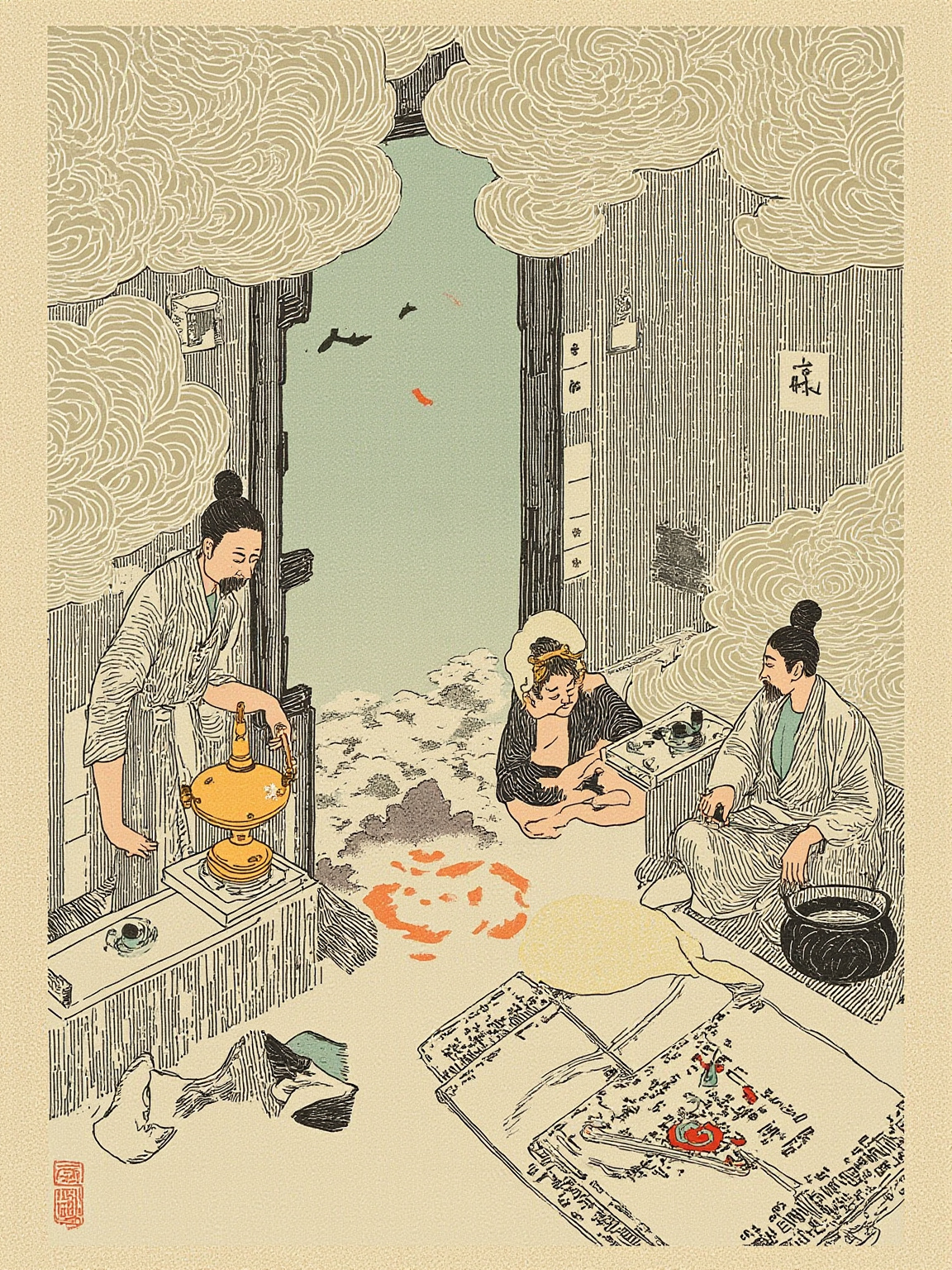
Of things strange, forceful, disorderly, and spiritual, the Master spoke not — and so I set down what he would not discuss.
怪、力、乱、神,子所不语也——然我偏要记他所不语的。
金句 · 自序 · 书名即檄文
The Fieldwork Crew Inside the Garden Study
Traces of fieldwork show up everywhere in Zi Bu Yu. Open any tale at random and you will likely find a small note attached, so-and-so told me this, or my brother-in-law Wang Gongnan says, Yuan Mei crediting his source. One night's story is a fox spirit, the next is a haunted county office, and the one after that might be a failed provincial candidate who stumbles into a City God's tribunal.
His basket of stories comes from roughly two sources. One is dinner-table talk among relatives and friends, thickest with fox-and-ghost lore from Hangzhou, Suzhou, and Jiangning. The other is the official gazettes, the court's own bulletins, whose bizarre criminal cases he polished into readable tales. Out of these two streams came more than twelve hundred short pieces, each just a few pages, each standing on its own, none of them requiring you to start at page one.
That is simply how the biji genre of the fantastic works: no protagonist, no throughline, no continuous story running cover to cover. It reads more like a thick joke book, divided into scrolls and sorted loosely by subject. Open it wherever you like, skip around at will, nothing breaks. Read it as a novel and you have misread it.
A Bureaucracy Underground, a Mirror of the One Above
The most rewarding part of Yuan Mei's ghost stories is the underworld bureaucracy he builds out of City Gods, Earth Gods, and runners. The City God is the underworld's county magistrate, the Earth God its village headman, the runners its clerks and bailiffs, a full staff, a full workflow, everything the world above has, the world below has too.
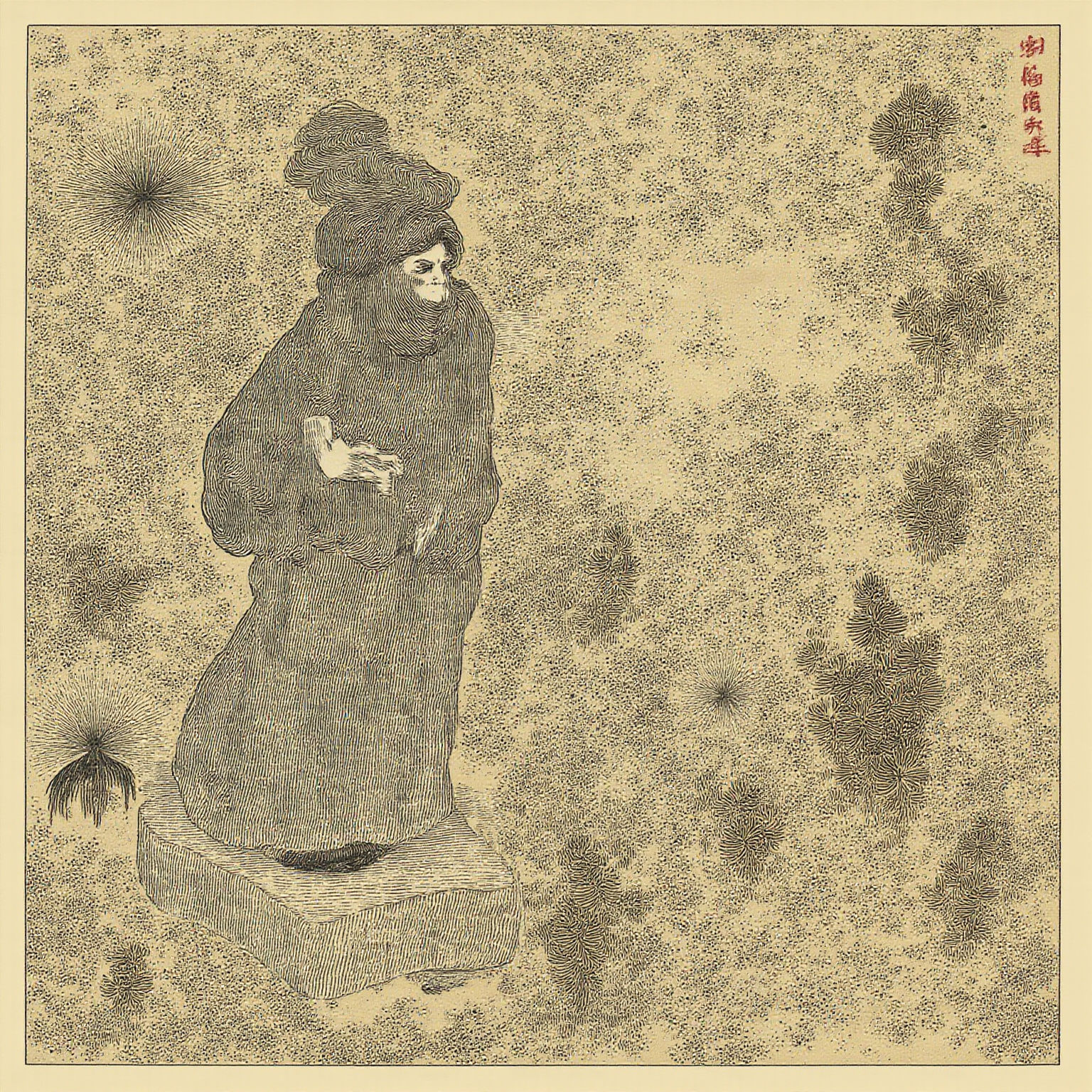
Below, the City God, the local Earth God, and their lictors kept an office that mirrored, in every weary particular, the yamen above.
城隍、土地、隶卒,阴间衙门口一应俱全,竟与阳世那座县衙别无二致。
金句 · 卷首 · 地下衙门与阳间官场
These underworld offices have the same problems as any other: buck-passing, graft, botched verdicts. A case gets kicked back and forth for three years running. A minor demon takes a bribe and doctors the register of life and death. A City God bungles his way through a case he never understood. Read enough of these and you start laughing, because this is not a ghost story at all, it is your own county courthouse in a ghost costume. Using the underworld to write about this one, using ghosts to scold the living, that is the real currency of Zi Bu Yu.
The ghosts are only the surface; social commentary is the bone and blood beneath. Lu Xun said Yuan Mei's prose sets aside ornament and, in doing so, comes closer to nature, and he put his finger on exactly the thing that matters: the looseness of the writing is what makes that underground bureaucracy feel so real.
A Pen That Turns Serious and Sends Up in the Same Breath
Yuan Mei switches between gravity and comedy the way a performer changes masks. In one tale a fox spirit impersonates the bodhisattva Guanyin, sits on a lotus throne for three years, and collects a whole mountain's worth of incense money, Yuan Mei writes it up like an exposé, mocking the credulity of temple worship. In another, a ghost throws its whole bag of tricks at Mr. Broadminded, and Yuan Mei has him smile his way through unmasking every one.
The tale titled No Flesh-and-Blood Body Is Ever a True Buddha is blunter still, exposing the whole scam of a living Buddha's ascension: talk of achieving Buddhahood in the body is just sleight of hand. Buddhism, the gods, the celibacy demanded by Neo-Confucian orthodoxy, the formulas of the examination essay, Yuan Mei takes them all on with the same needling, mocking tone, never once lecturing from a pulpit. He states his stance plainly in the preface: use the absurd to drive off the mediocre, use the startling to shake off the lazy. Delighting himself and his reader both, that whole program sits in that one line.
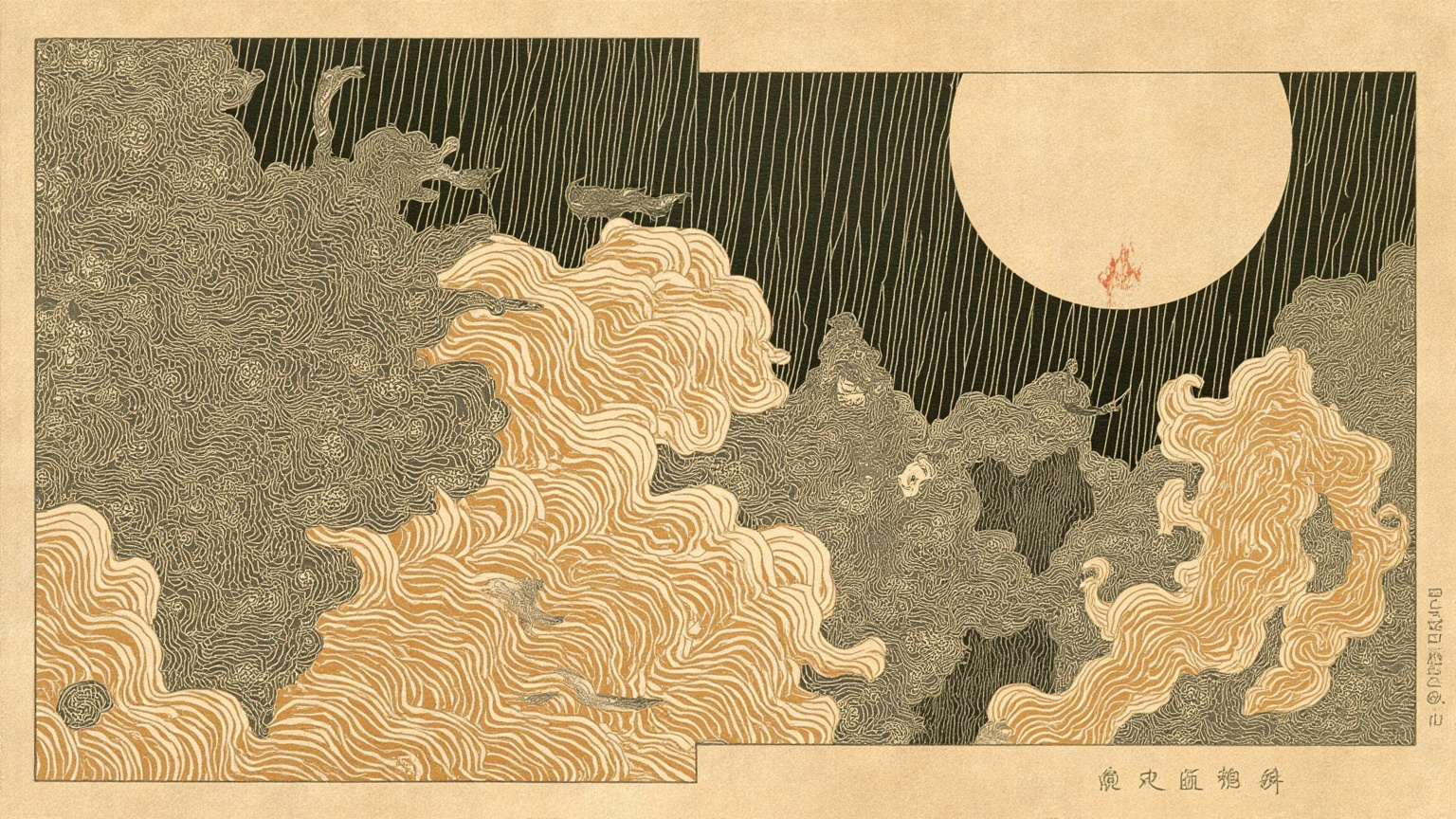
All flesh-borne Buddhas and immortals are false bodies — what ascends is no more than a trick of the eye, a sleight of the lamp.
凡肉身仙佛俱非真体——所谓升天者,不过障眼之技、烛下一幻。
金句 · 凡肉身仙佛俱非真体则 · 揭活佛升天
Mr. Broadminded Breaks a Ghost's Three Tricks
The single most memorable character in the whole book is probably Mr. Broadminded. A scholar who does not believe in omens, he runs into a ghost one night walking alone. The ghost tries to confuse him first, it fails. Then it tries to hide from him, he sees through it. Then it tries to terrify him, he does not so much as flinch.
Out of tricks, the ghost drops to its knees: I am out of ideas, sir, I only beg you to release me to my next life. Mr. Broadminded, cornered guest turned host, ends up the one doing the exorcising. What makes the story work is how neatly it sorts a ghost's whole arsenal into three moves, confuse, hide, frighten, a tidy little taxonomy. Yuan Mei keeps the tone light throughout, and Mr. Broadminded comes off less like a man facing a spirit than an old prankster trading barbs with one, with nothing sinister about it.
The Xingling School's Gentle Defiance
Yuan Mei led the Xingling school of poetry. Xingling, roughly native sensibility, meant writing what your own hand and mouth actually produce, putting on the page whatever is really in your head, in open defiance of the Neo-Confucian program of preserving heavenly principle by starving out human desire. After he left office, he threw poetry, wine, food, gossip, and ghosts into one pot and wrote it all by the candlelight of his garden study.
So Zi Bu Yu isn't curiosity-hunting or a display case for the strange, an old writer is using ghosts and spirits as a cup to pour out what weighs on his own chest. Read enough of these teasing, mocking little pieces and a figure emerges: a retired gentleman in the south, thoroughly disillusioned with officialdom, contemptuous of Neo-Confucian orthodoxy and the examination essay, sneering quietly at the frauds of Buddhism and Daoism. Gentle as the surface stays, the defiance underneath never lets up. He never charges anyone head-on, but every single tale lands a jab.
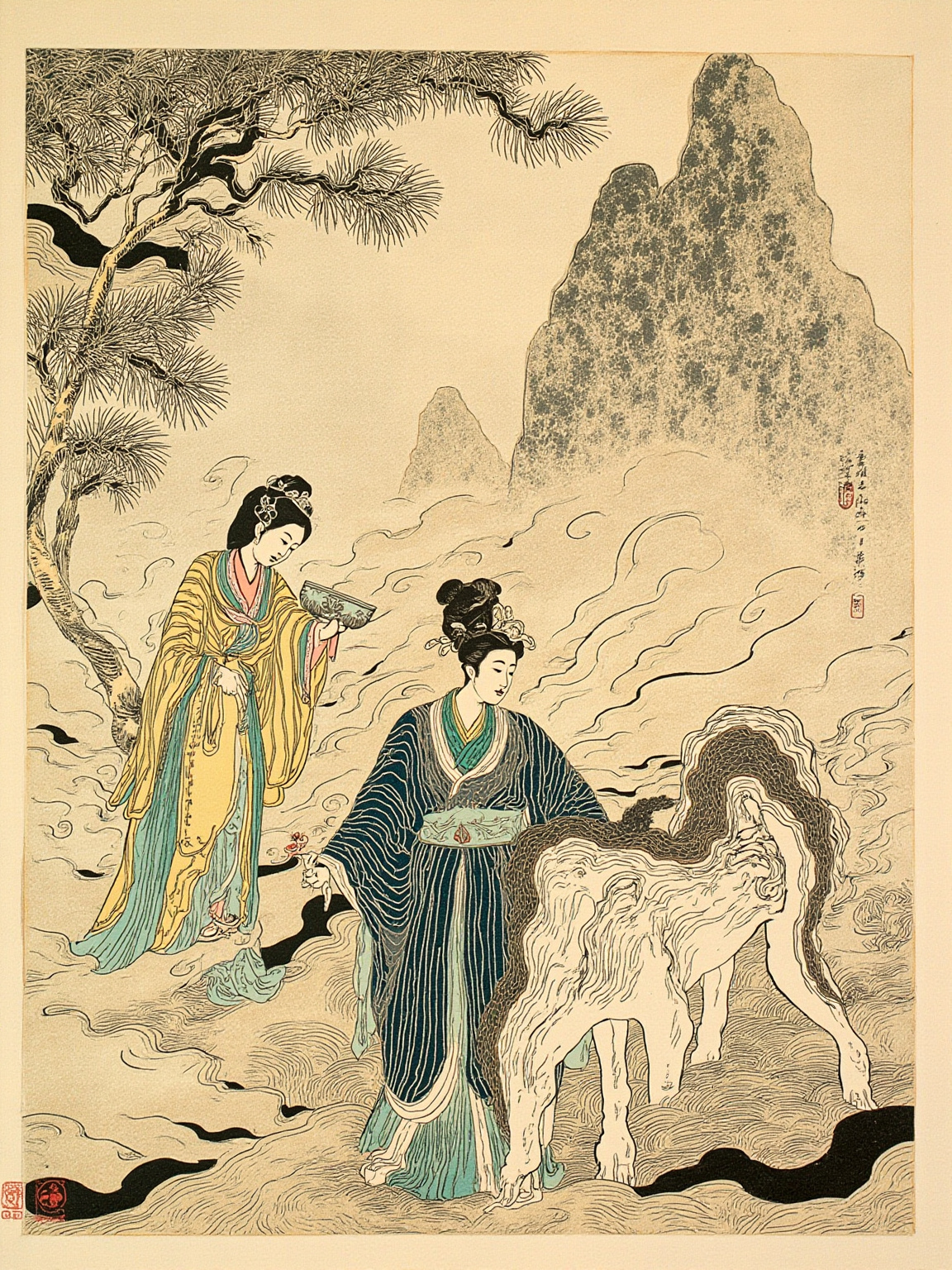
A ghost has but three tricks — first to bewilder, then to blind, and last to frighten. When all three fail, it kneels.
鬼有三技:一迷,二遮,三吓;技穷,则扑通一声跪于地。
金句 · 豁达先生则 · 破鬼三技
A Book of Jokes That Got Banned
Defiance like that was bound to draw official attention. Starting in 1838, the Qing court repeatedly placed Zi Bu Yu on lists of banned salacious fiction. In 1868, the famous banned-book catalogue compiled by the official Ding Richang put the whole book under outright prohibition. Not until the Guangxu era, decades later, did the ban quietly lapse.
That officialdom feared a collection meant to be read for laughs, and feared it this thoroughly, is itself evidence of how much defiance the book actually carried. Yuan Mei almost certainly never imagined, as he jotted down his jokes about fox spirits, that decades later a provincial grandee would frown over them.
The Last Piece of Qing China's Three Great Collections of the Strange
Classical-language tales of the strange in the Qing dynasty rest on three pillars: Pu Songling's Strange Tales from a Chinese Studio, Ji Xiaolan's Yuewei Caotang Biji, notes from his thatched study on close scrutiny, and Yuan Mei's Zi Bu Yu. All three write about ghosts and spirits, and no two sound alike. Strange Tales is lush, its foxes and ghosts falling in love with human beings, the prose laid on thick. Yuewei Caotang Biji is cold, using ghost stories to argue karma and consequence, a chill running under every line. Zi Bu Yu is comic, loose-limbed, built out of twelve hundred short pieces. Read all three together and the full shape of Qing ghost literature comes into view.
Take Zi Bu Yu out of that picture and the era's ghost literature loses a certain warmth: the work of an old prankster in a garden south of the Yangtze, writing by candlelight, laughing while the jab still lands.
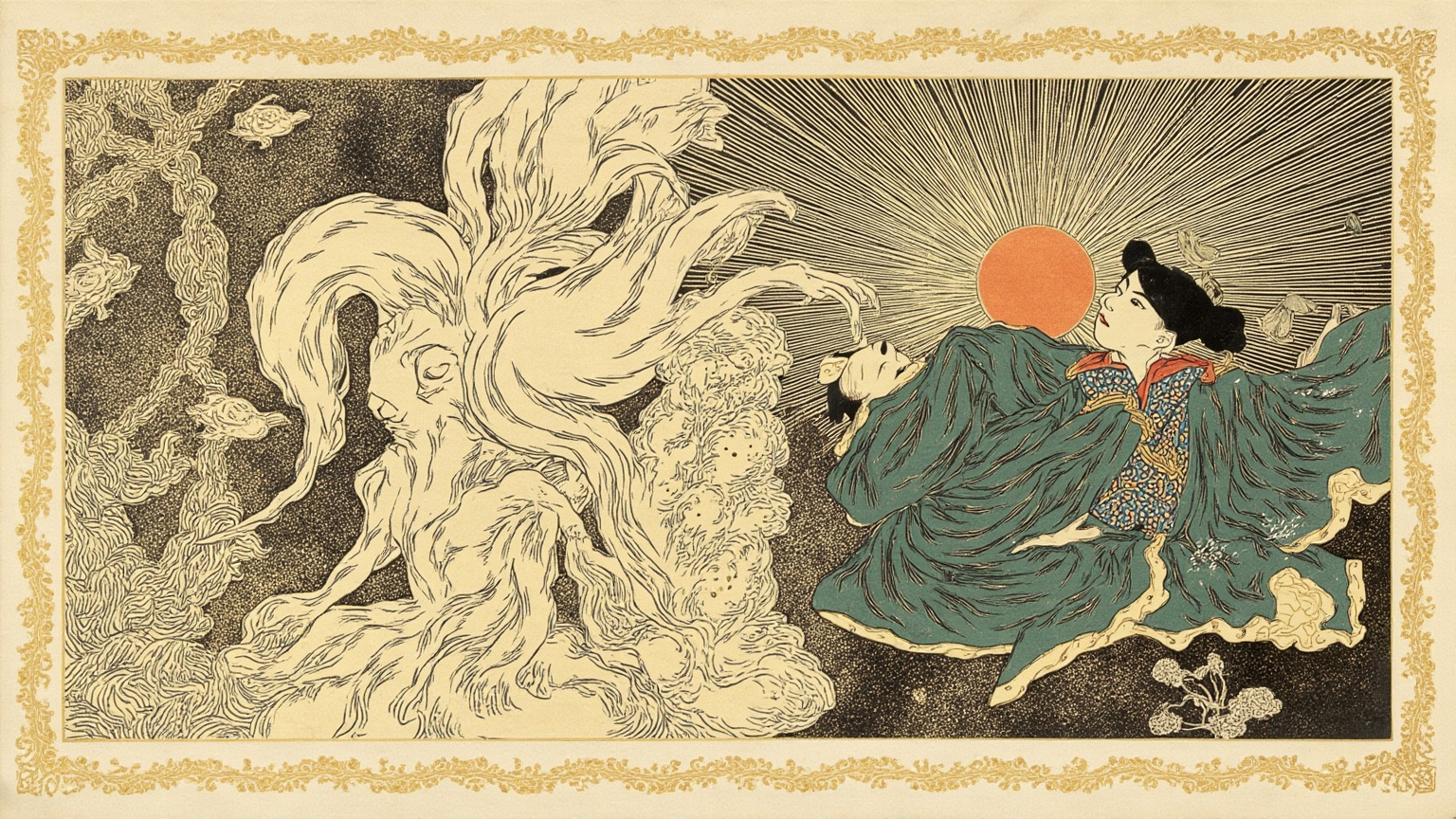
Of the three great registers of the strange in our dynasty, two are known — but without the third, the flavour of the age goes untasted.
清代三大志怪,缺了随园这一块,那时代的鬼神便少了一种温度。
金句 · 卷末 · 清代三大志怪的最后一块
Why the Plot Summary Still Leaves the Real Book Worth Reading
A guide like this one hands you a map, but you only smell the actual soil by walking into Sui Garden yourself. The story of Mr. Broadminded and the ghost's three tricks works because of its timing: the ghost tries one move, then Mr. Broadminded, smiling, undoes it, then the ghost tries another, undone the same way, until at last it drops to its knees. Get to that point and you laugh out loud, and that particular lightness cannot be handed to you secondhand.
Twelve hundred stories, and every one carries its own temperature. Some mock the clergy, some mock officials, some tell a strange romance between the living and the dead, some are just a dry joke jotted down late at night by candlelight. Get through the whole book and you will likely understand why Lu Xun called it too casual and often coarse, coarse it genuinely is, and casual it genuinely is too. That refusal to put on airs has, in our own age, become a rare commodity. The old man of Sui Garden was still in his seventies listening to stories and writing them down, still driven by what he himself called a lifelong love of unruliness, and no summary can stand in for that.
Zi Bu Yu is the defiance an old man distilled by candlelight in his garden, ghosts and spirits standing in as a cup for what weighed on his own chest.
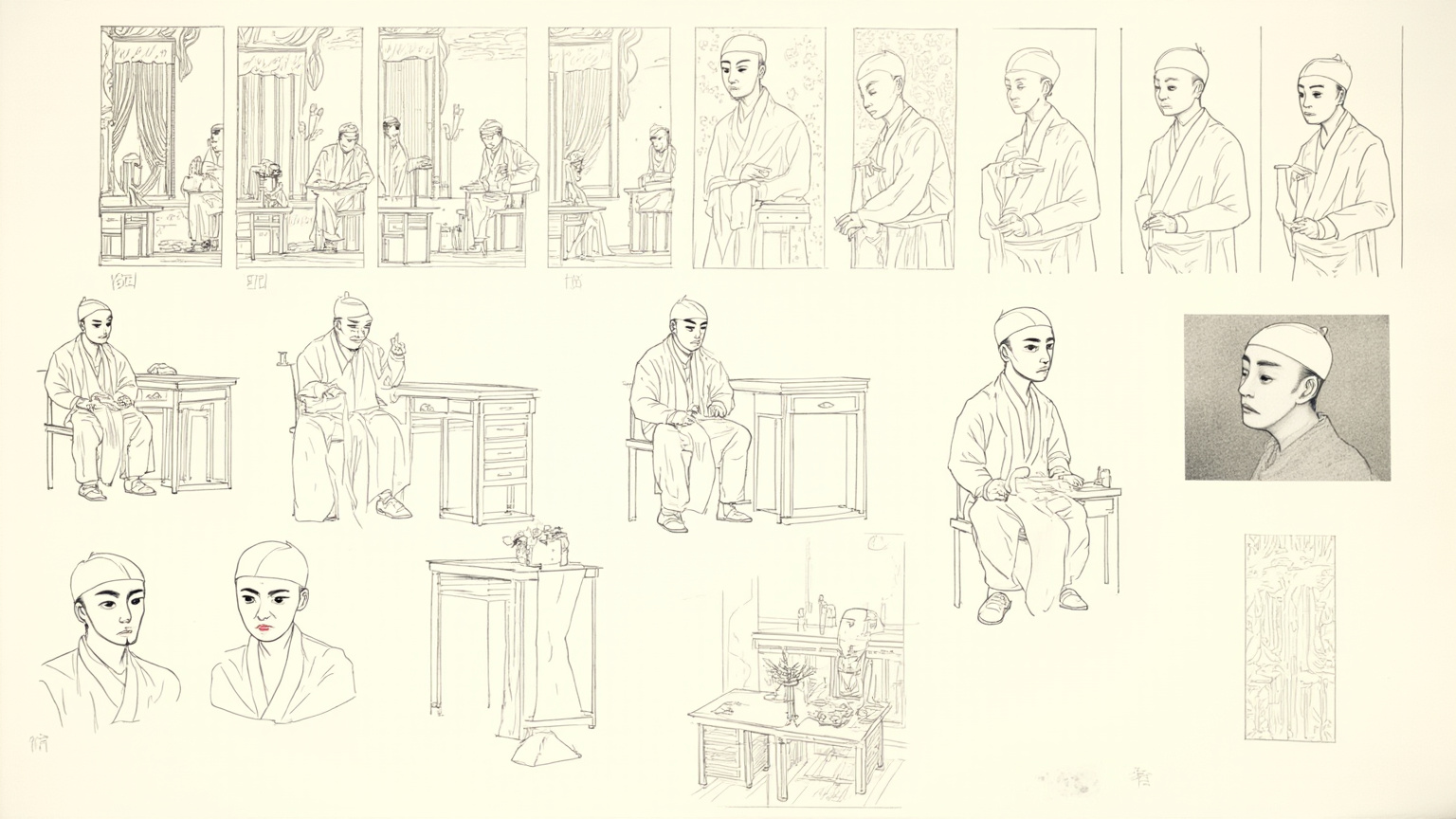
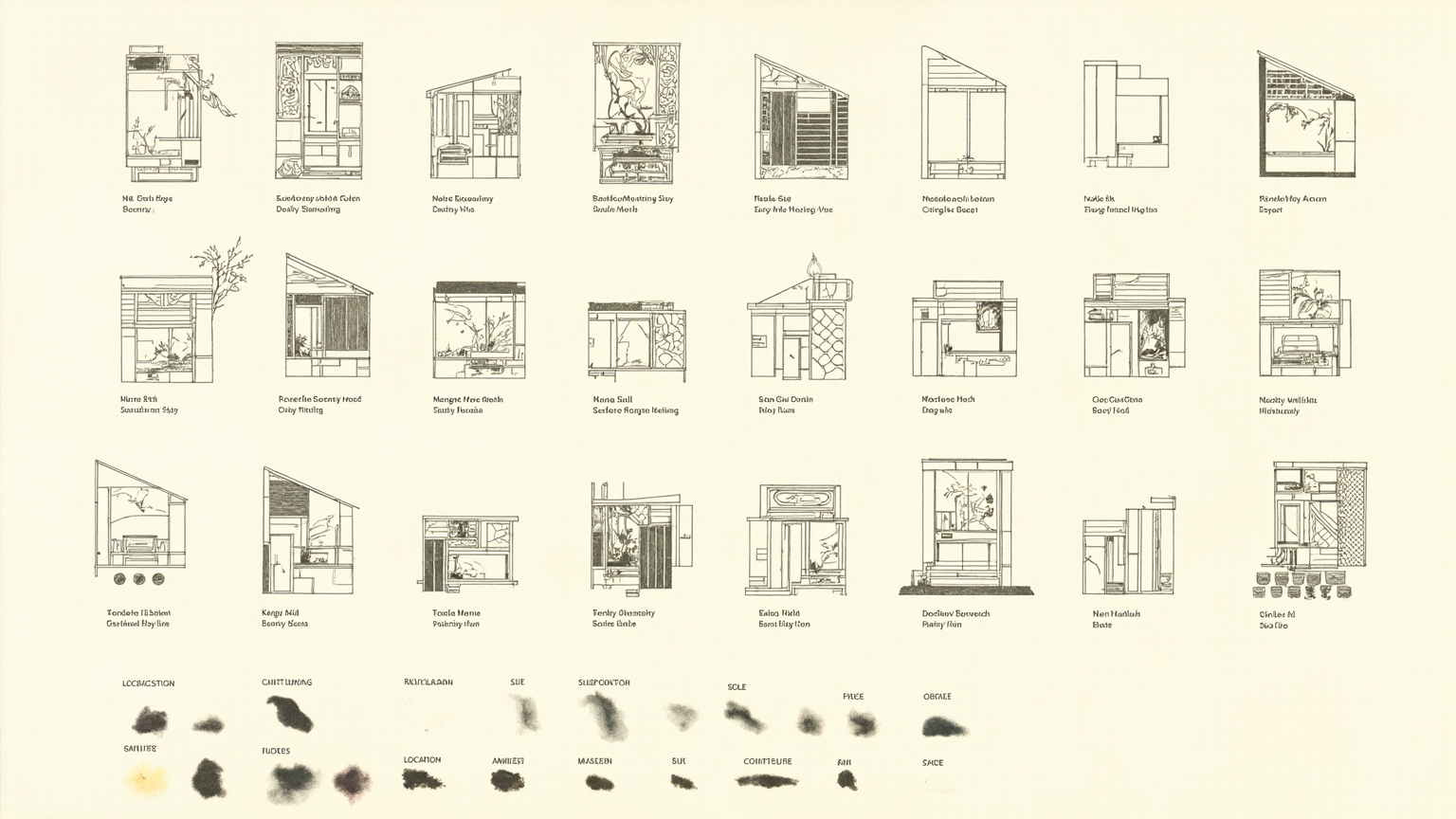
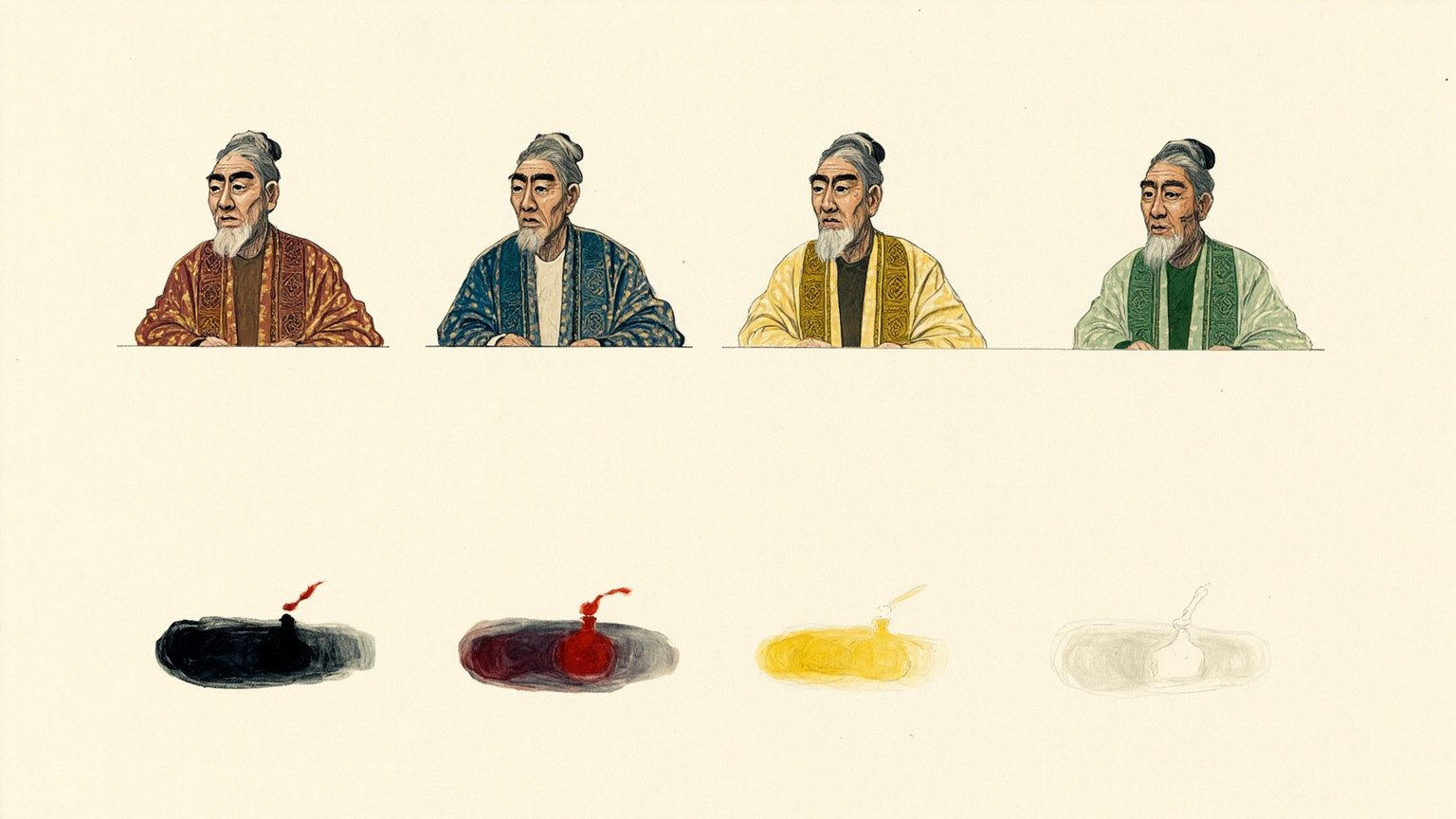
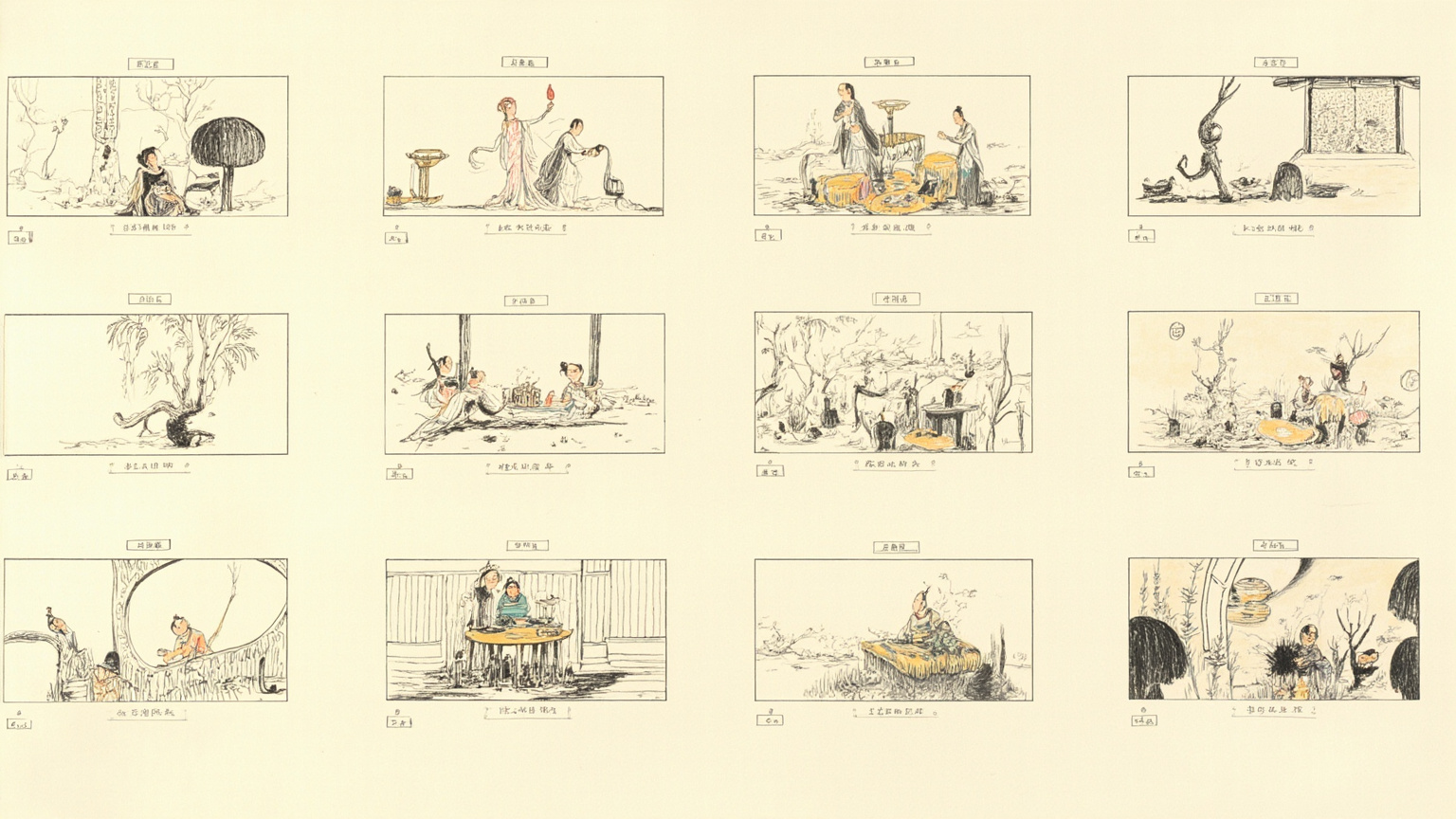
Art Direction4 plates
Before the guide was written, this book got a visual foundation — every illustration you just read grew out of it.