Zuni Folk Tales · Companion Guide
祖尼民间故事集
一个外来者在土坯房墙根记下的口述神话:郊狼偷火,少年以智破局,被弃的女孩从山坳里把青玉米带回人间。
Opening: A Fire, a Coyote, an Adobe Wall
The story starts with a cave — not the abstract cavern of myth, but an actual rock shelter called Acoma, at the headwaters of the Colorado River. This is where, the legend says, the Sun Mother gave birth to the divine child, and the handprint is still said to be visible on the rock wall. In the Zuni world, the center of the universe is neither in the sky nor somewhere far off; it is right here, at the Middle Place. Six sacred mountains ring the horizon, the human village sits at the center, the gods live on the peaks, and the ancestors pass between earth and sky through caves and springs. A young outsider — Cushing, an American who threw himself into this Pueblo tribe in his early twenties — crouched against the adobe walls and listened to the old people tell these stories over and over, in Zuni.
He was not passing through, and he was not a guest. He settled there for eleven years in all, learned the language, ate the cornmeal, went into the hills with the hunters. That is why Zuni Folk Tales is not a folktale collection passed through several hands. It is an outsider, sitting against an adobe wall, writing down in his own hand the myths the Zuni were still telling, still speaking in ceremony.
What This Book Actually Tells
The book is built on three layers. At the bottom is the creation myth: the Sun Father and Sun Mother descend, the direction gods each claim a quarter, and game, humankind, the seasons, and day and night are set in their places. This is how the Zuni Middle Place came to be. The middle layer is heroes and origins: a cast-off child is taken in by the gods and grows up to bring back fire, medicine, green corn. The top layer belongs to Coyote, a trickster who one moment steals fire for people and the next ruins a good thing, forever running some scheme, forever getting outsmarted by something sharper.
It was published in 1901 by the Smithsonian Institution in Washington. Since then, no one writing seriously about the oral traditions of the Southwest Pueblo peoples has been able to go around this slim book. It has been reprinted again and again, translated into dozens of languages, and still sits on the required-reading shelf in ethnology departments — not because it is literary, but because it is faithful.
The Cast: Gods, Tricksters, Children, Corn
The Sun Father (A-wa-ta-wa) sits high above, and the Zuni keep their distance from him. The one who actually runs things, who stays close to mortals, is the Sun Mother (Urewana). She pities people, grants the harvest, gives medicine, and prays the dead to their rest. The scene of her giving birth to the divine child in the Acoma cave is close to the gentlest image in the whole book. That child grows into a hero and returns to the people, delivering them from years without water or fire.
Coyote is never human and never appears as one. He is a trickster always scheming — greedy, vain, a braggart. He will steal you fire today and sell you out for a scrap of meat tomorrow. His pleasure is the con itself, but his cons keep handing people unexpected gifts, so he ends up half troublemaker, half co-author of creation. The Two Children are a different kind of protagonist: two mortal kids, regularly sent to pull off impossible tasks, who win by wit rather than force. The Green Corn Maiden, called the Hungry Girl, sits at the center of the plant-origin stories: cast out, rescued, given the green corn, and every Green Corn Festival the people speak her name before they eat. And behind them all is a crowd of unnamed Zuni storytellers, sitting against the wall. They are the book's real authors.
The Sun Father and Sun Mother Descend: How the Middle Place Began
Everything begins with the descent. The myth has it that the Sun Father comes first, laying down warmth, the growing season, and the principle of fatherhood, though he has little interest in the small business of human life. The Sun Mother follows close behind, and she is the one who actually comes down to earth: she pities mortals, grants the harvest, and finds the dead a place to rest. Each of the direction gods claims a sacred mountain, game is given its own point of origin, and people are set at the exact center of the six-sided world. This claim to be the center of the world is not map-boasting. It is the real core of Zuni ceremonial structure: the village is the midpoint of the universe, the gods come down from the mountains, the ancestors return through the springs, and the seasons turn around the village.
Cushing does not reach for poetic long sentences here. His method is closer to dry ethnography: set the scene, then let the characters speak for themselves. The gods say little and do less, but every descent, every act of placing something in the world, is pinned to a specific mountain, spring, or village name. That density of place names gives the creation myth the feel of a field report, as if the red earth under your feet really were the origin point of the universe.
The Acoma Cave: The Sun Mother Gives Birth to the Divine Child
At the headwaters of the Colorado River, in a rock shelter set into a cliff, the Sun Mother gives birth to the divine child. The story plays up neither the pain nor the miracle. It simply tells of a mother giving birth in the most hidden of caves, and of the child who grows up to fetch fire, water, and song on behalf of mortals. The handprint is said to remain on the rock wall to this day. The myth is reenacted again and again in Zuni ceremony, and Cushing sets it down exactly as told, without adding a line of his own drama.
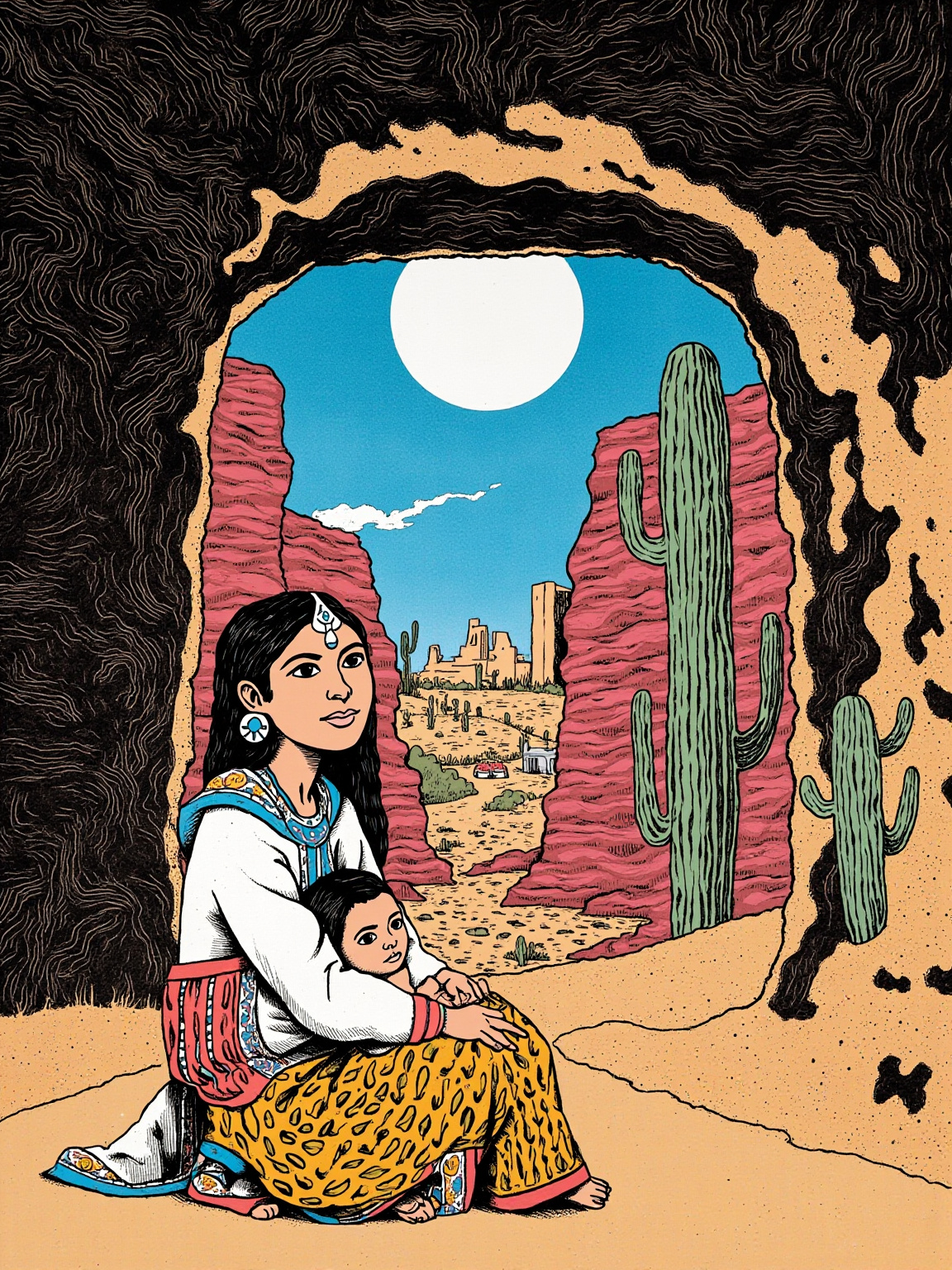
There in the deep rock chamber, Urewana bore the divine children, and the print of the infant's hand is yet to be seen upon the wall.
在那深深石窟之中,日母生下了神婴,而壁上至今仍留有那小小掌印。
金句 · 阿科玛洞 · 神婴降世
Coyote Steals Fire: A Win, Then a Fall
Coyote catches the smell of roasting meat drifting from far off. He knows it is the Fire God's fire, and the people below have none. He turns himself into a stick, lets himself be picked up and set beside the campfire. It is the classic trick: play dead, play wood, wait for the Fire God to feed the flames, then snatch a burning branch and run. The Fire God gives chase, and Coyote keeps looking back to jeer as he runs, nearly blowing out the fire in his own mouth. This is the standard Zuni arc of winning and losing in the same breath: he gets what he wants through flattery or shapeshifting, then loses it to his own greed, boasting, and mockery.
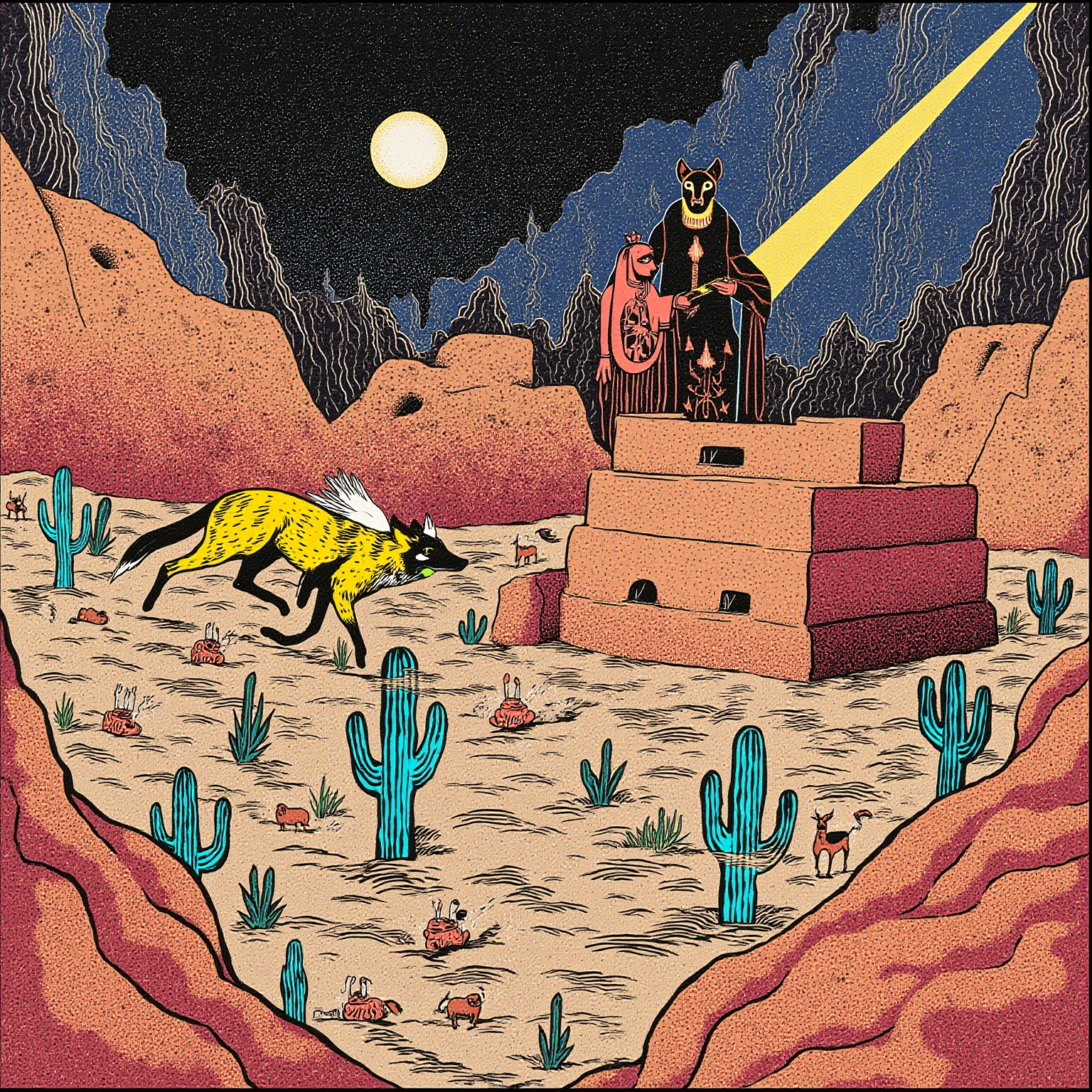
So Coyote became a stick, lay beside the fire of the god of fire, and when the god stooped to tend it, he seized a burning branch and fled.
于是郊狼化作一根木棍,躺在火神的灶边,待火神俯身添柴,他便叼起那根燃着的枝子,拔腿便逃。
金句 · 郊狼偷火 · 诡计与溃败
Stealing water, stealing song, stealing fish — all cast from the same mold. Coyote plays the pitiful beggar, the nobleman, the sorcerer, and every time he nearly pulls it off, and every time he is caught out by one last second of greed. The one who punishes him is usually some dim-looking badger, a silent hawk, or a hunter, and watching these plain, honest creatures turn the tables on the crafty trickster is the part of Zuni folktales that gets the biggest laugh. The stories tend to close on a sharp jab or a proverb set to a scrap of song, the audience roars, and that is the end.
The Two Children: Sent to Do the Impossible
Famine comes, and the village can barely hold on. The gods send out two children, mortal kids with no divine power, only wit. They must travel a great distance to bring back game, a song, a seed. The road is thick with monsters and traps: the older brother is nearly swallowed whole, the younger nearly roasted alive, and both survive only by thinking fast. When they finally bring what they were sent for back to the tribe, the whole village gathers around, the fire is lit again, and the corn goes back into the ground.
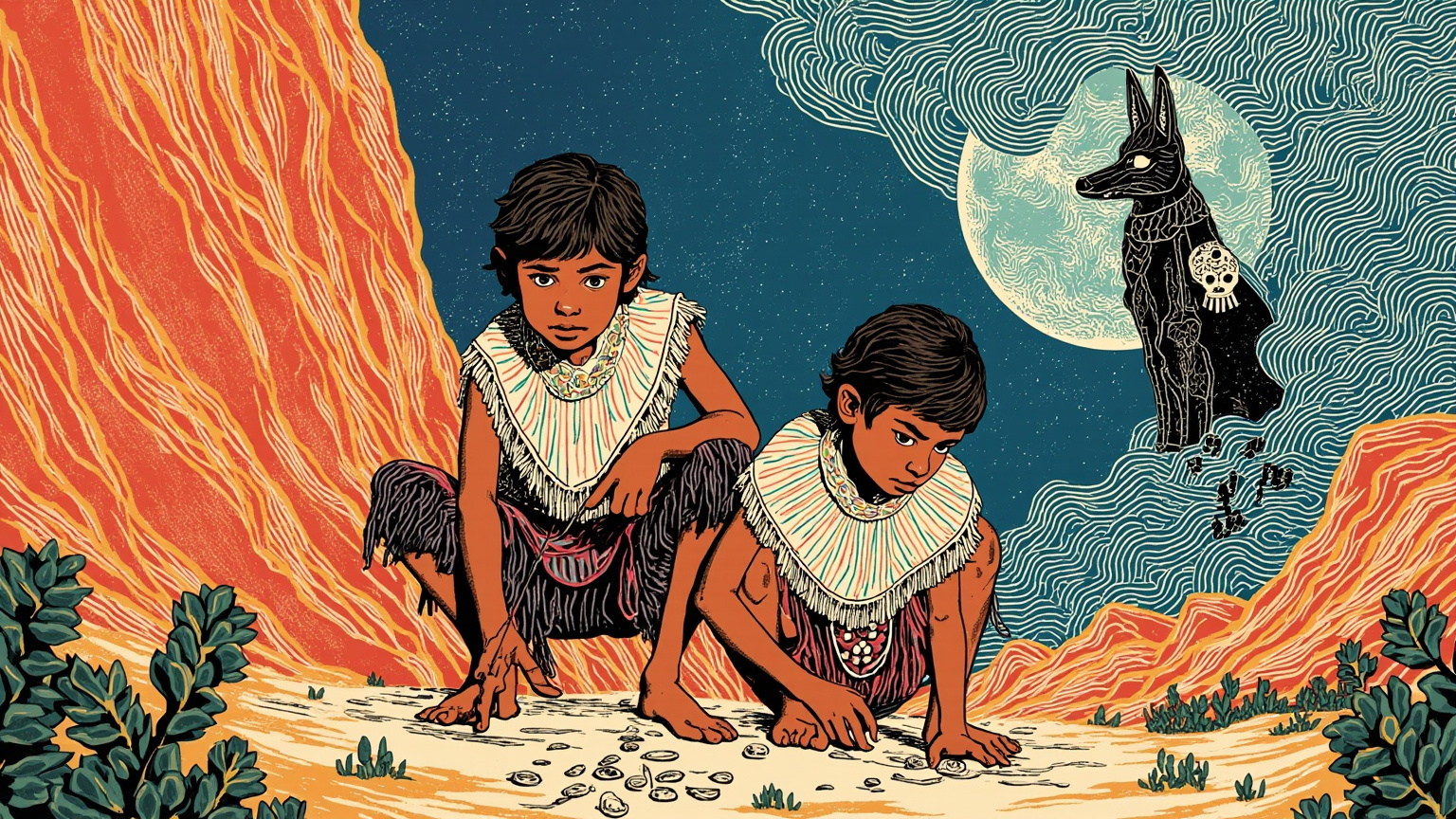
They were but two boys, and the world was full of monsters; yet by wit, and not by magic, they found their way home.
他们不过是两个孩子,世界却满是妖邪;他们凭的是脑子,不是法术,硬是走回了家。
金句 · 两少年远征 · 以智胜力
This pattern of the young hero who beats strength with wit turns up again and again in Zuni oral tradition, and it sets it apart from the Coyote myths of the northern Plains — the Zuni hero is mortal, and wins through intelligence, not magic. That fits how the Zuni think about being human: a person is not the gods' dependent but the one who bears the Middle Place, and has to work things out alone.
The Hungry Girl and the Green Corn: How the Plant Came to Man
The shape of the story: a little girl is unwanted by her family — too thin, eats too much, cries too much — and is left in the hills to die. There a divine mother finds her, raises her, and gives her a seed she has never seen before: green corn. She carries it back to the village, and the people harvest well ever after. This is where the Green Corn Festival comes from: every year, before the new corn is eaten, the people first speak the Hungry Girl's name.
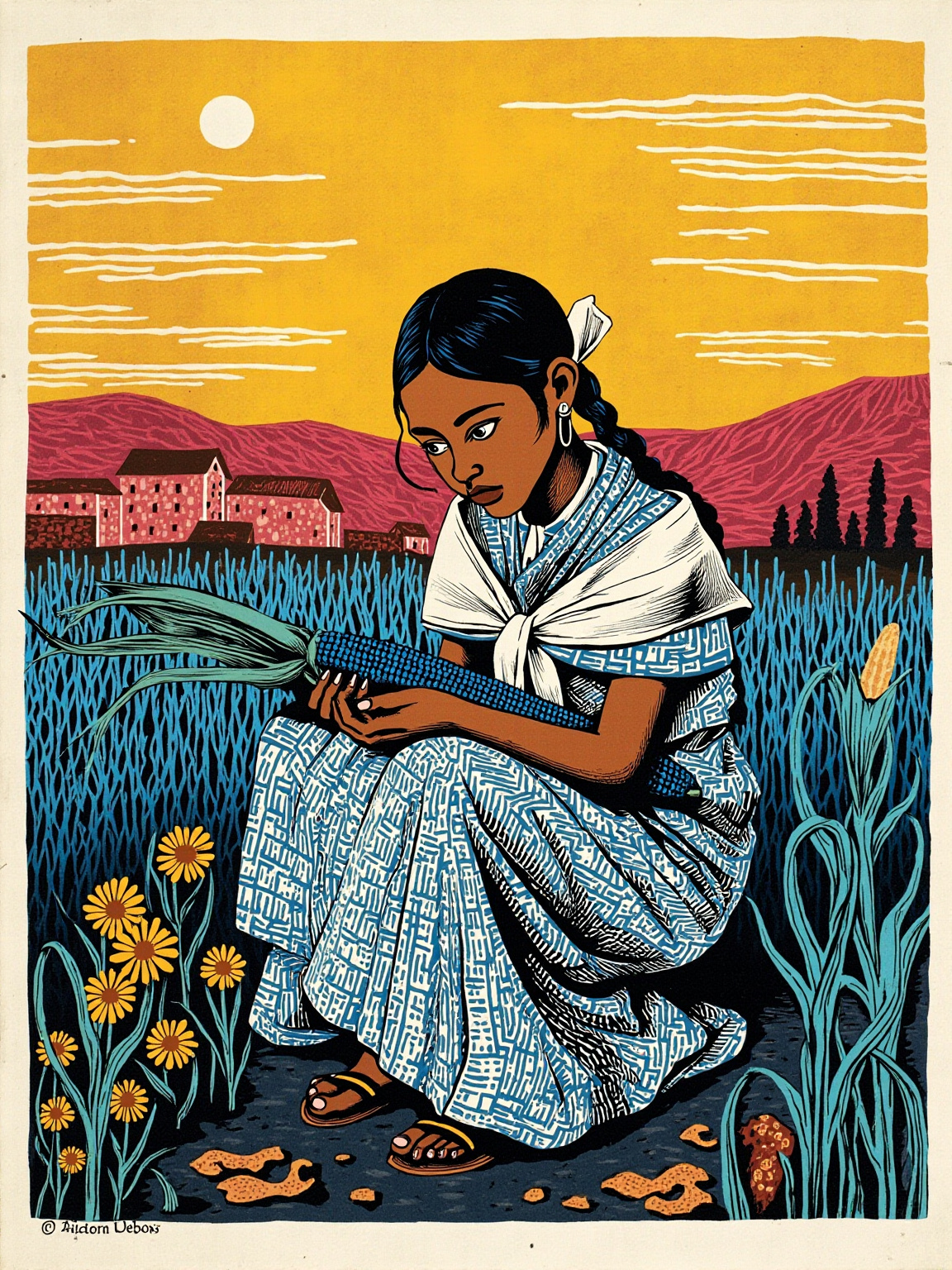
They left her in the mountains to perish, for she was thin and hungry; but the mother of corn found her and fed her, and gave her the seed.
他们把她丢在山里等死,只因她又瘦又饿;可青玉米的母亲寻见了她,养了她,并亲手将种子交付于她。
金句 · 饿女孩与青玉米 · 起源
The story does not go for pathos. The Zuni never tell it in the modern register of poor her — what they are telling is order: a person is cast out, but because a divine mother pities her, order is restored. Hunger here is not shame but qualification: only a child who has truly gone hungry earns the right to bring green corn back to the people. The motif shares its structure with the Sun Mother giving birth in the Acoma cave — a sacred mother takes in the abandoned and gives them what they need to live.
Coyote and the Sun Family: Partners Who Make and Unmake
Read the Coyote stories alongside the Sun Father and Sun Mother myths and an interesting tension appears: the Sun family stands for order, mercy, the steadiness of the seasons, while Coyote stands for chaos, greed, deceit. And yet the fire, water, song, and medicine that Coyote steals are exactly what the human world is short of. So order and chaos are not opposites here — they are two faces of the same universe. Without Coyote's tricks, the Sun family's gifts never reach mortal hands. That dialectic runs tighter and more complicated than the Coyote myths of the northern Plains, and it is the part of Zuni oral tradition outsiders most underrate.
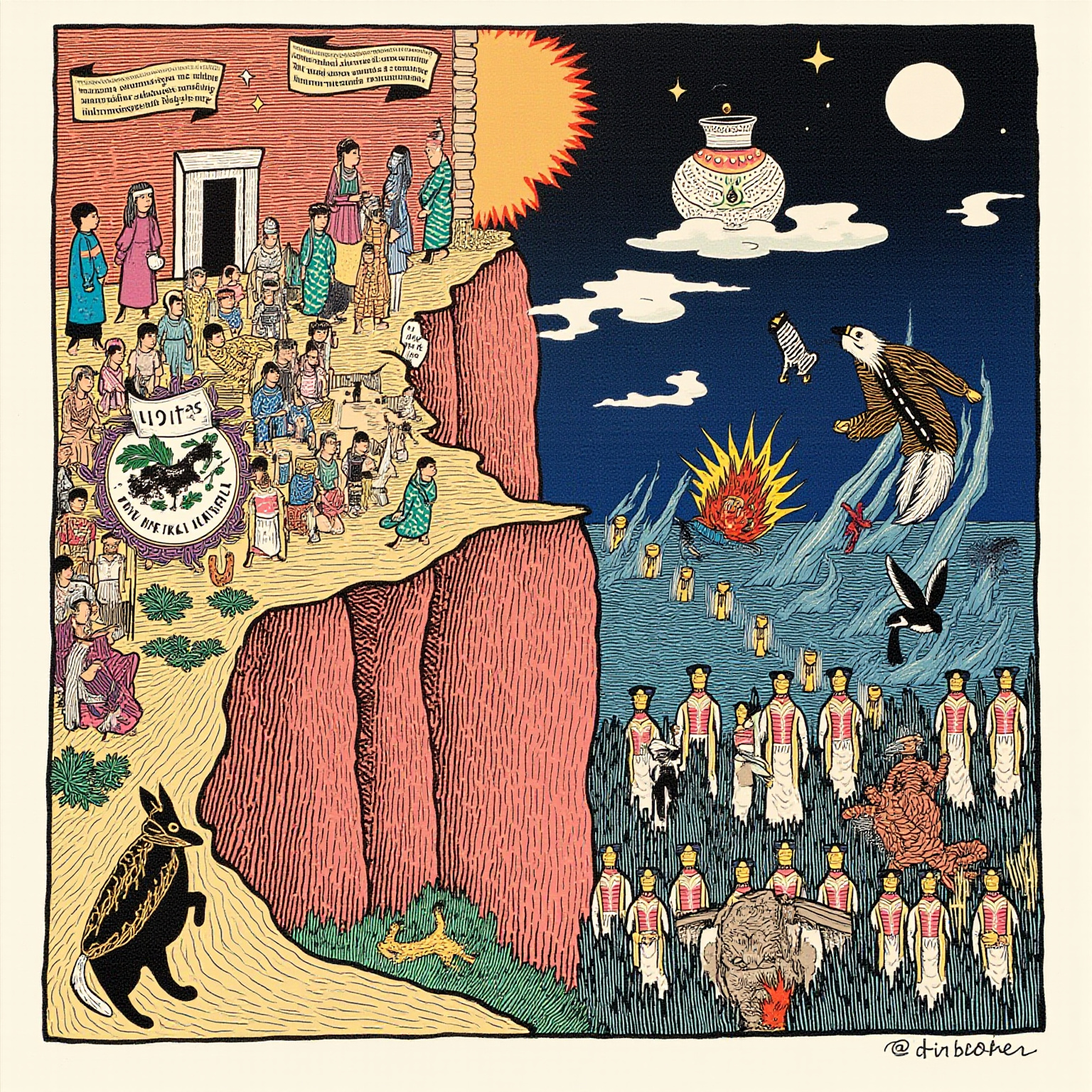
For Coyote is at once the spoiler and the bringer: what he steals by deceit, mankind receives as a gift.
郊狼既是败坏者,也是带来者:他以诈术窃得之物,竟成了人间所受的馈赠。
金句 · 秩序与混乱 · 张力
Against the Adobe Wall: Who Is Telling These Stories
The last character in this book is the anonymous Zuni storyteller, not any single elder but the group sitting against the adobe wall. Cushing returns to this image again and again: he sits among them, they speak a line, he writes it down, and sometimes a single line of Zuni takes several tries in English before it settles onto the page. This double authorship, spoken by the Indigenous and transcribed by the outsider, is what the book most deserves to be respected for. It is neither Cushing's invention nor an independent Zuni publication. It is what was left behind after eleven years of two peoples living side by side.
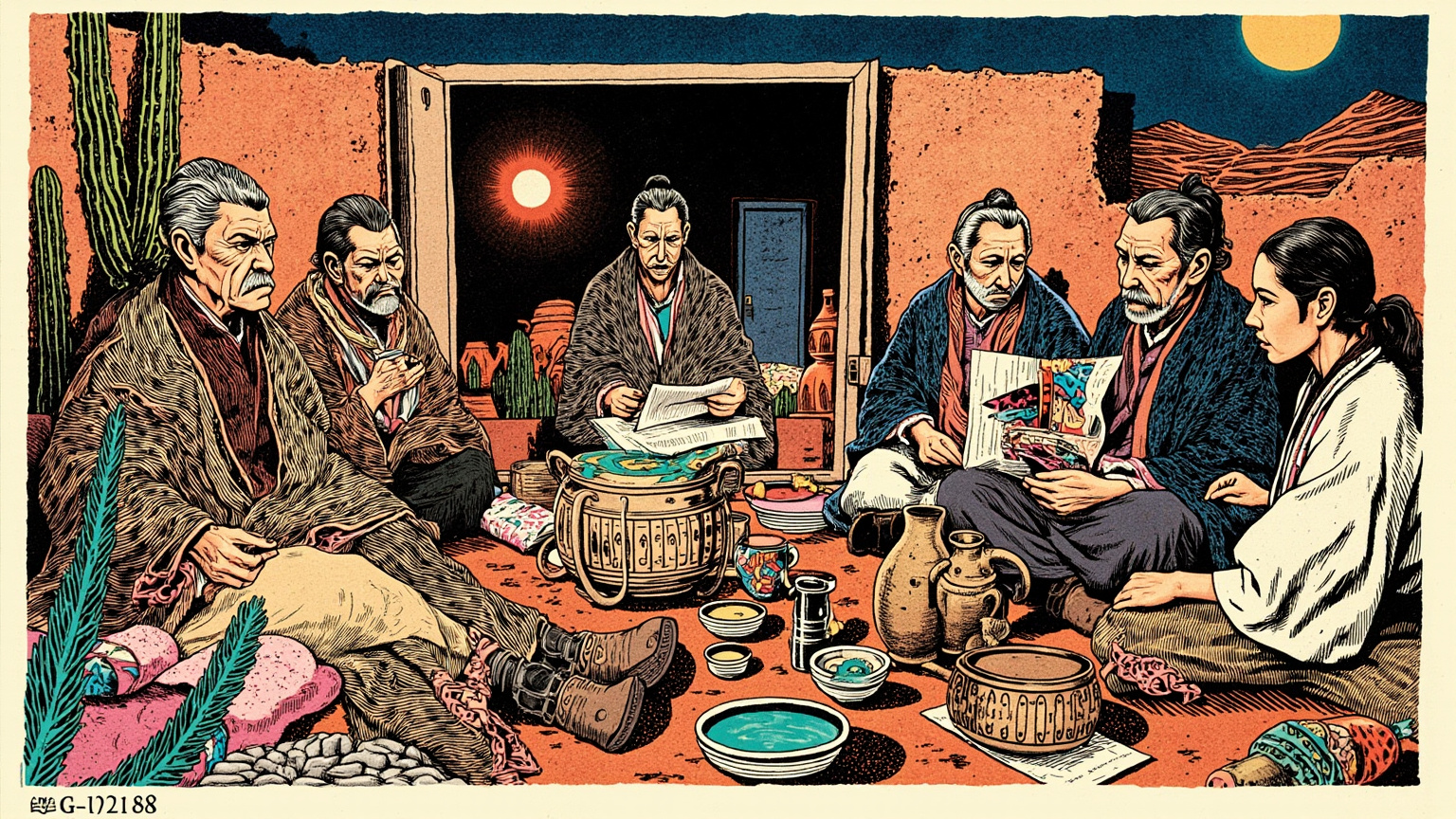
Thus it is the stranger who sits by the wall of the adobe house, catching word by word the tales the people tell one another in the night.
于是便是那位异乡人,坐在土坯房的墙根下,一句一句,记下他们在长夜里彼此讲着的故事。
金句 · 土坯房墙根 · 记录者
Why It Is Still Worth Reading
Two reasons. First, it is alive. When Cushing wrote these myths down, the Zuni were still speaking them in ceremony. More than a century later, the Zuni Pueblo community still dances for the Sun Mother, still speaks the Green Corn Maiden's name, still plays Coyote, on their appointed days each year. The world this book describes never died; an outsider simply froze it in the language of his time. Second, it is honest. Cushing never rewrote Zuni myth into a Victorian fable, and never dressed it up as an oddity for curious readers. He kept, wherever he could, the Zuni's own place names, god names, ceremonial terms, so that an English reader runs straight into a strange, complete, self-consistent spiritual universe — one centered on the Middle Place, bounded by six sacred mountains, and colored throughout by maternal mercy.
In this slim book, not one hero wins by force. Coyote wins by trickery, the hero by wit, the corn by a girl who was cast out.
Go Read the Text, Not Just Me
A guide can give you the map, not the land. I can tell you Coyote gets caught stealing fire, that the Hungry Girl brings back green corn, but I cannot tell you how the pitch of a Zuni line rises and falls when it is spoken, or what kind of quiet falls over the village when the Sun Mother's birth of the divine child in the Acoma cave is reenacted in ceremony. Cushing's transcription is full of syllable marks for ceremonial songs, the sequence of ritual gestures, the direction of place names. That weight, this small book only gives up to someone who opens the original, follows it against a map, and reads slowly.
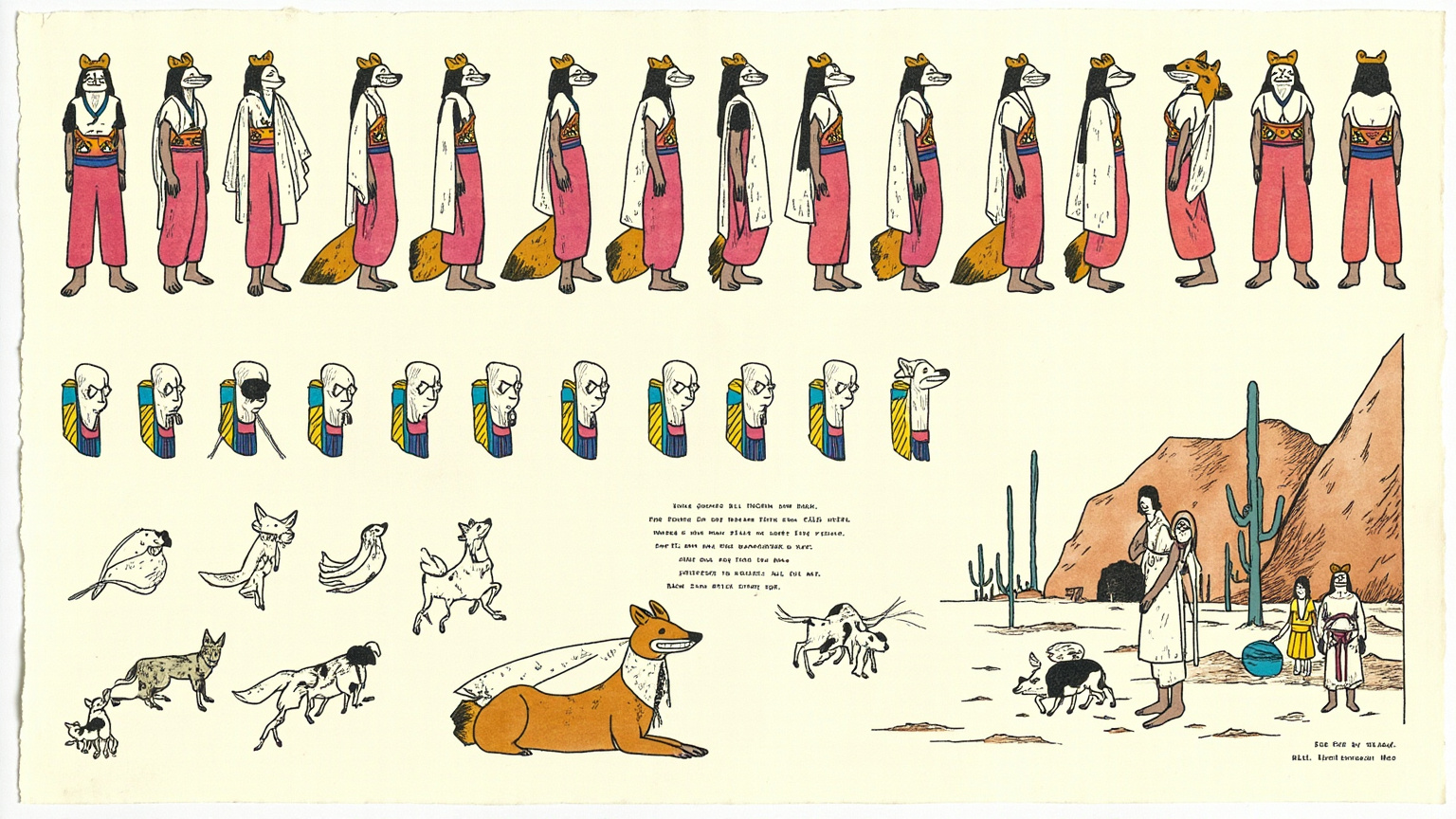
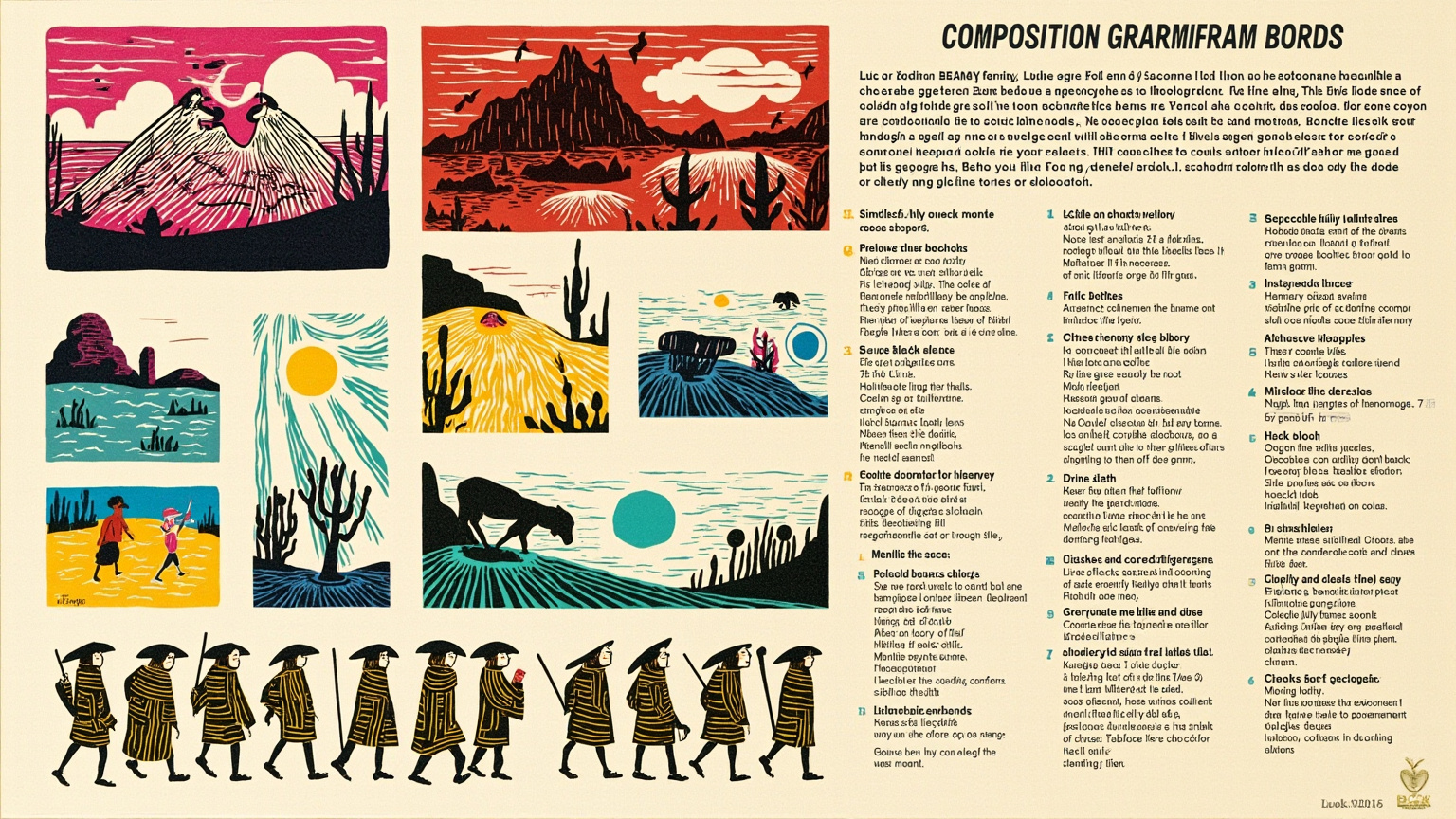
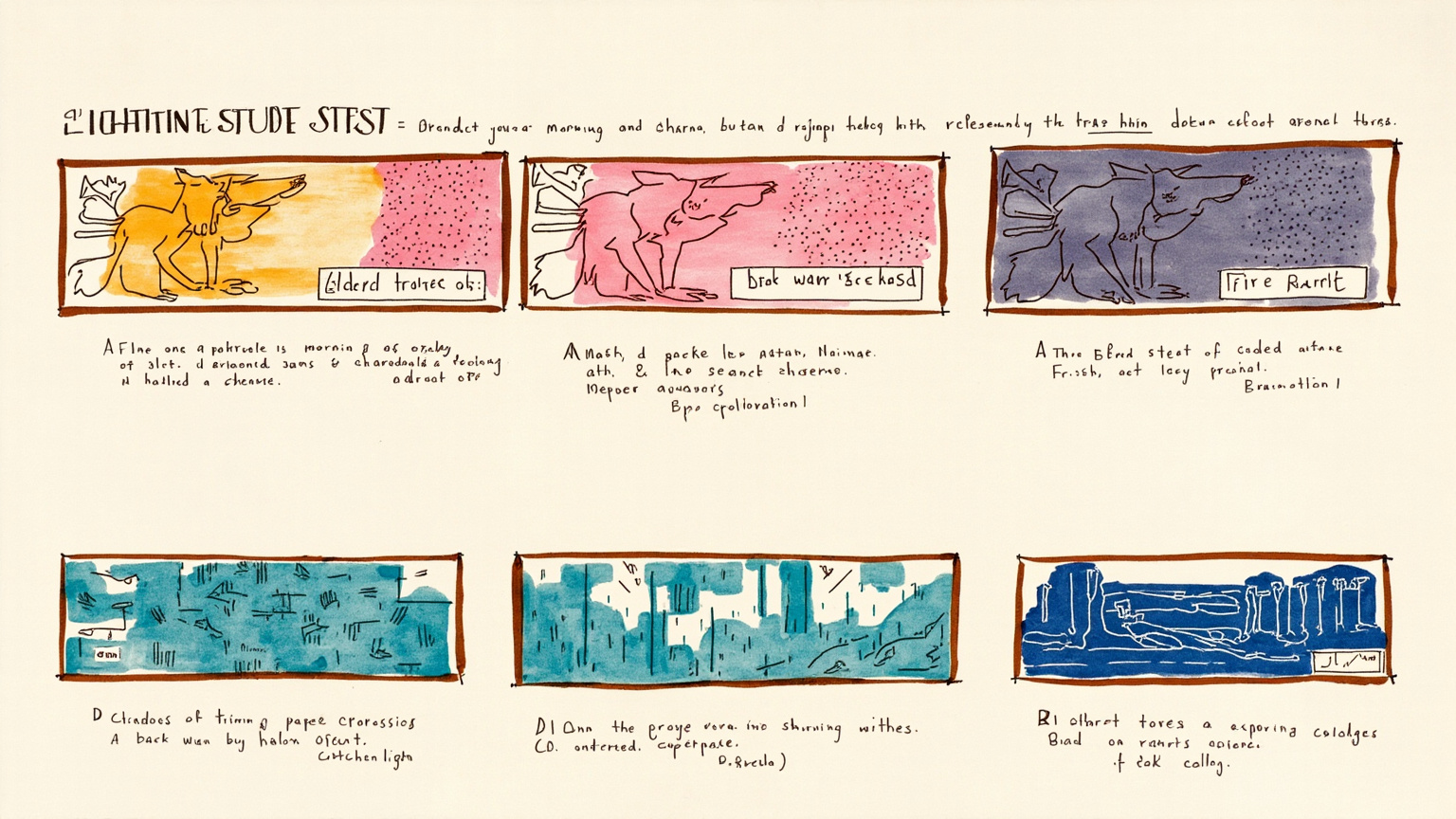
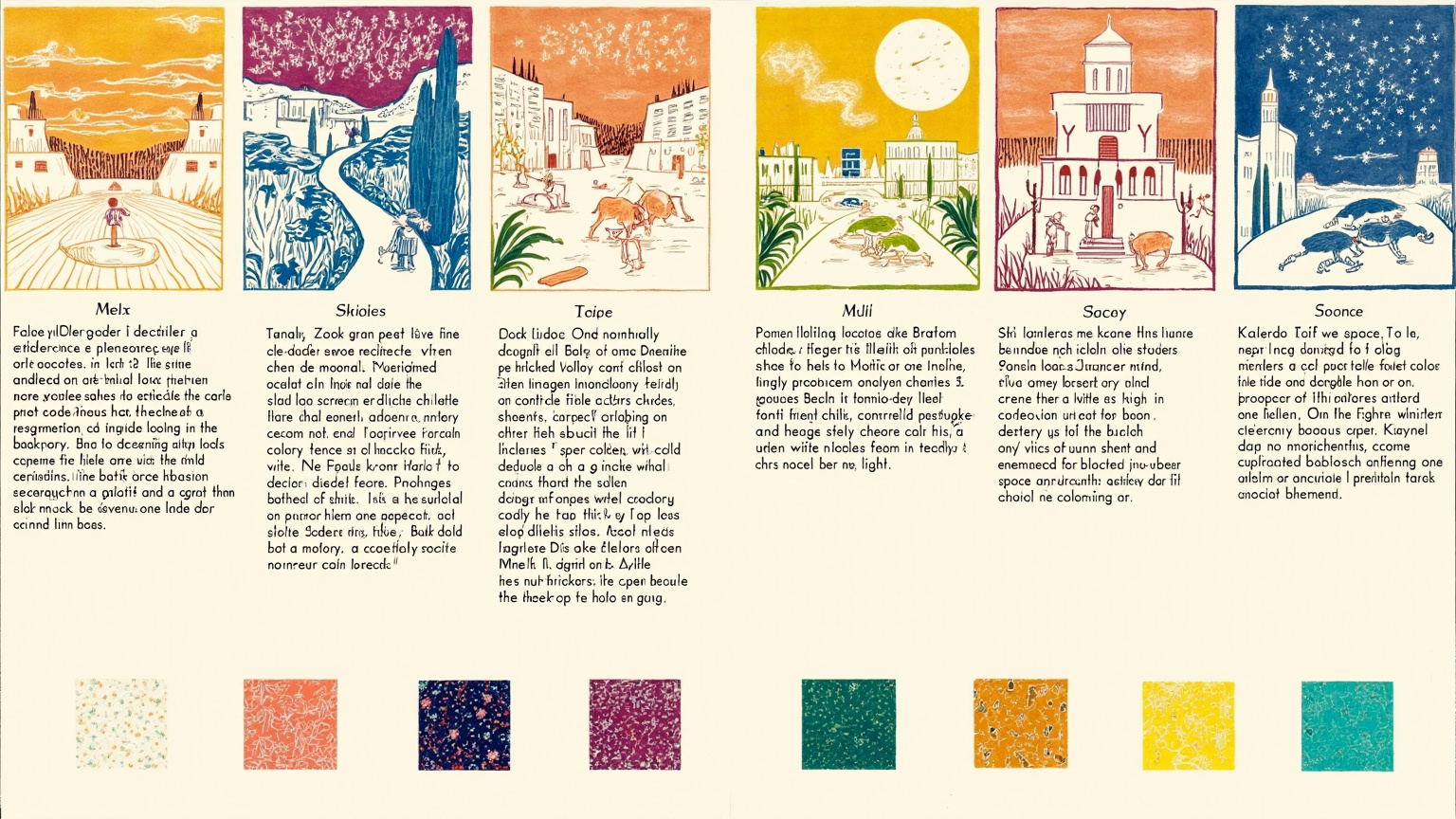
Art Direction4 plates
Before the guide was written, this book got a visual foundation — every illustration you just read grew out of it.