A comic novel so odd no one would publish it while its author was alive, then it won the Pulitzer.
Text and illustrations produced by the pipeline
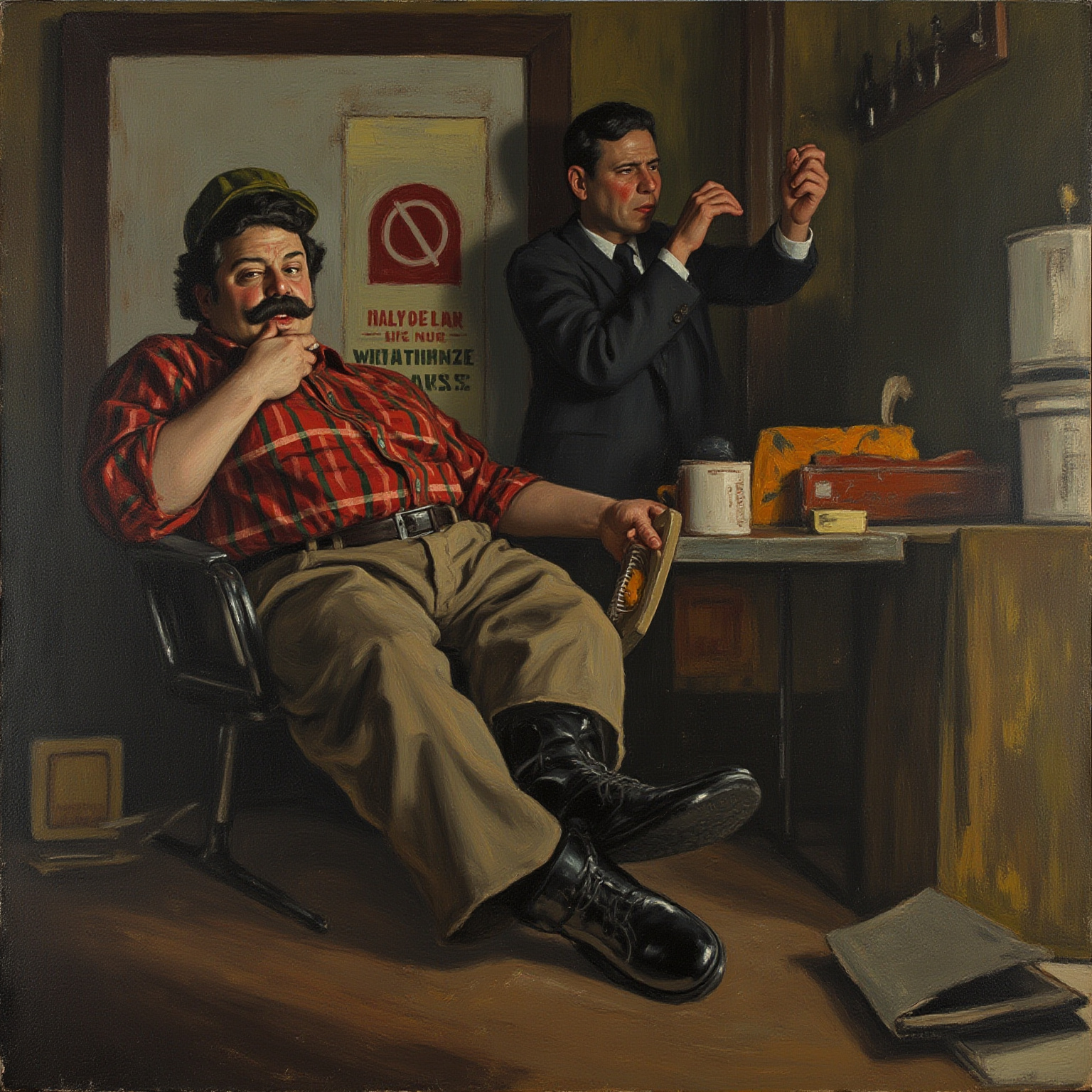
Outside a department store, a fat man in a hunting cap stands lost in the window display. A skinny patrolman ambles over, takes him in — heavy, disheveled, clearly unemployed — and without a word starts questioning him as a vagrant. The fat man flushes and unloads a medieval scholar's tirade on him. The outcome: the patrolman lets him go, and that same night the fat man's mother drives home drunk and hits a building, and a debt for damages falls out of the sky. The overgrown baby is forced out of the house to find work — and so begins the most absurd job hunt in American literature.
A Confederacy of Dunces is the only novel John Kennedy Toole finished. He was still in the prime of life when he finished it, unable to find anyone willing to publish it, and in despair he took his own life with a shotgun in Biloxi, Mississippi. Eleven years later, after his mother wore down one publisher's door after another with the manuscript, it finally saw print; a year after that, the Pulitzer board awarded it the fiction prize — only the second time the prize had gone to a writer who was no longer alive. In the decades since, it has gone through repeated attempts at a film adaptation, cycling through actor after actor and script after script, and every one of them has fallen apart. The industry gave it a nickname: the cursed project. A book too strange even for the screen — and that only fed the legend.
The hero, Ignatius J. Reilly, is in his early thirties, built large enough to strain a doorframe, and calls himself a medieval scholar. His bedside book of choice is Boethius's Consolation of Philosophy, with its wheel of fortune. He shares a house in New Orleans with his widowed mother Irene, in her fifties, and fills his days sneering at the modern world and working on a magnum opus he will never finish — which, in plain terms, means living off his mother, being lazy, being arrogant, and occasionally gassing himself with his own flatulence. Up in New York lives the one person he can't seem to live without, his lifelong nemesis Myrna Minkoff: folk singer, sexual liberationist, and committed activist. The two of them trade insults by mail for years on end, and the meaner the letters get, the more satisfying they seem to find it.
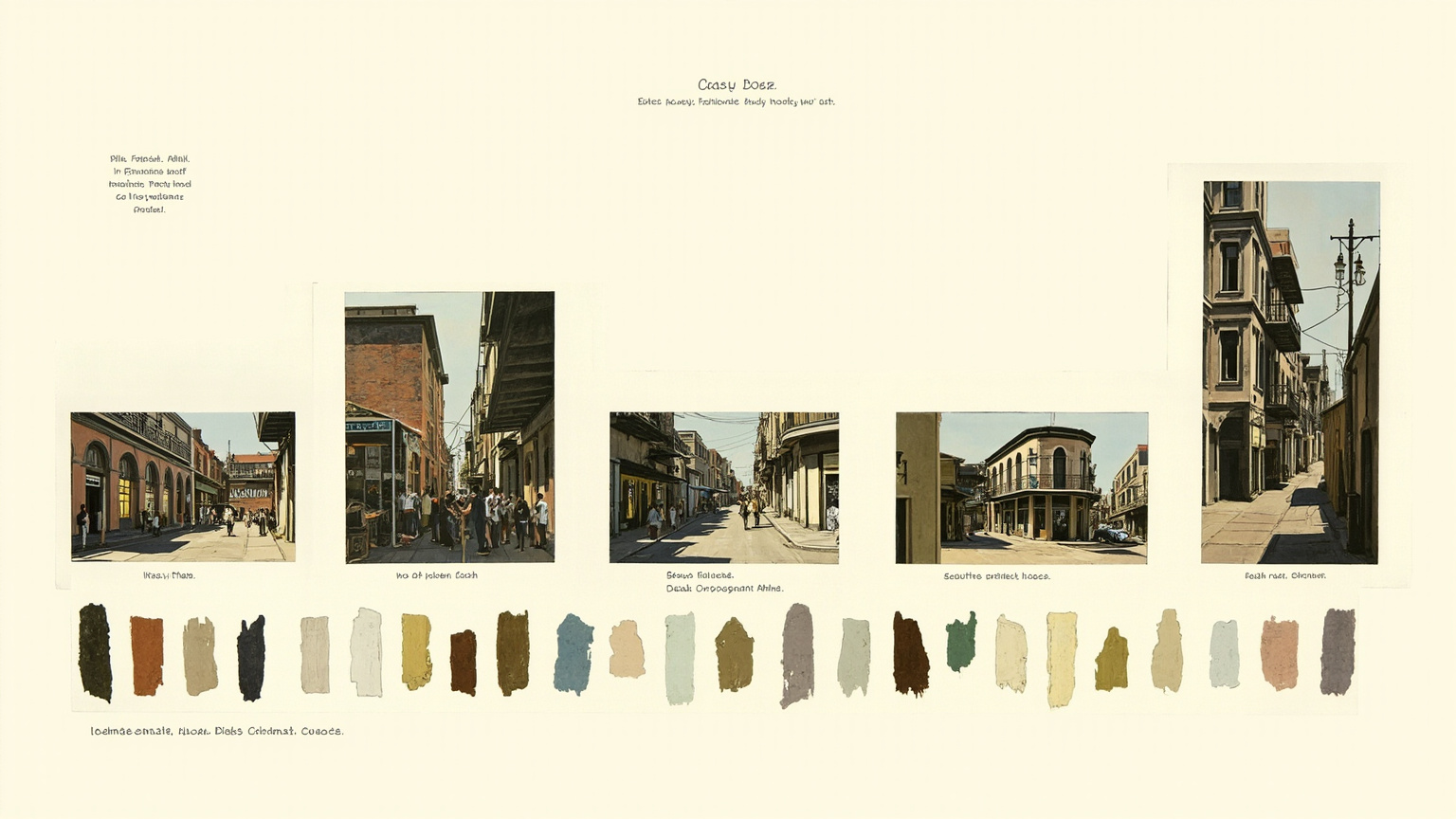
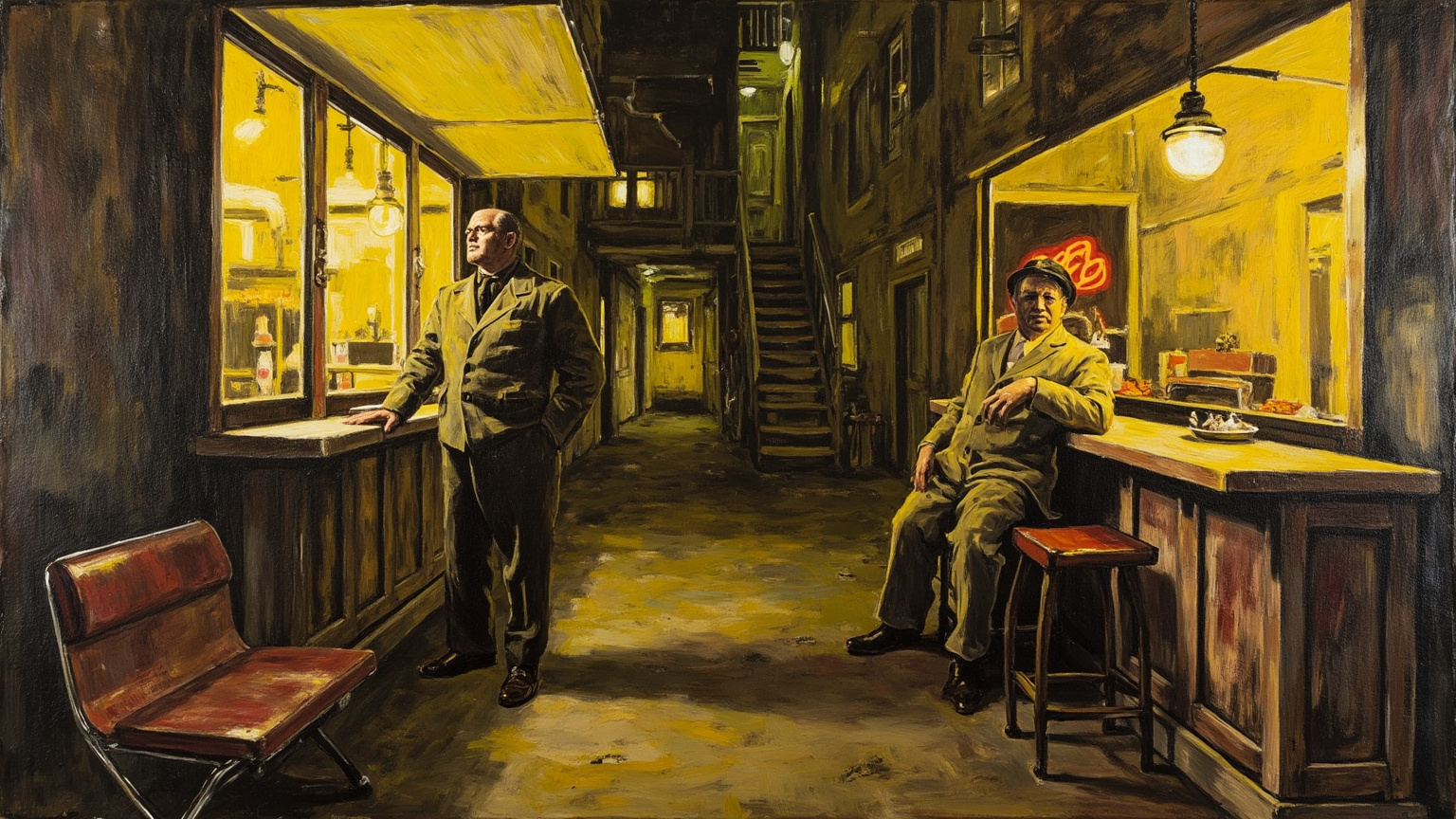
The story is set in the French Quarter of New Orleans in the 1960s. The sidewalk outside D.H. Holmes department store is the opening stage; the shabby offices of Levy Pants, where Ignatius later takes a desk job, come next; the Night of Joy strip club next door carries the other, darker thread of the plot; and a hot dog cart belonging to Paradise Vendors rolls through the Quarter as well. The whole book keeps cycling through these same few settings. The Yat accents, the smell of hot dog grease, the slang on the street corners — together they cook up a city that's loud, crowded, and full of characters bursting with life. There's only one rule here: the more dignified you act, the harder you fall.
The novel's biggest irony is that its hero spends his whole life quoting the Consolation of Philosophy, while the wheel of fortune never once stops where he points — because he's simply too heavy for the wheel to turn.
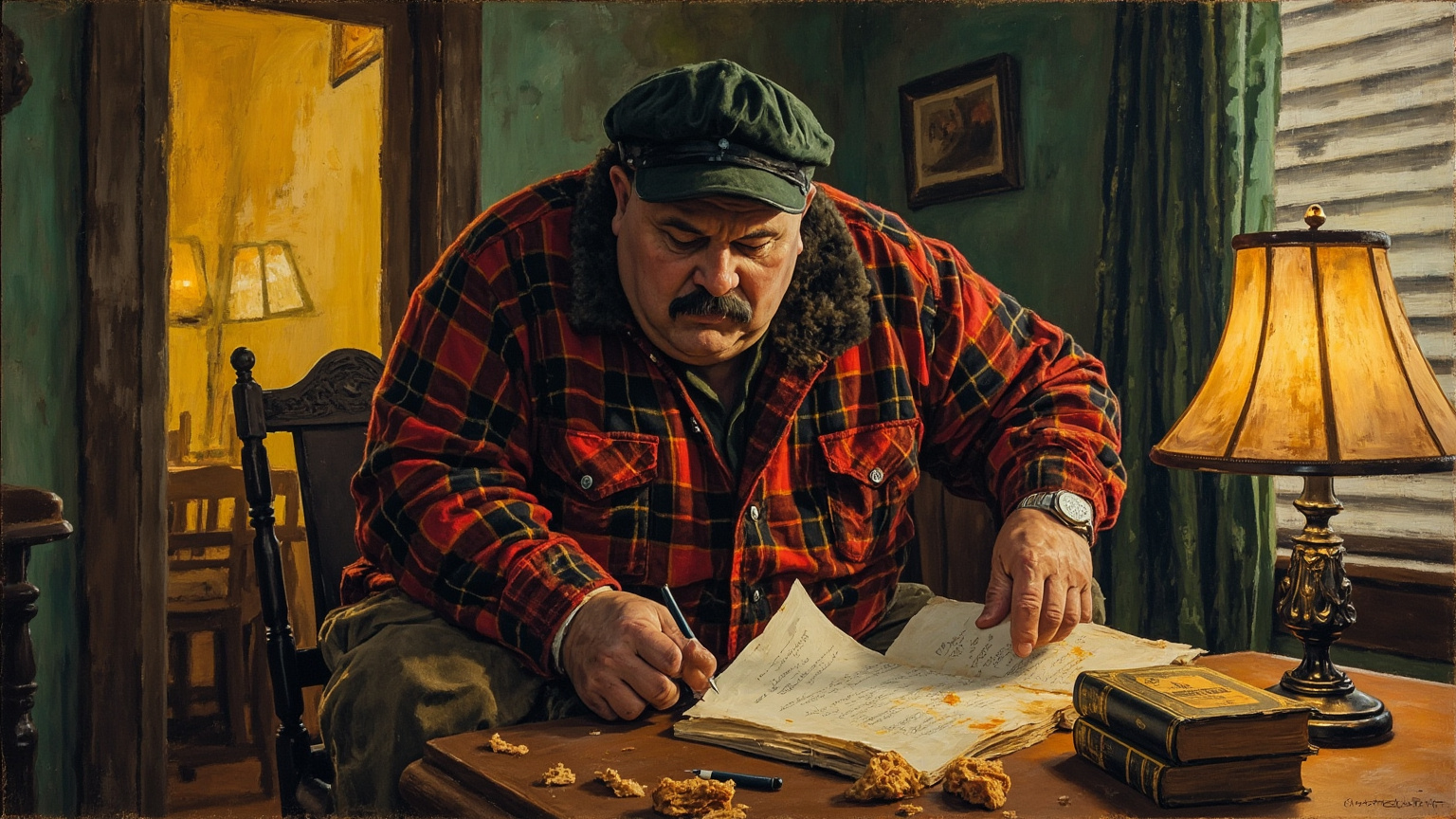
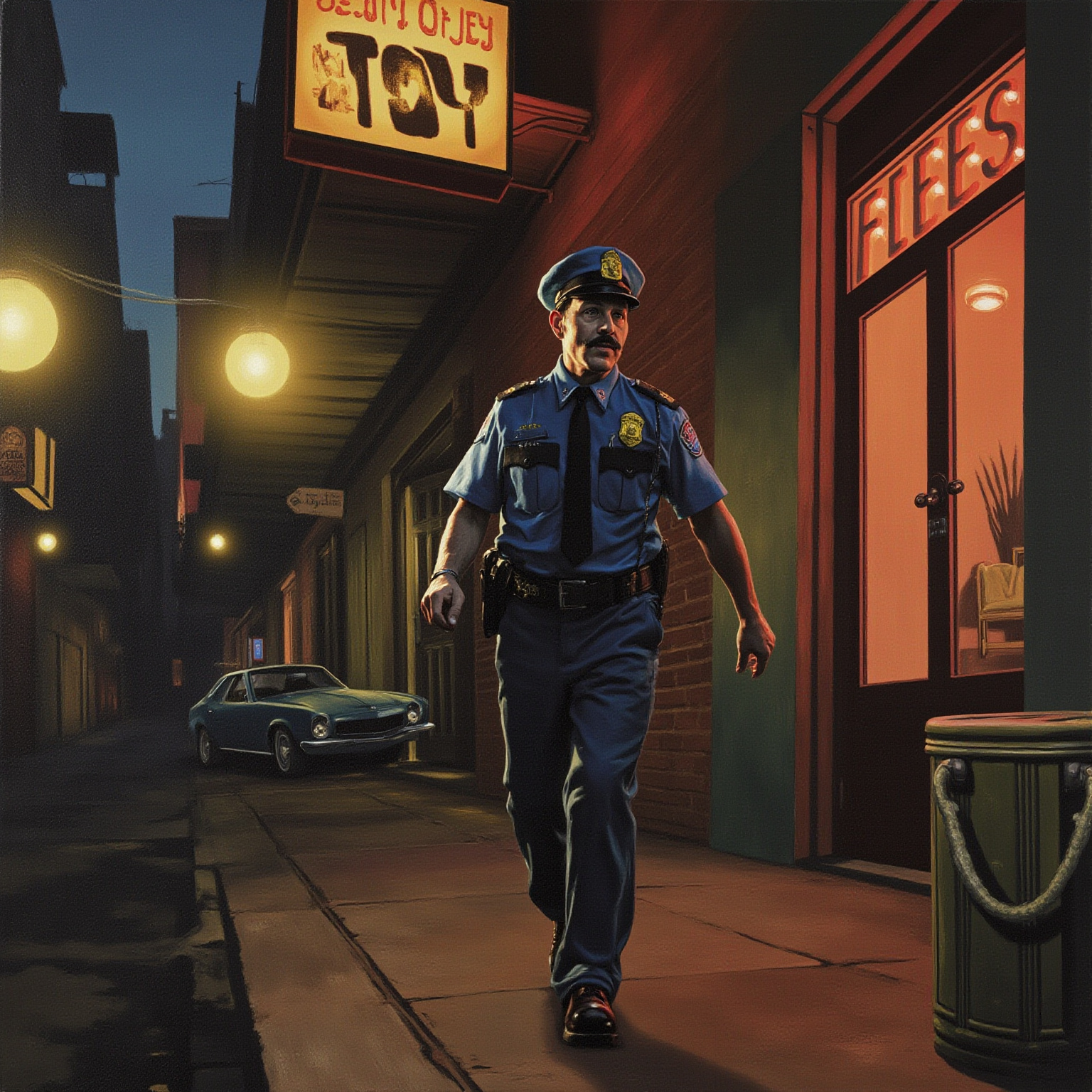
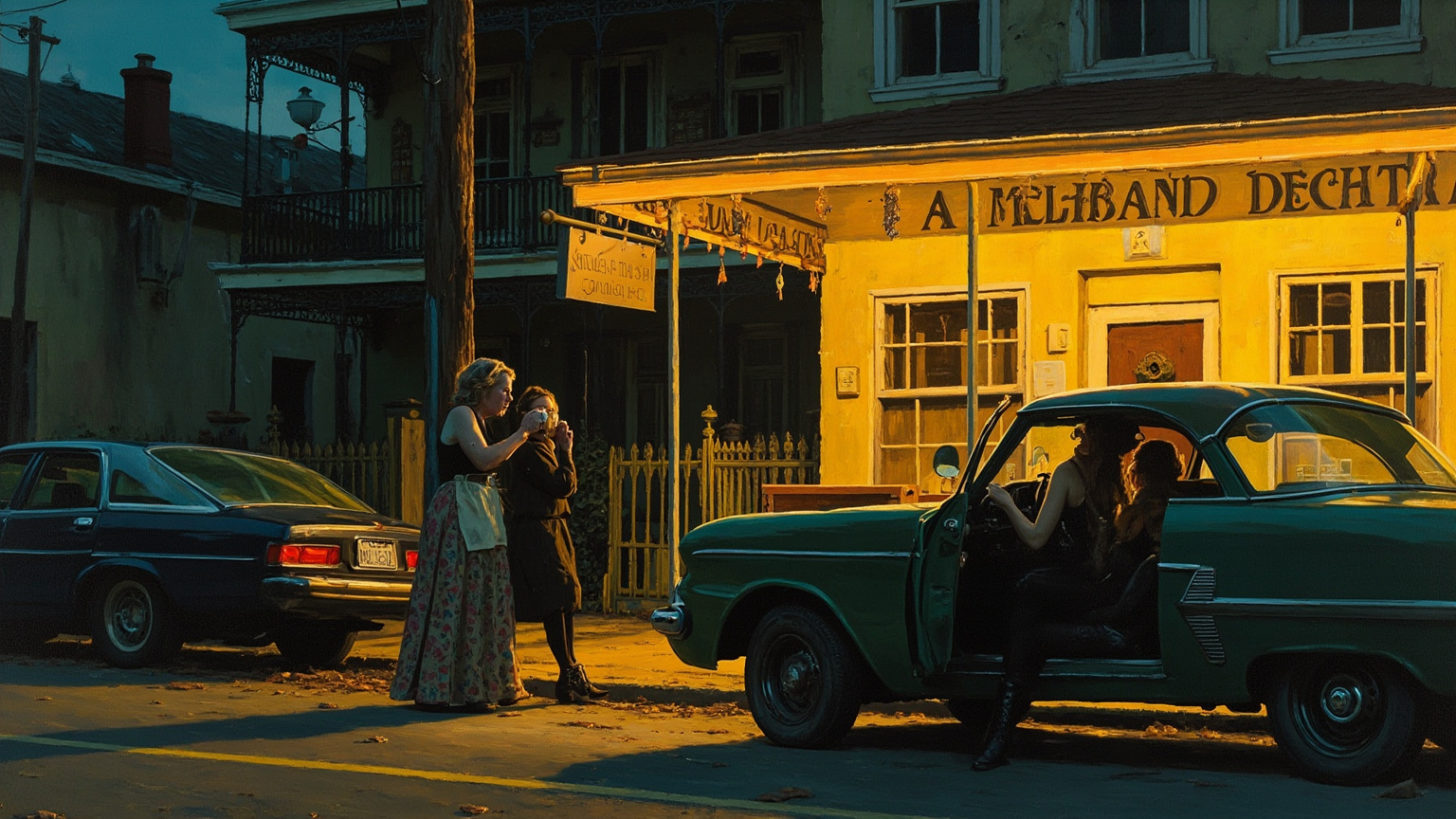
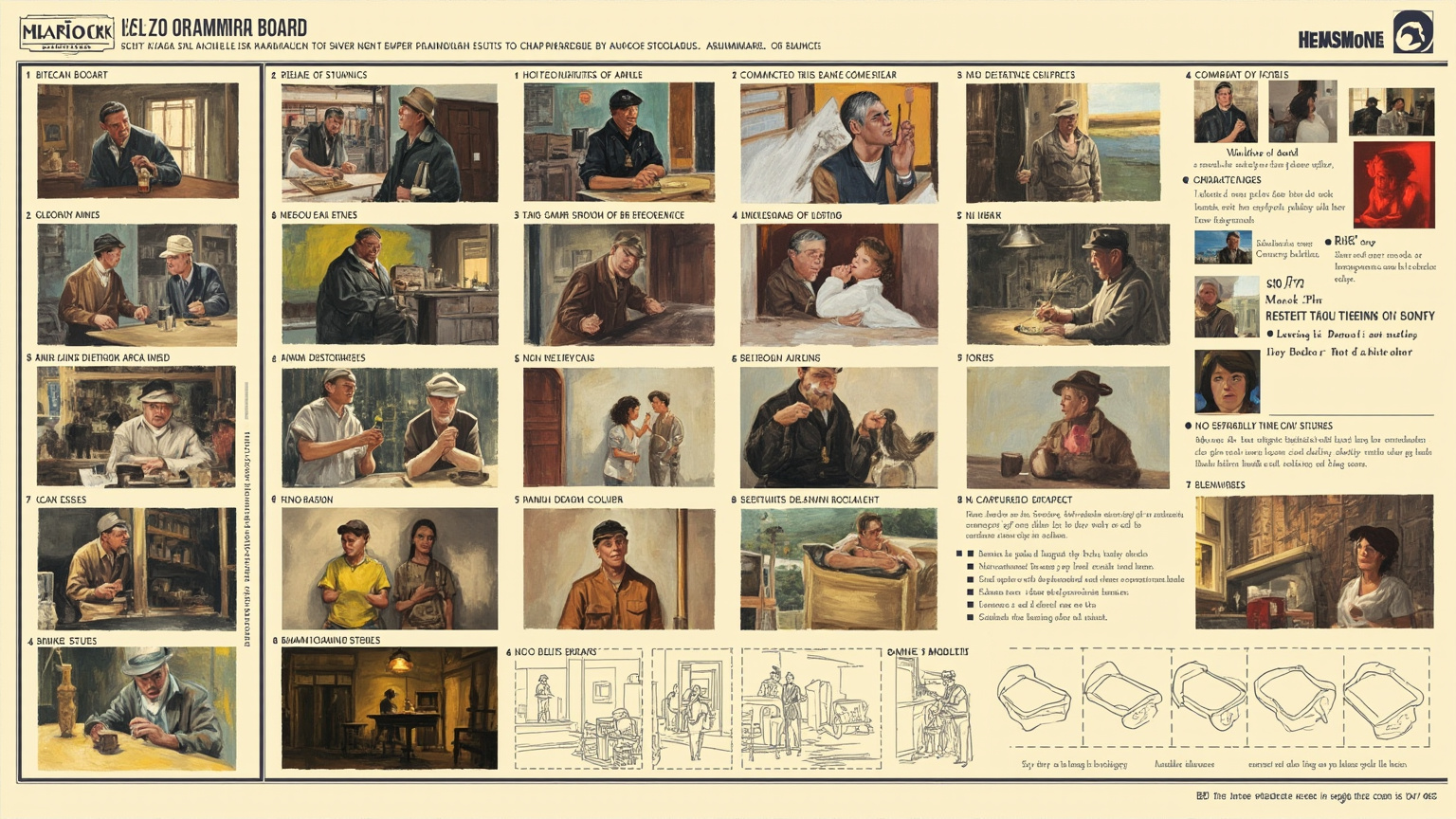
Before the guide was written, this book got a visual foundation — every illustration you just read grew out of it.
The interrogation outside the department store is the first domino to fall in the whole book. The moment Ignatius gets mistaken for a vagrant, the local patrolman Mancuso's fate bends along with it — punished by his superiors for detaining the wrong man, he's assigned a string of ridiculous undercover disguises, and from there his ill-fitting costumes get dragged, case by absurd case, toward crime scenes that keep circling back to Ignatius. What makes the construction so sharp is that Toole lets a patrolman and an overgrown man-child each stumble into their own separate messes, until the two collide outside a bar and the reader realizes these were never two plots — they were two gears turning the same machine.
That same night, Irene drives home drunk and hits a building, and a bill for damages lands on the family out of nowhere. This is a woman who has never once let her son go hungry, and reality finally has her pinned to the mat — to cover the debt, the overgrown baby has to go find work. Ignatius sulks through it, nose in the air, spitting out philosophical jargon by the string, and eventually shuffles out the door in his flannel trousers anyway. Toole plays this scene mercilessly straight: he doesn't give the mother tears, or the son regret. He just lets the two of them glare at each other across the dinner table until the silence goes cold, and that particular blunt-knife ache of a New Orleans working-class household is enough, on its own, to make the characters real.
Ignatius's first stop is a filing clerk job at Levy Pants. He quickly makes himself the self-appointed voice of the shop floor, in the name of recording the workers' grievances, and turns the place upside down with what he calls a workers' crusade — though of course he himself never lifts a finger, just delivers speeches from his desk between bites of bread. The one who appears to rally behind him is Burma Jones, a Black janitor who works next door at the Night of Joy strip club, where the owner threatens him with a vagrancy charge to keep him working below minimum wage, and who has been looking for a chance to get even for a while. Jones goes through the motions of supporting Ignatius's crusade while running his own separate calculation. The ending surprises no one: the uprising collapses into farce and Ignatius gets fired. What makes the writing work is that Toole gives a self-declared revolutionary and a genuinely calculating worker each their own hidden agenda, and the longer you read, the harder it gets to say which of the two actually has his head on straight.
Having lost his job at the pants factory, Ignatius switches to pushing a hot dog cart for Paradise Vendors through the streets of the Quarter. But his appetite is as outsized as his ambitions — he eats more of the stock than he sells, arguing with customers with a mouth full of hot dog. At the same time, he launches a Crusade for Moorish Dignity, and tries to turn New Orleans's gay community into a political force by crashing a party thrown by the socialite Dorian Greene. Neither scheme goes anywhere; he ends up thrown out of the party as an uninvited guest. Toole's cleverest move here is writing the political farce with the same rhythm as a domestic one — the energy Ignatius pours into his crusades is the exact same energy he pours into fighting with his mother in the kitchen, an energy that is nothing but incurable self-regard.
A second, darker thread is quietly tightening next door, at the Night of Joy. Its owner, Lana Lee, is shrewd and cold-blooded — running a strip show on the surface while secretly using runaway teenage girls to run an underground pornography ring. Burma Jones sweeps floors and plays along with a meek face while watching everything with a cold, calculating eye. This thread has nothing to do with Ignatius's, on paper, but Toole keeps forcing the two to cross paths on the streets of the Quarter — Ignatius gets mistaken for someone connected to the Lana Lee case and chased from the department store to the bar, then from the bar to his hot dog cart, in a state of complete disarray.
The net finally closes thanks to Patrolman Mancuso, the same man punished with undercover duty at the start of the book. This small-time cop, who keeps arresting the wrong people and gets chewed out by his superiors like a dog with its tail between its legs, works through a string of ridiculous disguises — a vagrant, a customer, everything he isn't — until he finally clears his name and single-handedly busts Lana Lee's underground operation. It's the most satisfying beat in the whole book: the one man the story keeps laughing at turns out to be the only one still standing at the end. This is also where the contrast between Ignatius and Mancuso closes its loop — the more one of them thrashes around, the more ruined he gets, and the more the other gets kicked down, the higher he climbs back up.
The story's real climax plays out between mother and son. Pushed to the end of her rope, Irene — egged on by her best friend Santa Battaglia — starts seriously considering committing her son to an asylum. Had it gone through, Ignatius would have spent the rest of his life locked away in some New Orleans institution. At the last possible moment, Myrna Minkoff comes tearing down from New York in her Renault — the nemesis who has spent the entire book trading insults with him turns out to be the one who lifts him off the wheel of fortune. Two people who despise each other, who each think the other beneath them, end up with a bond deeper than the one between mother and son, and that absurdity is the sharpest cut in the whole book.
Ignatius has Boethius's Consolation of Philosophy on his lips constantly, blaming every misfortune on the wheel of fortune. Toole's sharpest trick is letting the reader realize, slowly, that there is no wheel of fortune — there is only a fat, lazy, self-important grown man who has outsourced the part of his life he refuses to take responsibility for to a medieval symbol. By the later chapters, readers find they can no longer tell whether they should feel sorry for him or throw him out with the trash. That's the most venomous thing about this book: it makes you laugh, and then leaves you wondering who the real dunce actually is.
Satire in this book plays no favorites. The rigid Southern conservatism Ignatius embodies gets stripped bare by Toole, and the performative 1960s New York activism Myrna embodies gets torn down just as thoroughly, exposed as hollow posturing. The bureaucrats at the pants factory, the bar owner, the various hustlers of the French Quarter — nobody escapes the pen. Burma Jones, threatened with a vagrancy charge into working below minimum wage, is the thorn under all the comedy — a real cross-section of the racial and class currents running under New Orleans. The novel hands out no medals to anyone, and that's exactly where its clear-eyedness lies.
And yet Toole never turns New Orleans into a city worth hating. He gives real warmth to the local slang, the hot dog smoke, the wooden staircases of old French Quarter houses, the full-throated voices of neighborhood women — however awful Ignatius gets, the ground under his feet stays warm. Toole died young, but the way he writes a city's street life reads as if he'd been doing it for a hundred years. The symbiosis of mother and son, the friction between the underclass and those above them, the mutual mockery of left and right — the city is what holds it all together.
A summary can tell you how the dominoes fall, but it can't give you the sound of them falling. Half of Ignatius's comedy runs on his mouth, and the other half runs on that huge, constantly malfunctioning body of his — the way he breaks a chair, the way he wheezes into a fit outside the department store, the way he leaves Dorian Greene speechless with rage at a party. Only the rhythm of the actual sentences gets you laughing out loud. Then there are his letters to Myrna, philosophical jargon and personal insults tangled together on the page — the first time I read one, I nearly put the book down just to sit with it — and a summary can only paraphrase the gist; the density and absurdity of the prose itself can't be carried over. And then there's the flavor of New Orleans: the French Quarter slang, the Yat accents, the smoke off the hot dog carts — you can only smell those by reading the text itself. In short: the plot is just the map. The smell is on the street.