Botchan (Master Darling) · Companion Guide
Botchan
An unbending young son of Edo heads south to Shikoku to teach, and walks straight into the pettiness and politics of a country school — he fights a battle he was always going to lose, and enjoys every minute of it; what's really waiting for him, back in Tokyo, is the old maid who loves him like her own child.
The Opening: A Young Man Who Refuses to Bend
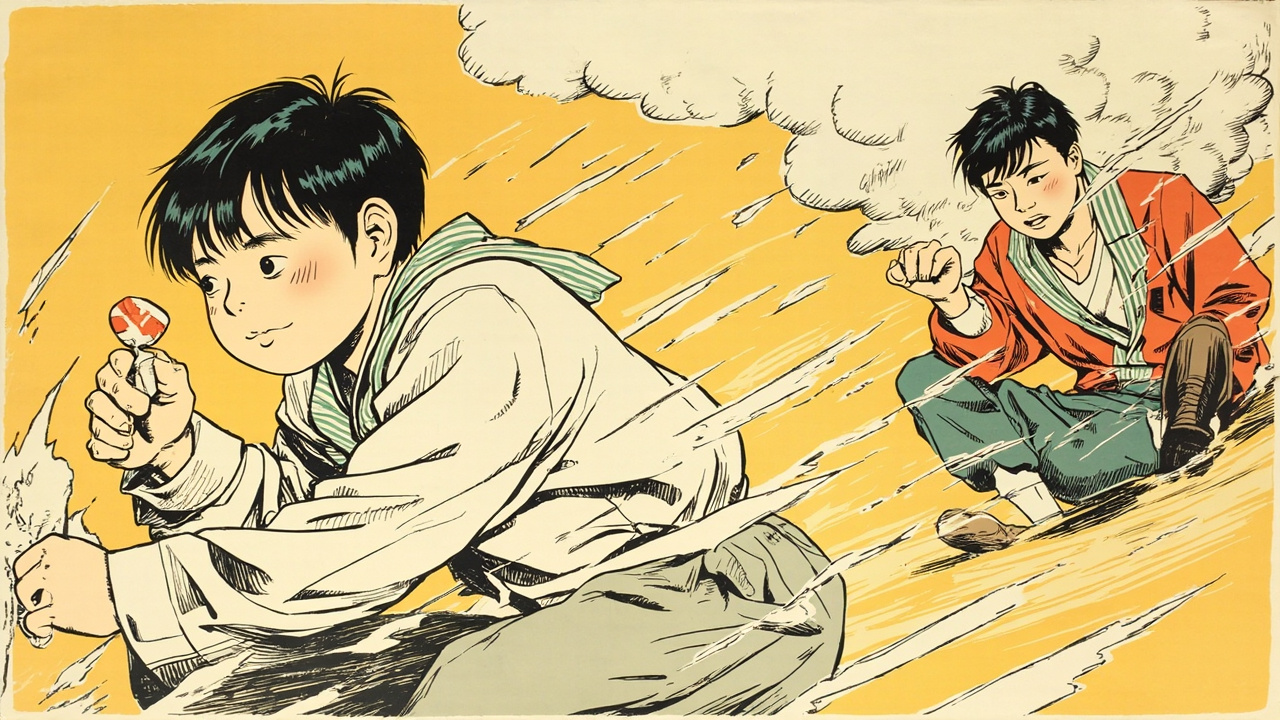
Dare him once, and he will jump off the second floor. Egg him on, and he will test a brand-new knife against his own thumb — not out of courage, but because his brain always arrives half a beat after his body. You probably know someone like this: always first to leap in, never willing to back down, always the one wrecking the room. But stay near him long enough, and you quietly relax. Because with him around, at least nobody dares lie to your face. Over a hundred years ago, in the old downtown quarter of Tokyo, there was a boy exactly like this. His own family had given up on him. Only the old maid who had raised him since he was small — cleaning up after him, telling the neighbors with total conviction that this child would amount to something — kept faith. The pet name she gave him became, in time, a name the whole of Japan would come to know: Botchan.
What Kind of Book This Is: Meiji Japan's Most Beloved Comedy
Botchan was published near the end of the Meiji era, written by Natsume Sōseki — a name no history of modern Japanese literature can skip. His other, even more famous book, I Am a Cat, watches the world with a cold satirical eye. This one is different. This one runs hot, all youthful temper. In his twenties, Sōseki himself taught mathematics at a middle school in Matsuyama, on the island of Shikoku — a damp, stifling little town, a cramped school, factions tangled like spiderwebs. He poured that firsthand experience into this short, cathartic book. More than a hundred years after it first appeared, it has become something close to required reading in Japan — anyone who went through middle school has read it — a comedy laced with just enough of an ache to make it unforgettable.
People and Place: An Edo Temper Loose in a Meiji Country School
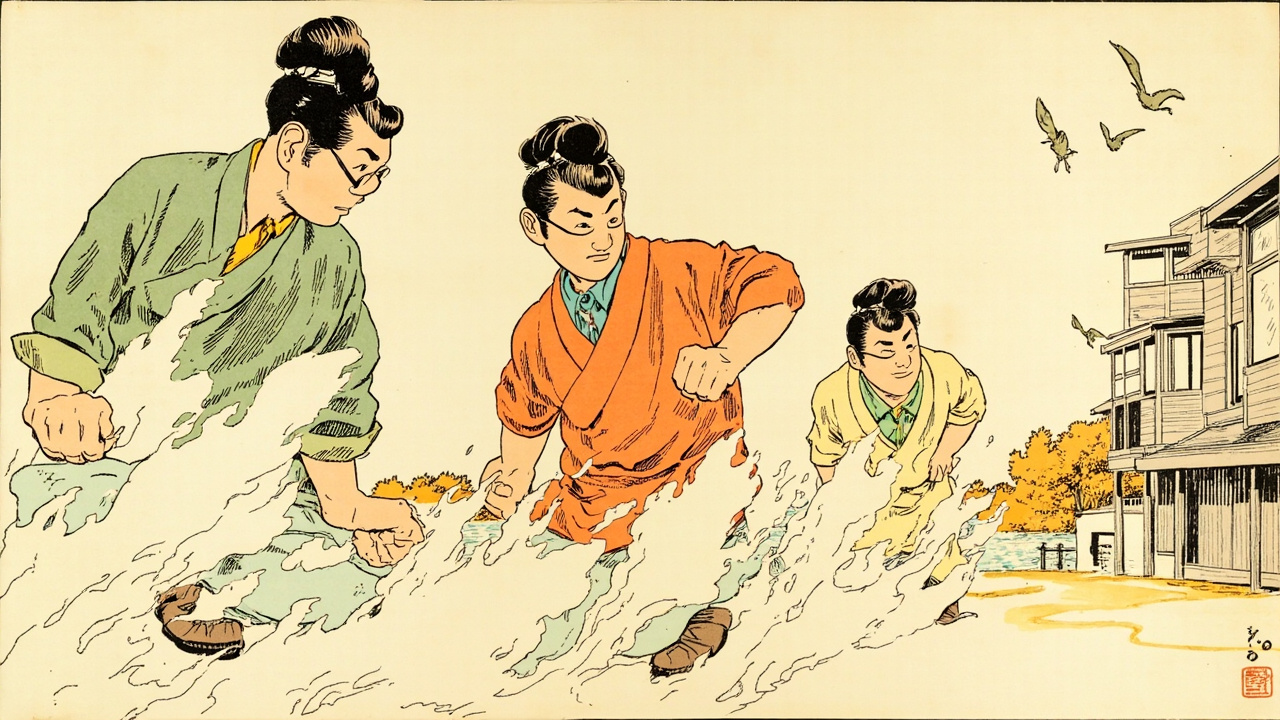
The hero has no proper name. From beginning to end he is simply Botchan — the pet name the old maid Kiyo gave him as a child. After his parents die and his older brother sells the family house and moves away, he finishes a technical college in Tokyo on his small share of the inheritance and takes his first job in life: teaching mathematics at a middle school in Matsuyama, out on Shikoku. The world he lands in is a shabby seaside town — a threadbare school, a boardinghouse with floors that creak, a hot-spring resort thick with petty scheming. The principal talks in platitudes, the head teacher dresses too well, the English teacher is soft-spoken, the old teacher has a head of wiry hair — and Botchan takes one look at each of them and pins on a nametag. The principal, full of noble-sounding sermons, becomes Badger. The head teacher, all smiles to your face and a knife in your back, becomes Red Shirt. The toady who trails him is Clown. The wiry-haired teacher, who later stands beside Botchan, is Porcupine. And the soft-spoken English teacher becomes Squash. These names are where the book gets its laughs — but they are also his eyesight. A man who cannot bend turns out to see through people better than anyone.
How the Plot Runs: A Fight He Was Bound to Lose, Fought Gladly
I. Tokyo: Where the Troublemaker Came From
The story opens with his own memories. He was a troublemaker from the start, hot-headed enough that a few careless words could get him to slice his own thumb open with a knife, just to prove a point. Nobody in his family took him seriously — only the old maid Kiyo, who loved him like her own son, washed his clothes, watched out for him, and cried her eyes out pressing two gold coins into his hand when he finally left. He grumbled that she was a nuisance and would never admit otherwise, but her line — that he would amount to something one day — became the one light he carried back with him to Tokyo.
II. Heading South: Sizing Himself Up for the First Time
Contract in hand, he says goodbye to Kiyo and rocks his way from Tokyo to Matsuyama, first by steamer, then by train. It is a stifling little town, the air thick with the smell of the sea and hot-spring sulfur. He already suspects he will not stay long. What he does not suspect is how quickly he will manage to offend absolutely everyone.
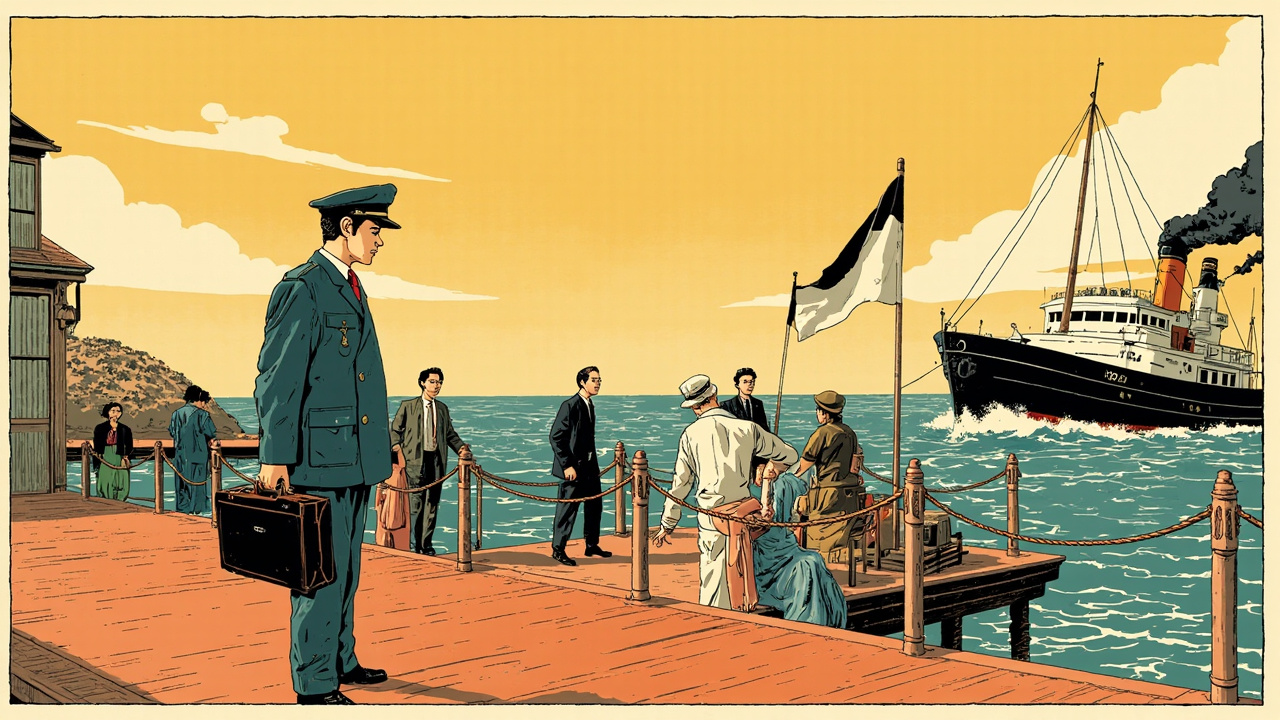
Great Scott! I wouldn’t stay in such a hole, I thought, but I had to get out.
我的天!这种破地方我才待不下去——可我还是得下船。
Original line · Chapter 2 · The steamer docks, first sight of Shikoku
III. First Day at School: Handing Out Nicknames, Taking the Bait, Fuming
He meets the principal, the head teacher, his colleagues, and by the end of one glance around the room he has finished naming every one of them in his head. Only that night, moving into the boardinghouse, does he really learn what the countryside has in store: someone stuffs grasshoppers into his bedding, someone chalks tempura and dumplings on the blackboard as a jab at him. He is not being bullied, exactly — a pack of local troublemakers is testing what he is made of. He answers every jab in kind, shaking with anger the whole time.

You insignificant grasshoppers, startling a man! See what’s coming to you!
你们这些不起眼的蝗虫,也敢惊了大爷!看我怎么收拾你们!
Original line · First night at the school · Grasshoppers in the bedding
IV. Sorting Friend from Enemy: An Alliance with Porcupine
At first he and Porcupine, the wiry-haired teacher, cannot stand each other — the fallout from a small misunderstanding. But once a few things come into focus, he catches his breath: Porcupine is actually the straight one. It is Red Shirt — the smoothest talker, the best dressed, the one with the most refined smile — who says one thing to your face and does another behind your back. Red Shirt has already been quietly arranging to have the mild-mannered Squash transferred away, so he can have Squash's fiancée, the town's acknowledged beauty, for himself. This is the turning point of the book. Botchan is no longer alone in seeing through everyone. He has his first ally.
V. The Fight Back: Schemes, Transfers, Frame-Ups
Red Shirt turns out to be far slicker than Botchan expected. He eases Squash out without a ripple, then frames Porcupine and pins the blame on him. The school is a web of factions — the principal, Badger, drapes himself in a long robe and official-sounding phrases, while everyone underneath is running their own private calculation. Botchan's straight-ahead temper runs at all of it like a man headbutting a wall. He knows the wall will come down eventually. He also knows his own head will bleed first.
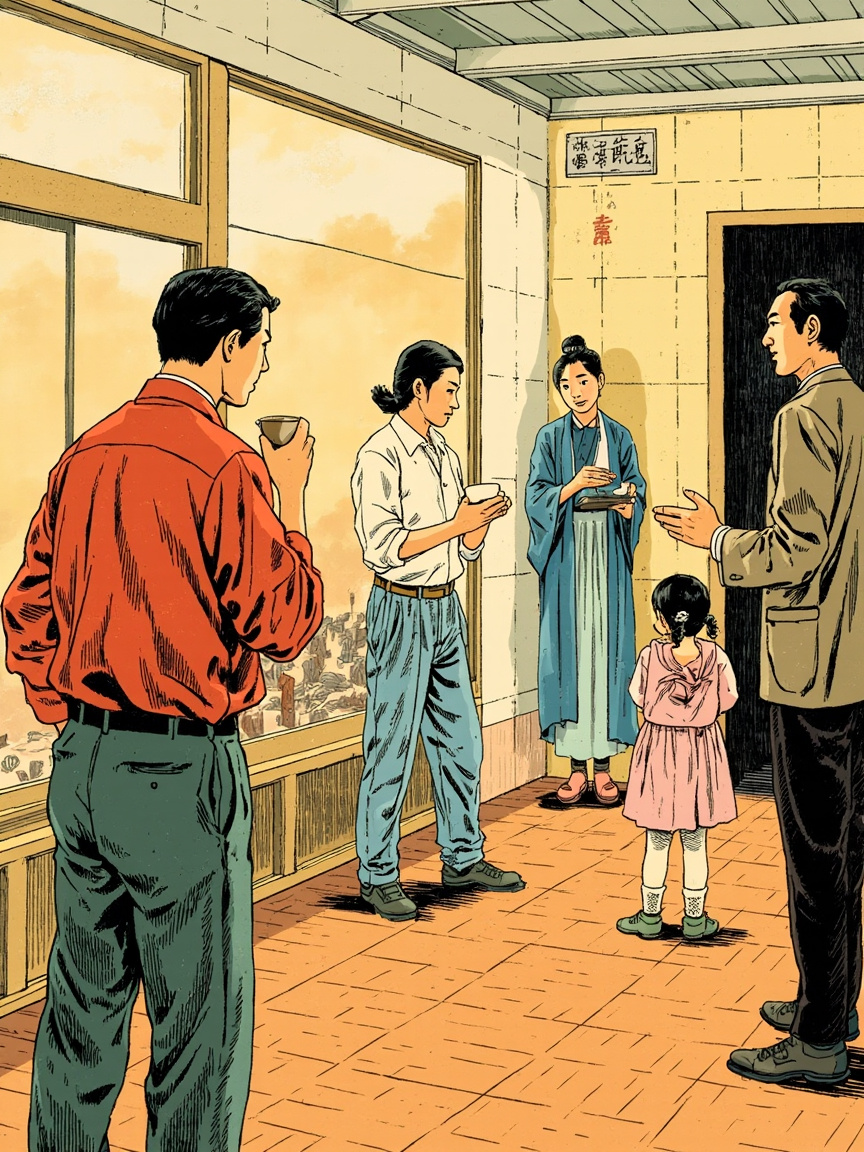
He is a fellow with a double face. A man deserves no confidence unless he is as straight as the bamboo.
这家伙有两副面孔。人若不像竹子那样直,就不值得信。
Original line · Seeing through Red Shirt's two-facedness
VI. Climax: At First Light, a Beating Delivered
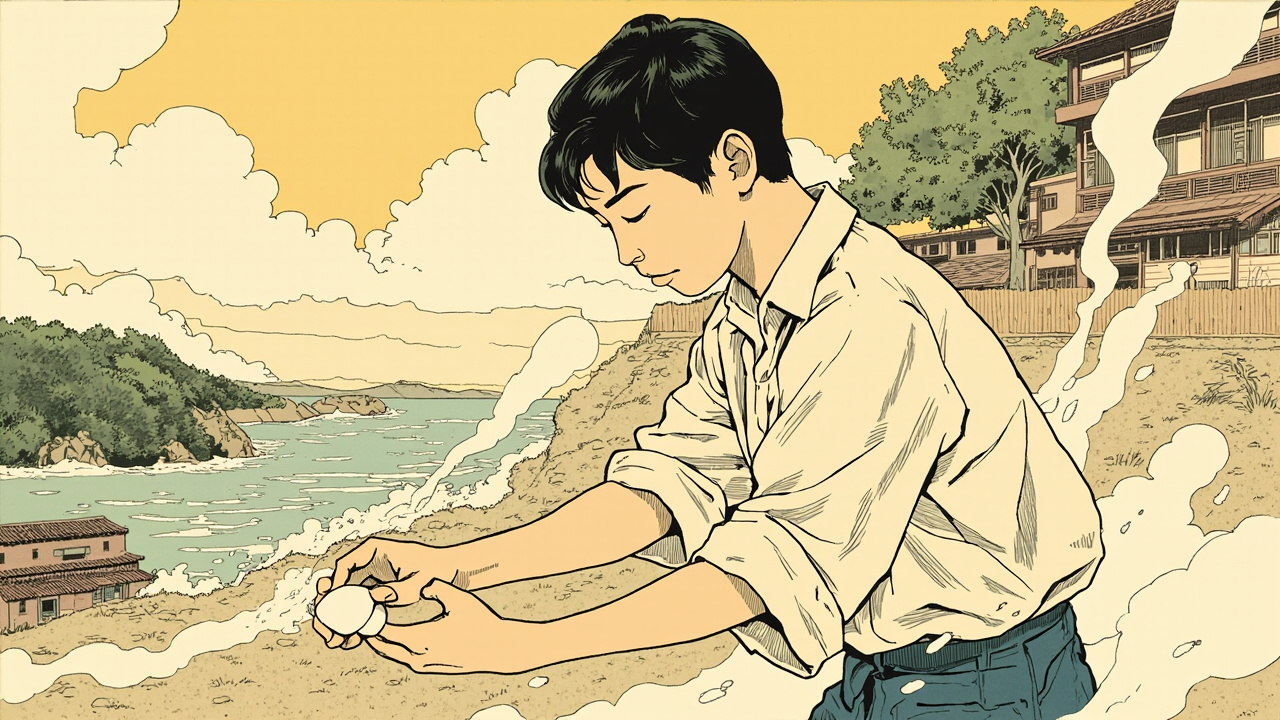
Evidence finally in hand, he and Porcupine stake out the back door of the school until dawn. Sure enough, Red Shirt and Clown come stumbling out the back of the geisha house before first light, faces still shiny with the night before — caught red-handed by Botchan himself, in exactly the embarrassing state you would want to catch them in. Neither man says much. They throw the eggs they have been carrying, then give both of them a thorough beating. It feels wonderful. It also brings them straight back to earth: they resign on the spot, too keyed up even to go back and pack their bags properly. The job is gone.
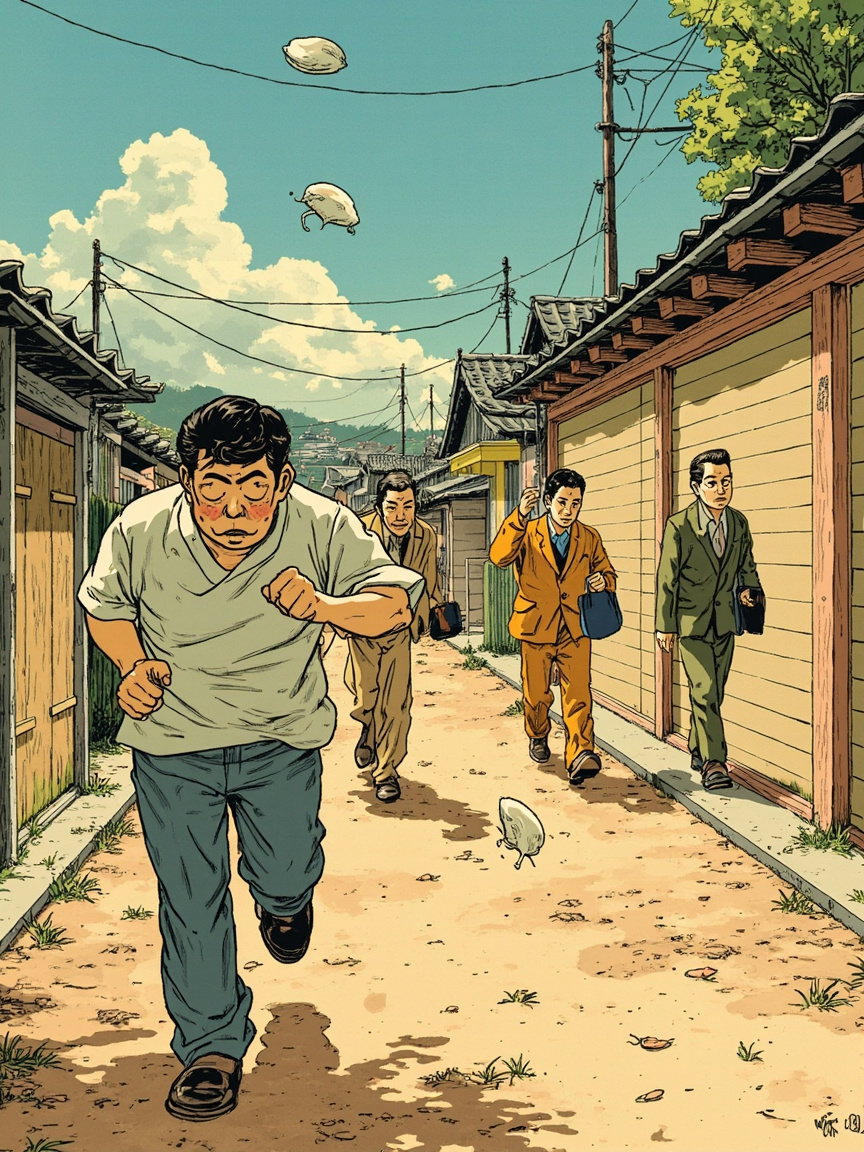
This is the punishment of heaven on you grovelling wretches.
这就是天罚,落在你们这些卑鄙小人身上。
Original line · At first light · Eggs thrown, a beating, caught in the act
VII. Back to Tokyo: Warmth, Loss, and a Final Goodbye
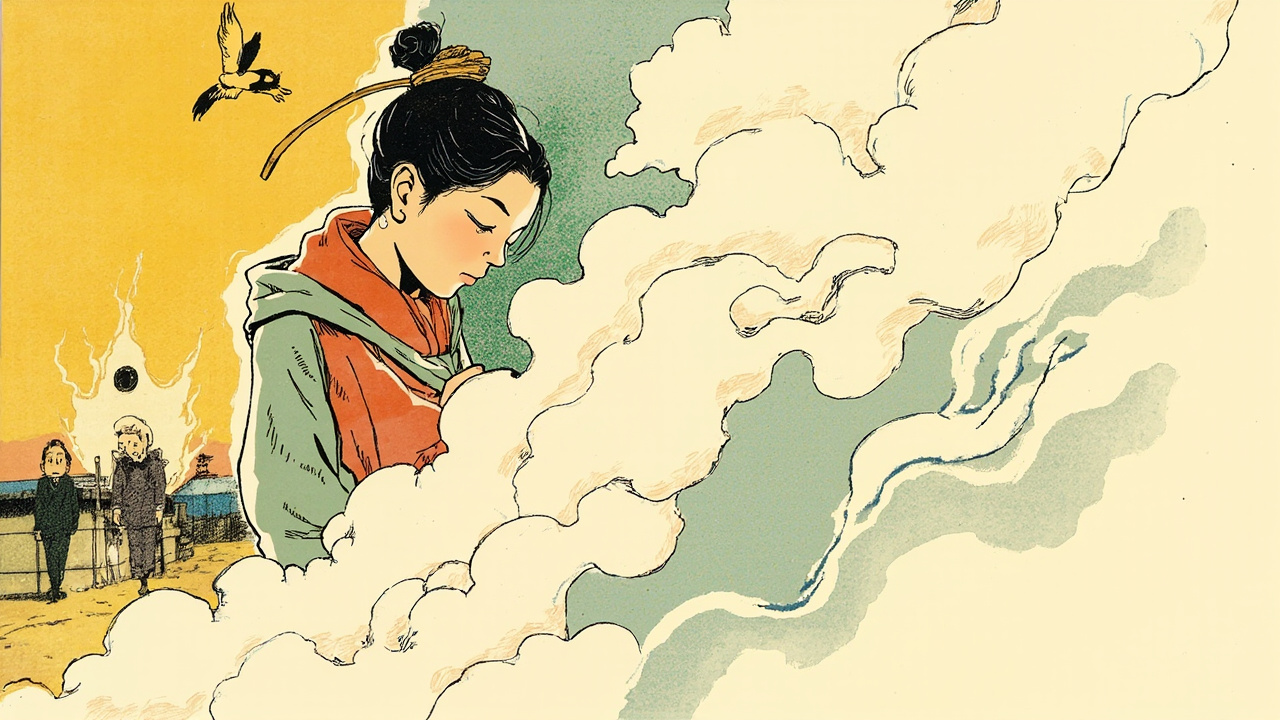
Botchan returns to Tokyo and takes a job as a technician at a streetcar company — putting his mathematics to work on streetcar machinery. Whether that counts as amounting to something is a separate question, but there is food on the table and he is getting by. He sees Kiyo again. Her hair has gone completely white, her body is failing a little more every day, but the moment her eyes land on him, her whole face creases into a smile. Not long after, Kiyo dies. As she wished, she is buried in the small temple that belongs to Botchan's family. A man who never once learned to bend had, all along, someone quietly holding the floor beneath him steady. Here, that floor gives way.
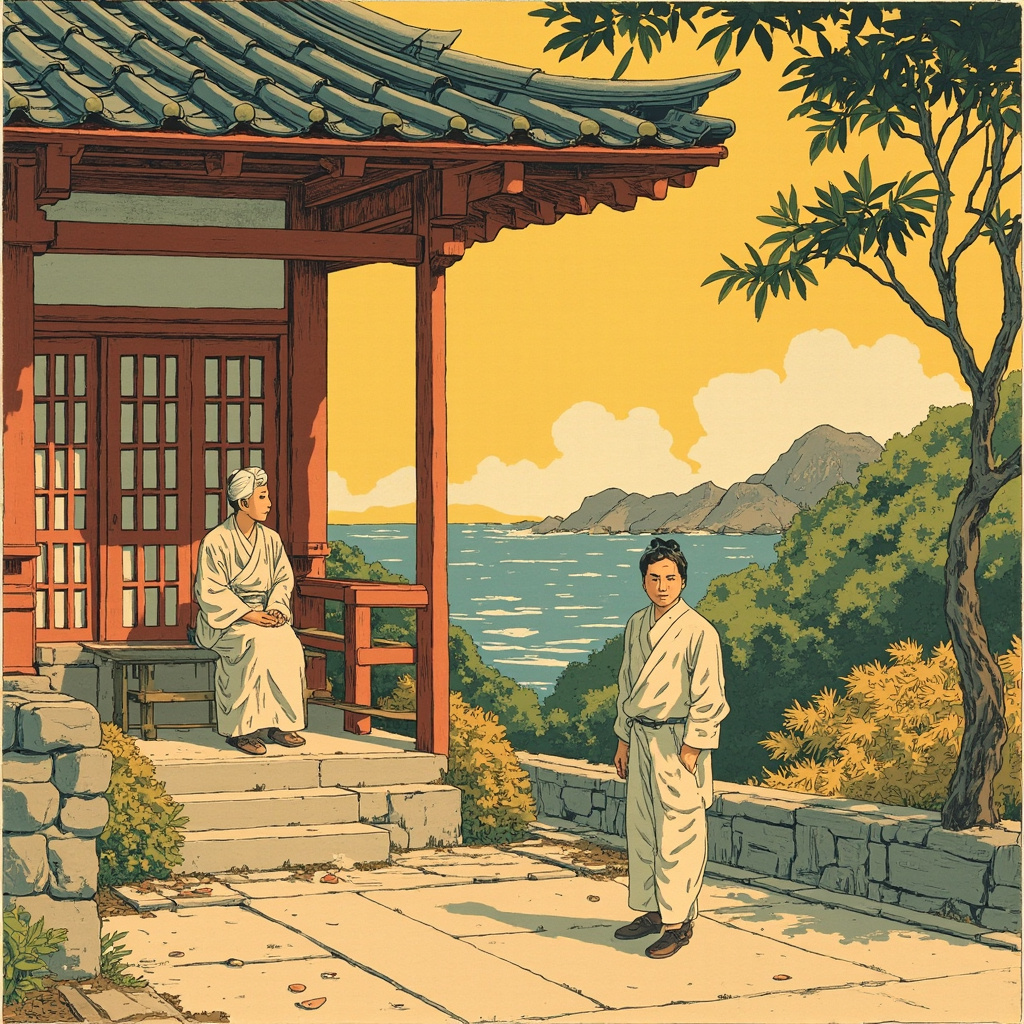
Please, Master Darling, if Kiyo is dead, bury me in the temple yard of Master Darling.
少爷,要是清死了,就把我葬在少爷家的寺院里吧。
Original line · The novel's close · Kiyo's dying request
Theme: Honest Recklessness Is Worth More Than Polished Respectability
How It's Written: An Edo-Voiced First Person, Told in One Breath
The rarest thing in this world is a temper that never learns to bend, paired with someone willing to catch you when it costs you everything — Botchan had both, which is why this story makes you laugh with tears in your eyes.
Why It's Worth Reading Even After You Know the Plot
I can tell you the whole plot. But a few things no summary can hand you. First, the rhythm of Botchan's own voice — once his Edo-accented first person gets going, the pleasure of it is something no translation or synopsis can dilute. Second, the jolt of recognition when the nicknames land exactly where they land, and you catch, for one second, your own office staring back at you from the page. Third, the warmth in Kiyo that never needs to be said outright — she is the ground Botchan stands on, and the book's one real tear-jerker, and you will not feel how dear she is unless you have stuck it out beside Botchan in the original, page after page. Botchan is short. You can finish it in a few days. Reading it is not a lesson — it is meeting a person: someone from over a hundred years ago who, like you, refuses to bend, and a chance to notice whether you, too, have someone quietly holding the floor steady beneath you.
Art Direction4 plates
Before the guide was written, this book got a visual foundation — every illustration you just read grew out of it.