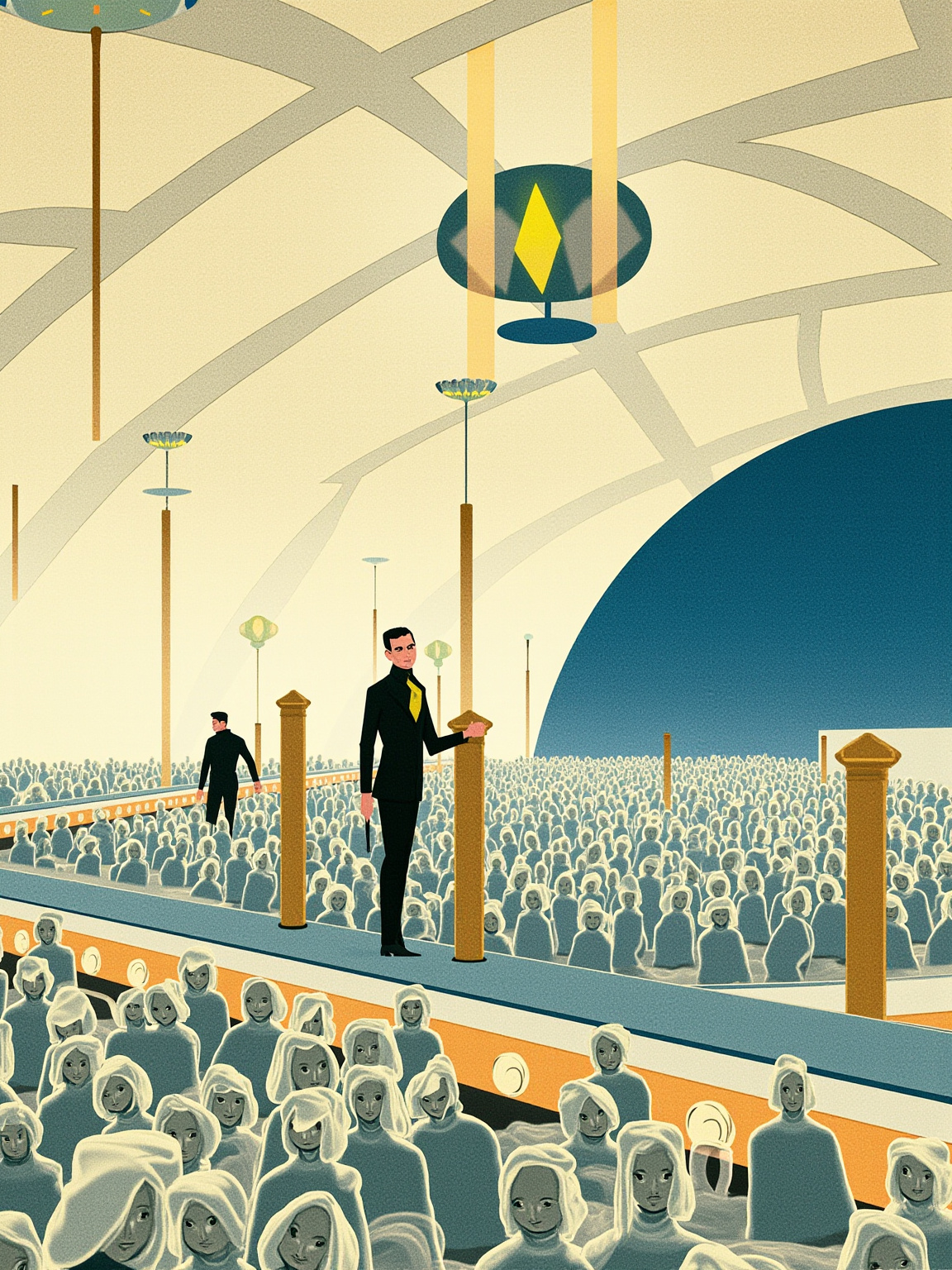
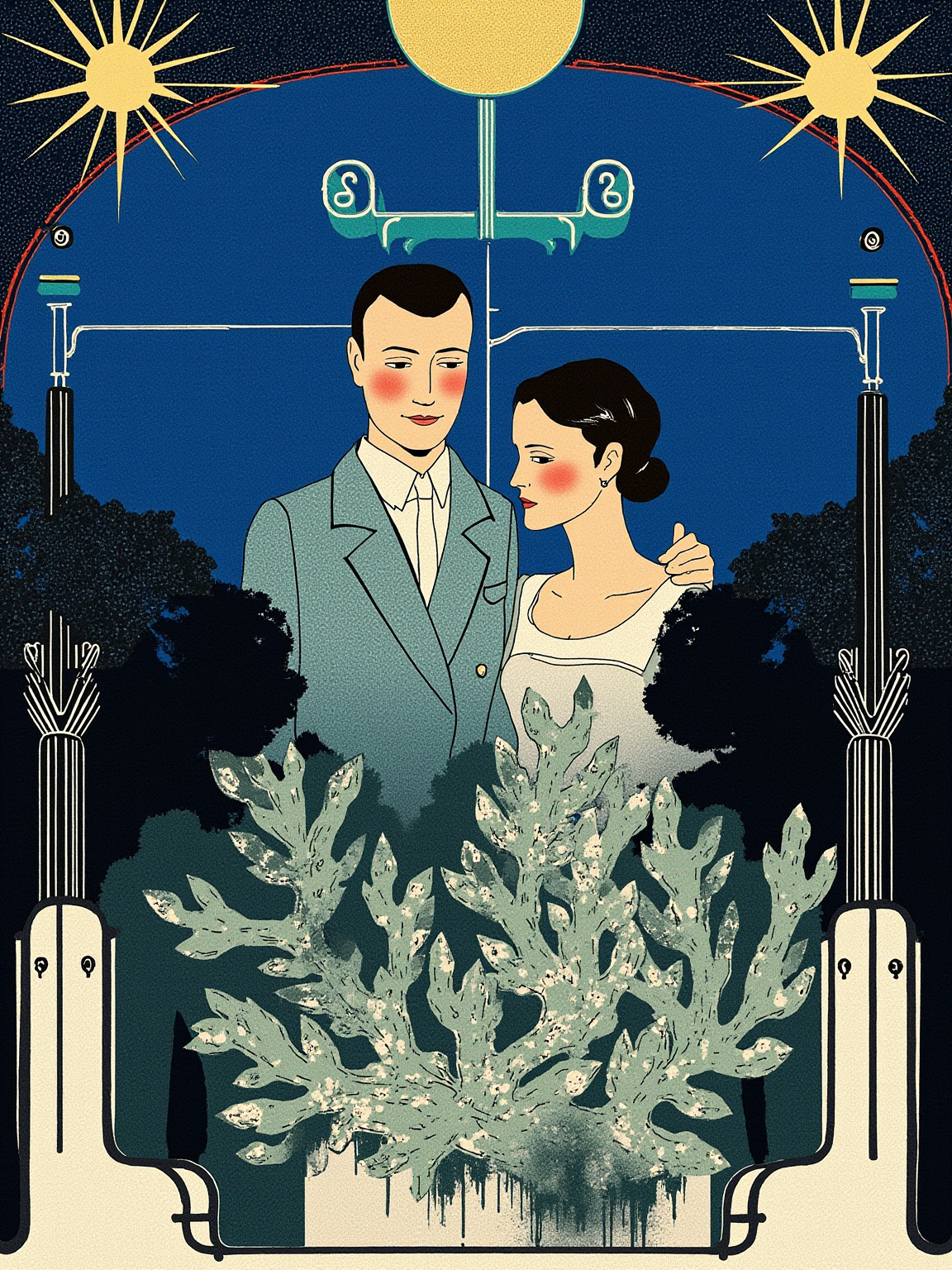
In the year 632 A.F., in a workshop at the Hatchery in London, hundreds of identical gray infants are spat from bottles along a conveyor belt — their intelligence set from the moment of fertilization, raised to grow up without marrying, without families, without nostalgia, under a motto stamped into the workshop ceiling: Community, Identity, Stability. Later, a young white man from the wilderness points at this city and shouts, "O brave new world" — he thinks he is marveling. He is counting down to his own death.
What kind of book is this
Brave New World was published in 1932; Aldous Huxley was thirty-eight when he wrote it. In literary history it stands with Orwell's Nineteen Eighty-Four as one of the twentieth century's two foundational dystopias — but they are not the same nightmare. In Nineteen Eighty-Four, Big Brother watches you, the telescreens track you, fear holds you down. Brave New World works the other way: no one is watching you. You are fed, comfortable, and happy, and you hand over — willingly — your capacity to read, to think, to suffer, and to say no. Huxley never let the book go. In 1958 he wrote a companion volume, Brave New World Revisited, and came back to say: I was too optimistic.
Life in a bottle: five castes and two ways to die
In this story's world, people are not born — they are manufactured. The Central Hatchery and Conditioning Centre uses a technique called Bokanovsky's Process to split a single fertilized egg into dozens of identical clones, then presets their intelligence, physique, coloring, even degree of impairment while they are still in the bottle, sorting them into five castes: Alpha, Beta, Gamma, Delta, Epsilon. Gray-clad Alphas become the thinkers; mulberry-red Betas become nurses; black-clad, stunted Epsilons spend their lives turning screws. Two things do the conditioning: doctrine broadcast on a loop while they sleep, and reflexes installed in infancy — a baby who reaches for a book gets shocked, so the grown adult finds reading nauseating on instinct. The World State also hands out a pill called soma: unhappy, take one, no questions about why you're unhappy, and no room to wonder either. Add the feelies and a code of love that says change partners like you change clothes, and pain, aging, religion, and family have all been engineered out of daily life.
What makes Huxley's writing here so brutal is that he makes Lenina sincere — not a tramp, not a device. She is the one person in that world willing to break the rules for him, and he drives her off with humiliation instead. That is crueler than making her rotten.
The mother who died on soma
Linda is allowed unlimited soma. On a white bed in a London hospital, she sleeps and does not wake, until her lungs fill with fluid and she slips away quietly. John rushes in and kneels at the bed, sobbing — a sound that startles the nurses and the children standing nearby, who have no idea why anyone would cry. The World State long ago engineered death into something as forgettable as switching off a television: a person goes, a vent opens, the body is carried out, the way you'd clear leftovers. In that room, John's grief is the strangest thing anyone has seen.
John doesn't go to Iceland, and he doesn't stay either. He finds an abandoned lighthouse out past the city limits, shuts himself inside, and takes up the whip against himself, trying to flog his way to some meaning in being alive. The World State's tabloid reporters catch the scent fast, circling in helicopters with feelie-grade tactile cameras, recording him taking the lash. John realizes the crowd watching him is more indecent than he is — he stops feeling like a penitent and starts feeling like the newest exhibit in a zoo. With what's left of his strength, he drives the onlookers out, bolts the door, and climbs to the top of the lighthouse.
The crowd below waits for the next act. The next day, someone pushes the door open and finds him hanging from the rafters. Dead. The World State goes on taking its soma, watching its feelies, changing lovers, and another day turns over in the calendar of Our Ford. The book ends here.
ImaReadFolio 06 — 06
Go read the book — some of this a guide can't give you
You already have the map of the plot. But a few things you can only meet on the page. First, the canned broadcast looping through children's sleep, chanting "I love everybody, everybody loves me" — Huxley turns advertising and political slogans into a lullaby, and you have to read those lines yourself to feel where the chill sits. Second, the moment John reads Shakespeare and Romeo and Miranda are running through his head at once — two scripts colliding in the same skull is a kind of poetry this book alone has. Third, the texture of the closing scene at the lighthouse: the drone of helicopter blades, the restlessness of a crowd waiting for a show, the metal clang of the door John shuts for the last time — these details only leave a mark if you read them yourself. The map is finished. The country is still in the book.
ImaRead6
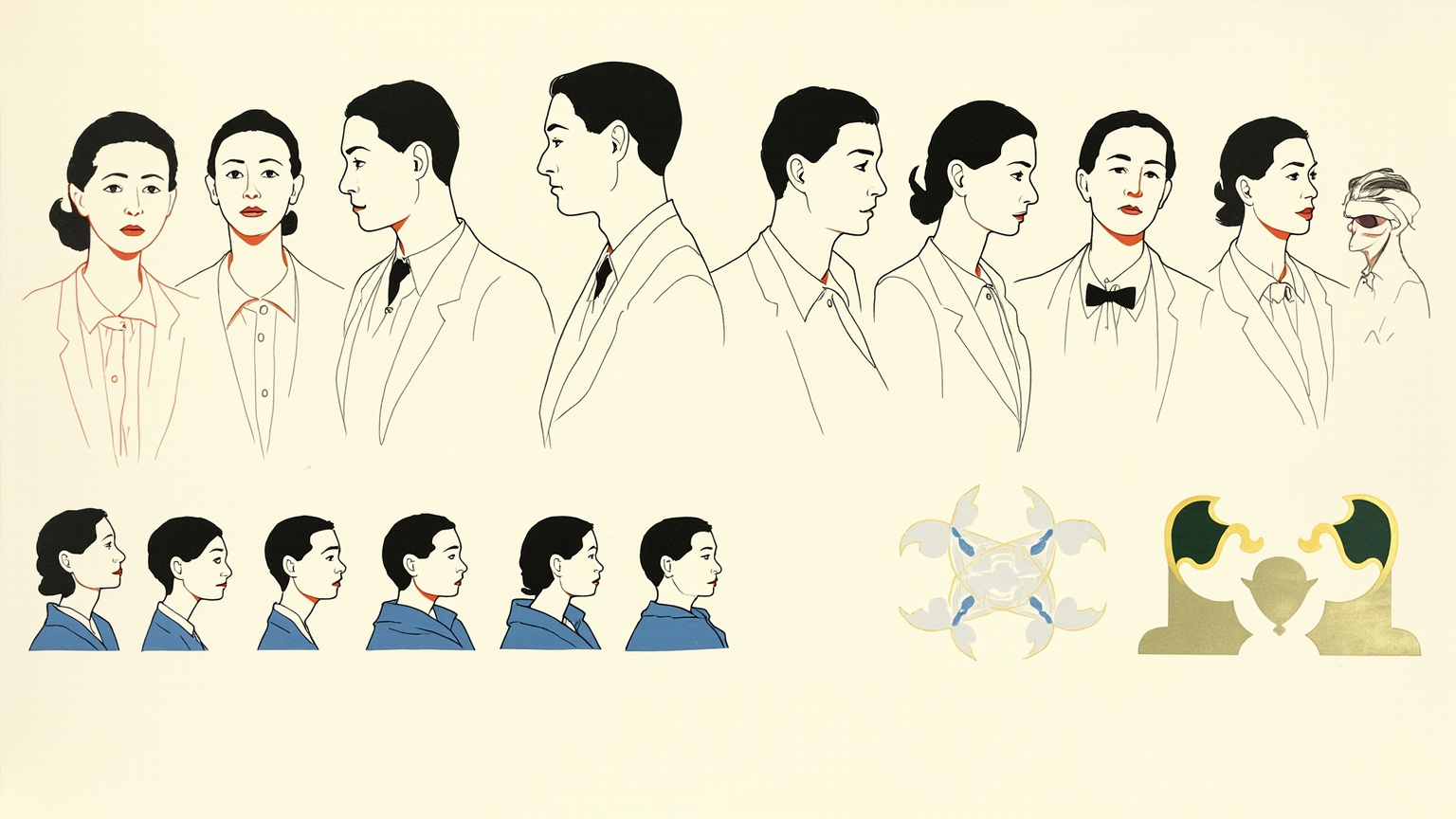
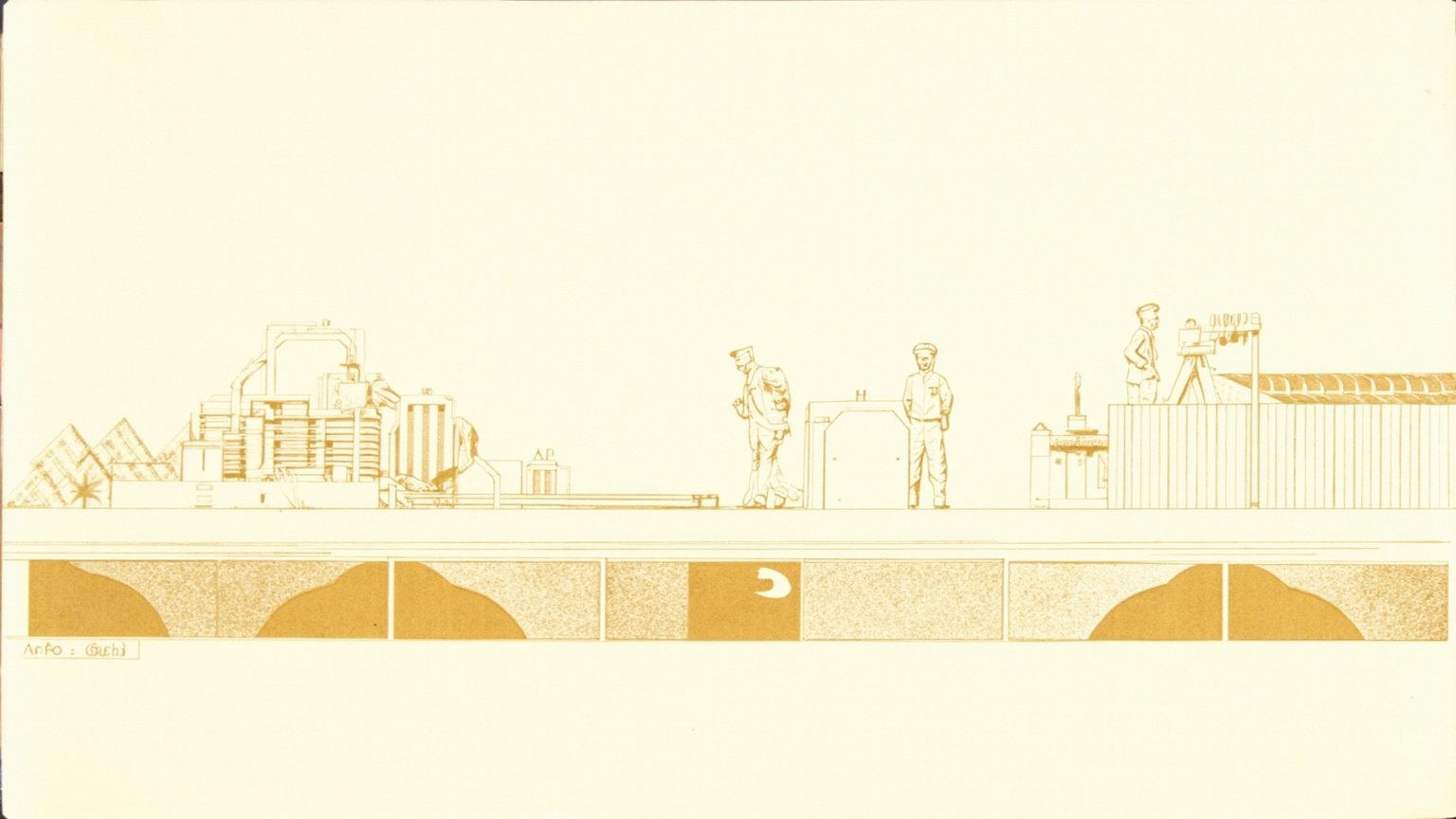
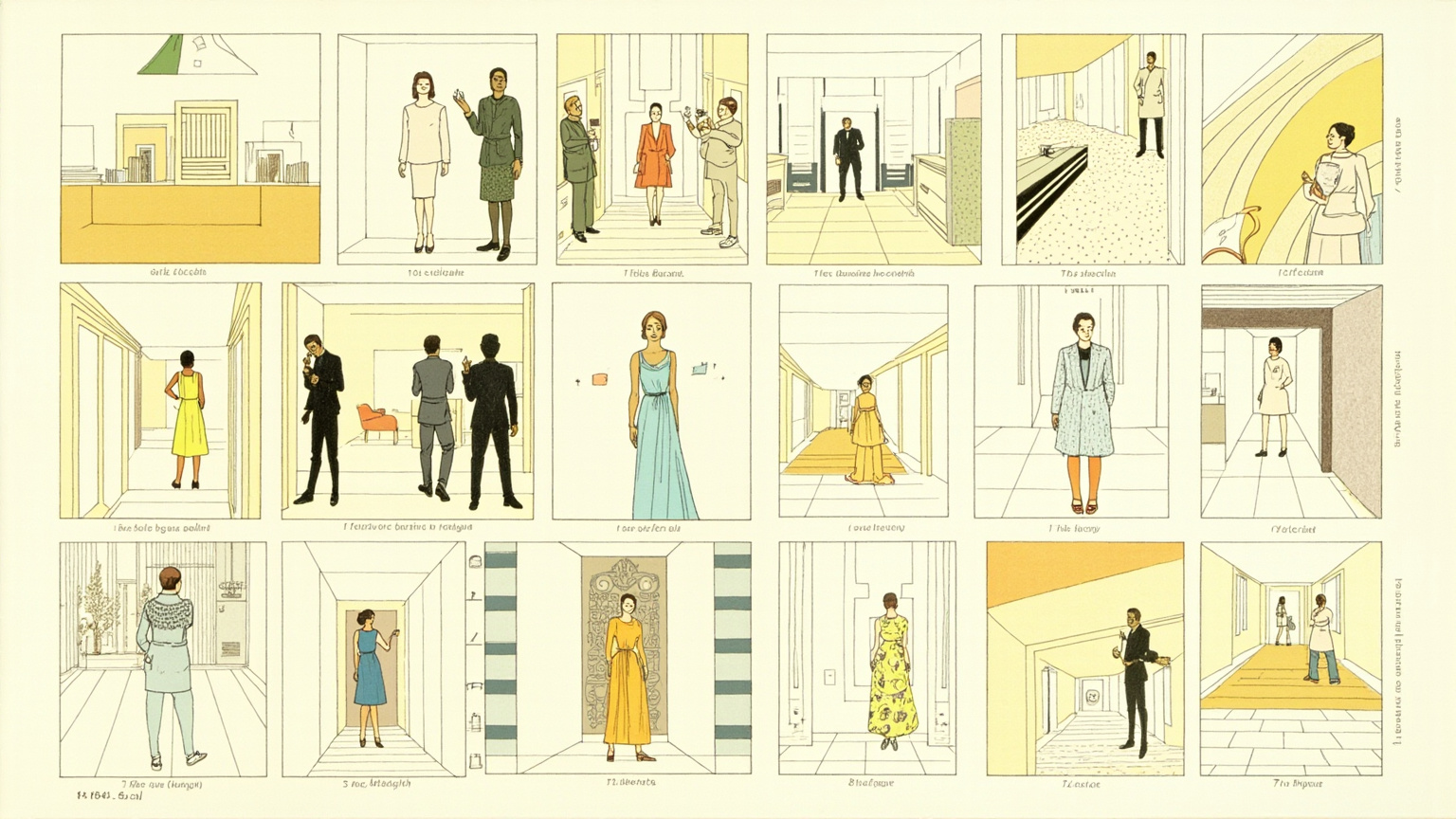
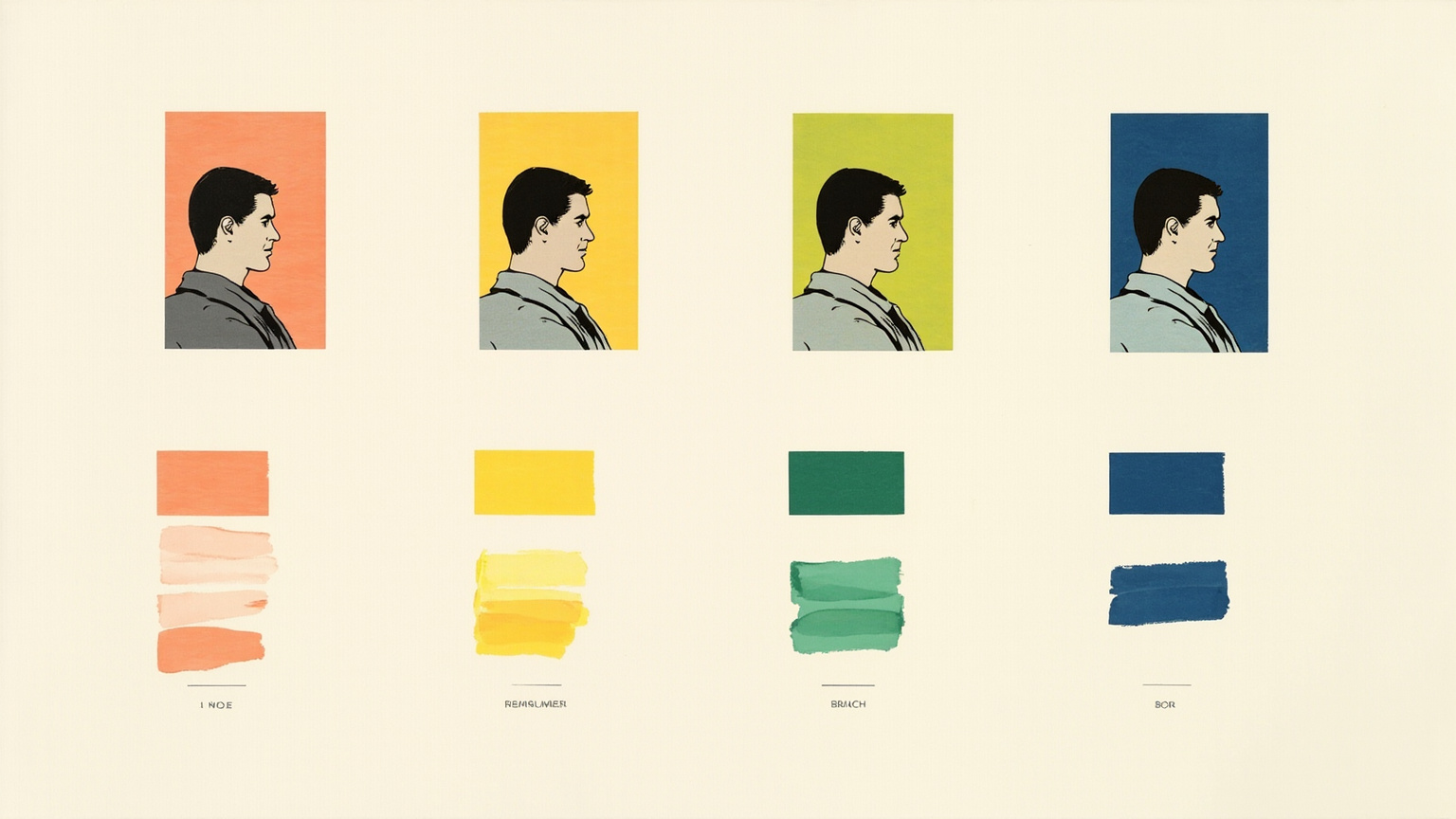
Art Direction4 plates
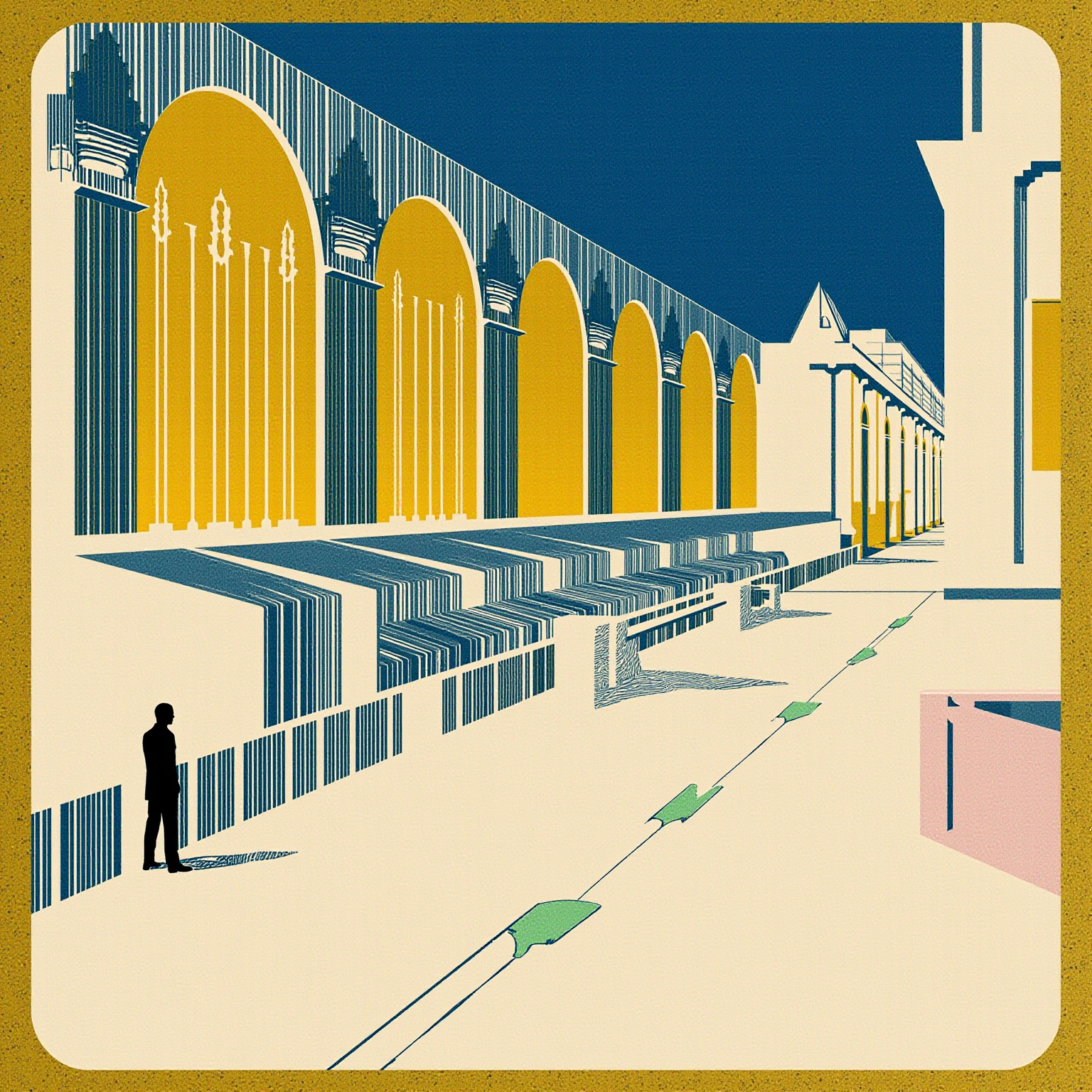
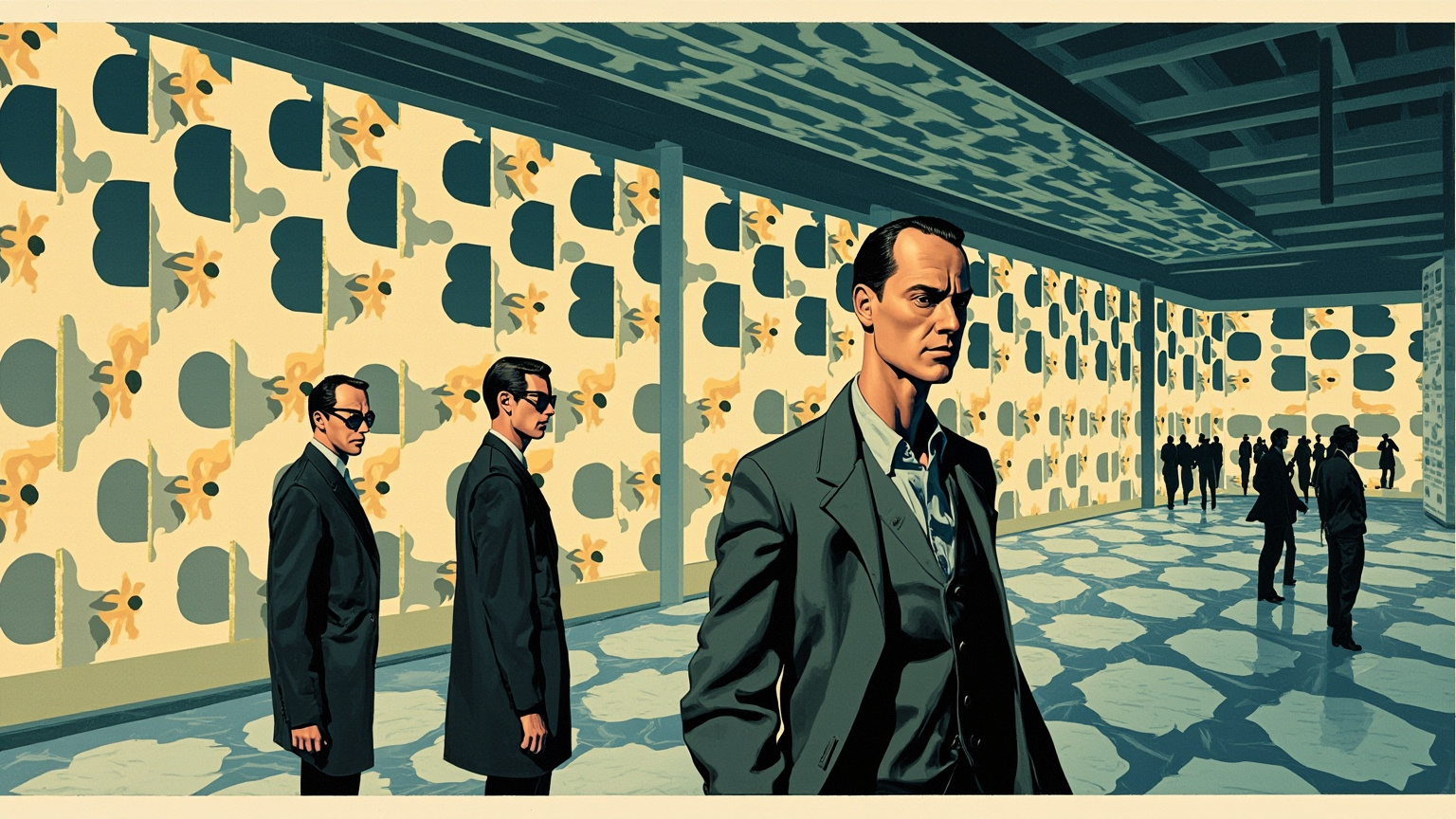
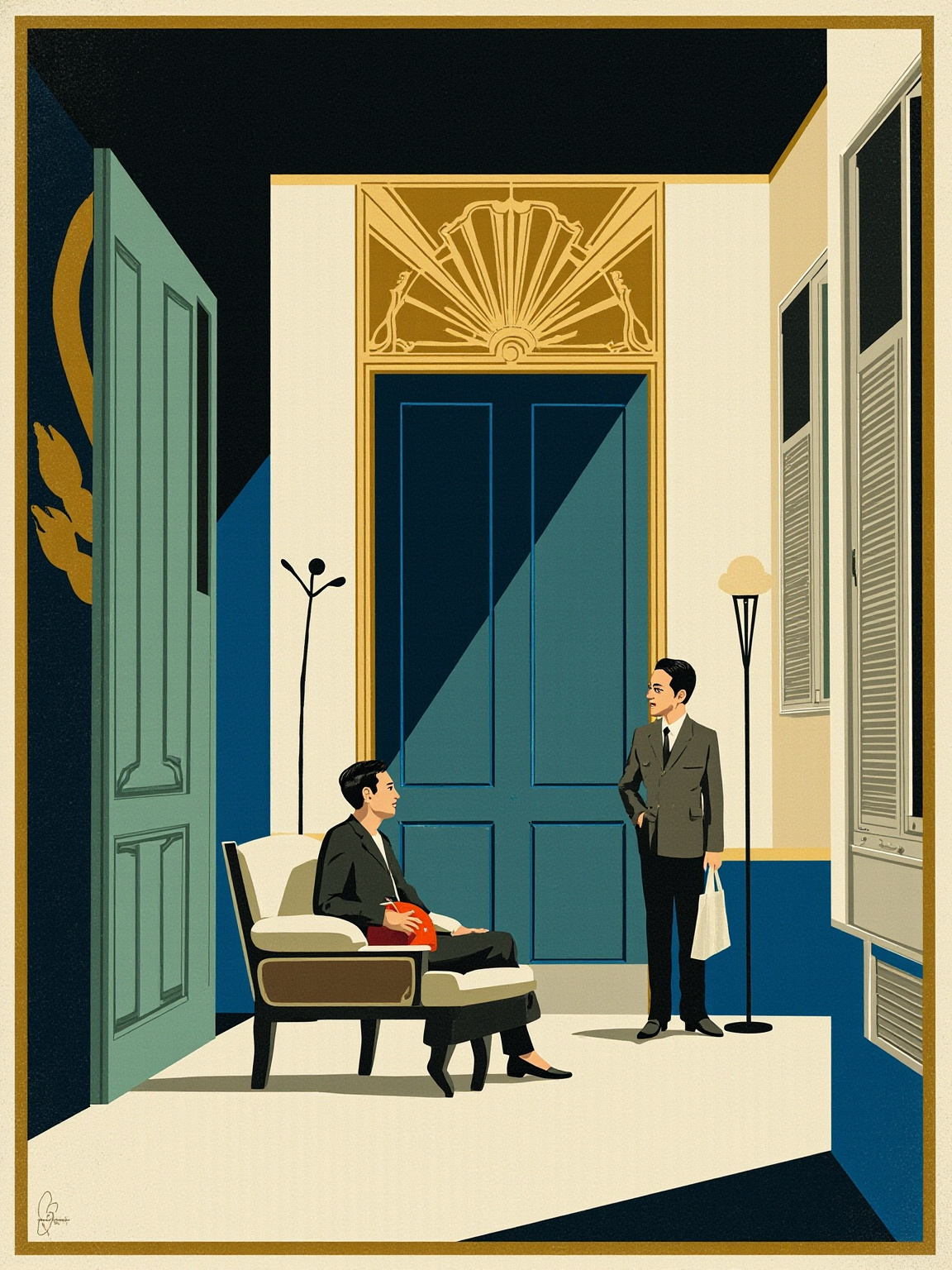
Before the guide was written, this book got a visual foundation — every illustration you just read grew out of it.
The world's Controller for stability is named Mustapha Mond — there are only ten of him, worldwide. He was a promising young physicist once, until he worked out for himself that truth and happiness can't both be had. The state chose happiness, so he went to work running it. Later in the book he lays the ledger open in front of the protagonist — the flattest, and the most unsettling, stretch in the whole novel.
There are four or five principal characters. Bernard Marx is an Alpha psychologist who, by spec, should be tall and handsome, but stands a head shorter than his caste — rumor has it alcohol got into his blood surrogate at the hatchery. In a society where being different from everyone else is the original sin, his body makes him doubt, for the first time, the happiness soma has been feeding him. Lenina Crowne is a pretty Beta nurse, properly conditioned, who by the rules should be seeing several men at once — except she falls for one man in particular, and that single-mindedness will cost her, publicly. Mustapha Mond is the Controller, already introduced. The two who matter most are still to come: a woman named Linda, and her son, John.
A child who should never have been born
Years earlier, the Director of the Hatchery in London took his companion Linda on holiday to the Savage Reservation in New Mexico — a patch of land the World State deliberately left uncivilized, a kind of living museum where marriage, old age, sickness, and death still exist. The Director got separated from the group and fled; Linda fell and hurt her leg, couldn't keep up, and was left behind. The tribe took her in, and she gave birth, hugely pregnant, to a son. That son is John — white-skinned, fair-haired, and still an outcast among the tribe. His mother had only one book on hand, a battered complete Shakespeare, and John learned his English, his morals, and how to make sense of suffering from it. Shakespeare became a second father living inside his head.
Bernard, on holiday at the Reservation with Lenina, stumbles onto Linda and her son. He sees an opportunity at once and brings the two "living fossils" back to London, meaning to make his fortune off them. The bet pays off.
"Father" — one word blows up a Director
John's first public appearance in the World State comes at a mass assembly, where the Director is addressing new employees in the great hall. John pushes through the crowd and calls out, "Father." In the World State, "father" ranks with the worst obscenities — the whole concept of family has been deleted as filth. The Director goes gray on the spot, his twenty-year-old sin shouted out in front of the room by the son he abandoned. Bernard, holding this winning hand, can barely keep from grinning. The Director resigns the next day and disappears. This is Huxley's cruelest stroke: civilization trading affection for shame. No one lays a hand on anyone — one sentence is enough to ruin a man.
Bernard becomes the toast of London overnight — "the man who owns the Savage" — every party fighting to book him. Suddenly he's tall, he's surrounded, he's photographed, he's invited to dine with the Controller. But there was never much substance in him, and the more famous he gets, the more he shrinks; hauled in front of Mustapha Mond for a talking-to, he folds completely. In the end he's exiled to Iceland. The saying that a pitiable man usually has it coming fits him exactly.
The love Shakespeare taught him meets a world with no chastity
In London, John falls for Lenina. The script running in his head is Romeo and Juliet: be faithful, be constant, wait, suffer, die well. The script running in hers is World State orthodoxy: if you want someone, take them, then move on — clinging to one person is backward, even sick. She genuinely likes him, and, against the rules, she is faithful to him alone — which, in this civilization, reads as an illness. At a party she strips and throws herself at him; John's Shakespeare collapses on the spot, and he grabs a whip, lashing himself while calling her a whore. The scene drives the book's two logics face to face: my way of loving you forces you to be humiliated for my sake; your way of loving me forces me to become someone I cannot be. Neither one is wrong, and neither one is livable.
ImaRead3
John, out of his mind, storms a soma distribution point and hurls the crate out the window — below, a crowd of Delta workers waiting for their sweet ration nearly riots when the drug runs out. Chaos breaks out. In the confusion, John is subdued and brought before Mustapha Mond.
The Controller opens the ledger: pick one
This scene is the core of the whole book. Mustapha Mond, unhurried, walks John through the accounting: truth, beauty, God, freedom, literature, deep love — everything humanity has chased since the beginning — all of it comes bundled with pain. Civilization decided it didn't want any of that anymore, and traded it for stability, comfort, and nights without insomnia. The price is that no one gets to read Shakespeare, or the Bible, or spend an afternoon alone just thinking. Worth it? The World State decided it was.
John won't accept it. Mond doesn't lose his temper: look at those Deltas — they'll never read Dostoevsky, but they're not suffering either. Force them through the pain first and they still won't manage Dostoevsky afterward, and they'll resent you for it. We've simply cut out, ahead of time, a kind of pain they never wanted. There's no one-line comeback to that — this is where Huxley is at his most ruthless, refusing to hand the reader a ready answer. The first time I read this passage I sat there stunned, and went back a page to read it again.
This conversation is the densest passage in dystopian literature precisely because it refuses to declare a winner. It never says happiness is wrong, and it never says freedom is mandatory. It simply lays both options on the table and makes you stare at the gap between them — then turns out the light and leaves you to think it through alone.
ImaRead4
Structurally, this is the coldest cut in the whole book. John doesn't lose to the World State's machinery in the end — he loses to the fact that the World State has turned even suffering into a spectacle for consumption. He couldn't even hold on to the freedom to punish himself. That hurts more than if they'd simply had him shot.
Why it keeps getting dragged back into the conversation
In 1932 there were no test-tube babies, no gene editing, no iPad. But Huxley had already written Bokanovsky's Process — cloning a population to order, presetting them by caste; hypnopaedia — doctrine looped through sleep to slip past the brain's resistance; soma — a pill for the first sign of a bad mood, no questions asked; the feelies — consumption wired straight into touch, addictive while feeling like art. Looking back over the decades since, none of this arrived one piece at a time — it arrived all at once. Every time a new one lands, someone on social media pulls this book out to check it against reality.
Here is the difference from Nineteen Eighty-Four: Orwell warns you, don't let them control the information. Huxley warns you, don't let them feed you until you're too full to care. One is the rule of fear, the other the rule of pleasure. The second one leaves your palms sweatier today, because no one thinks pleasure is suspect, and no one thinks comfort needs watching.
Totalitarianism's most practiced trick was never making you afraid. It's making you comfortable enough to forget you ever wanted to resist anything.