A childhood garden of a hundred plants, a quack doctor's absurd prescription, a photograph inscribed 'Parting,' and an old friend whose drowning was never quite explained.
Text and illustrations produced by the pipeline
At the foot of the wall, little red berries poked out of the mud brick in a ragged row. Seven or eight years old, young Xun crouched in the weeds catching blister beetles and pulling up fleeceflower roots — grown-ups had told him a hundred times that a root pulled up whole would turn into a person, and every time, he had to try again. This vegetable patch, called the Hundred-Plant Garden, was the brightest place in his whole childhood.
Decades later, Lu Xun sat at a desk in Beijing or Xiamen and gathered these fragments into a book. He called it Dawn Blossoms Plucked at Dusk — flowers that fall in the morning, picked up only when evening comes. It was published in 1928.
It is Lu Xun's only collection of memoir essays — ten pieces, each standing on its own, nothing like the short stories in Call to Arms or Wandering. They first appeared serially in 1926 in the Beijing biweekly Wilderness under the working title Old Tales Retold; only in 1928 did the Weiming Society in Beijing collect them into a book, retitled Dawn Blossoms Plucked at Dusk.
Answering the question of how Lu Xun became Lu Xun means going through this slim book. From the private school behind his family's old house in Shaoxing, to the new academy in Nanjing, to medical school in Sendai, to the moment he gave up medicine for writing — the whole arc of his awakening is scattered across these ten essays. That is also why three of them, From the Hundred-Plant Garden to the Three-Flavor Study, Mr. Fujino, and Ah Chang and the Classic of Mountains and Seas, have sat in Chinese schoolbooks for generations.
The narrator throughout is young Xun — the boy scrambling over the mud wall in the Hundred-Plant Garden, and, a decade or so later, the medical student studying in Japan, are the same person at two different ages. The warmest figure in the book is Ah Chang, his nurse, a maid from the Shaoxing countryside, full of rules, who slept sprawled in the shape of the character for big and left him no room to turn over in bed. She could not read a word, yet after he once let slip that he wanted an illustrated Classic of Mountains and Seas, she went to no end of trouble and came home with it.
Ah Chang and the Classic of Mountains and Seas is widely regarded as a classic of modern Chinese prose. What makes Lu Xun good at this is that he writes the birth of respect without turning Ah Chang into a saint — she is still the maid who sleeps sprawled across the bed and tells ghost stories; what changes is that you suddenly understand her.
In the temple processions and Mulian operas of Shaoxing, Lu Xun's favorite figure was a ghost called the Living Wuchang. As the story went, this soul-summoner once let a man escape who was due to die, and the King of Hell had him beaten forty times for it — and ever since, under the strict letter of the underworld's law, he keeps a soft spot for mercy. Lu Xun says he is more likable than plenty of upstanding gentlemen among the living — a line that, written in 1926, carried real weight.
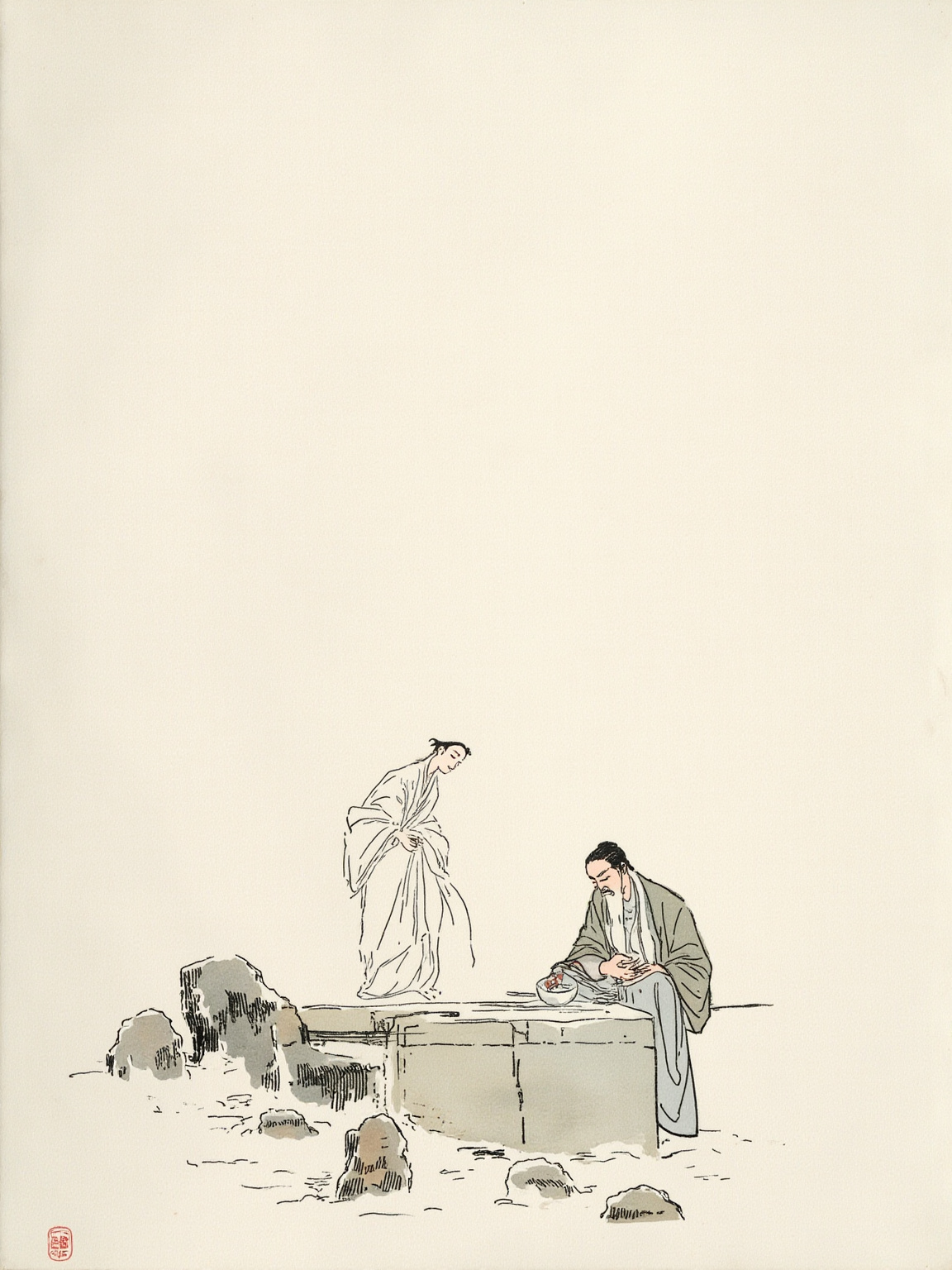
Writing about Fan Ainong's death, Lu Xun says only that he suspects it was suicide. An accident, a drowning, a misstep, a suicide — he cannot say for certain himself, and the book closes on that unresolved note of mourning. A friend was gone, gone without a clear reason, leaving even the cause of his death ambiguous for the living to carry. It is the most wistful passage in the whole book, and it is where the book ends.
By this point the book has stopped being a child's memories and become a middle-aged man looking back at the first half of his life. As bright as the childhood was, this is that dark.
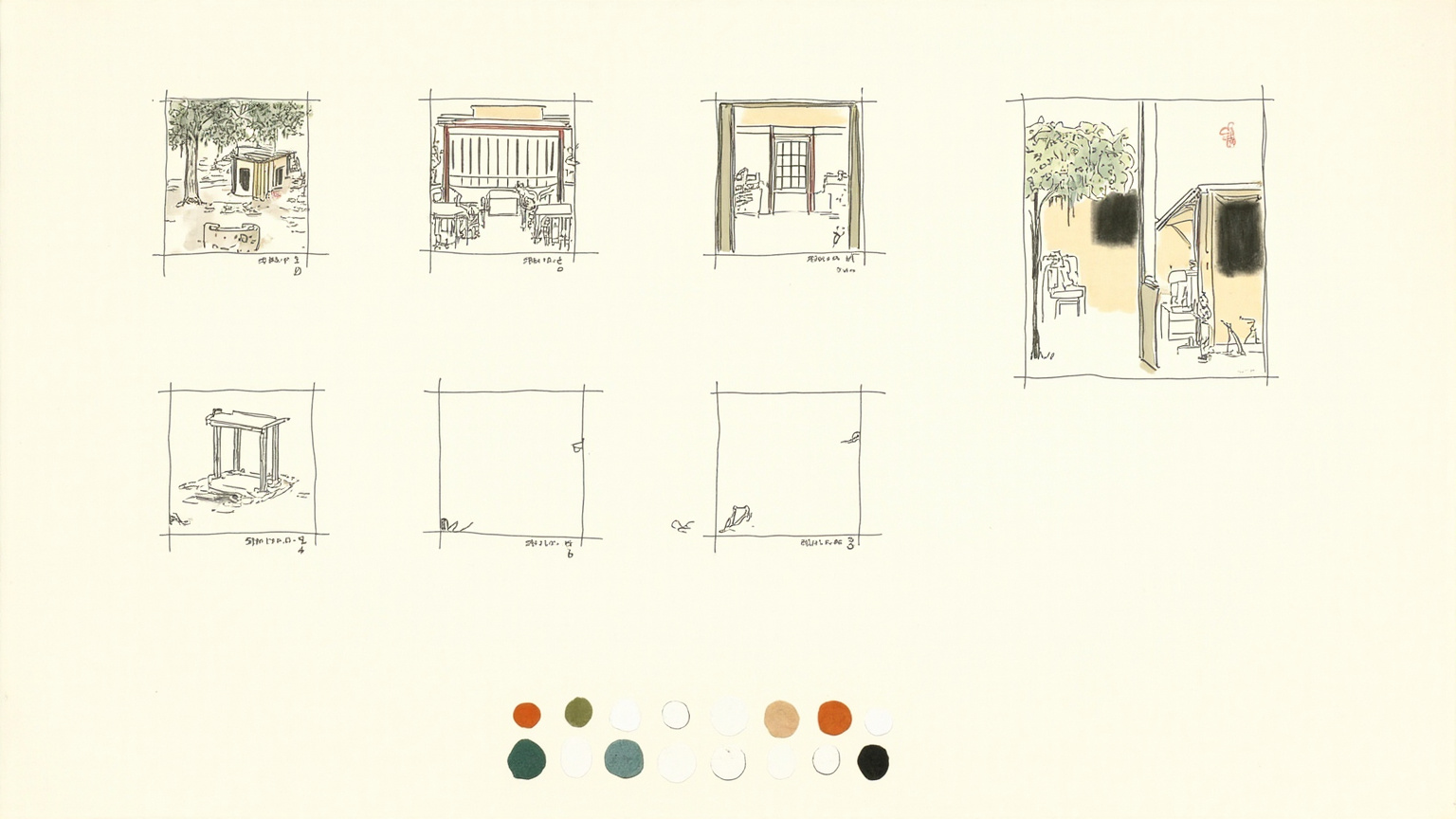
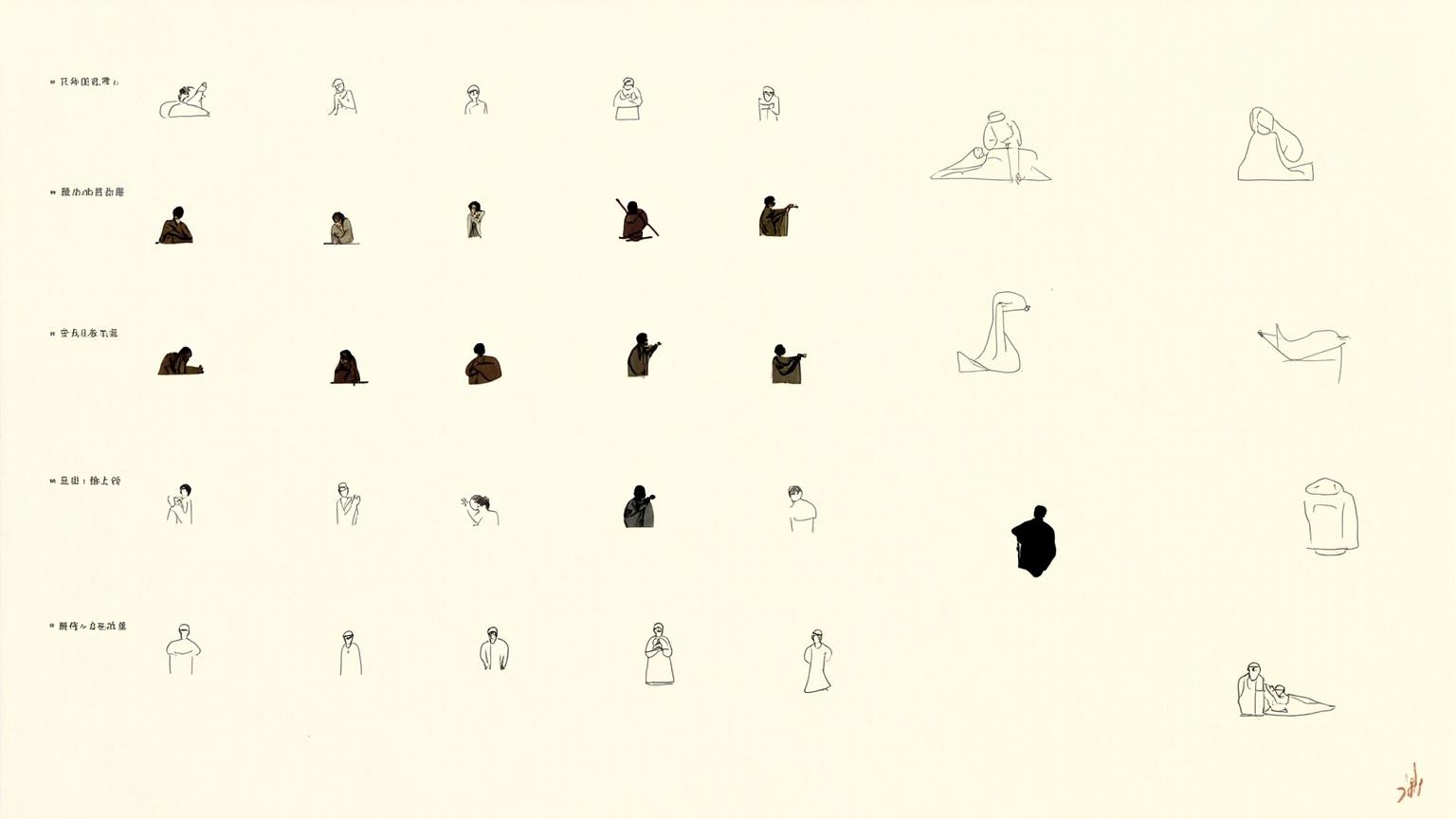
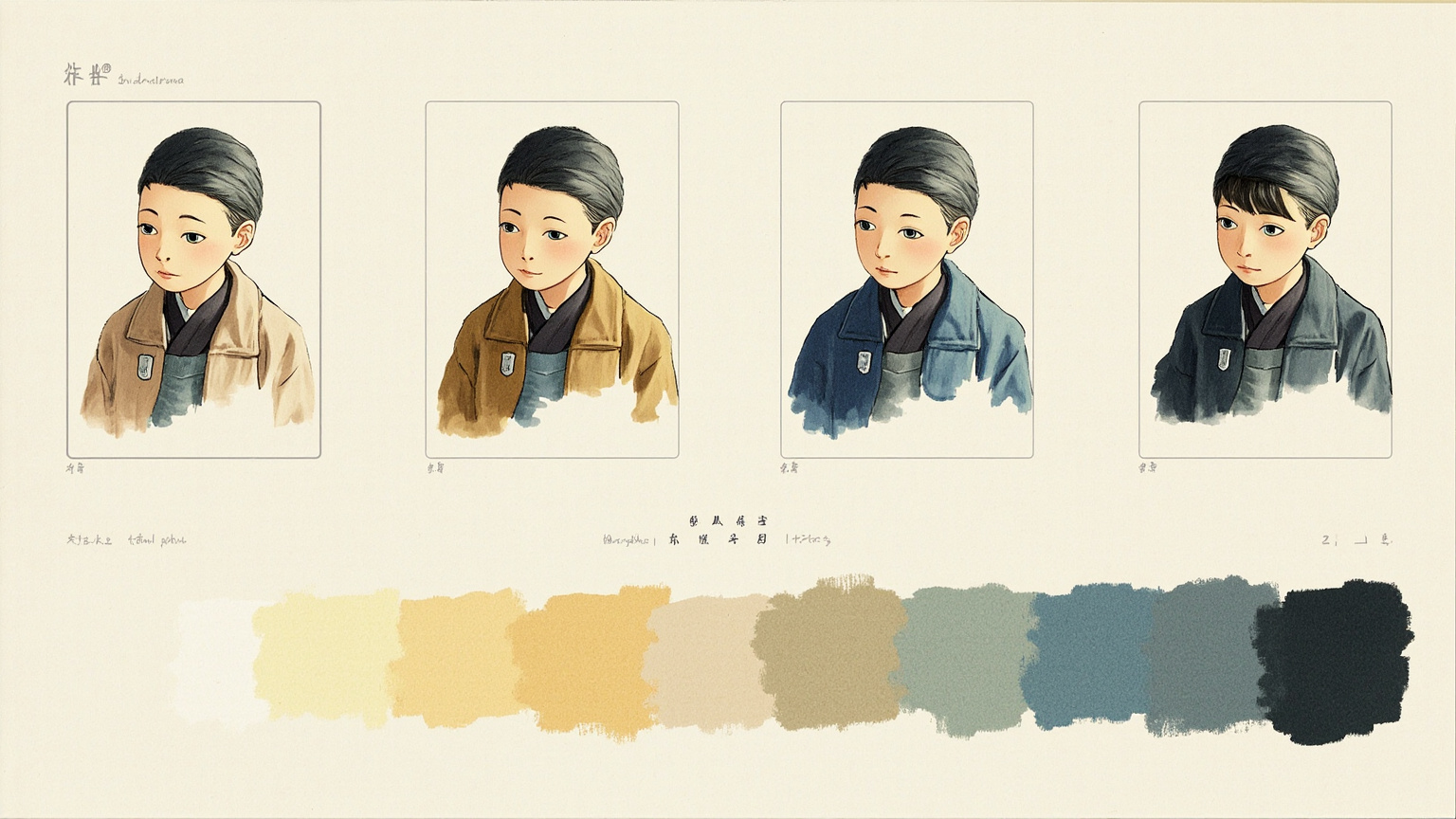
Before the guide was written, this book got a visual foundation — every illustration you just read grew out of it.
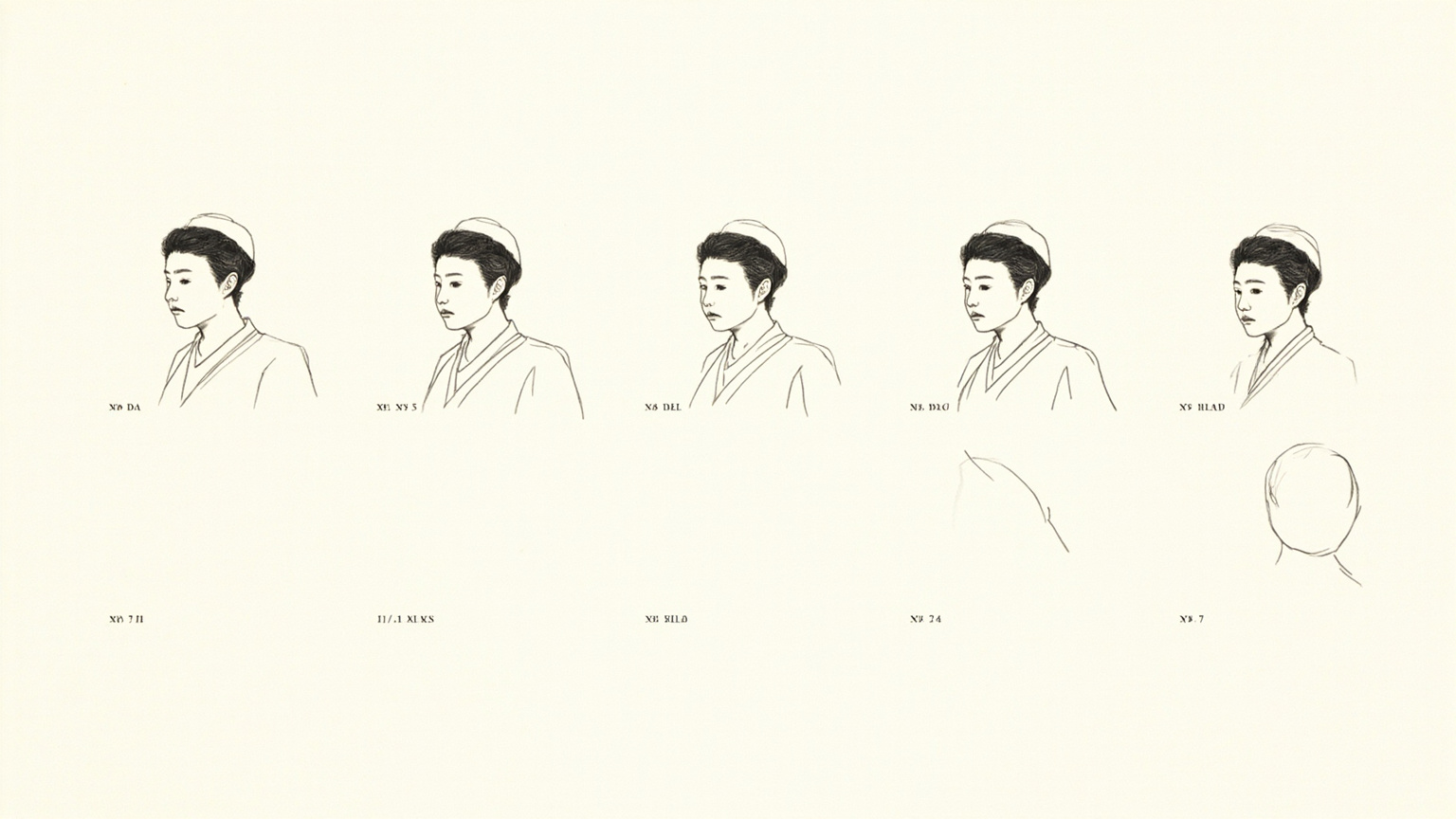
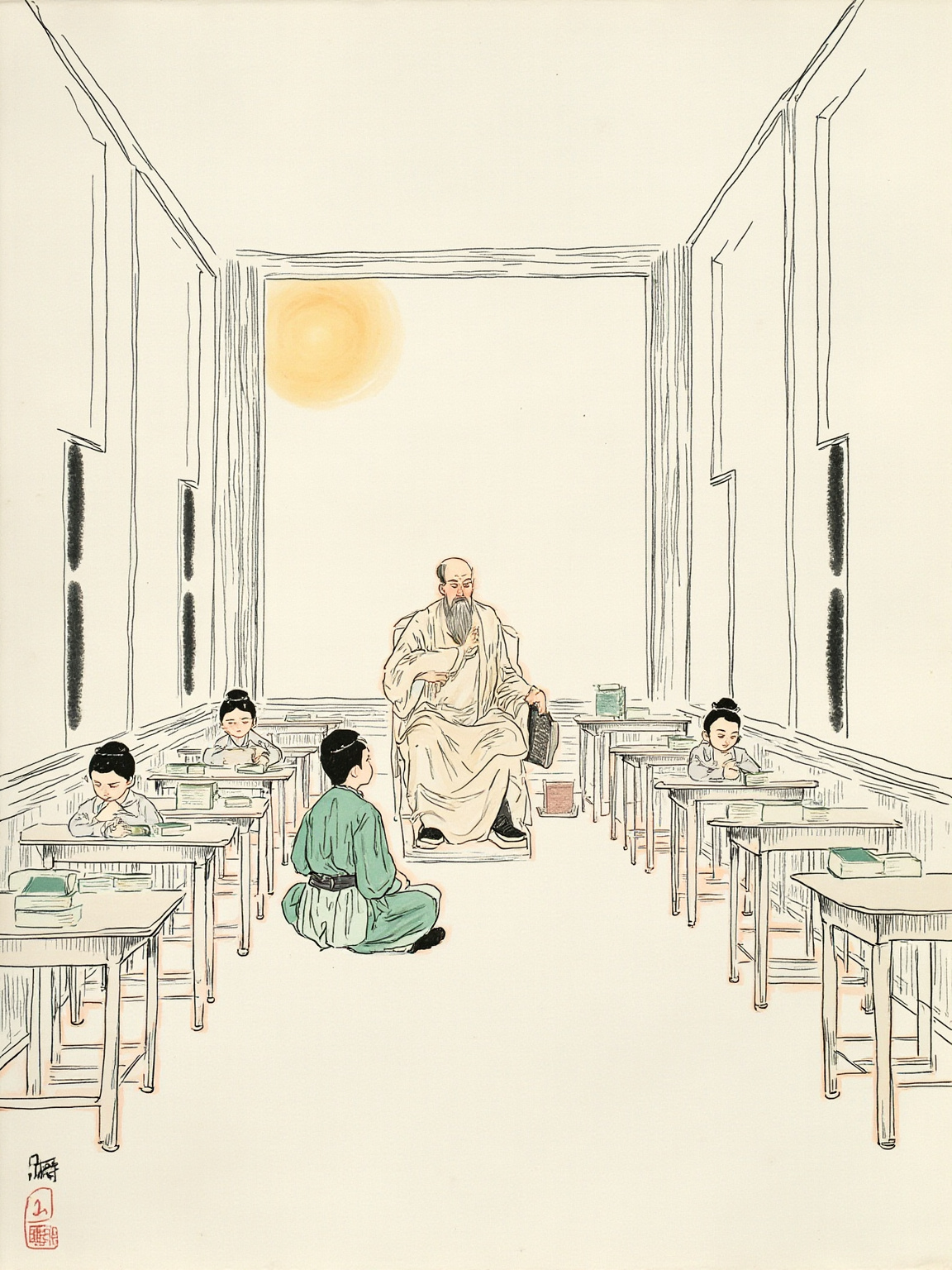
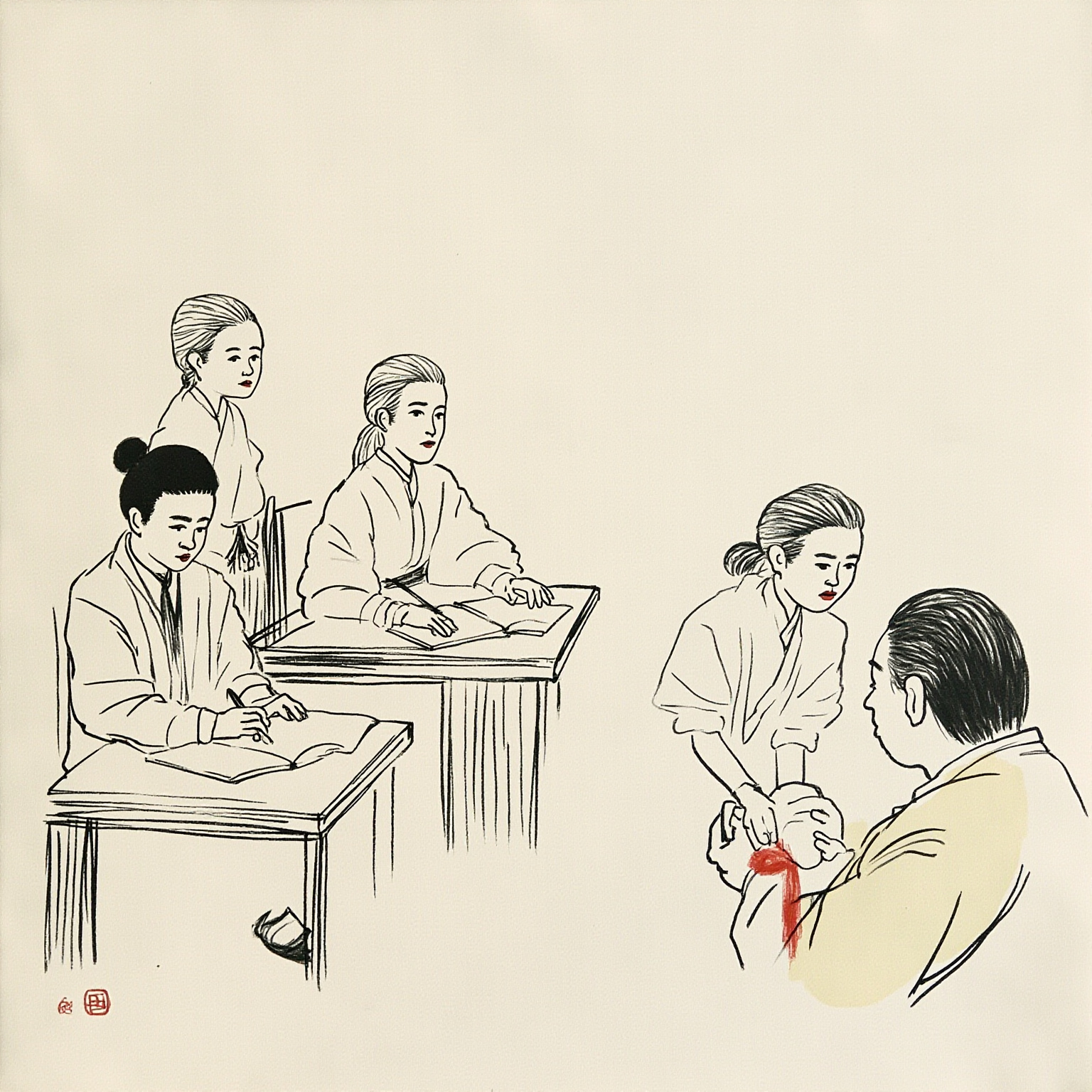
At the Three-Flavor Study, Old Master Shou Jingwu is one of the rare private-school teachers Lu Xun writes with real respect — upright, plain, learned, keeping a ruler and a rule about kneeling in punishment that he almost never actually used. At Sendai Medical College, Mr. Fujino, a professor of anatomy, was the one teacher who took the Chinese student seriously, correcting the position of blood vessels in his notes stroke by stroke in red ink. Then there is Fan Ainong, an old friend from his Japan years, met again in Shaoxing after they had both returned home, who eventually drowned — the cause never settled.
The world of the book is not complicated: the Zhou family's old house in late-Qing Shaoxing, the Jiangnan School of Mines and Railways in Nanjing, Sendai in Japan, and Shaoxing again around the 1911 Revolution. The ten essays stand apart, and the timeline is not continuous — you have to accept it jumping between childhood, adolescence, and early adulthood, because that is what memory actually looks like.
The Hundred-Plant Garden was a vegetable patch and also a child's playground. Blister beetles let off a foul smell if you squeezed them between your fingers; fleeceflower roots, pulled up whole, were said to turn into little people; and somewhere in the tall grass, people said, some strange thing called the snake-woman might be hiding. Ah Chang told him that story, and he half believed it, and could not bring himself to disbelieve it either. Later he was sent to the Three-Flavor Study to study under Old Master Shou Jingwu. The school had a ruler and a rule about kneeling in punishment, but the old man almost never used either; when a student got lost in his recitation, his head would tip back and his shoulders would rock — a picture Lu Xun carried with him for the rest of his life.
What to notice in the writing: Lu Xun describes his childhood in a deliberately restrained, nostalgic register, tossing off the most mischievous details as though they were nothing — which only makes the innocence he has lost more visible. The Hundred-Plant Garden essay is almost entirely plain description, without a single grand word, and yet by the end that vegetable patch outweighs any tale of heroism.
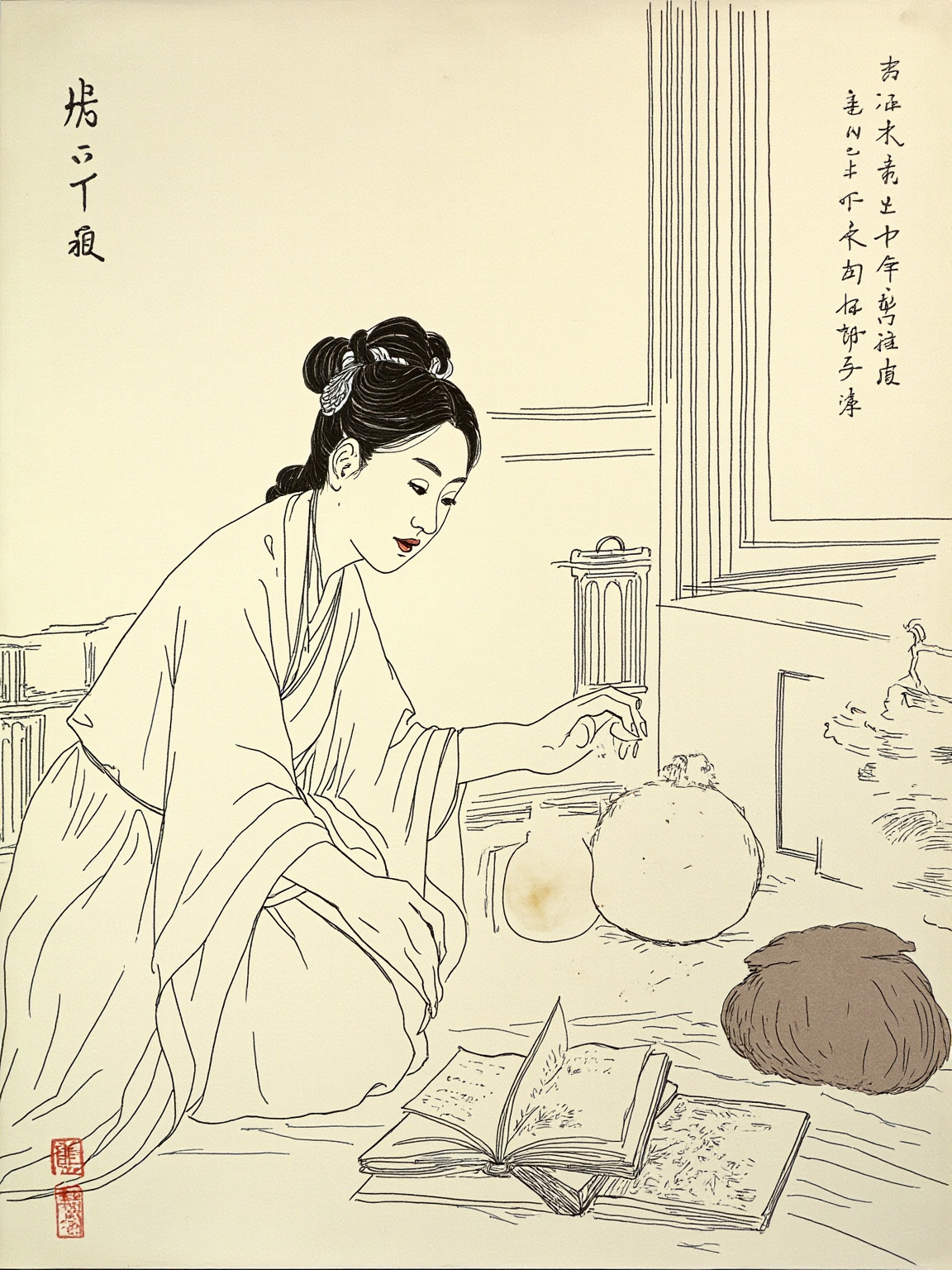
Ah Chang had endless rules. On New Year's morning she made young Xun say congratulations before she would let him eat his lucky tangerine; at night she slept sprawled in the shape of the character for big, and he was squeezed into a corner of the bed. She loved telling strange stories from the countryside too — the Long-Haired Rebels, the snake-woman — and he listened half in fright and half hungry for more.
But once, for no particular reason, Lu Xun mentioned to the family that what he wanted most was an illustrated Classic of Mountains and Seas — he had probably not meant it seriously himself. Ah Chang, who could not read, went out and was gone for several days, and came back with the book, its cover printed with beasts that had human faces, nine-headed snakes, three-legged birds. That was the first time the boy felt something new toward her, something more than gratitude — the discovery that someone he had never taken seriously could care about something this much.
A different kind of blow came from an old picture book called The Twenty-Four Paragons of Filial Piety. One of its stories tells of Guo Ju, who buried his own son alive so he could afford to feed his mother. Lu Xun attacks this kind of story for the damage it does to children — his target is not filial piety itself, but a warped literature that dresses up burying a child alive as virtue. The same book swings hard in tone: writing about the Living Wuchang, Lu Xun is a mischievous boy again; writing about The Twenty-Four Paragons, he turns cold as a blade. It holds a warm-hearted child and a merciless critic at once.
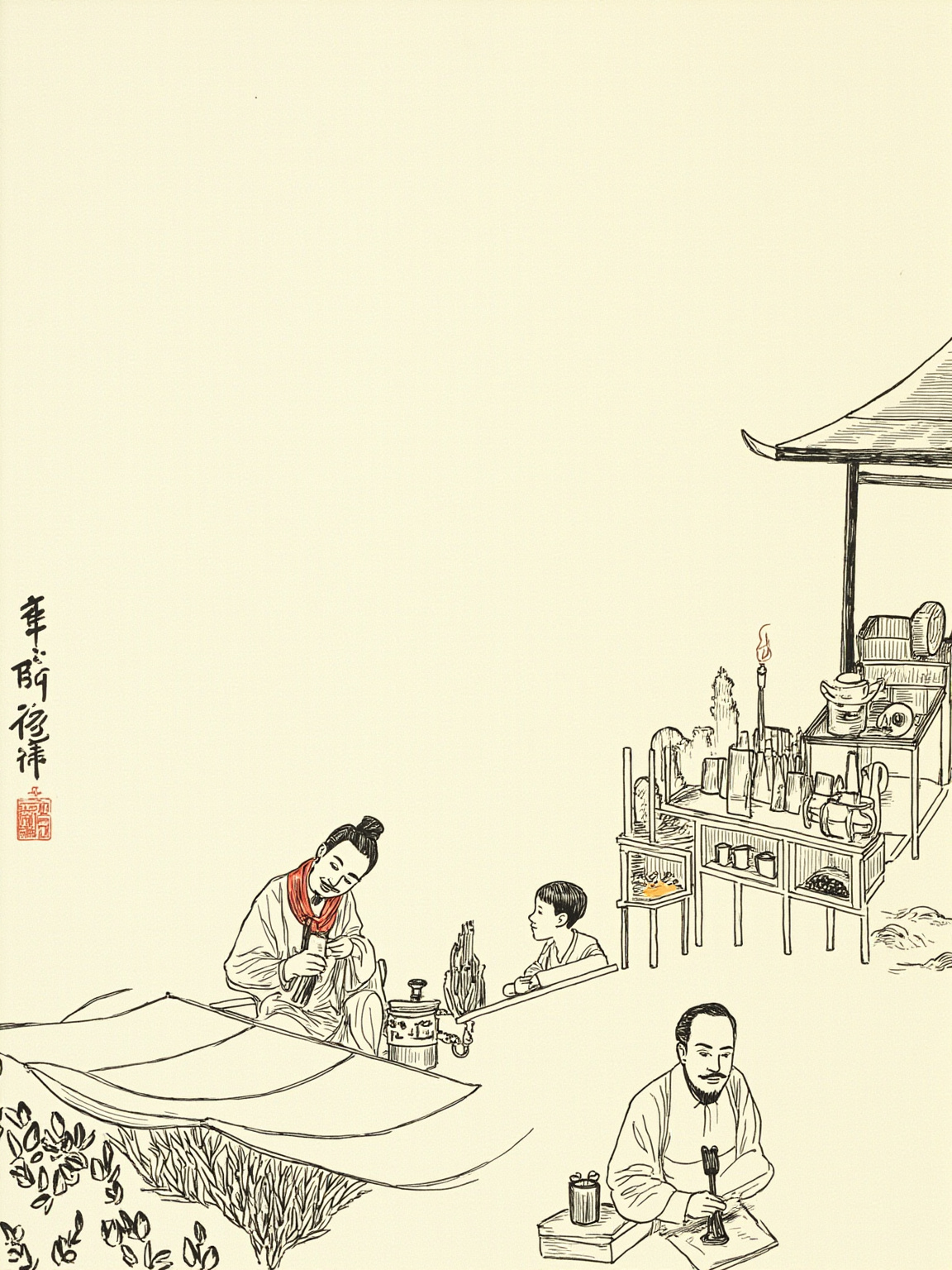
Lu Xun's father, Zhou Boyi, was sick for years and never got better. The famous doctors of Shaoxing — Chen Lianhe, as Lu Xun names him — took turns treating him, and the ingredients they prescribed were absurd enough to remember for a lifetime: a stalk of sugar cane that had weathered three frosts, a mating pair of crickets that had to be the original pair and no substitute, and from another doctor, a scrap of an old, broken drum skin. None of this is Lu Xun exaggerating for effect — these were real practices from an era of old-style medicine dressed up in mystification.
His father's illness was never cured. Lu Xun's later decision to go to Japan and study medicine has one of its roots buried in this hopeless course of treatment. A boy who watched a parent suffer through such absurd remedies would want, more than most people, to understand why people die and how illness should actually be treated. One thing worth being precise about: My Father's Illness is an attack on the culture of quackery, on old-style medicine dressed up in mystification, not a rejection of Chinese medicine as a discipline. The two are not the same target.
One year, the rare chance came to go see the Festival of the Five Fierce Gods. Opera stages, dragon-boat races, candy vendors — the whole street was stacked with everything a child could want. Then his father suddenly called him back and told him to memorize a passage from the Jianlüe, a rhymed history primer schoolboys were made to learn by heart, a dozen-odd lines of tongue-twisting classical Chinese — no leaving the house until he could recite it. By the time he had stammered his way through it and rushed out to the street, the festival's excitement had already peaked and passed.
What cuts deepest in this short essay is not his father's unreasonableness but the fact that the child had no room to object at all. By the time he was finally let go, his excitement had already gone cold. Lu Xun writes the most wounding moment with real restraint — he does not protest, he simply records how his excitement was pulled out of his hands in that instant. That restraint carries more weight than any outburst would.
At Sendai Medical College, Lu Xun met Fujino Genkurō. This professor of anatomy went over Lu Xun's lecture notes with real care, correcting even a slightly misplaced blood vessel in red ink. That the teacher who treated the Chinese student best in the whole school was Japanese — said in 1926, that line alone already stung.
What pushed Lu Xun to give up medicine for writing was an incident with a slide shown during an anatomy class. A newsreel of the Russo-Japanese War was screened, showing Chinese onlookers watching, blank-faced, as one of their own countrymen was beheaded. Lu Xun wrote about that moment again and again afterward: what wounded him was not how the Japanese treated him, but the sheer numbness on his countrymen's faces. Medicine could not cure that kind of numbness — writing might. That moment became the starting point of his entire literary life.
What to notice in the writing: Mr. Fujino's red-ink corrections and the glow of that slide sit inside the same essay as a matched pair — one a specific, personal, warm act of kindness, the other an abstract, collective, despairing numbness. Lu Xun never spells out the contrast; he lets it speak for itself.
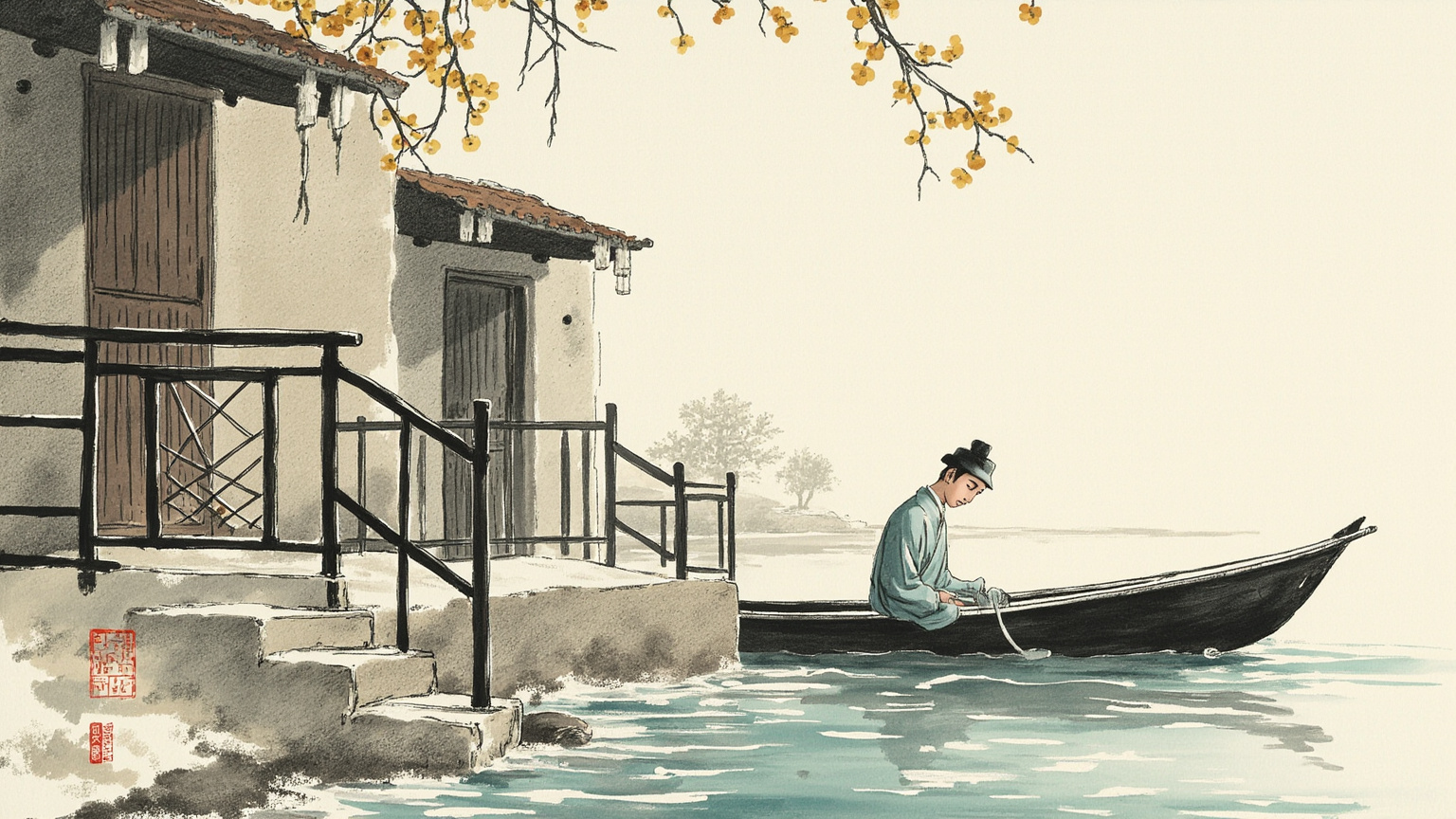
Around the time of the 1911 Revolution, Lu Xun returned to Shaoxing and, among old acquaintances, ran into Fan Ainong again. They had known each other years earlier in Japan, and had once argued bitterly over the killing of Xu Xilin; this time, they became close friends instead. Fan Ainong was proud, difficult, and down on his luck — still frustrated and penniless even after the revolution. The last word of him came after a night of drinking on a boat; afterward, he drowned.
On the surface, Dawn Blossoms Plucked at Dusk is the gentlest thing Lu Xun ever wrote. He describes the vegetable patch of the Hundred-Plant Garden, Ah Chang sleeping sprawled across the bed, Mr. Fujino's corrections in red ink, setting aside the blade he carries in Call to Arms. But the gentleness has another layer under it: it stitches warmth and criticism together, telling a story in the voice you'd use with a child about an old world he had no patience for.
More important, it is the source of the whole critical thread Lu Xun would spend the rest of his career pulling on. The idea of the numb onlooker takes its first shape in that slide-show classroom in Sendai; the blank, watching faces that later fill Kong Yiji, Medicine, and A Public Example all trace back to this book. Read that way, Dawn Blossoms Plucked at Dusk stops looking like Lu Xun's soft side and starts looking like the first draft of everything sharp he wrote afterward.
Read the actual text of Dawn Blossoms Plucked at Dusk and you will hear something no companion guide can reproduce for you — Lu Xun's ear for a sentence. The Hundred-Plant Garden passage opens with Behind our house was a large garden, and the sentences run on clean and unadorned from there, like a child crouched on the ground telling you what he got up to yesterday. The passage about Ah Chang bringing back the Classic of Mountains and Seas has no commentary in it at all, until the very end, where he sets down, quietly, this made me feel a new respect for her — see those words sitting alone at the close of the paragraph and you understand what it means to hide gratitude inside a period. All ten essays can stop you mid-sentence somewhere and leave you sitting with it a moment. That is not something a guide can hand you secondhand. That is Lu Xun himself, a hundred years later, speaking straight into your ear.
The real trick of Dawn Blossoms Plucked at Dusk is that Lu Xun turns his disappointment with an old world into the one vegetable patch a boy could never bear to leave.