The Tin Drum (Die Blechtrommel) · Companion GuideStories · Issue 00
10 minutes to The Tin Drum — a boy who refuses to grow up, and the shattered century behind him
The opening novel of the Danzig Trilogy, a magic-realist fable of postwar Germany.
Text and illustrations produced by the pipeline
ImaReadFolio 02 — 06
Opening: A Century Hidden Under Four Skirts
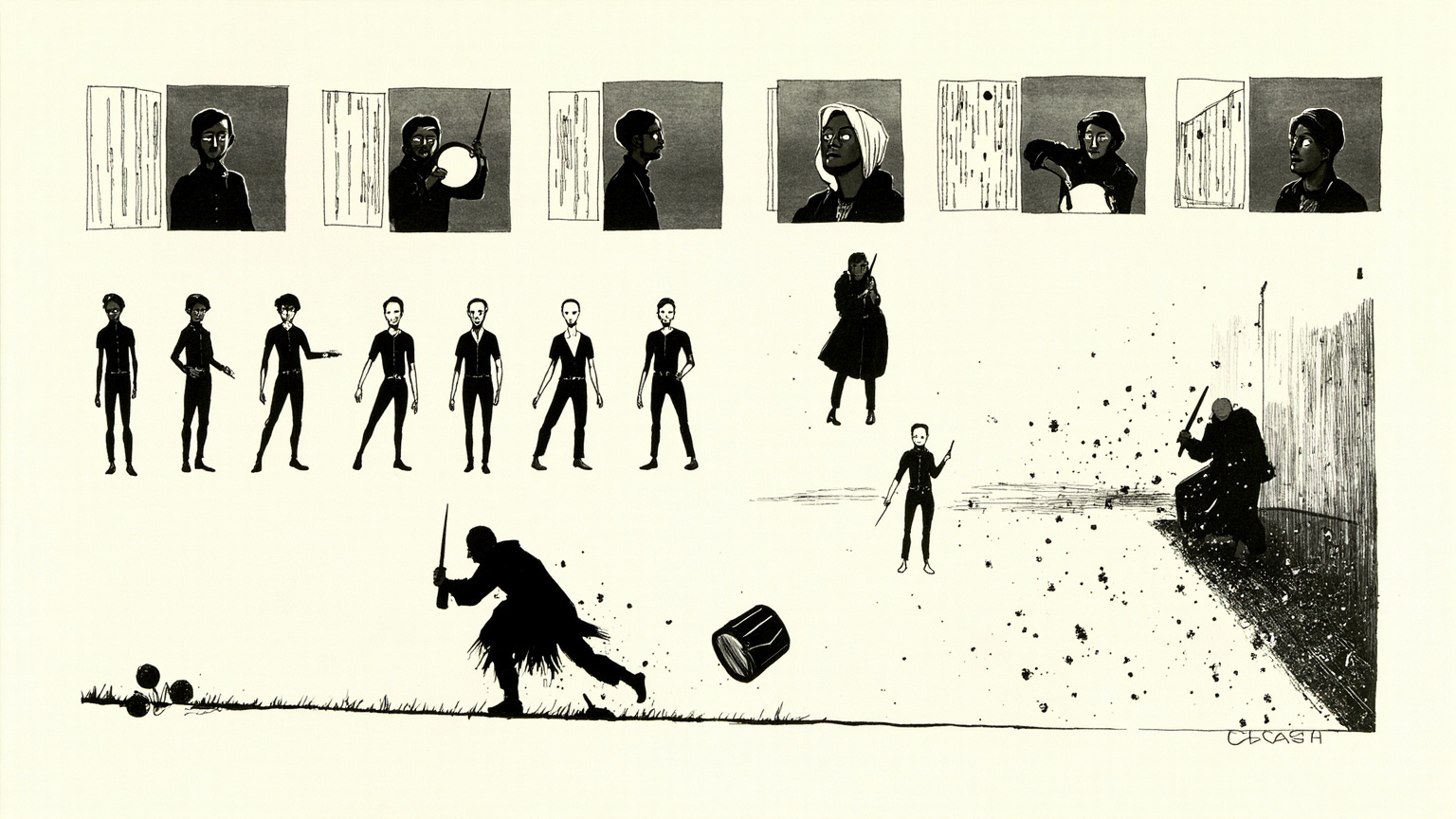
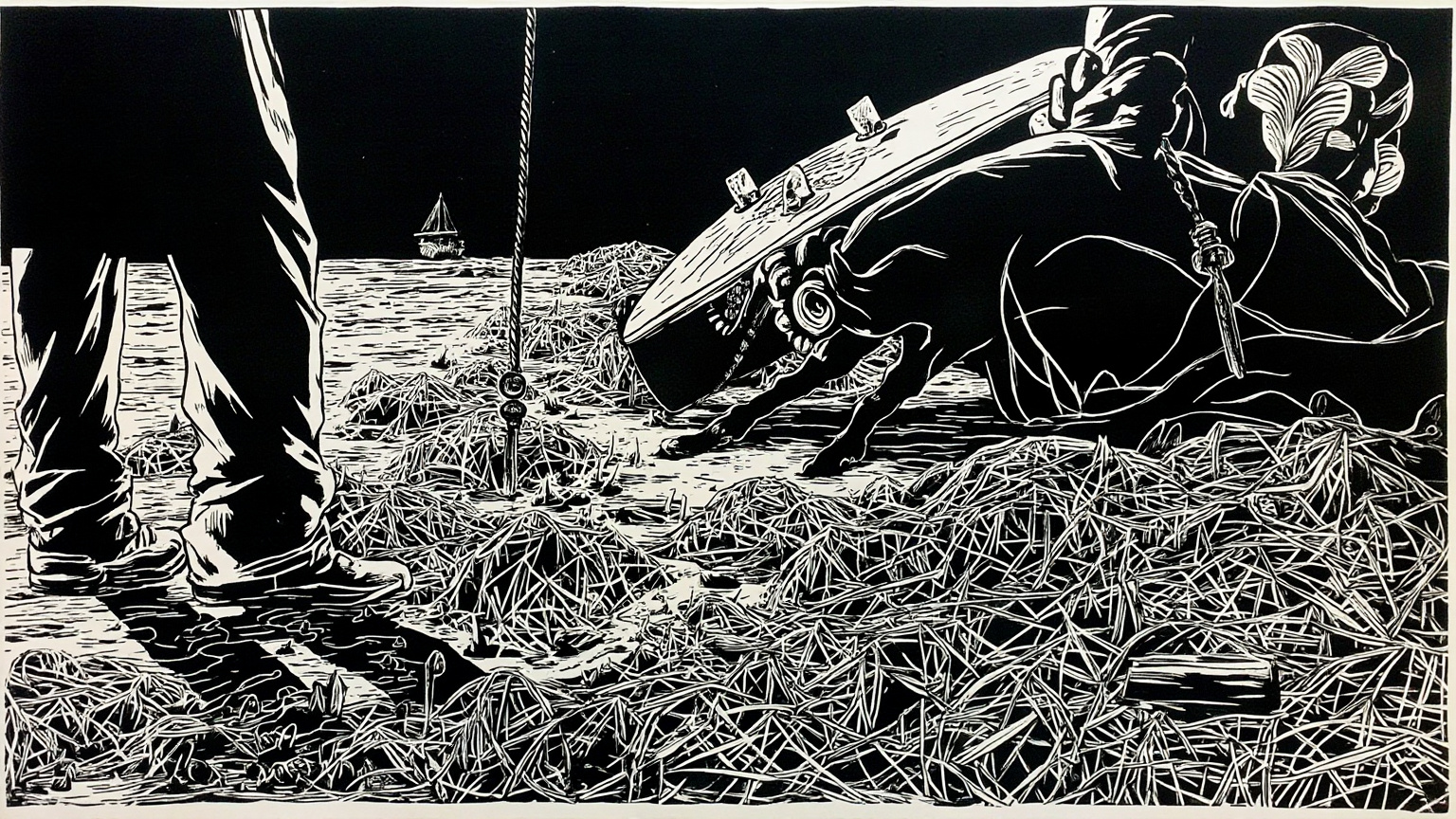
In a potato field in Kashubia, a peasant woman named Anna Koljaiczek squats at the edge of the furrows and spreads her four wide skirts. Underneath them hides Joseph, an arsonist on the run. The men chasing him pass by and see nothing. Anna and Joseph later come together, and their daughter Agnes will become Oskar's mother. This is the opening image of the whole novel: four skirts hiding one man, and a family planted from that hiding. Grass turns this almost fairy-tale act of concealment into the embryo of an entire German century of chaos.
What Kind of Book This Is
The Tin Drum is a novel by the German writer Günter Grass, published in 1959, the first book of the Danzig Trilogy, followed by Cat and Mouse and Dog Years. It fixes its gaze on a city that no longer carries its old name: Danzig, today's Gdańsk in Poland, once a free city suspended between Germany and Poland. When Grass won the Nobel Prize in Literature in 1999, the citation singled this novel out by name. Alongside Volker Schlöndorff's 1979 film adaptation, it is regarded as the founding work of postwar German writing that looks its own past in the face.
There is one reason it has lasted: it sidesteps the tone of official history and stuffs an entire era into the drumbeat of a dwarf child who refuses to grow up, letting absurdity take root in flesh and blood. Many writers have since walked this path. This book was the first to walk it all the way through.
The People: A Drummer's Family, and an Unreliable Son
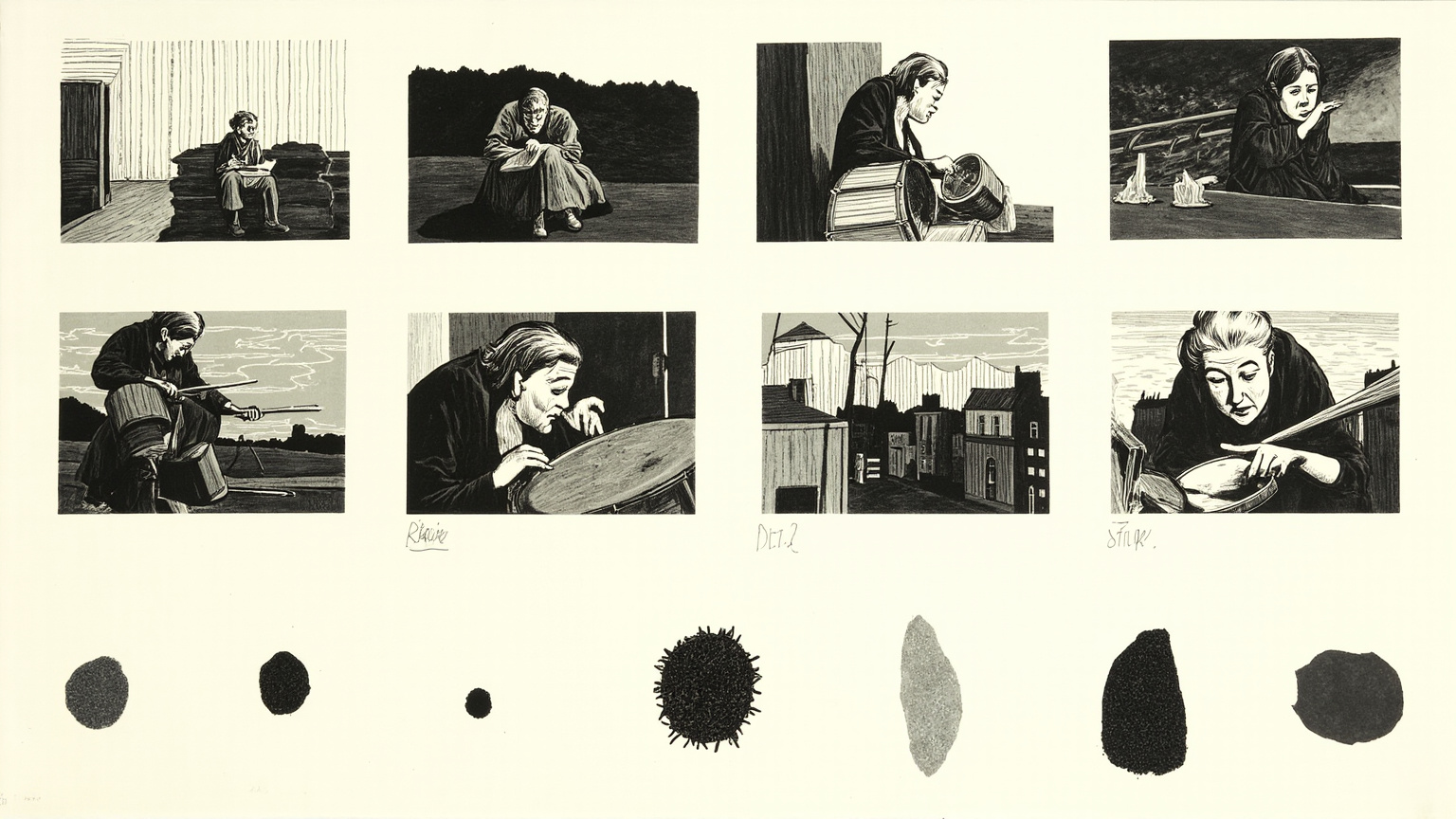
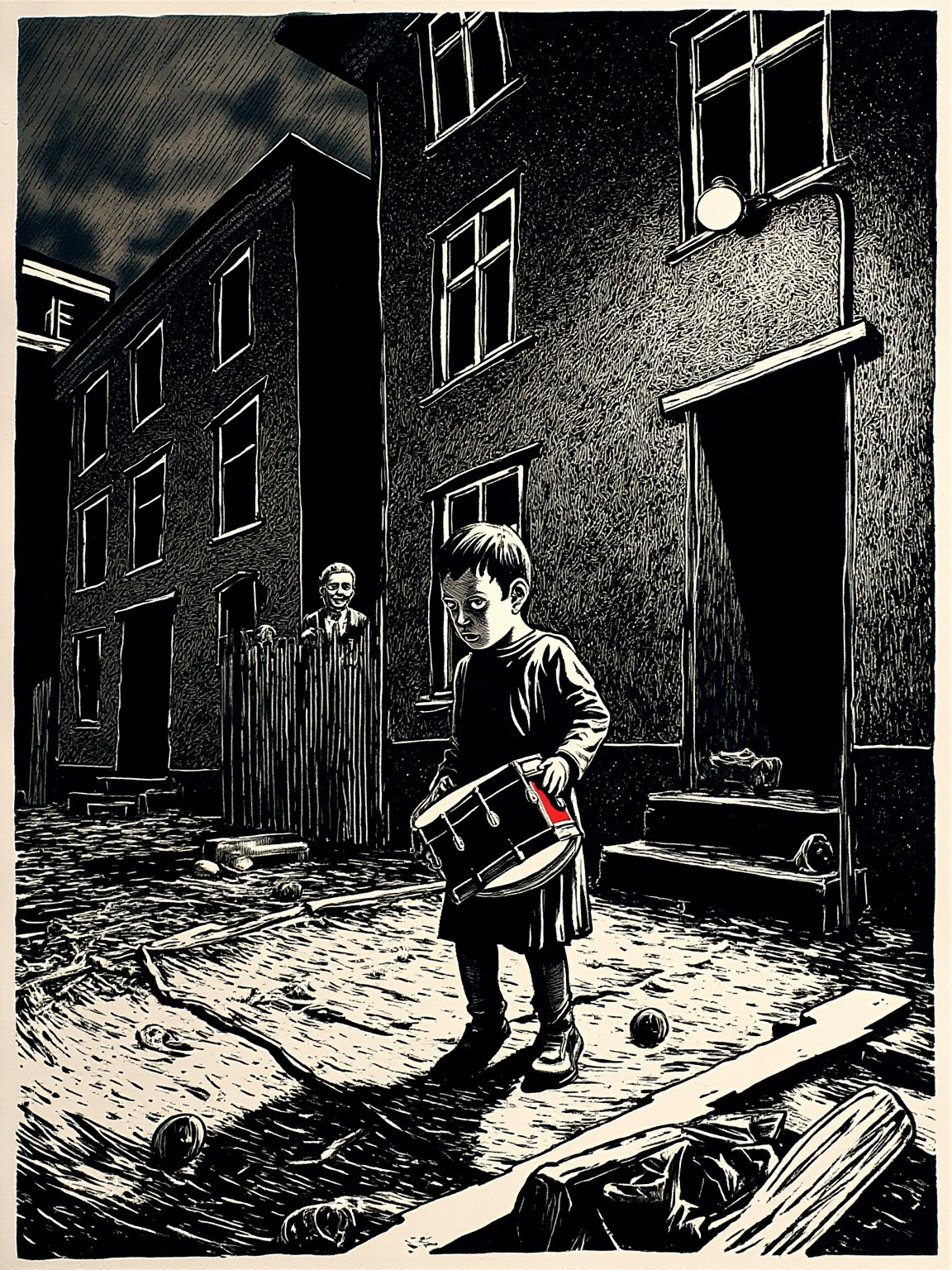
The protagonist, Oskar Matzerath, is both the narrator and the hole at the center of the story. On his third birthday he receives a red and white tin drum, and that same day he deliberately throws himself down the cellar stairs, after which he refuses to grow, his body fixed at the size of a small child while his mind stays fully adult. He survives on two things: a drum, and a scream that can shatter glass. Only after the war, at his father's grave, does he throw the drum away and decide to start growing again, ending up a hunchbacked adult dwarf. By the novel's end he is thirty, lying in a bed in a mental institution, dictating his life story to the reader. Nothing he says can be taken entirely at his word.
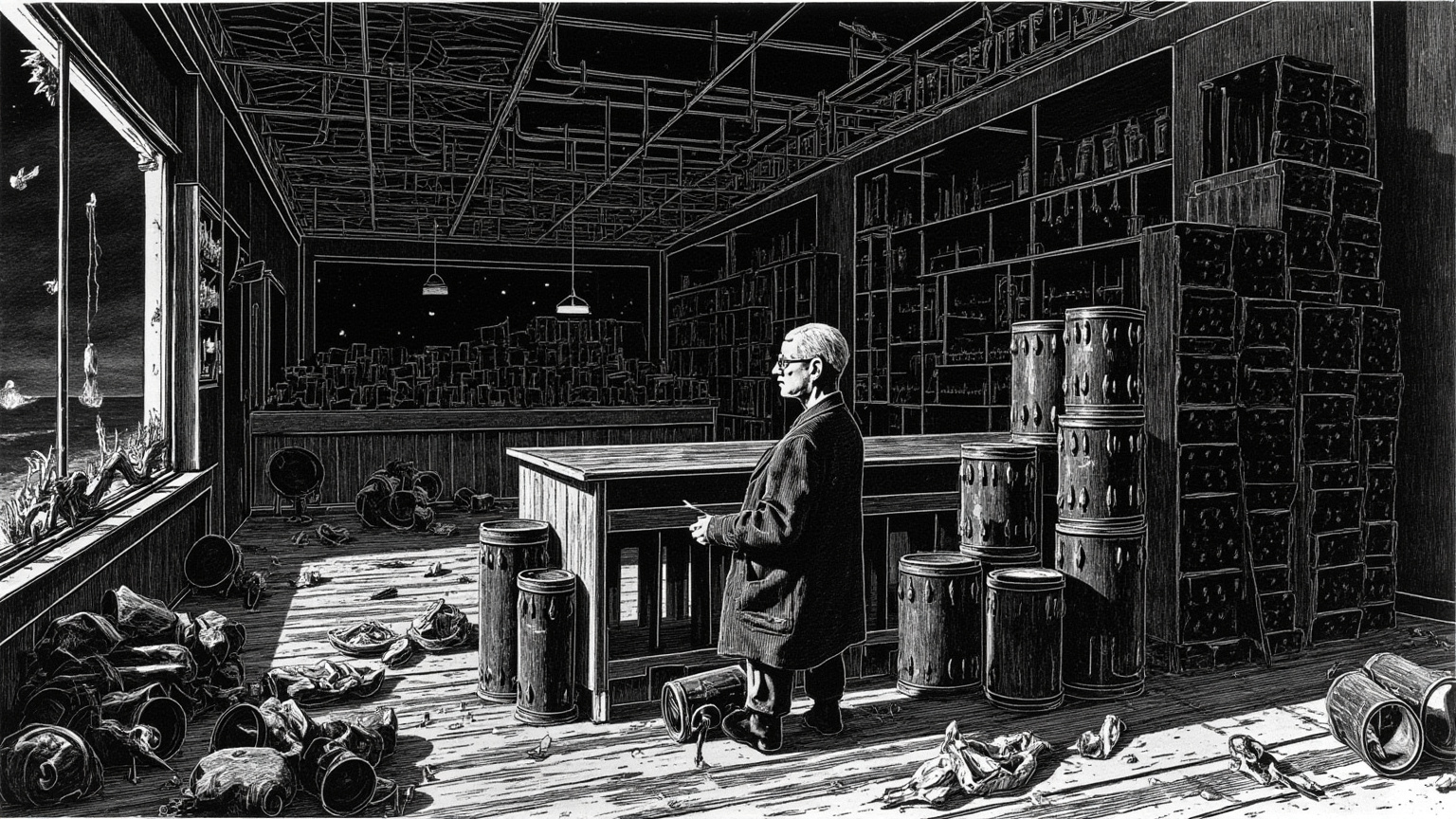
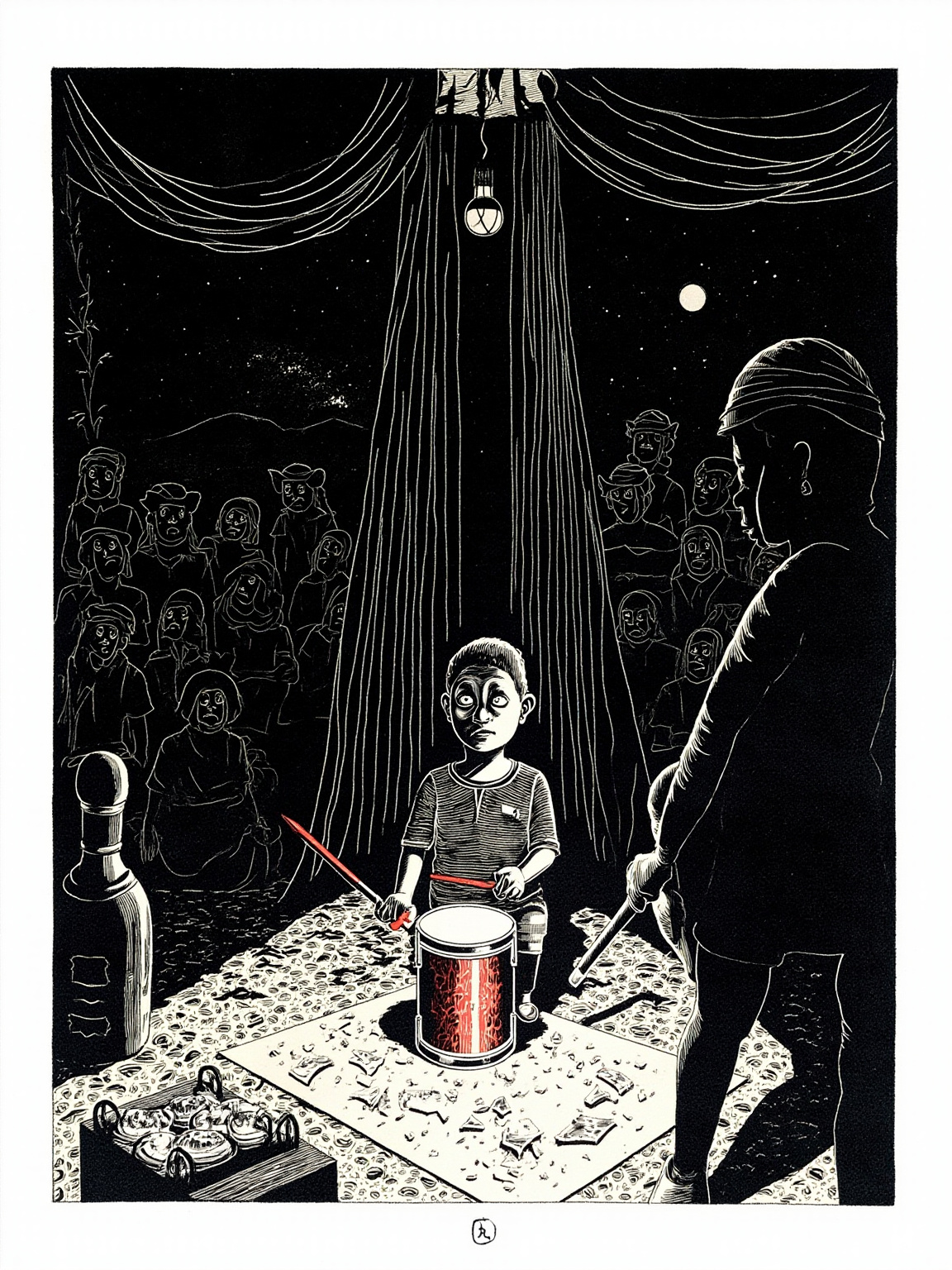
Around him sits a whole family. His mother Agnes, granddaughter of the woman under those four skirts, marries the Danzig grocer Alfred Matzerath while carrying on a secret affair with her Polish cousin Jan Bronski. Whose child Oskar actually is, the novel never settles. Alfred later joins the Nazi Party, and when Soviet troops storm the city in 1945, he swallows his party pin to hide it from his collar, chokes on it, and is finished off by a Soviet soldier's bullet while he struggles, a death so absurd it borders on farce. Jan Bronski dies in 1939 defending the Polish Post Office in Danzig. Sigismund Markus, the Jewish toy shop owner who keeps Oskar supplied with tin drums, poisons himself behind his own counter after his shop is smashed during Kristallnacht in 1938. And then there is Meister Bebra, who runs a troupe of dwarf performers and takes Oskar into a show touring the front for German troops. Bebra is his wartime refuge, and also the stage on which he becomes complicit with an absurd history.
ImaRead2
ImaReadFolio 03 — 06
ImaReadFolio 04 — 06
ImaReadFolio 05 — 06
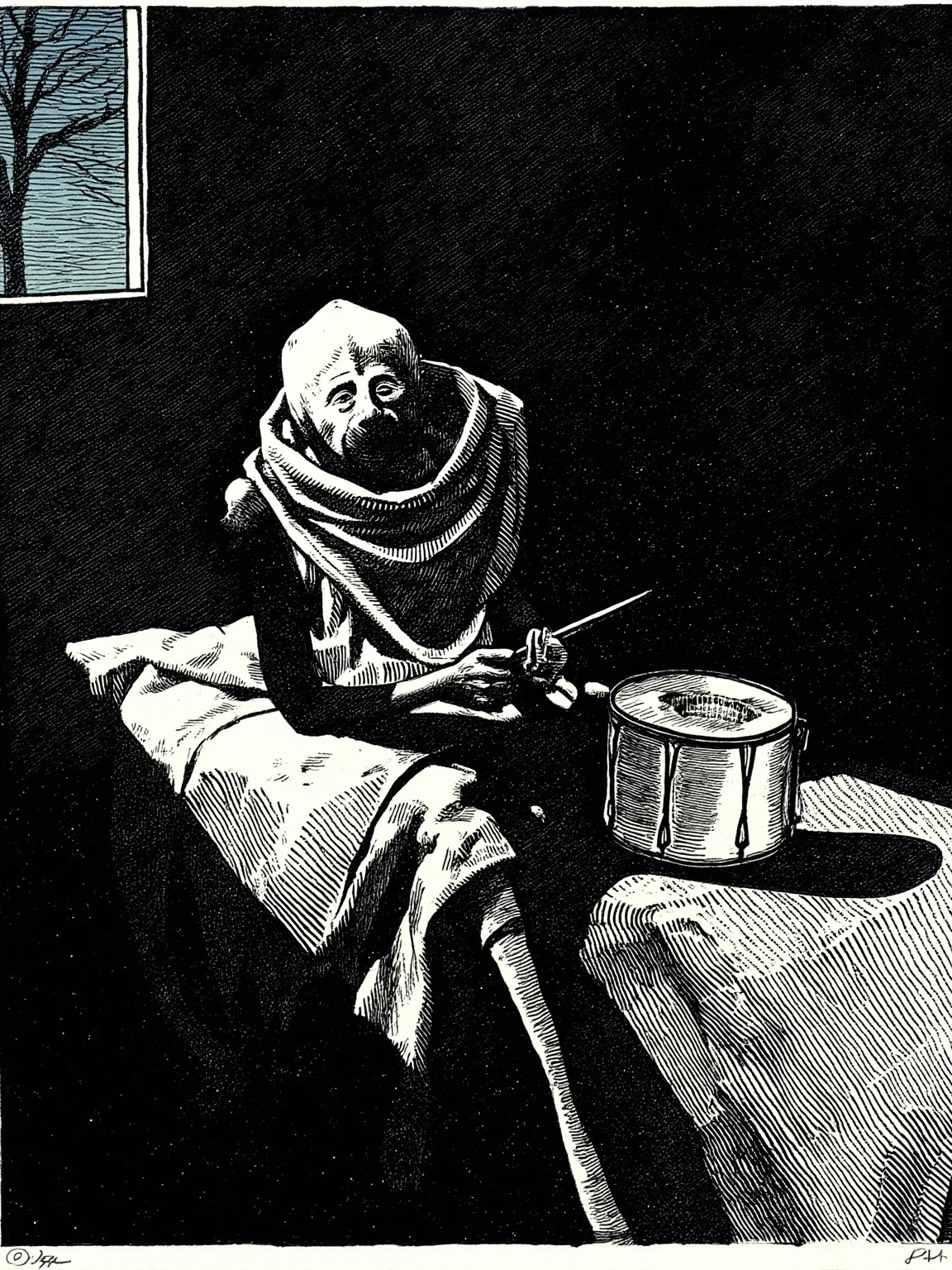
Postwar Düsseldorf, and Thirty Years Recalled from a Hospital Bed
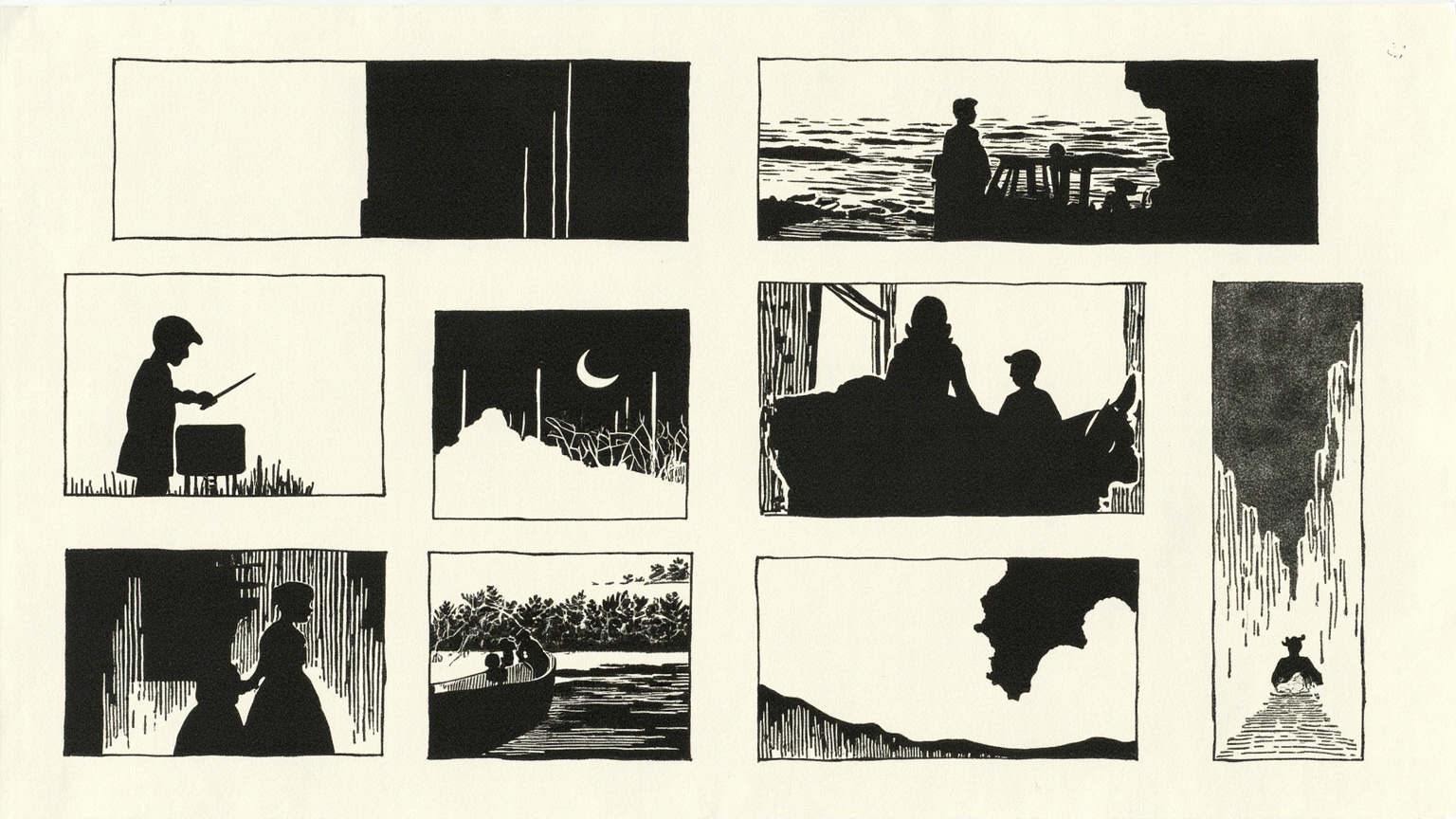
After the war the family moves to Düsseldorf in West Germany. Oskar works as a stonemason's apprentice, a life model at an art academy, a drummer in a jazz band. He can do anything, because he has lived through everything and is, at the same time, nothing in particular. Eventually a murder charge that is never quite pinned down lands him in a mental institution. Lying in his hospital bed, he begins to dictate his absurd life story to an imagined reader, you. At the very start of the book, Oskar tells you he is thirty years old, and that the man speaking is a hunchbacked dwarf. This is a monologue delivered from a hospital bed, and every sentence in it is bent by memory, so the reader is never quite allowed to trust it.
ImaReadFolio 06 — 06
In 1979 Volker Schlöndorff brought it to the screen, and the film took both the Palme d'Or at Cannes and the Academy Award for Best Foreign Language Film. The film has drawn more readers to the book, but remember what it cannot reproduce: Oskar's voice, an unreliable man narrating the most absurd things he has seen in the calmest possible tone.
Knowing the Plot Is Not the Same as Having Read It
A guide like this can give you the map, not the drumbeat. Oskar's sentences carry a particular rhythm: he tells his mother's death and the story of four skirts hiding a man in a potato field in exactly the same voice. That refusal to shift gears only catches you if you read it page by page yourself. And the lies Oskar tells, which parts are true, which parts he invented at thirty from a hospital bed, you only start doubting yourself, again and again, by walking behind him the whole way. That is what The Tin Drum actually asks of you. Remembering what happened in the twentieth century matters less than learning not to trust, too easily, whoever is telling you about it.
ImaRead6
Art Direction4 plates
Before the guide was written, this book got a visual foundation — every illustration you just read grew out of it.