The Vinland Sagas (The Saga of Erik the Red / Eiríks saga rauða + The Saga of the Greenlanders / Grœnlendinga saga) · Companion Guide
文兰萨迦
从冰岛到格陵兰再到美洲——一代人把已知世界的尽头一寸一寸往西推,直到撞上一个再也推不过去的、属于别人的海岸。
The Hook
On some day near the end of the tenth century, an Icelandic woman stood on a shore that had never appeared on any European map. Behind her sat the longship that had rowed over from Greenland three years earlier, cattle still tethered on deck. Underfoot was a fruit she had never seen; she bit into it, winced at the sourness, and someone nearby told her what it was: a grape. The land would later be called Vinland — wine-land. Her name was Gudrid. She had no way of knowing that the ground she had just stepped onto would sit untouched for nearly five hundred years before a man named Columbus "discovered" it again. Her son Snorri, born on that same shore, was the first European child on this continent to have a name.
That is what the Vinland Sagas are about — not a single voyage, but an entire generation pushing west again and again: from Iceland to Greenland, from Greenland to the Americas, until they ran into a world that belonged to someone else and would push back no further.
What Kind of Book This Is
Two medieval manuscripts make up the Vinland Sagas: Eirik the Red's Saga and the Saga of the Greenlanders. Both are anonymous, both were written down in Old Norse around the thirteenth century, and both describe events from roughly 985 to 1010 — a gap of one or two hundred years between the events and the writing. The standard English translation is the Penguin Classics edition.
What makes it remarkable has nothing to do with literary craft — it is that the story turned out to be true. In 1960, archaeologists dug up a Norse settlement at the northern tip of Newfoundland called L'Anse aux Meadows: turf, the foundations of sod houses, iron nails, a ship's keel, all of it. The dates lined up with what the sagas described. This almost never happens in literary history — a medieval legend, stamped as fact by a shovel in the ground.
The People and the World
The story's protagonists are one family. Erik the Red had a temper to match his hair and beard — that is where the name comes from. He killed a man in Norway and was outlawed for it, killed another in Iceland and was outlawed again, and finally took his family and a band of followers and simply sailed west. He found Greenland, named it "green land," and built the Eastern and Western Settlements on either side of the fjords. Sod houses, longships, the assembly, family feuds — that was the entire inventory of the new colony.
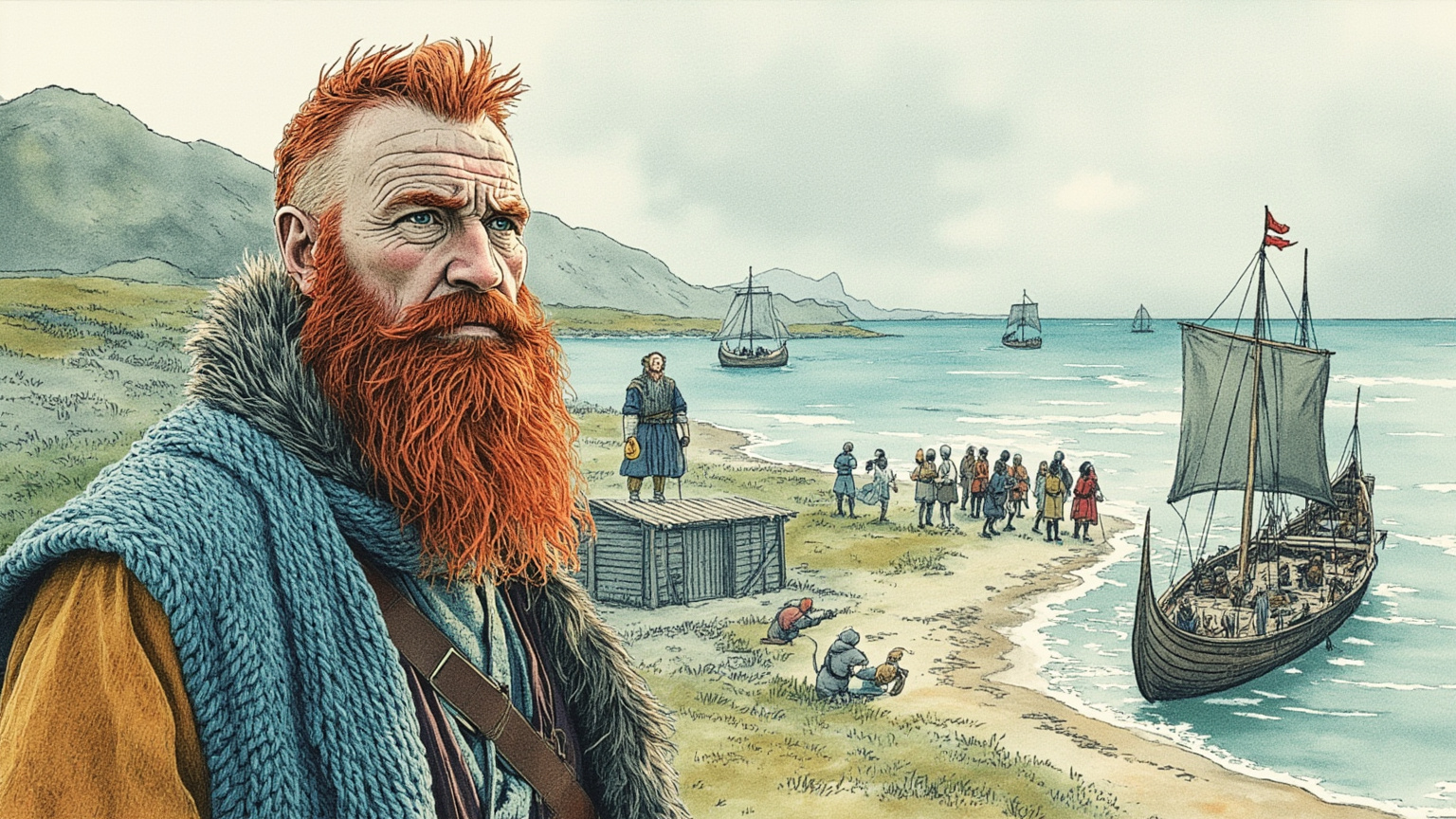
He was banished from Norway, and again from Iceland, and sailed westward with his household to find a land none on the map yet knew.
他在挪威杀了人,被判流放;到了冰岛又杀了人,再被流放——于是带着全家和追随者往西走,去找一片还没有人标在图上的地。
金句 · 红发埃里克萨迦 · 流放西渡
None of his children gave him an easy time. His eldest son, Leif Erikson, sailed to Norway, was talked into Christianity by the king, and came home determined to push further west — he was the one who found Vinland. His second son, Thorvald, also sailed to Vinland and never made it home. His daughter Freydis later put together her own expedition there and did something terrible that the saga disposes of in a single sentence — we will get to that in the last section.
The third key figure married into the family from outside: Thorfinn Karlsefni, a wealthy Icelandic merchant of Norwegian descent, who married Gudrid. Gudrid was born in Iceland, married into Greenland, and then followed her husband on the expedition to Vinland — she traveled farther than anyone else in the family, and she is the most far-ranging woman in the sagas.
The Plot: West, and Further West
The story has to start with Erik the Red getting driven out of his own home. He killed a man in Norway and was outlawed; he killed another in Iceland and was outlawed again. Icelanders punished him by putting his whole family out, not behind bars — the North Atlantic didn't have prisons, it had the sea. Erik loaded a crew and sailed west, and struck a coastline cut to pieces by glaciers. He found it, named it "green land," and the rest was a matter of building the Eastern and Western Settlements.
The Greenland settlement got built, but life there was never settled. Feuding families, occasional friction with the native population, and a North Atlantic climate that left only a few months a year fit for sailing wore this group down hard and short-tempered. The saga never writes that tension as mood — it writes it as events: an argument, a settlement of damages, someone slamming a table or drawing a knife at the assembly. Reading a saga means getting used to this: it doesn't write psychology, it writes action.
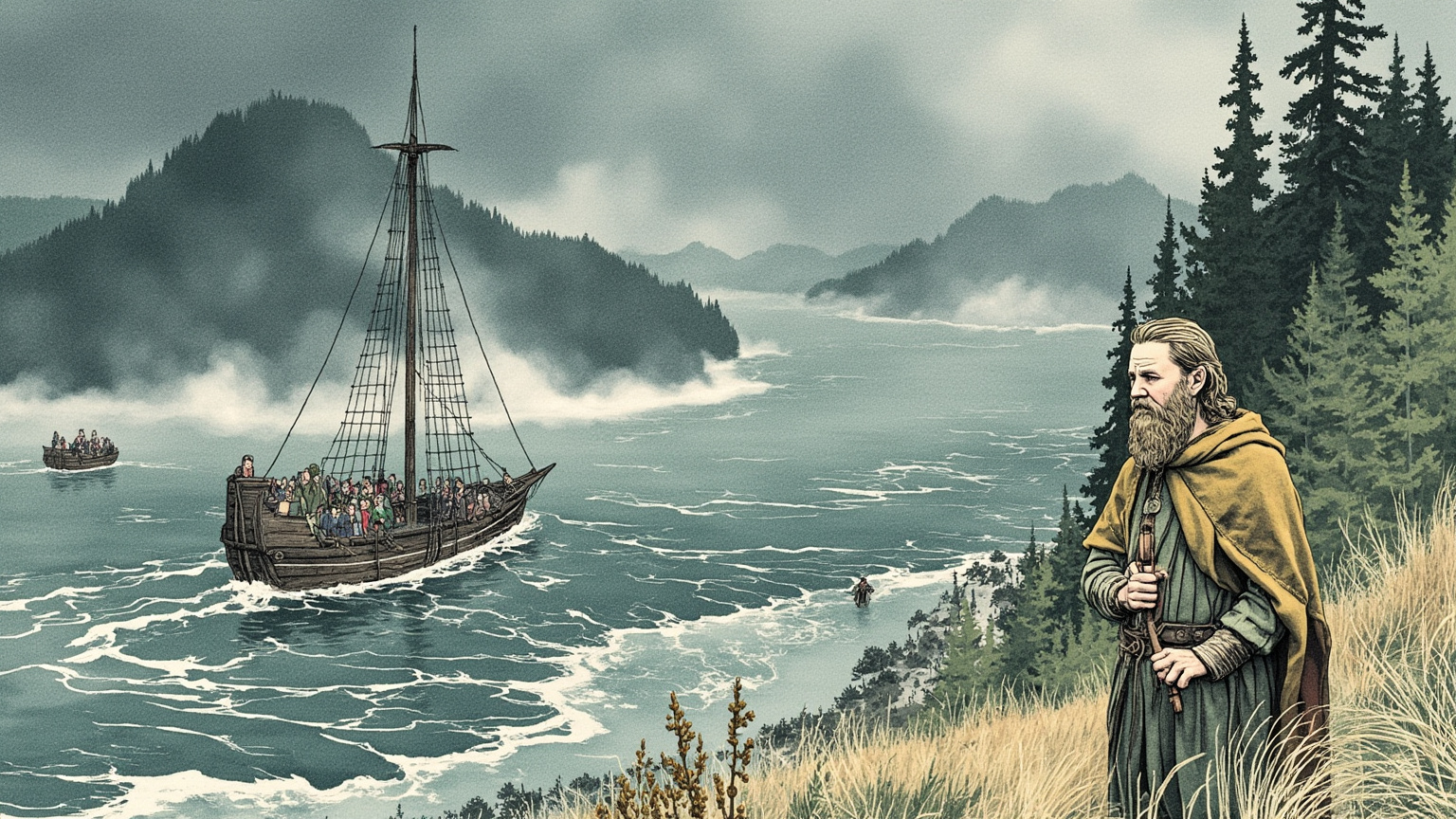
He called it Greenland, and said that people would be the more drawn thither if the land had a fair name.
他给那地方起名叫格陵兰,绿地——他说,若土地有个好听的名字,人就更愿意往那里去。
金句 · 格陵兰人萨迦 · 为土地命名
Then there's Leif. "Leif the Lucky" sailed to Norway and was talked into baptism by King Olaf Tryggvason — a small detail that tells you this whole region was shifting faiths, the old gods giving ground to the new one. Leif got baptized, sailed back to Greenland, pushed the family's westward course a little further, and landed on a coast no European had ever seen.
At the river mouths he found grapes growing, wild wheat growing on its own, salmon so thick you could step on them — this isn't saga exaggeration, the same landscape can still be found around Newfoundland today. He named the place Vinland, wine-land, or by another reading, meadow-land. But he didn't stay. Leif was scouting, not settling. He brought grapes and wheat samples back to Greenland and left the rest to his brother and to those who came after.
The one who actually meant to stay was Karlsefni. He arrived with his wife, his household goods, his livestock — not a raider looking to grab something and run, but a man trying to build a life. His wife Gudrid came with him. The saga makes a point of noting that women were part of the expedition, and that detail matters: it means they meant to build a real home, not a temporary camp.
Three years. Karlsefni's expedition held on at that shore for roughly three years. They tried farming, tried herding, and traded with the local people — red cloth for furs. The earliest trading was even peaceful: the Norse offered cloth, the natives brought pelts, and both sides followed a rule where you set your goods down, stepped back, and let the other side do the same before anyone picked anything up. Think about that rule for a second — neither side trusted the other, but both trusted the arrangement.
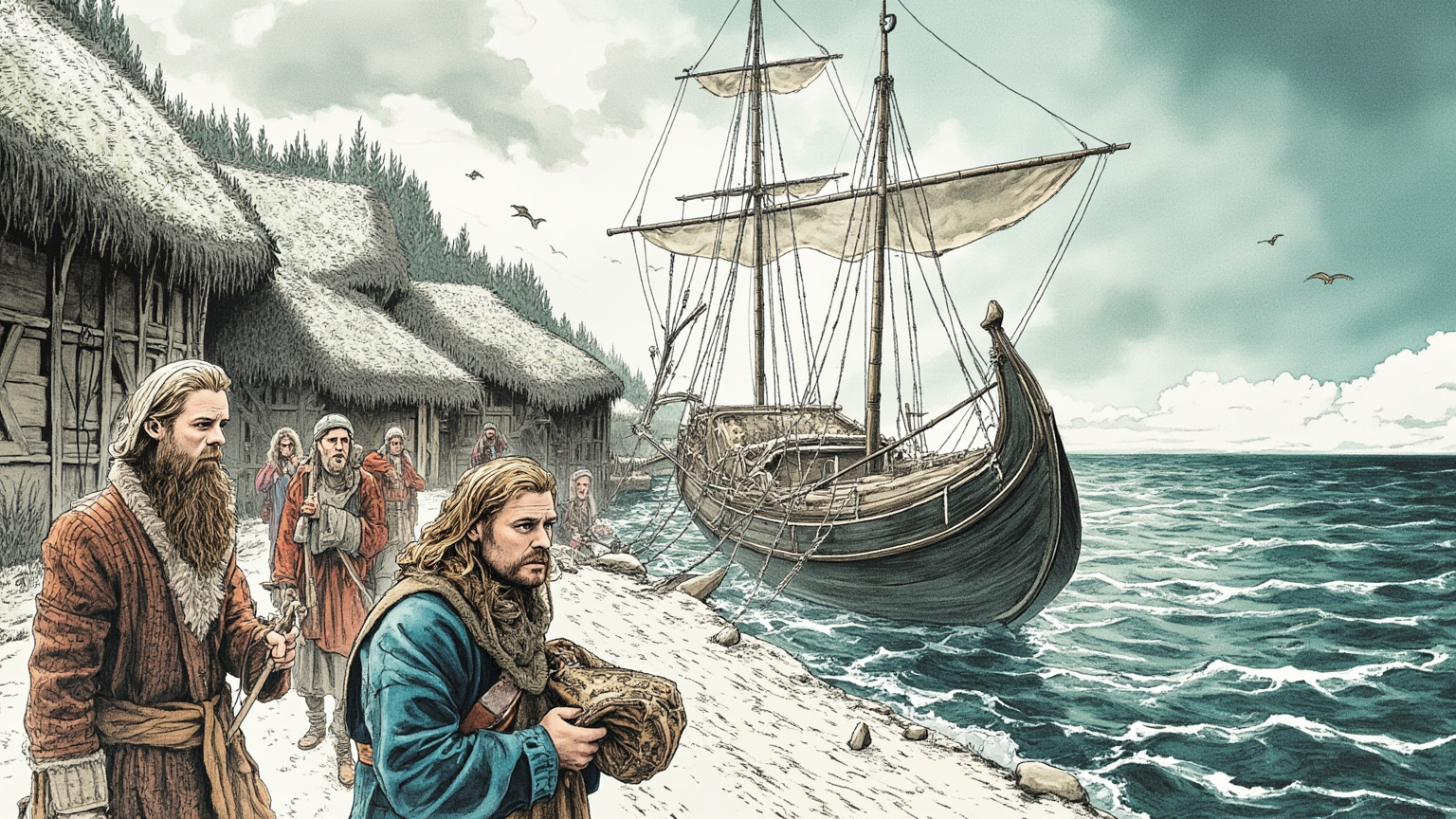
They came to a land where vines grew of themselves, and wild wheat, and the salmon were so many they might be taken in a basket.
他们到了这样一片地方:野葡萄自生自长,野麦自熟,鲑鱼多得可以用筐兜。
金句 · 格陵兰人萨迦 · 登陆文兰
Conflict came eventually. The saga never spells out how it started, only how it ended: they gave up. Three years of effort, the cattle and the women and the wheat seed they'd shipped over, all loaded back onto the boats and sailed home to Greenland. I stopped short reading this part — Karlsefni wasn't defeated, he left on his own terms. He found the place unlivable not because the land was bad, but because the people already there were never going to hand it over.
But the trip wasn't wasted. Gudrid's son Snorri was born in Vinland — one of the sagas' most famous details, the first named European child born in the Americas. Snorri was later carried back to Greenland, then to Iceland, where he became the ancestor of a prominent Icelandic family line. The whole story closes a loop this way: push west as far as it will go, then turn back to Iceland and fold that bloodline back into the home genealogy.
Gudrid's life didn't stop there. After Karlsefni died, she remarried, and her new husband took her to Norway and then Denmark. Later still, she set everything aside and walked south alone across the European continent, all the way to Rome, to complete a pilgrimage.
I want to pause on this: a woman at the end of the tenth century went from Iceland to Greenland, from Greenland to Vinland, from Vinland back to Greenland, across the sea to Norway, from Norway to Denmark, and finally on foot to Rome. That route is longer than most European men of her time ever traveled in a lifetime. The saga's author doesn't write her inner life, doesn't call her remarkable — he just lists the places she went. That restraint carries more weight than any adjective could.
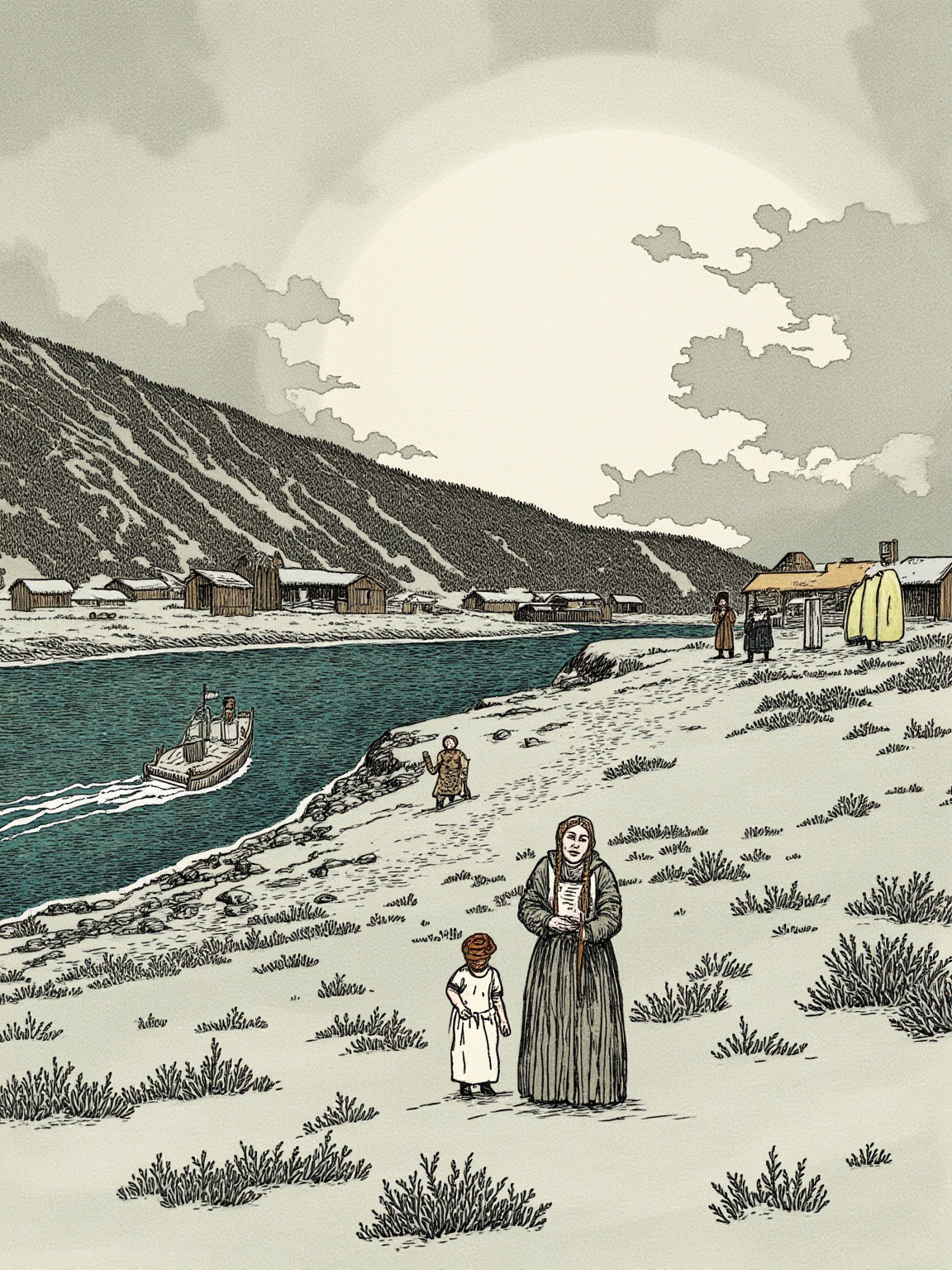
Gudrid went from Vinland to Greenland, from Greenland across the sea to Norway, from Norway to Denmark, and at last on foot to Rome — farther, in sooth, than any woman of her day.
古德里德从文兰回格陵兰,从格陵兰渡海到挪威,从挪威到丹麦,最后步行走到罗马——她走的路,比她那个时代任何一个女人都远。
金句 · 格陵兰人萨迦 · 古德里德的朝圣
Freydis was the last of this family to sail. After Karlsefni's expedition turned back, she organized one of her own to Vinland. The saga records what she did there in a single sentence: she killed a group of women from her own party with her own hands. Then it moves straight on to her return to Greenland, still in possession of her estate, unpunished. The saga's coldness here is unsettling — it doesn't judge, doesn't explain, just puts the fact on the record and leaves it. I won't walk through what happened, and you shouldn't expect that from a companion guide either. But the fact of it is a real crack in the sagas' world: this is not a pastoral, not a hero's tale, and this is part of what's actually in it.
After Freydis, the expeditions to Vinland stopped. The reason isn't complicated: conflict with the local people ruled out any long-term settlement, and Greenland itself had too few resources to keep mounting expeditions that took a whole family's ships and people to organize — it stopped being worth it. That's how the saga pushes "the edge of the known world" west one last time, and then closes the door on it.
Last, the thing that makes this saga different from every other one: L'Anse aux Meadows, Newfoundland, 1960. Archaeologists uncovered a Norse settlement there — sod-house foundations, iron nails, a ship's keel, a spindle whorl. The radiocarbon dates matched what the sagas described. This is exceedingly rare in literary history: a legend written down more than a thousand years ago, stamped as fact by archaeology. Most legends either get slowly disproved or stay forever unresolved. The Vinland Sagas ran the other way — the story arrived first, the evidence came later, and when it arrived, it mostly lined up.
Themes and Craft: Why Read It
What makes this saga worth reading today is that it tells a story of colonization failing. Vinland was never stopped by the ocean or by storms — it was stopped by another people who were just as organized, just as dignified, and had no intention of giving up their land. An eleventh-century writer already had this figured out, with more clarity than plenty of nineteenth- and twentieth-century novels ever managed.
It was not the sea that stayed them, but another folk, no less ordered and no less proud, that would not yield up the land.
挡在路上的不是大海,是另一些人——同样有章法、同样不肯让步的一群人——他们不打算让出这片土地。
金句 · 红发埃里克萨迦 · 西向的边界
It's also the most outward-looking of the sagas. Most Icelandic sagas stay close to home — blood feuds and settlements between a handful of local families, rarely reaching beyond the island itself. The Vinland Sagas pull the camera back: across the whole North Atlantic, to the North American coast, to Rome. This is a picture of the world, not a family dispute.
As for the writing itself, the sagas barely touch psychology. They write action — who killed whom, whose boat capsized in which bay, who handed over the grape seeds, who shouted something at the assembly. Even Gudrid's walk to Rome gets no explanation of why she went or what she felt — just a list of place names, one after another. That restraint reads hard at first, but it gets addictive once it sinks in.
Eleventh-century Icelanders had already written, five hundred years before Columbus, a clear-eyed account of what that other continent actually was.
Why Read the Sagas Themselves
Now that you know the plot, should you still read it? Yes. This guide gives you the map, but a map doesn't carry the smell of a sod house, the sound of a fist on the table at the assembly, the sourness of that first bite of grape on the Vinland shore, or the bone-cold silence the manuscript leaves after Freydis's single sentence lands. Only the original has that — and it's short: both sagas together fit into one afternoon. Sit down and let those Icelanders tell it to you themselves, in their own thousand-year-old voice.
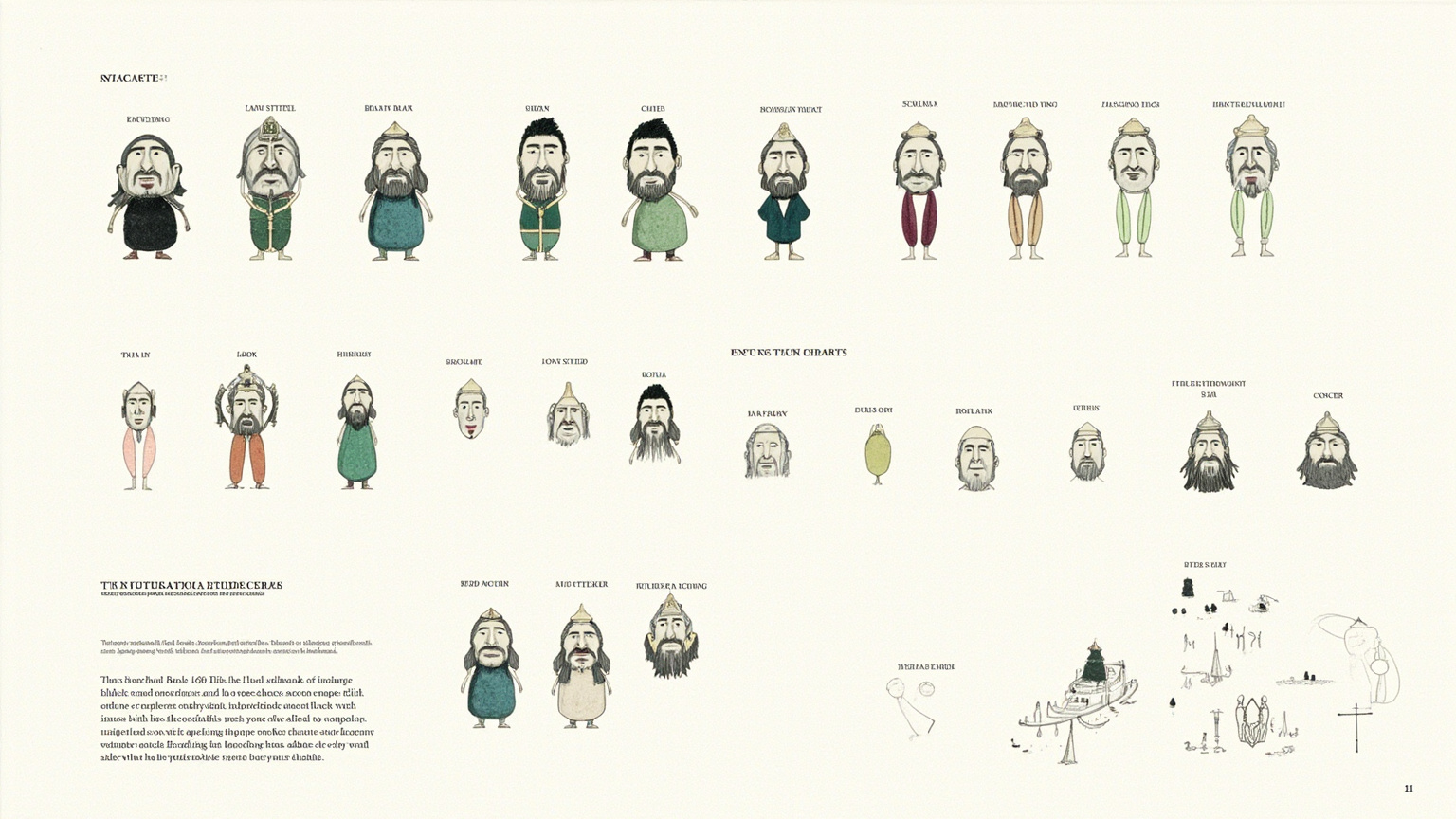
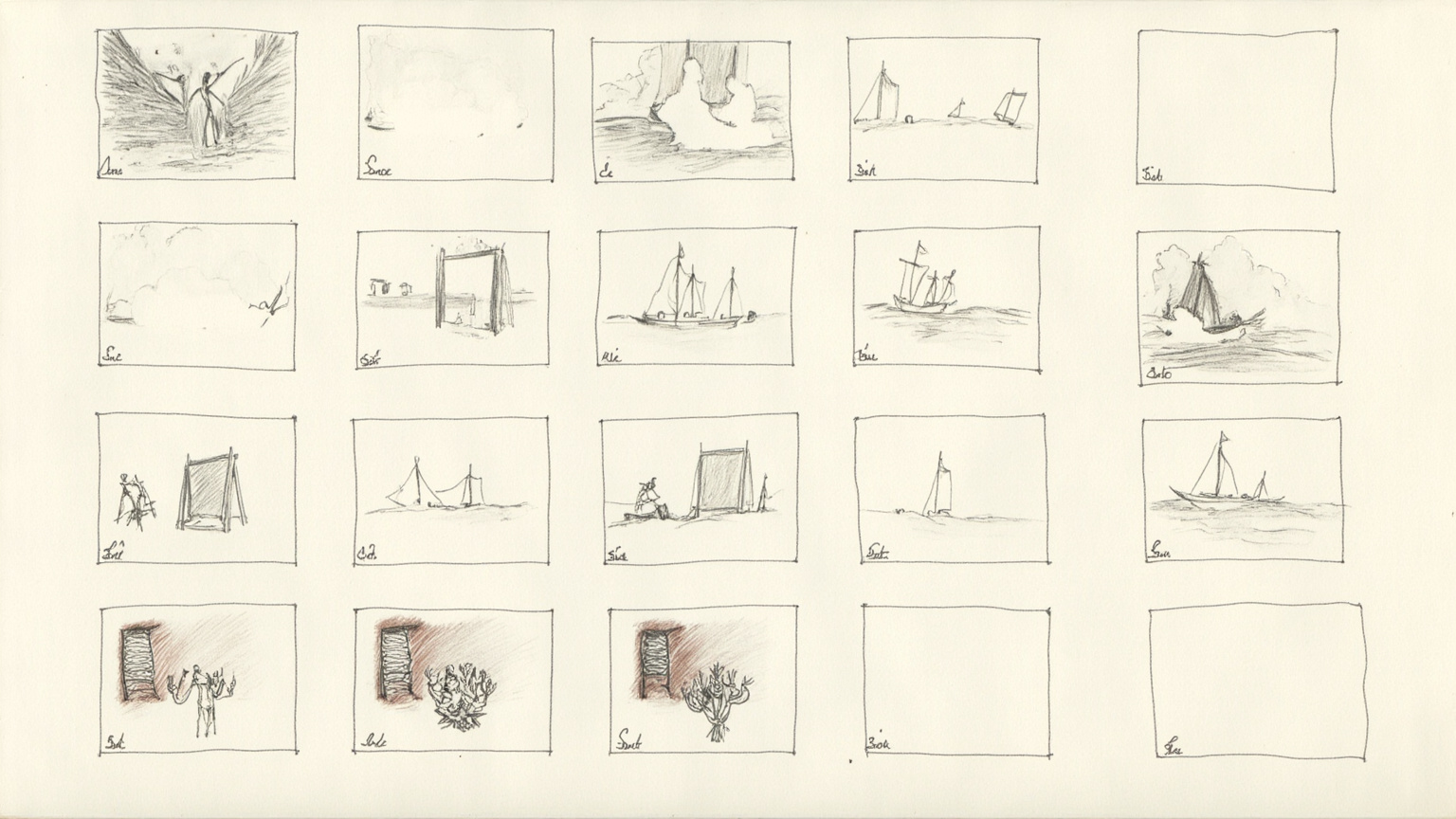
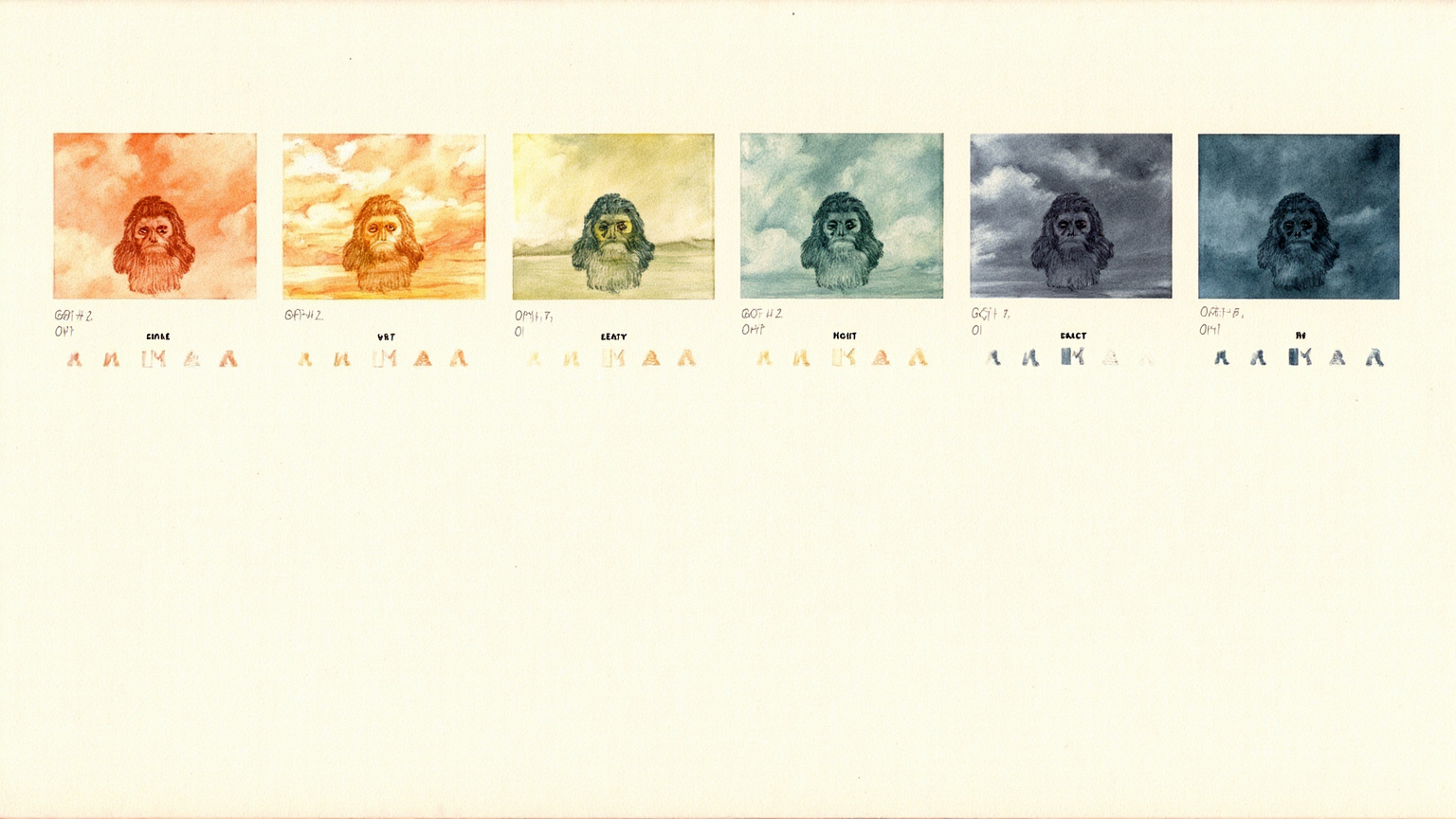
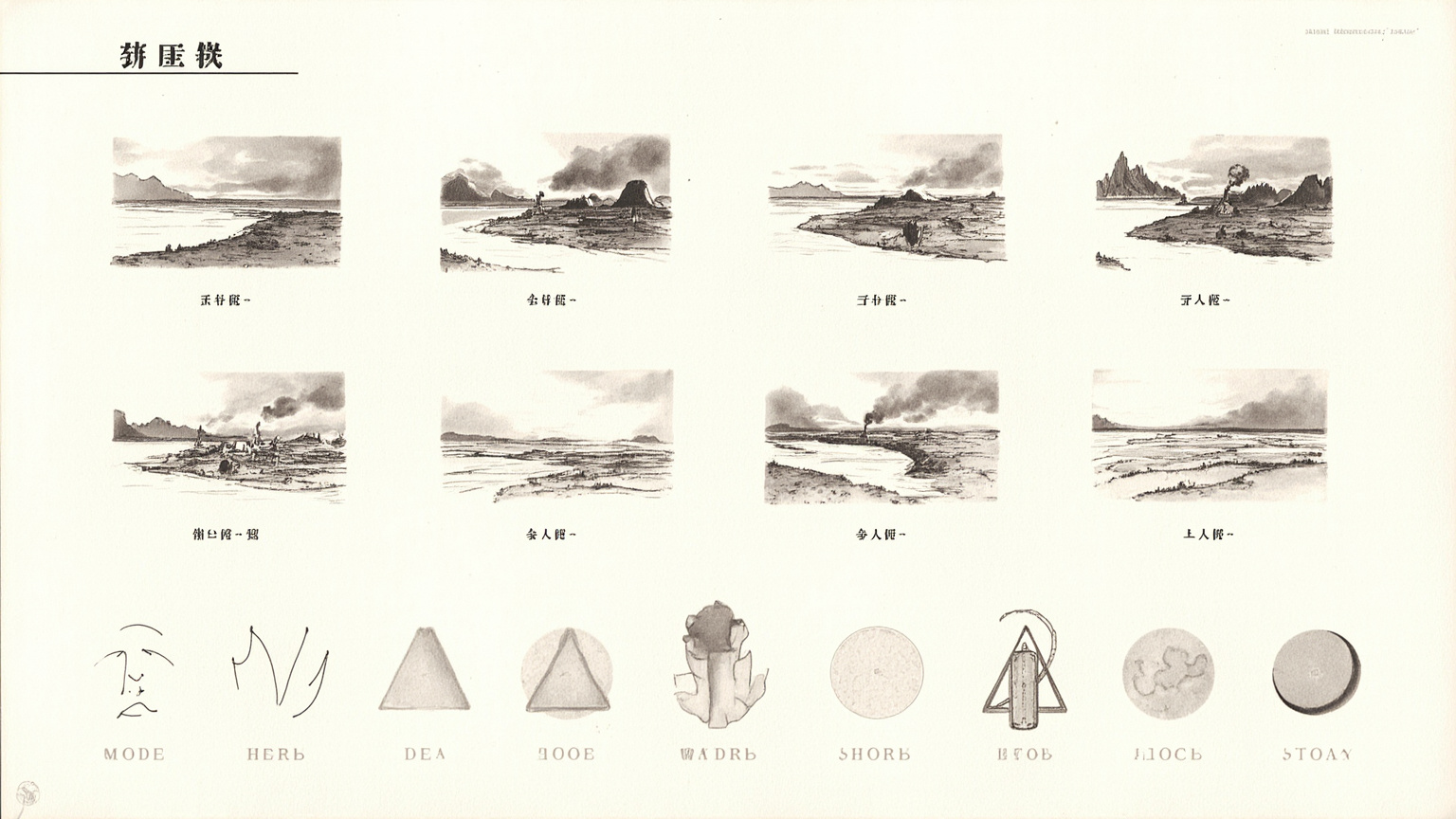
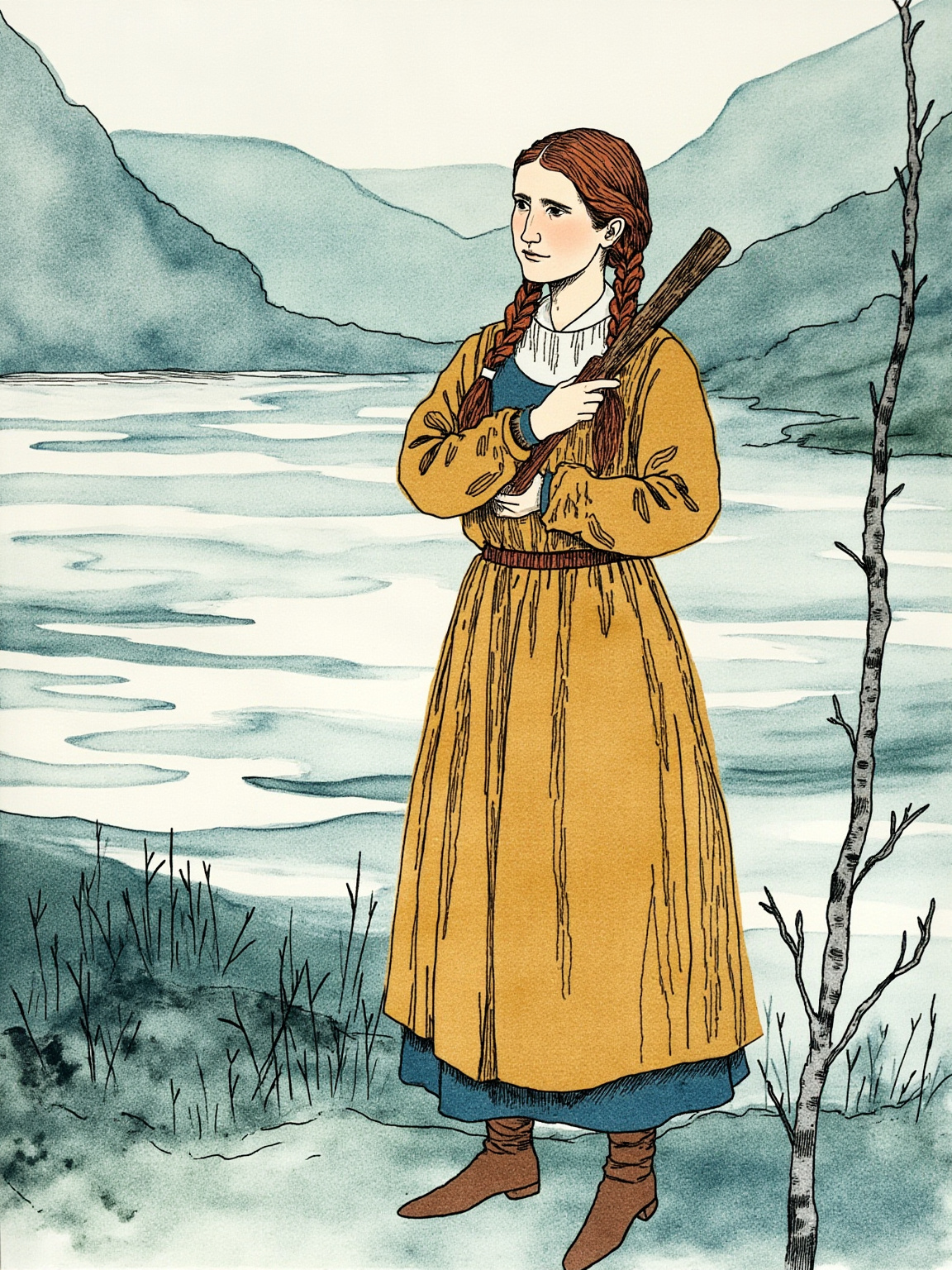
Art Direction4 plates
Before the guide was written, this book got a visual foundation — every illustration you just read grew out of it.