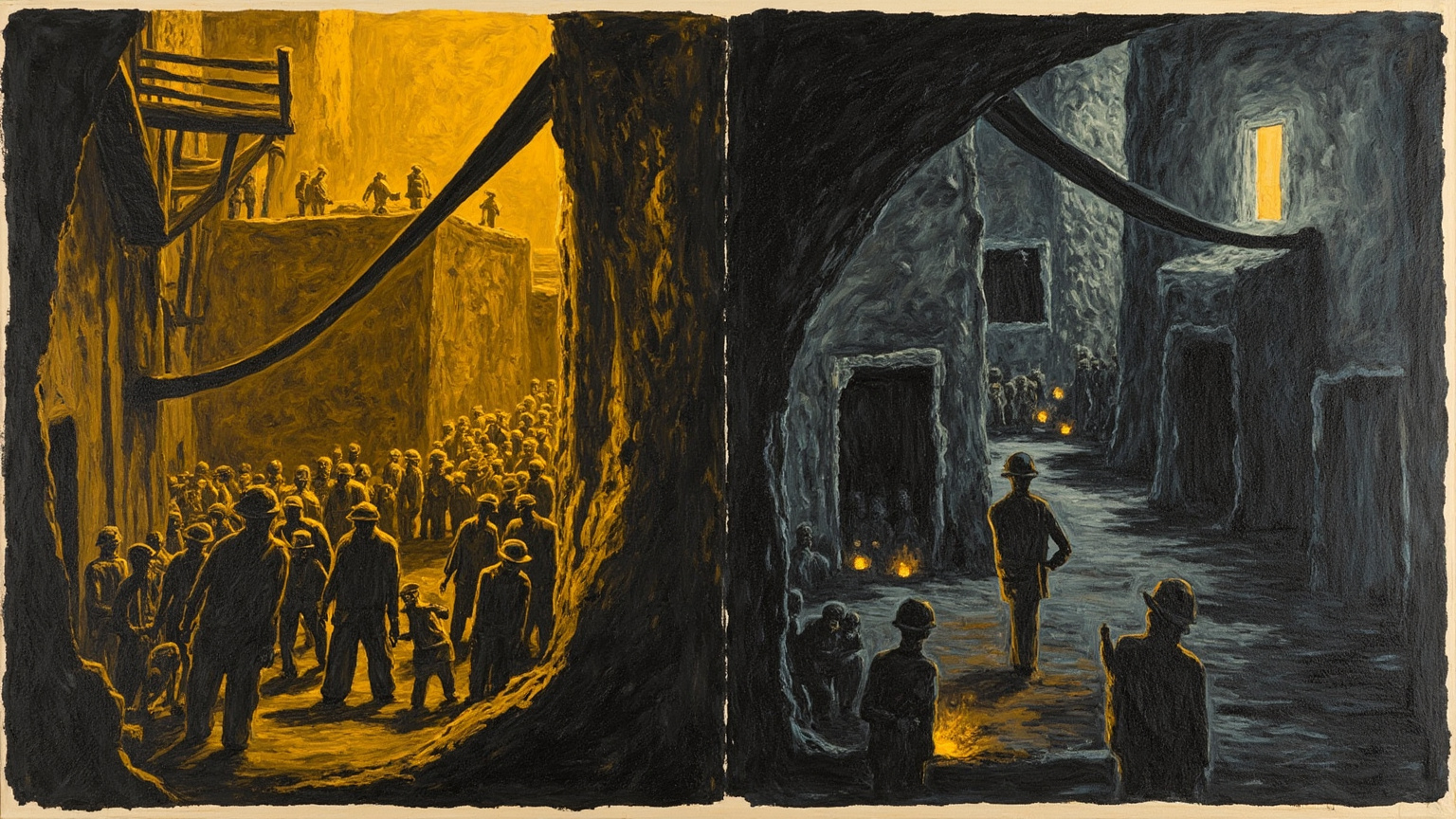
A man of books hires a man who has actually lived.
Text and illustrations produced by the pipeline
A finger got cut off because it was in the way. The man who did it is Alexis Zorba, a Macedonian Greek past sixty. He has been a soldier, a miner, a potter, a peddler, and he never travels without a santuri slung over his shoulder. One day at the potter's wheel his little finger kept catching on the clay, so he picked up an axe and took it off without a flinch. The book's other lead is a young man who has read himself bald -- the day they meet, Zorba is standing at the port of Piraeus, laughing at the sea. Two men built out of opposite materials, tied together from that point on.
Zorba the Greek was written by the Greek novelist Nikos Kazantzakis in 1946, just after the Second World War ended. The standard English translation appeared in 1952, and a decade later Anthony Quinn carried it to the screen, giving the world its most famous Greek dance. It is easy to let the film mislead you into thinking this is a Mediterranean travelogue. It is not. The novel has blood in it, an execution, a total financial ruin -- a tug of war between mind and body, books and labor, rule and freedom. It has held its place in literary history because of the man who dances in front of the wreckage: the least philosopher-like figure in twentieth-century fiction, and the one who comes closest to being philosophy itself.
The novel is told in the first person by a young intellectual whom Zorba calls 'Boss' -- he is never given a name. He has inherited a derelict lignite mine on Crete and hopes that physical work will pull him out of a life spent talking about books instead of living. He and Zorba travel to a seaside village on the island and lodge at the inn run by Madame Hortense, a woman who once charmed a fleet of foreign naval officers and now sits out her fading years alone by the sea. Within days Zorba has courted her hard enough that a mock engagement turns half real, while the Boss finds himself unable to stop thinking about the village's most beautiful -- and most unreachable -- young widow.
The village is small and its rules are strict. Old Mavrandonis, the respected patriarch, has a son named Pavlos, the young man who drowns himself chasing the widow. Set against Mavrandonis is kindly, hospitable old Anagnostis, the village's gentler face. There is also Mimiko, the village fool who runs errands and carries messages, half figure of fun, half messenger. Crete runs on an older law than the state's: honor, blood debt, and rough justice count for more than any court.
Zorba isn't a saint performing his life for us. He is a man living his life for himself -- which is exactly what makes him a saint to everyone else.
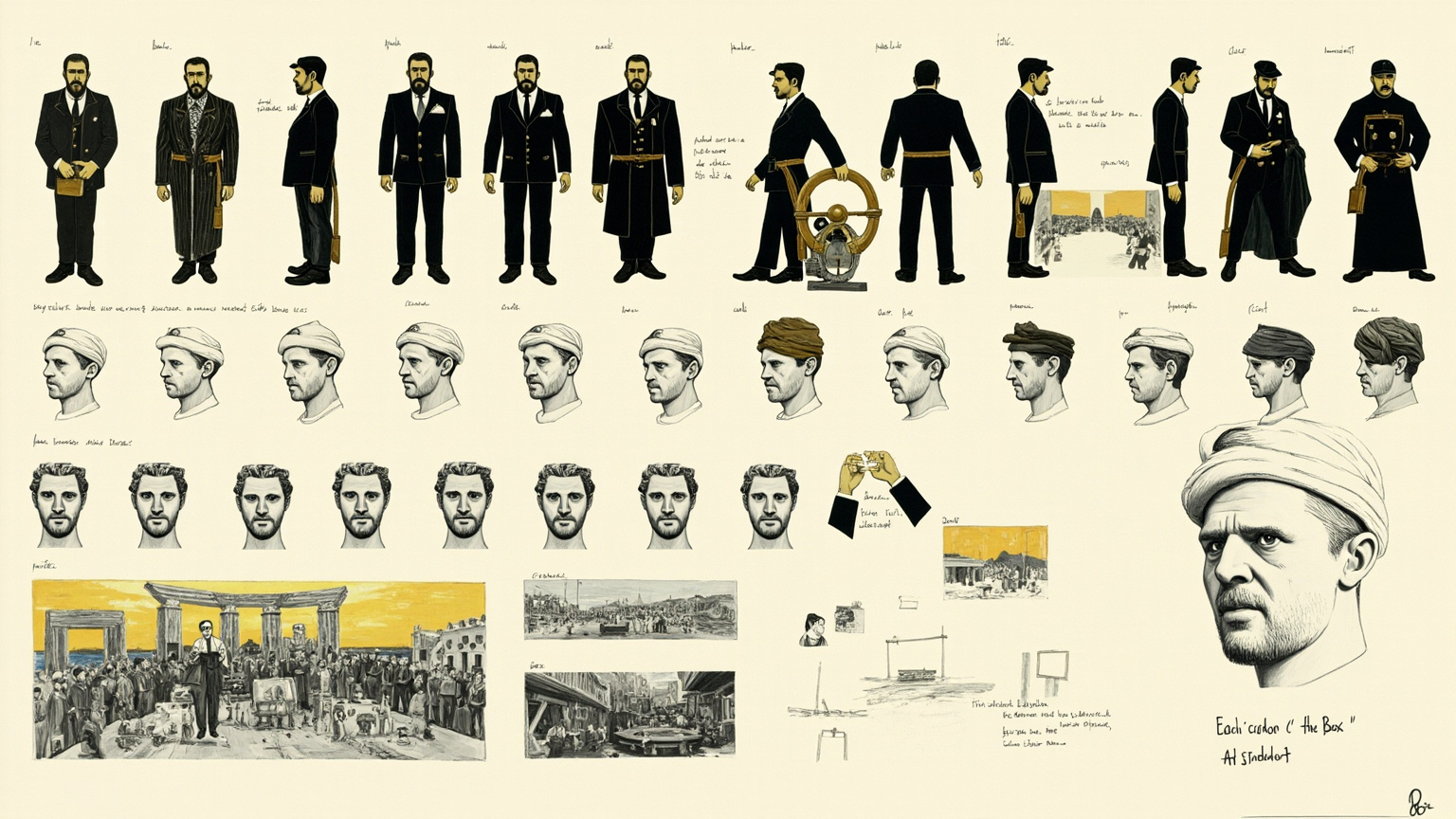
Before the guide was written, this book got a visual foundation — every illustration you just read grew out of it.
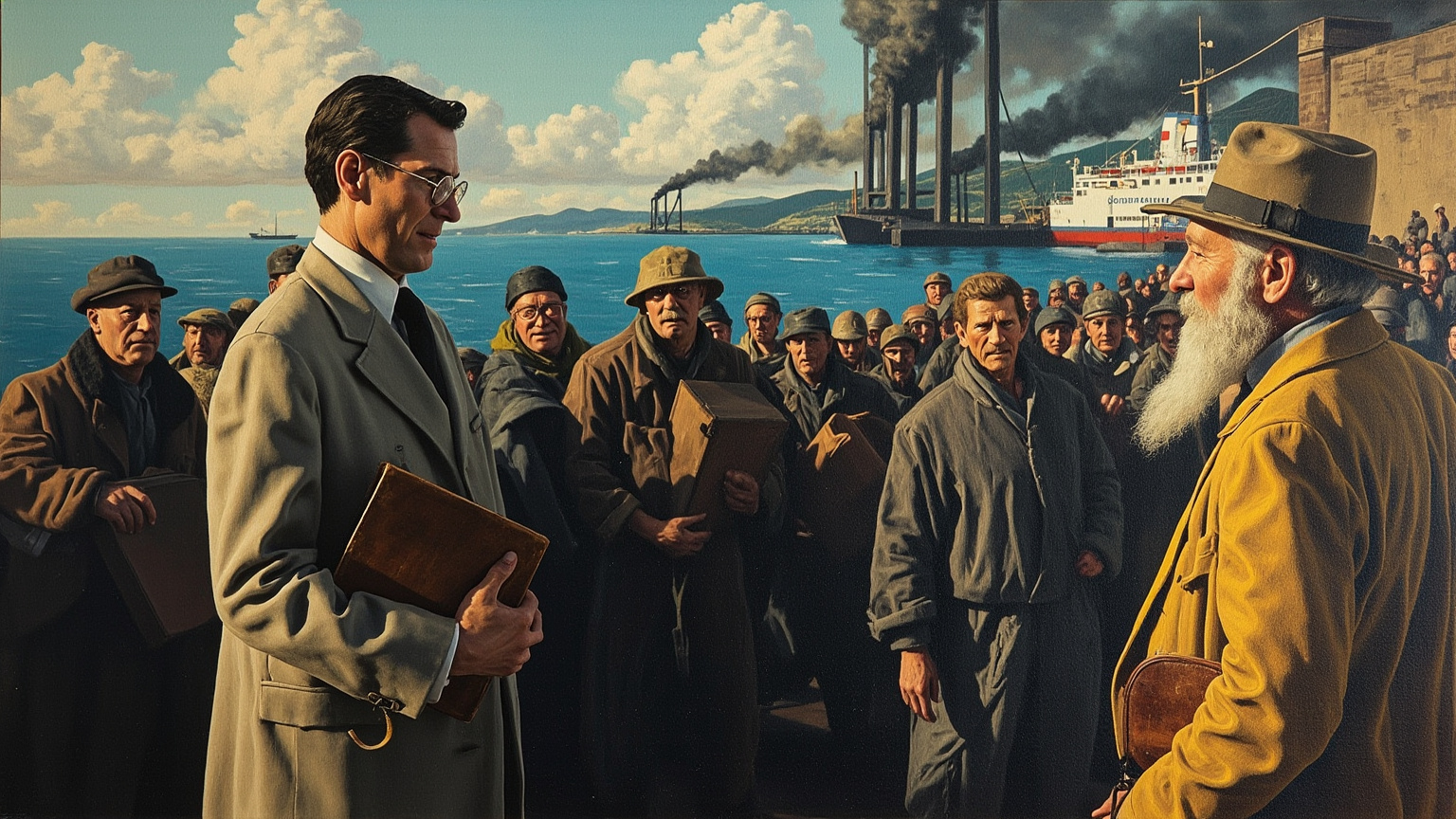
The story opens at a port. The bookish narrator is waiting for his boat at Piraeus with a volume of Buddhist scripture in hand when Zorba walks up and offers himself as the man to run the mine on Crete. Put the two of them side by side and the point is obvious: one is brain, the other is appetite; one lives on the page, the other at the dinner table and on the dance floor. Long before the film's famous silhouette on the beach, this first meeting has already set the whole book's tension in place.
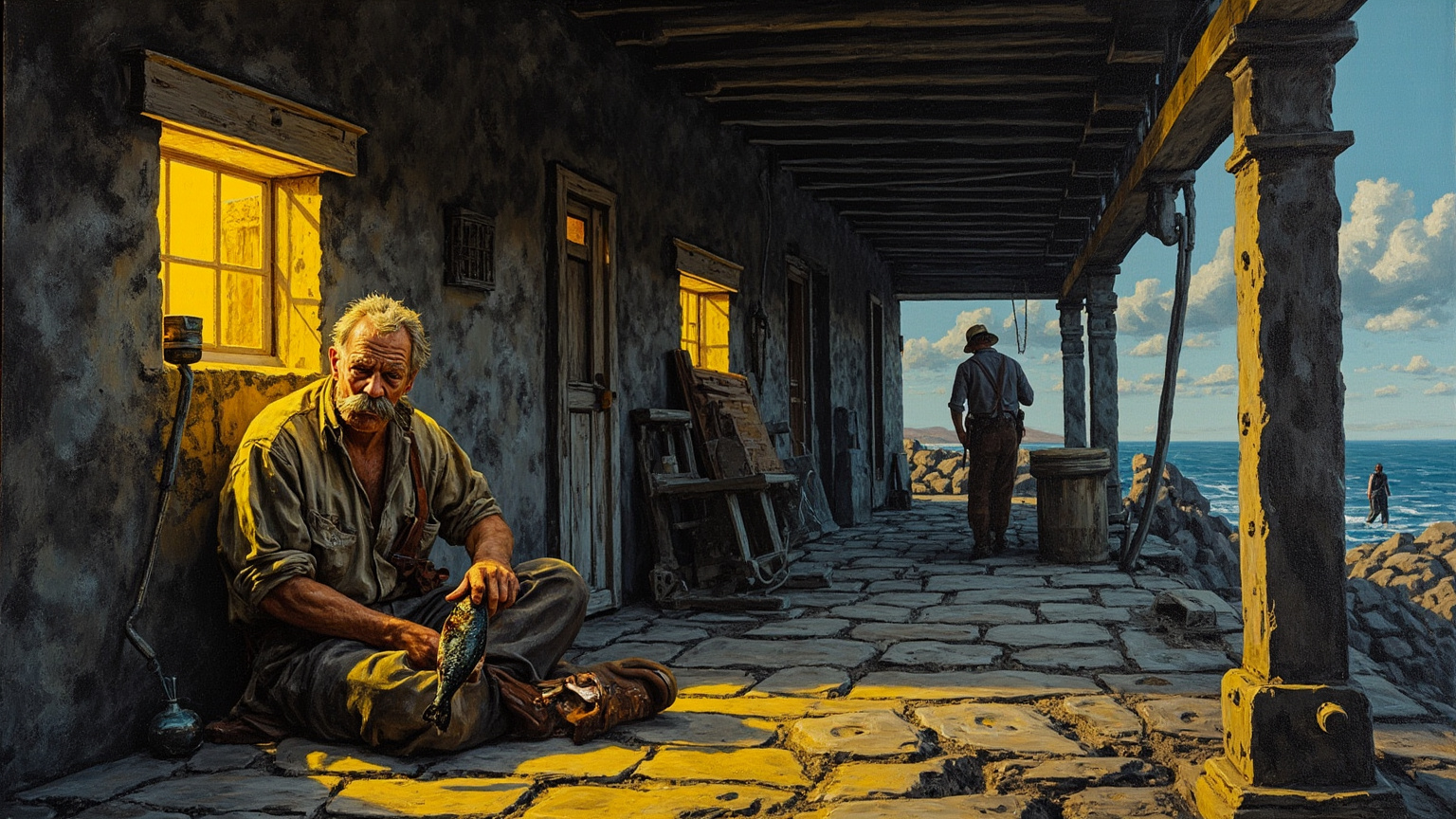
The seaside village on Crete is where they set up. Madame Hortense's inn is low-ceilinged, smoke-stained, and open to the sea wind, and Zorba wastes no time teaching the Boss how to eat with his hands, how to keep time with his feet, and how to sleep like a flash flood after a jug of wine. The widow never so much as looks up when she passes, yet the Boss cannot get her out of his head -- the women here turn out to be harder to read than every book he has ever owned.
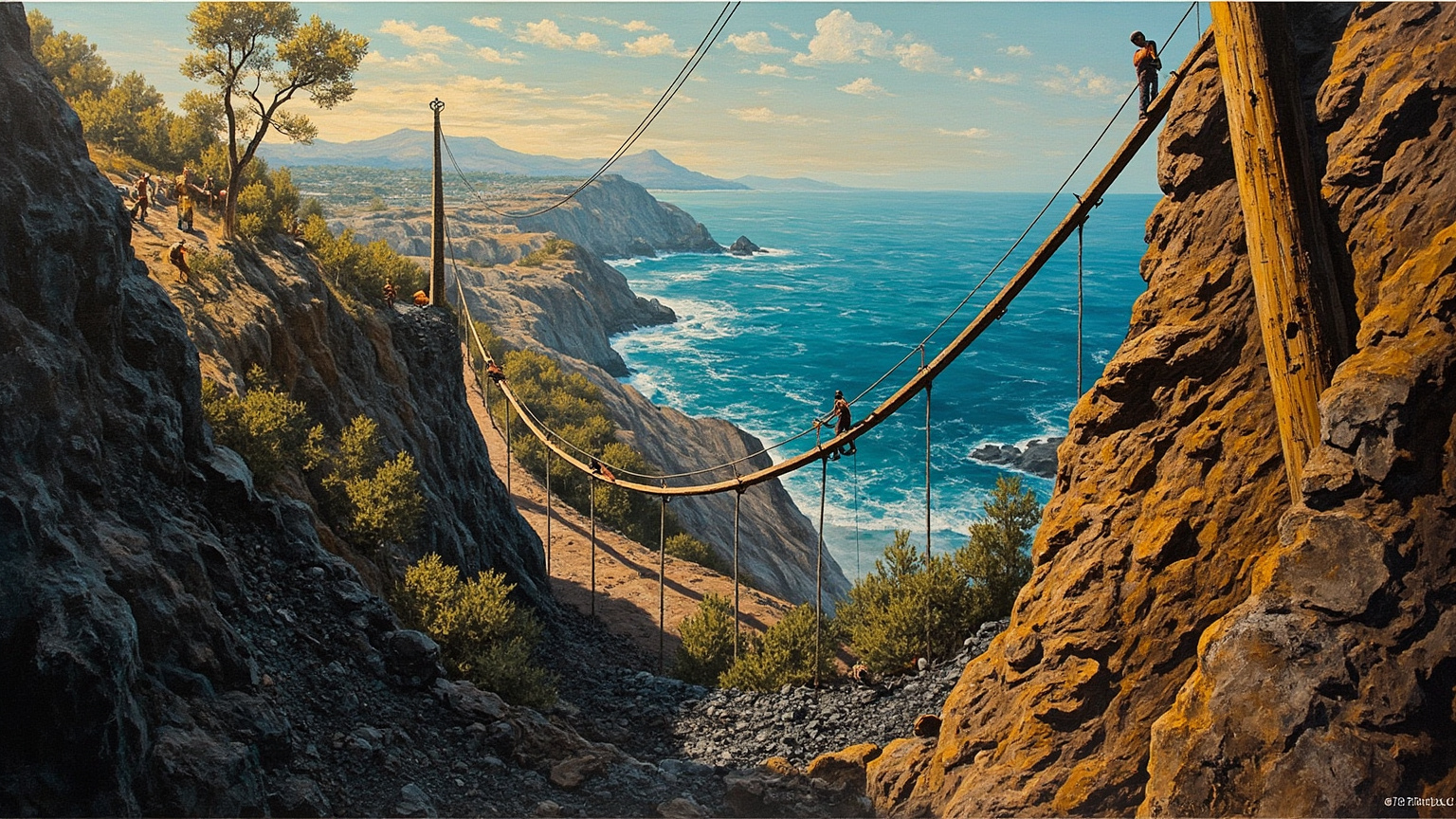
The mine is old, but Zorba quickly gives it a pulse. That's not enough for him -- he talks the Boss into buying timber rights to the monastery's forest up the mountain and rigging an aerial cableway to send the logs thundering down, a scheme that stakes almost everything the two of them have. The buckets sway in the mountain wind, the wooden towers climb into the clouds, and for the first time in his life the Boss feels like something other than a spectator. Kazantzakis writes the whole enterprise like a poor man playing chess against God.
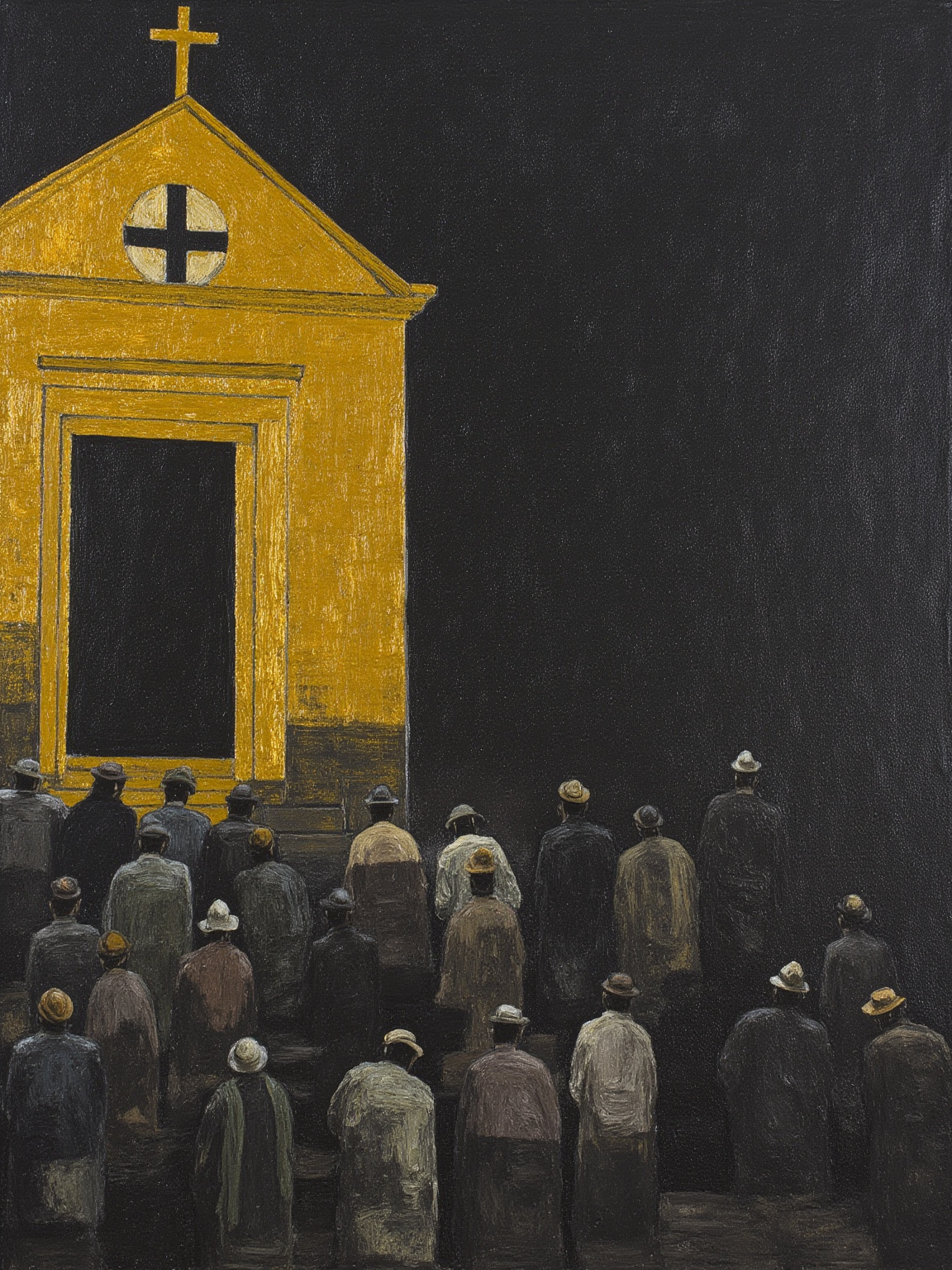
But the village's undercurrent breaks before the cableway does. Pavlos, driven half mad chasing the widow, hears that she has spent a night with the Boss and drowns himself -- and the whole village corners the widow outside the church. It is not a mob that does the killing. It is Pavlos's own father, the respected old Mavrandonis, who strikes the blow himself. Zorba tries to save her and doesn't reach her in time; the Boss can never look at the village the same way again. Kazantzakis doesn't soften it: a village's 'rules' can kill faster than a mine collapse.
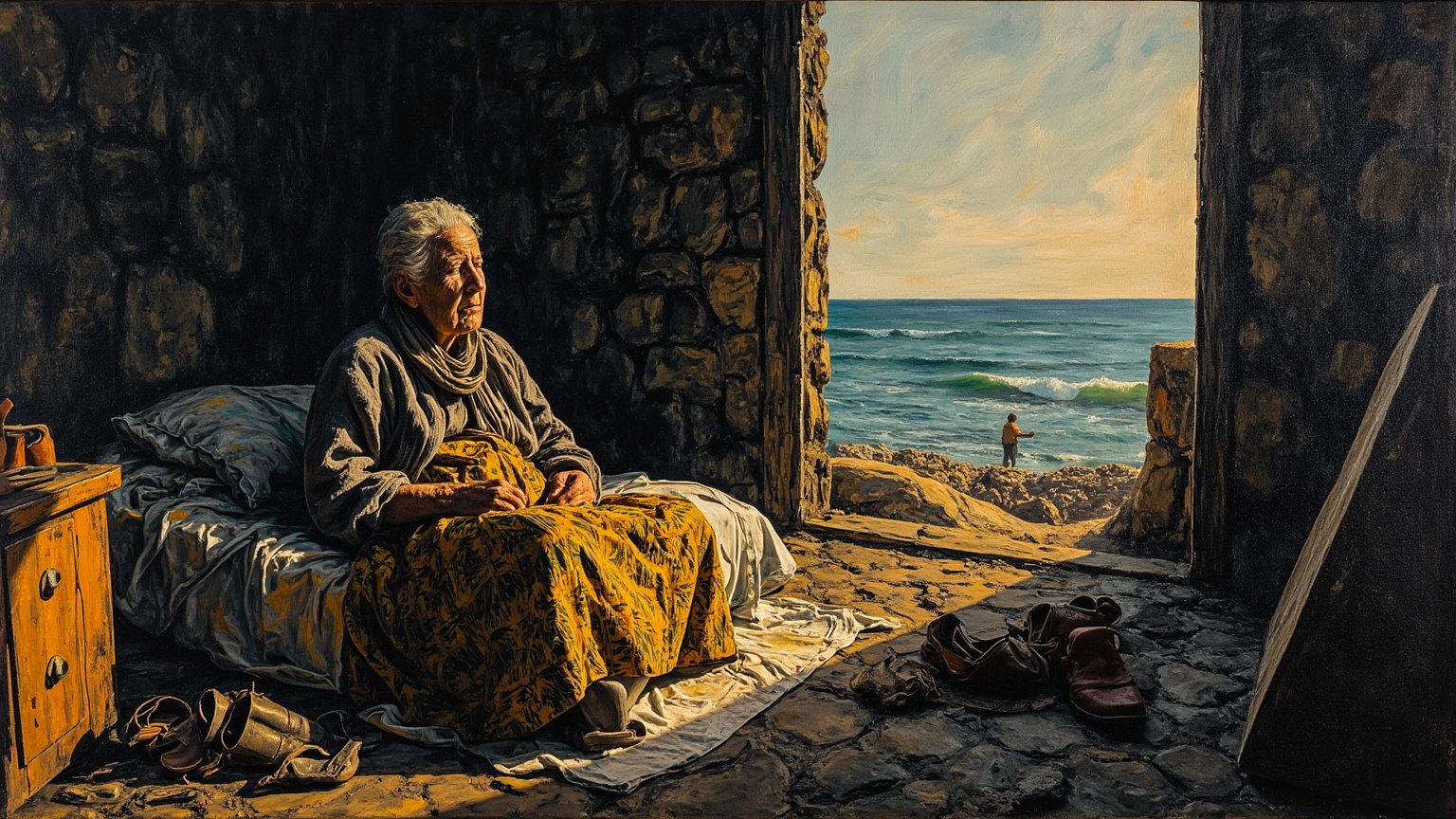
Madame Hortense falls ill. Zorba calls her 'Bouboulina,' and no one can say for certain how real their engagement ever was -- but once she takes to her bed, she never gets up again. The village women hear the news and rush in to ransack her trunks and cupboards while she still has breath left in her; by the time she dies, most of what she owned is already gone. The funeral Zorba manages to scrape together for her is too shabby to look at, and he cries at it not like a grown man but like a child who has lost an entire sea. It is this scene that teaches the Boss what caring actually looks like.
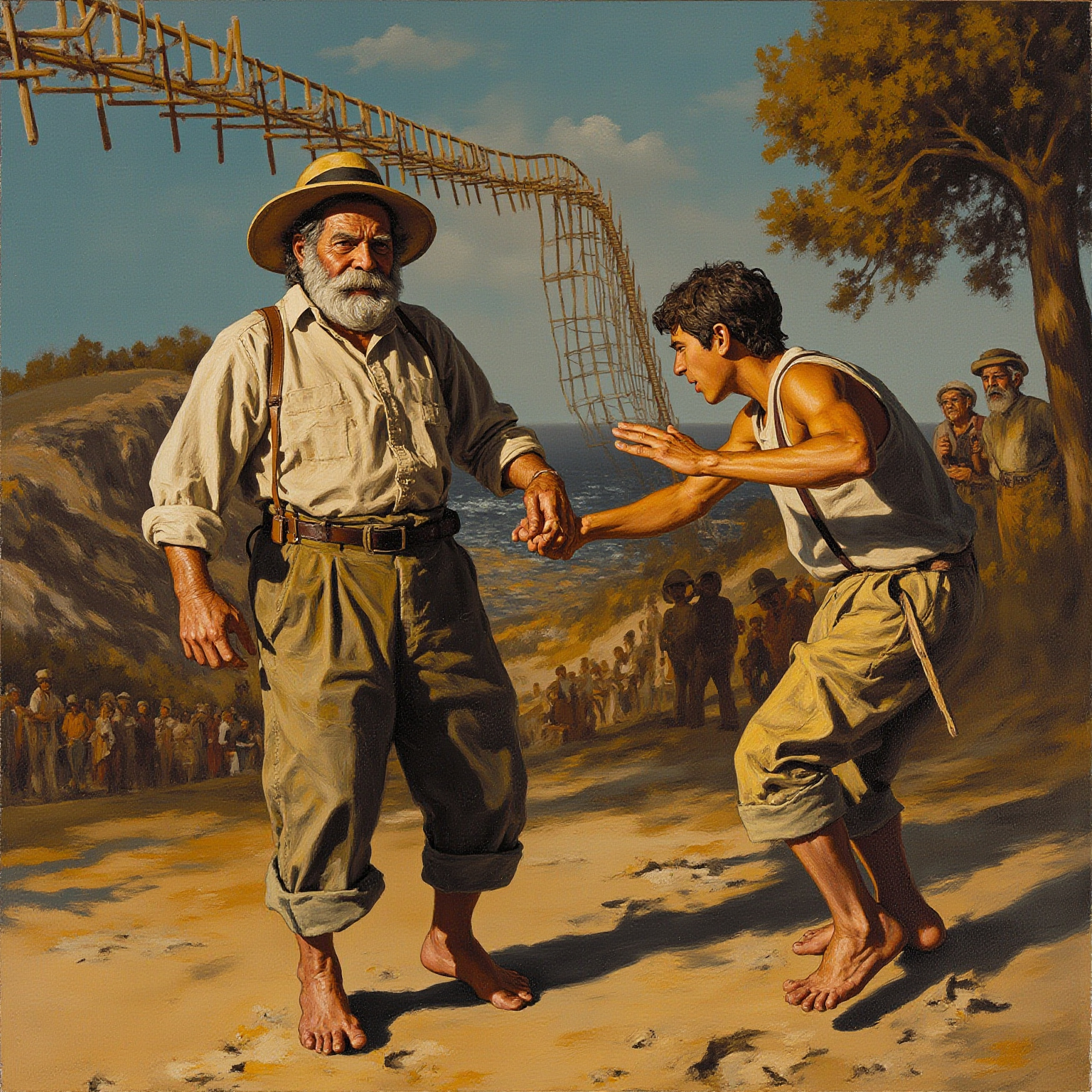
The day the cableway is finally finished, they throw a whole ceremony around it: logs come screaming down the wire while the village stands with its heads tilted back. Then the entire wooden structure -- years of Zorba and the Boss's work -- collapses in one crash into a heap of splinters. The Boss expects to see Zorba howl, or collapse himself. Instead Zorba bursts out laughing, grabs him, and runs barefoot onto the beach to dance. This isn't madness. It's an answer -- to the question of how you live in the face of ruin. Kazantzakis doesn't spell out the lesson anywhere; he hands the whole thing to a pair of bare feet covered in sawdust.
The Boss leaves Crete soon after. The two of them never meet again. Word reaches him later that Zorba spent his last years far off in Serbia, married, had a child, and still carried his santuri on his shoulder -- laughing and singing right up to his final breath. He never lived a single day the respectable way, and no respectable day ever got the better of him.
What this book is really about is how to live. Zorba stands for one way: hands, appetite, feet, music, giving himself over completely without stopping to think. The Boss stands for the other: restraint, self-examination, running every impulse through the mind first. The first way burns; the second endures -- and neither man ever quite manages to live inside the other's half. Kazantzakis is smart enough not to argue the point in a paragraph of philosophy. He packs both ways of living into two actual men and sets them eating, fighting, mining, dancing -- and by the time you notice, you already understand it.
Underneath that runs a deeper thread: death. Zorba cutting off his own finger, Madame Hortense's death, the widow's murder, Pavlos drowning himself, Zorba's own last breath in a foreign country -- the book keeps returning to death in one posture after another, to press on a single question: how you die and how you live turn out to be the same question. It never gives an answer, but it puts Zorba laughing next to every one of those deaths, and that laugh is the closest thing to an answer it offers. The first time I reached this part I flipped back a page -- how does an old man laugh at a moment like that? Read it again and you see it isn't laughter at all. It's refusal.
A companion guide can give you the map. It cannot give you the land. The film can give you the dance; it cannot give you the sleepless night the Boss spends back in Piraeus, the first time in his life he realizes he has never once lived a single day with half of Zorba's nerve. The grain of Mediterranean sunlight on an old wooden table, the smell of Zorba tearing bread and dipping it in olive oil while he lectures the Boss on how to live, the low murmur of Greek carried on the sea wind after the village does its rough justice -- none of that survives being retold. Next time someone brings up the dance, smile, and go open the book instead.